
Animals of Florida Mangroves: Wildlife of the Coastal Forest
Tangled Roots, Teeming Life — Wildlife of Florida's Mangroves
Key takeaways
- Florida has three native mangrove species — Red, Black, and White — which together fringe roughly 469,000 acres of the state's southern and central coasts.
- Mangrove forests serve as critical nursery habitat for more than 220 fish species, including economically important game fish like Snook, Red Drum, and Atlantic Tarpon.
- Florida is the only place in the continental United States where American Alligators and American Crocodiles coexist in the wild, with their ranges overlapping in South Florida's mangrove estuaries.
- The Mangrove Tree Crab (Aratus pisonii) lives almost entirely on the prop roots and branches of red mangrove trees, where it plays a key role in nutrient cycling between the trees and the water.
- Invasive Lionfish (Pterois volitans) — introduced from the Indo-Pacific in the 1980s — have reshaped Florida's nearshore food webs by preying on native juvenile fish populations across mangrove and re
About this resource
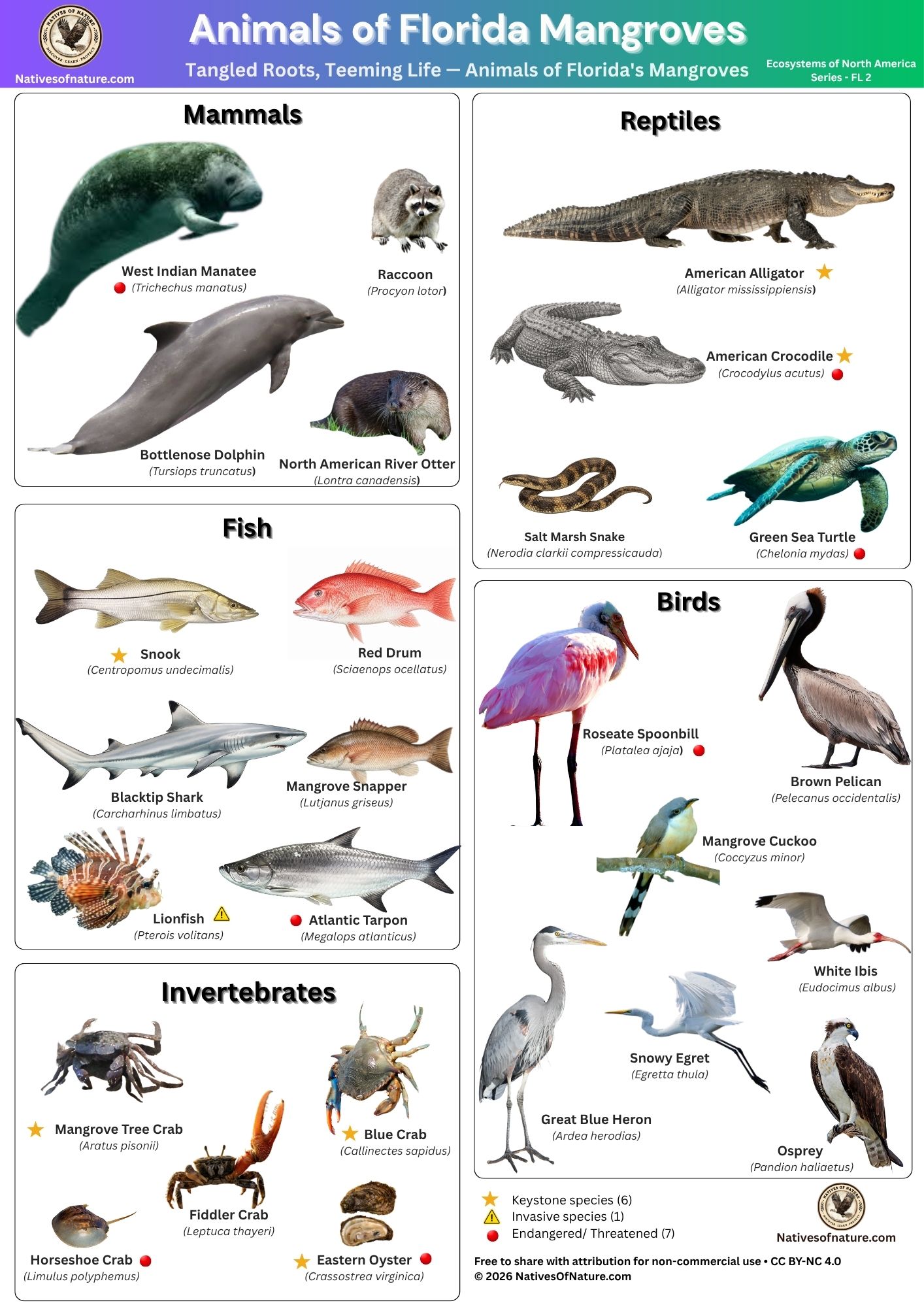
In the heart of Florida’s coastal estuaries, mangrove trees grow with their roots submerged in saltwater — a feat that less than 1% of the world’s plant species can achieve. These tangled prop roots create one of the planet’s most productive nursery ecosystems, where juvenile fish find refuge from predators, wading birds stalk the shallows, and a community of crabs, snails, and oysters lives entirely on the bark, branches, and sediment of the trees themselves.
Florida is home to three native mangrove species — the Red Mangrove (Rhizophora mangle), Black Mangrove (Avicennia germinans), and White Mangrove (Laguncularia racemosa) — which together fringe roughly 469,000 acres of the state’s southern and central coasts. The forests they form are critical habitat for more than 220 fish species, 180 bird species, 24 reptiles and amphibians, and the West Indian Manatee, whose populations depend on mangrove-fringed estuaries during winter.
This illustrated wildlife poster features 26 representative species drawn from across Florida’s mangrove ecosystem — from apex predators like the American Crocodile (Crocodylus acutus) and the American Alligator (Alligator mississippiensis) to the Mangrove Tree Crab (Aratus pisonii) that climbs prop roots in vast numbers, and the invasive Lionfish (Pterois volitans) that has dramatically reshaped Florida’s nearshore food webs over the past two decades.
Each animal is labeled with both its common and scientific name, organized into five taxonomic groups for quick reference. The poster identifies six keystone species whose ecological roles disproportionately shape the ecosystem, marks seven species listed as endangered or threatened, and flags one invasive species transforming Florida’s coastal waters. Together, the species shown range across the mangrove fringes of Everglades National Park, the Ten Thousand Islands, Biscayne Bay, the Indian River Lagoon, and the Florida Keys — a habitat that is among the most ecologically productive and economically valuable in North America.
Identification helper
Mammals
Quick comparison table
Featured Species of Florida’s Mangrove Forests
A reference table covering the 26 species shown on the poster — organized by taxonomic group, with habitat, diet, conservation status, and native/invasive designation for each.
| Animal | Group | Habitat | Diet | Conservation status | Native / Invasive |
|---|---|---|---|---|---|
| West Indian Manatee Trichechus manatus | Mammal | Coastal estuaries, springs, mangrove-fringed shallows | Seagrasses, aquatic plants | Threatened (US ESA) | Native |
| Bottlenose Dolphin Tursiops truncatus | Mammal | Bays, estuaries, mangrove channels | Fish, squid, crustaceans | Least Concern | Native |
| Raccoon Procyon lotor | Mammal | Mangrove shorelines, hammocks, edge habitats | Crabs, oysters, fish, eggs, fruit | Least Concern | Native |
| North American River Otter Lontra canadensis | Mammal | Brackish creeks, mangrove channels, coastal rivers | Fish, crustaceans, amphibians | Least Concern | Native |
| American Alligator Alligator mississippiensis | Reptile | Freshwater portions of mangrove estuaries, brackish edges | Fish, turtles, birds, small mammals | Least Concern (recovered) | Native |
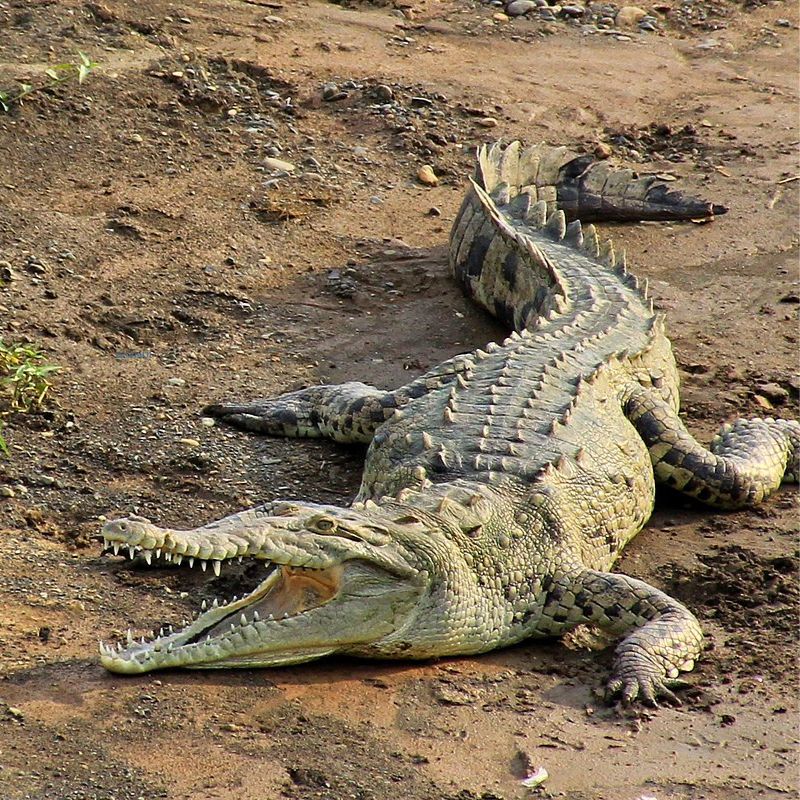
| American Crocodile Crocodylus acutus | Reptile | Mangrove estuaries, brackish coastal waters | Fish, crabs, birds, small mammals | Threatened (US ESA) | Native |
| Green Sea Turtle Chelonia mydas | Reptile | Mangrove nurseries (juveniles), seagrass beds (adults) | Seagrasses, algae (adults); omnivorous as juveniles | Threatened (US ESA) | Native |
| Mangrove Salt Marsh Snake Nerodia clarkii compressicauda | Reptile | Red mangrove root systems, salt marshes | Small fish, crabs | Least Concern | Native |
| Snook Centropomus undecimalis | Fish | Mangrove root systems, estuaries, inshore flats | Small fish, shrimp, crabs | Least Concern | Native |
| Red Drum Sciaenops ocellatus | Fish | Mangrove flats, estuaries, nearshore waters | Crabs, shrimp, small fish | Least Concern | Native |
| Blacktip Shark Carcharhinus limbatus | Fish | Nearshore mangrove-fringed waters, estuaries | Fish, rays, crustaceans | Vulnerable (IUCN) | Native |
| Mangrove Snapper Lutjanus griseus | Fish | Red mangrove roots, oyster reefs, inshore structure | Small fish, shrimp, crabs | Least Concern | Native |
| Lionfish Pterois volitans | Fish | Mangrove-fringed reefs, hard bottom, estuaries | Juvenile fish, crustaceans | Not assessed (invasive) | Invasive |
| Atlantic Tarpon Megalops atlanticus | Fish | Mangrove estuaries (juveniles), coastal waters (adults) | Fish, crabs, shrimp | Vulnerable (IUCN) | Native |
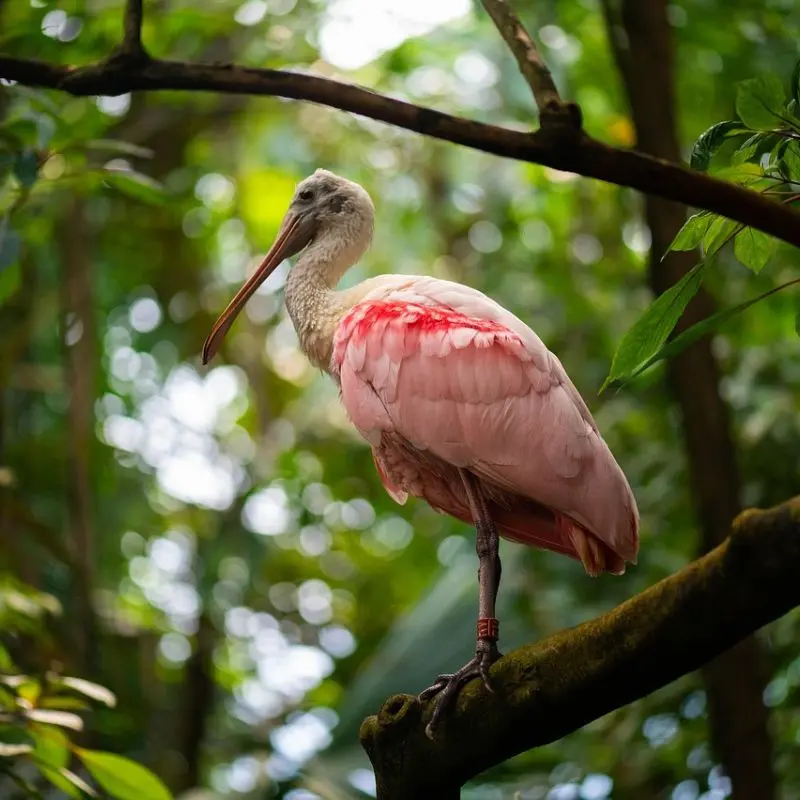
| Roseate Spoonbill Platalea ajaja | Bird | Mangrove flats, mudflats, shallow estuaries | Shrimp, small fish, aquatic insects | Threatened (FL state-listed) | Native |
| Brown Pelican Pelecanus occidentalis | Bird | Coastal waters, mangrove islands (nesting), estuaries | Fish (primarily mullet, menhaden) | Least Concern (recovered) | Native |
| Mangrove Cuckoo Coccyzus minor | Bird | Mangrove forests, tropical hardwood hammocks | Caterpillars, large insects, small reptiles | Least Concern | Native |
| White Ibis Eudocimus albus | Bird | Mangrove edges, mudflats, freshwater wetlands | Crustaceans, fish, insects | Least Concern | Native |
| Great Blue Heron Ardea herodias | Bird | Mangrove shallows, marshes, coastal flats | Fish, frogs, small reptiles, small mammals | Least Concern | Native |
| Snowy Egret Egretta thula | Bird | Mangrove shallows, estuaries, salt marshes | Small fish, crustaceans, insects | Least Concern | Native |
| Osprey Pandion haliaetus | Bird | Coastal waters, mangrove canopy (nesting), estuaries | Fish (almost exclusively) | Least Concern | Native |
| Mangrove Tree Crab Aratus pisonii | Invertebrate | Red mangrove prop roots and branches | Mangrove leaves, detritus, small invertebrates | Least Concern | Native |
| Blue Crab Callinectes sapidus | Invertebrate | Mangrove estuaries, oyster reefs, brackish bottoms | Detritus, fish, mollusks, vegetation | Least Concern | Native |
| Fiddler Crab Leptuca thayeri | Invertebrate | Mangrove mud at high-tide line, burrows | Detritus, algae, organic sediment | Least Concern | Native |
| Horseshoe Crab Limulus polyphemus | Invertebrate | Sandy mangrove fringes, shallow bays (spawning) | Mollusks, worms, small invertebrates | Vulnerable (IUCN) | Native |
| Eastern Oyster Crassostrea virginica | Invertebrate | Mangrove estuaries, intertidal reefs, brackish bottoms | Plankton, suspended organic particles (filter feeder) | Reefs critically declining (FL) | Native |
Featured animals in this resource
Mammals
-
State Marine Mammal of Florida, USA
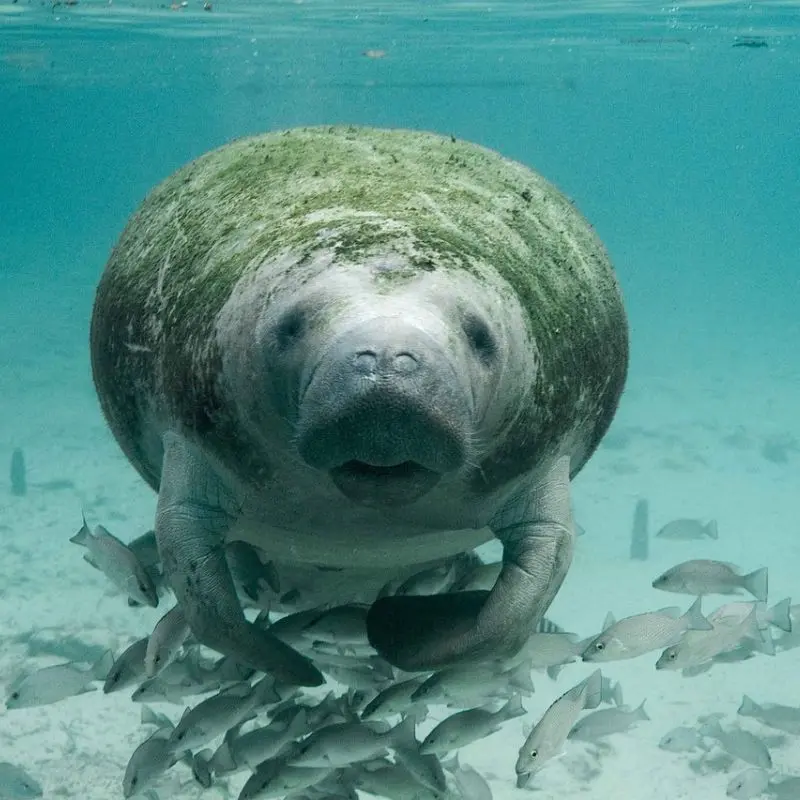
Florida Manatee
S. name: <em>Trichechus manatus latirostris</em>
IUCN: Threatened
Diet: Herbivore
Habitats: Oceans, Wetlands
-
National Animal of Barbados, National Aquatic Animal of India
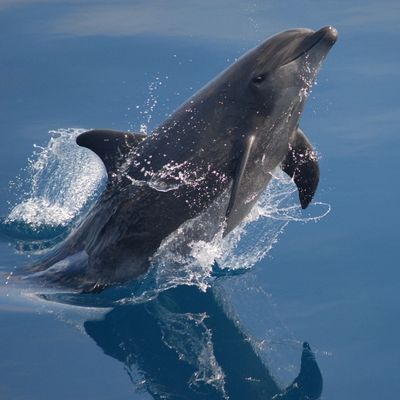
Bottlenose Dolphin
S. name: <em>Tursiops truncatus<em/>
IUCN: Least Concern (LC)
Diet: Carnivore
Habitats: Coastlines, Estuaries, Wetlands
Sources & methodology
Related visual resources
Authorship & review

Sreeraj Vijaydas is involved in the editorial and research direction at NativesOfNature. His work centers on developing clear, accurate wildlife content that promotes understanding of biodiversity, conservation challenges, and sustainability,…

Arya Sankar is a postgraduate in Zoology with academic and research experience in wildlife and marine sciences. She has worked on research projects at the Central Marine Fisheries Research Institute…
Frequently asked questions
- How many species are featured on the Animals of Florida Mangroves: Wildlife of the Coastal Forest?
- This poster features 26 species, each labeled with its common and scientific name.
- Can I print and share this poster?
- Yes. This poster is released under CC BY-NC 4.0, which permits free non-commercial sharing, printing, and reuse with attribution to NativesofNature.com.
- What print sizes are available?
- PDF versions are available in A4, A3, A2 and US Letter. A high-resolution JPG and transparent PNG are also offered for anyone repurposing the poster.