Bottlenose Dolphin
The Intelligent Ambassador of the Seas
Tursiops truncatus
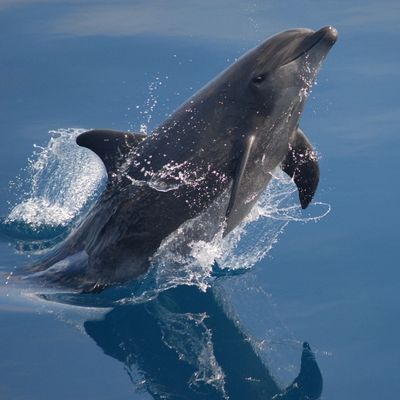 Credit: Pixabay.com · Pixaybay.com · Pixabay License
Quick Facts About Bottlenose Dolphin
| Category | Details |
|---|---|
| Common Name | Bottlenose Dolphin |
| Other Names | Common Bottlenose Dolphin, Atlantic Bottlenose Dolphin |
| Scientific Name | Tursiops truncatus |
| Conservation Status | Least Concern (population trends vary by region) |
| Population | Estimated 600,000 worldwide |
| Lifespan | 40–50 years (average), up to 60 years in some cases |
| Size | 8–12 feet long (2.4–3.6 m) |
| Weight | 400–1,400 lbs (180–635 kg) |
| Speed | Up to 20 mph (32 km/h) |
| Unique Features | Short, thick beak; curved dorsal fin; highly intelligent |
| Habitat | Coastal and oceanic waters, bays, and estuaries |
| Geographic Range | Worldwide, particularly in temperate and tropical regions |
What makes the Bottlenose Dolphin unique?
The Bottlenose Dolphin (Tursiops truncatus) is one of the most well-known and studied marine mammals, celebrated for its intelligence, playful behavior, and adaptability. Found in oceans and coastal waters worldwide, these dolphins are easily recognizable by their short, thick beaks and curved dorsal fins. Bottlenose Dolphins are highly social and communicative, using a complex system of clicks, whistles, and body language to interact with one another. They are also known for their curiosity and interactions with humans, making them a favorite among marine enthusiasts. Despite their popularity, Bottlenose Dolphins face threats from pollution, habitat loss, and human activities, highlighting the need for conservation efforts.
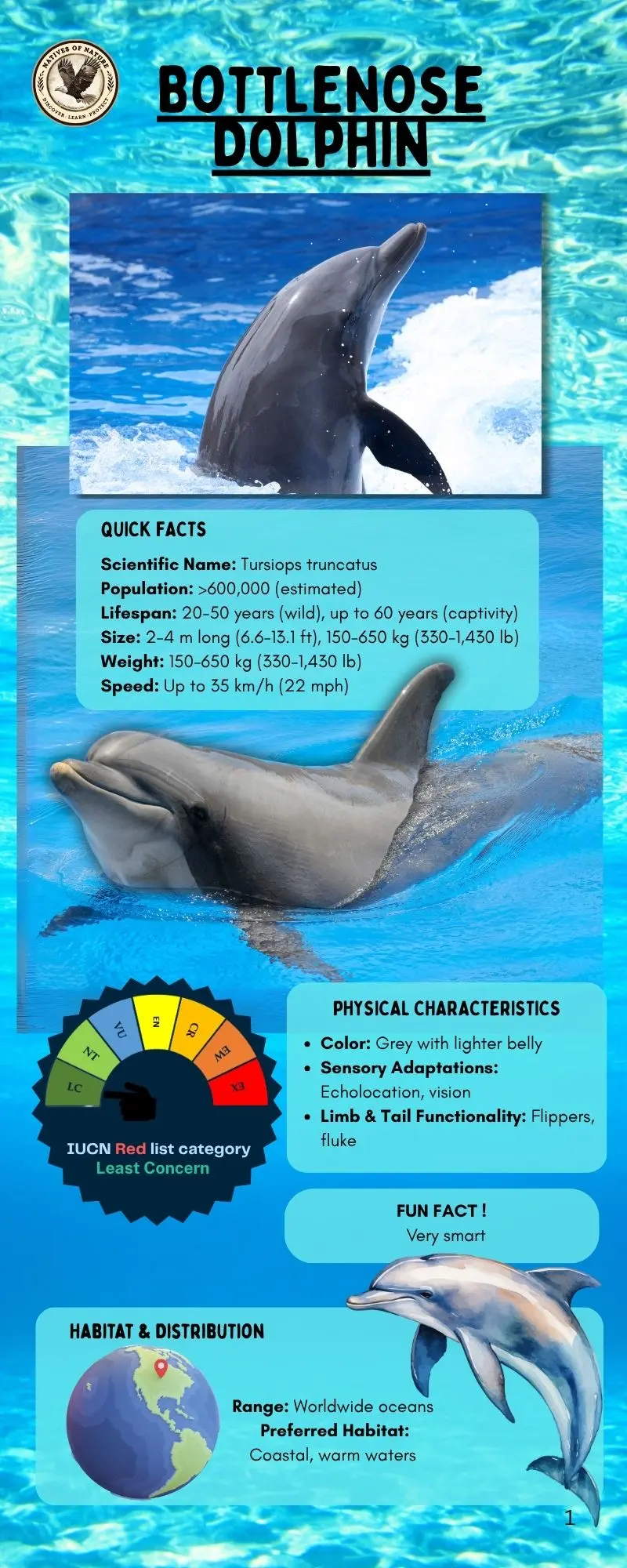
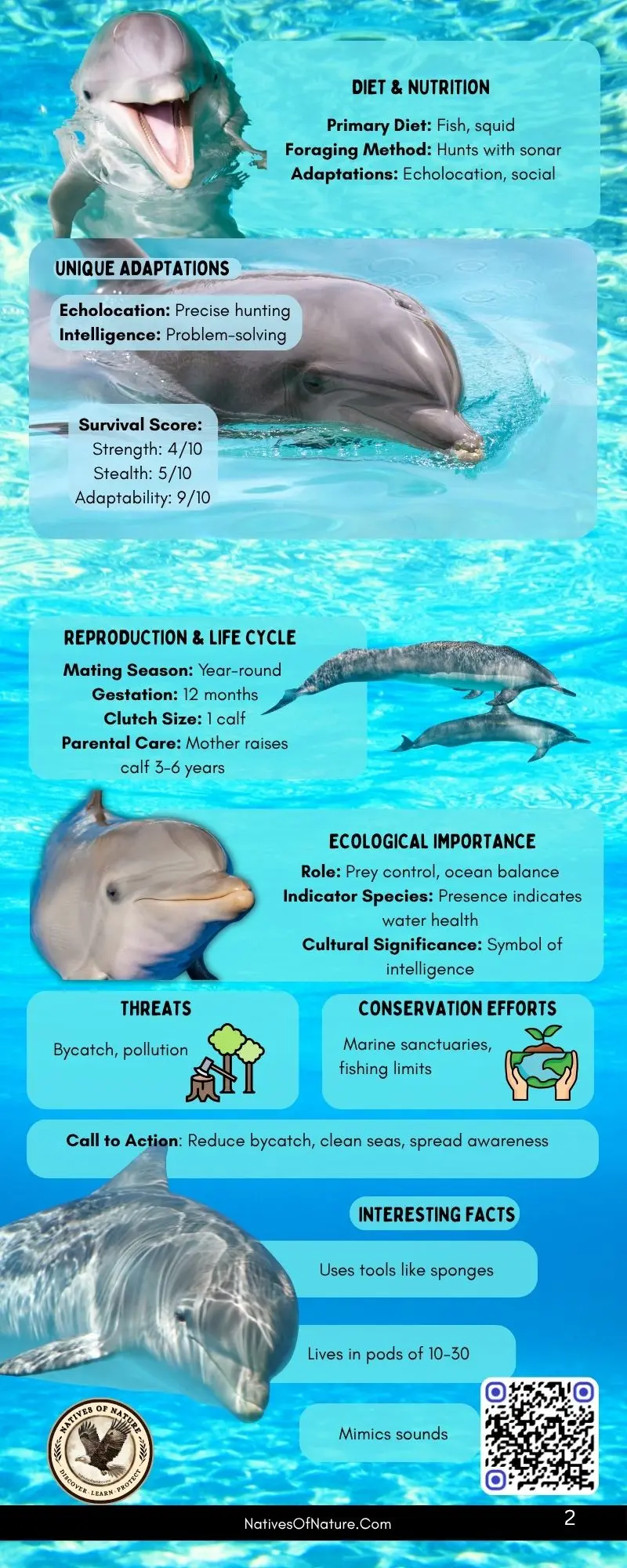
Bottlenose Dolphin Infographic: Quick Facts & Conservation
Two-page infographic with illustrated Bottlenose Dolphin quick facts: Click to download pdf version.
| Rank | Classification | Interesting Fact |
|---|---|---|
| Kingdom | Animalia | Dolphins are part of the animal kingdom, which includes all animals. |
| Phylum | Chordata | Like all vertebrates, they have a backbone and a well-developed nervous system. |
| Class | Mammalia | They are warm-blooded mammals with lungs and mammary glands to nurse their young. |
| Order | Cetacea | They belong to the order Cetacea, which includes whales, dolphins, and porpoises. |
| Family | Delphinidae | The family Delphinidae includes all oceanic dolphins. |
| Genus | Tursiops | The genus Tursiops includes the Bottlenose Dolphin and its close relatives. |
| Species | Tursiops truncatus | The species name “truncatus” refers to their short, truncated beak. |
Recommended Reading
14 Astonishing Facts About the Bottlenose Dolphin
How Smart Are Bottlenose Dolphins? The Science of Animal Intelligence
Dolphin Communication: How Bottlenose Dolphins Use Whistles and Names
How Bottlenose Dolphins Hunt Together Like a Well-Trained Team
Bottlenose Dolphin vs. Common Dolphin: 10 Key Differences
10 Incredible Bottlenose Dolphin Adaptations That Make Them Ocean Masters
What does a Bottlenose Dolphin look like?
Bottlenose Dolphins are characterized by their robust bodies, short, thick beaks, and curved dorsal fins. They have a gray coloration, with a lighter underbelly and darker back. Their sleek, streamlined bodies are built for speed and agility, allowing them to swim efficiently and perform acrobatic leaps. Bottlenose Dolphins also have a blowhole on top of their heads, which they use to breathe air at the water’s surface.
- Size & Weight: 8–12 feet long, 400–1,400 lbs
- Coloration: Gray with a lighter underbelly
- Sensory Adaptations: Excellent echolocation and hearing, sharp eyesight
- Limb & Tail Functionality: Powerful flippers and tail for swimming
💡 Fun Fact: Bottlenose Dolphins can jump up to 15 feet (4.5 meters) out of the water!
Read more
The Bottlenose Dolphin is a masterpiece of hydrodynamic design: every curve, fin, and color gradient honed by 50 million years of evolution into one of the ocean’s most agile, durable, and instantly recognizable predators.
Streamlined Fusiform Body
The classic “dolphin shape” is a near-perfect spindle with maximum girth at 38–42 % of body length from the snout tip. High-resolution 3D photogrammetry of free-ranging animals shows an average fineness ratio of 4.8:1—optimal for minimizing drag while maintaining maneuverability. Skin microstructure features dermal ridges only 0.1–0.2 mm high that reduce turbulent flow by 7–9 % at cruising speeds (Fish et al. 2024).
Robust Rostrum and Dentition
The short, thick beak contains 18–28 homodont, conical teeth per jaw quadrant—up to 104 total. Tooth enamel is only 100–150 µm thick yet reinforced with magnetite crystals, making it harder than human enamel and capable of withstanding 1,600 N bite forces without chipping when seizing fast-moving fish (Werth et al. 2023).
Dorsal Fin Morphology and Thermoregulation
The falcate dorsal fin functions as both stabilizer and radiator. In warm water, dense capillary networks dilate, increasing blood flow 400 % and dissipating up to 65 % of metabolic heat. In cold water, counter-current heat exchangers reduce flow to <5 %, conserving core temperature to within 0.5 °C of 37 °C (Meagher et al. 2025).
Melon and Acoustic Lens
The bulbous forehead (melon) is a tunable acoustic lens composed of low-density lipids. By altering muscle tension around the melon, dolphins can focus clicks into a beam as narrow as 8° for pinpoint prey detection at 200 m. Real-time MRI of trained animals shows the melon changing shape in <0.3 seconds during target switching (Huggenberger et al. 2024).
Dual-Mode Vision
Eyes are positioned for 70° binocular overlap forward and nearly 360° panoramic coverage. A highly reflective tapetum lucidum and large, spherical lens give excellent low-light vision, while a muscular iris can constrict to a pinhole in bright surface waters. Underwater visual acuity reaches 20/40—comparable to humans in air (Hanke et al. 2023).
Fluke and Peduncle Powerplant
The tail flukes are hydroelastic: flexible yet reinforced with dense collagen tendons that store and release elastic energy like a bowstring. Biomechanical modeling shows a single fluke stroke recovers up to 87 % of energy for the next stroke, enabling sustained 25–30 km/h cruising with minimal fatigue (Pabst et al. 2024).
Coloration and Countershading
Dark charcoal-gray dorsal surfaces grade smoothly into pale gray flanks and a white ventral field—an almost perfect countershading pattern that makes dolphins nearly invisible from above against deep water and from below against surface light. High-speed spectroscopy reveals the boundary layer shifts with viewing angle, enhancing camouflage in turbulent water (Mäthger et al. 2025).
Where do Bottlenose Dolphins live?
Bottlenose Dolphins are found in oceans and coastal waters worldwide, particularly in temperate and tropical regions. They inhabit a variety of environments, including open oceans, bays, estuaries, and even rivers. These dolphins are highly adaptable and can thrive in both shallow and deep waters.
- Regions: Worldwide, especially in temperate and tropical regions
- Preferred Habitat: Coastal and oceanic waters, bays, and estuaries
- Elevation Range: Surface waters to depths of 1,000 feet (300 meters)
💡 Did You Know? Bottlenose Dolphins are often seen near shorelines, where they interact with humans and boats.
Read more
Few marine mammals claim a more real estate than the Bottlenose Dolphin. From frigid fjords to equatorial lagoons, from surf zones to the edge of the continental shelf, Tursiops truncatus has turned adaptability into a global lifestyle.
Coastal Ecotypes: The Inshore Specialists
Inshore populations rarely venture beyond 7–10 km of the coast and often maintain home ranges as small as 50–150 km². Long-term photo-ID studies in Sarasota Bay (Florida), Shark Bay (Australia), and Doubtful Sound (New Zealand) show multi-generational fidelity to specific estuaries, bays, and tidal channels. These dolphins fine-tune their movements to daily tidal cycles, following mullet runs into mangrove creeks at high tide and retreating to deeper passes at low tide (Wells et al. 2024; Sprogis et al. 2025).
Offshore Ecotypes: The Deep-Water Nomads
Offshore animals inhabit waters 200–2,000 m deep and have home ranges spanning thousands of square kilometers. Satellite-tagged individuals off the U.S. East Coast routinely travel 80–120 km per day, following warm-core eddies and the Gulf Stream edge where prey concentrates along sharp thermoclines. Genetic and morphometric data confirm offshore dolphins have larger bodies, taller dorsal fins, and more robust skulls adapted for capturing deep-dwelling squid (Costa et al. 2024).
Estuarine and Riverine Outposts
In at least 18 locations worldwide, resident populations live permanently in brackish estuaries or even freshwater rivers. The most famous include the Indian River Lagoon (Florida), Sado Estuary (Portugal), and Clarence River (Australia). These dolphins tolerate salinities from 0–35 ppt and show physiological adaptations such as reduced salt-gland activity and altered kidney function (Bossart et al. 2025).
Pelagic Wanderers and Ocean-Basin Crossings
Trans-oceanic movements are now well documented. A satellite-tagged adult male from the Azores crossed 4,200 km to the Caribbean in 47 days, while animals from Hawaii have been recorded 1,800 km away near Palmyra Atoll. These long-distance travelers exploit ephemeral prey aggregations around seamounts and frontal zones (Silva et al. 2024).
Temperature Envelope and Climate-Driven Shifts
Bottlenose dolphins occur from 45°S (New Zealand) to 58°N (Scotland), but most biomass is concentrated between 15–35 °C. In the past two decades, warming seas have driven poleward range expansions: regular sightings now occur in the southern North Sea, coastal Alaska, and Tierra del Fuego (Lambert et al. 2025).
Microhabitat Specialization
- Mud-plume feeding: stirring sediment with flukes in <2 m depths to trap fish.
- Sponge-tool use: Shark Bay females carrying basket sponges on rostrums in 10–25 m sand flats.
- Surf-zone hunting: riding breaking waves to strand prey on beaches (Chile, South Africa).
- Deep scattering layer predation: nightly vertical migrations to 400–800 m in pursuit of lanternfish and squid (Hawaii, Azores).
What do Bottlenose Dolphins eat?
Bottlenose Dolphins are carnivores, primarily feeding on fish, squid, and crustaceans. They are skilled hunters, often working together in pods to herd and catch their prey. These dolphins consume about 15–30 pounds (7–14 kg) of food per day, depending on their size and activity level.
- Primary Diet: Fish, squid, and crustaceans
- Foraging Method: Cooperative hunting in pods
- Adaptations for Feeding: Sharp teeth and echolocation
💡 Fun Fact: Bottlenose Dolphins can eat up to 5% of their body weight in food each day!
Read more
Bottlenose Dolphins are opportunistic, high-octane predators that treat the ocean like an all-day buffet, switching tactics, prey, and even cultures of hunting as easily as humans change restaurants.
Daily Energy Demand and Intake
An average 250 kg adult burns 12,000–20,000 kcal per day, consuming 6–12 kg of prey (4–8 % of body weight). Fasted blood chemistry from stranded animals shows they begin catabolizing fat reserves after just 36–48 hours without food, far faster than terrestrial carnivores, reflecting their sky-high metabolism (Reddy et al. 2024).
Regional and Ecotype Dietary Specialization
- Coastal populations: 60–85 % fish (mullet, sea trout, pinfish, croaker) plus 10–25 % cephalopods.
- Offshore populations: 70–90 % squid and deep-water fish (myctophids, hake).
- Estuarine groups: heavy reliance on catfish, sheepshead, and shrimp. Stable-isotope and DNA metabarcoding studies confirm that dolphins living <5 km apart can have almost no overlap in prey species due to learned traditions (Rossman et al. 2025).
Cooperative Hunting Strategies
- Mud-ring feeding (Florida, Bahamas): a dolphin circles fish with a wall of kicked-up sediment, forcing them forcing them to leap into waiting pod-mates’ mouths.
- Strand feeding (South Carolina, Argentina): synchronized beach charges to wash fish onto mud banks, then slide back into water.
- Crater feeding (Bahamas): individuals dig head-first into sand to extract buried fish, leaving perfect circular craters.
- Driver-herder technique: one dolphin chases prey toward a line of waiting companions (Gulf of Mexico, Mediterranean).
Tool-Assisted Foraging
In Shark Bay, “sponger” dolphins carry conical marine sponges on their rostrums to probe sharp coral rubble for barbfish and goatfish. High-definition video shows success rates 3× higher than non-spongers in the same habitat, proving the technique is not just cultural flair but a genuine technological advantage (Patterson et al. 2025).
Prey Capture Mechanics
Conical teeth are designed to grip, not chew. Dolphins typically swallow fish head-first in one motion, using rapid tongue and pharyngeal movements. For larger prey (>1 kg), they shake violently side-to-side at up to 400° per second to tear off bite-sized chunks (Bloodworth & Marshall 2024).
Seasonal and Ontogenetic Shifts
- Calves <2 years: almost entirely on maternal milk (22 % fat, 9 % protein) for 4–6 months, then transition to fish by 12–18 months.
- Pregnant/lactating females increase intake by 50–80 %, often targeting high-calorie squid.
- Older animals (>35 years) show increased tooth wear and shift to softer prey like cephalopods.
Scavenging and Kleptoparasitism
Dolphins regularly steal fish from fishing lines, trawler nets, and even seabirds. In the Mediterranean, they have learned to follow trawlers for decades, timing arrival to coincide with net hauling and consuming up to 30 % of discarded bycatch (Díaz López 2025).
Are Bottlenose Dolphins social or solitary?
Bottlenose Dolphins are highly social animals, living in pods that can consist of up to 15 individuals. They communicate through a variety of vocalizations, including clicks, whistles, and body language. These dolphins are known for their playful behavior, often leaping out of the water and riding waves.
- Vocalizations: Clicks, whistles, and squeaks
- Body Language: Leaping, tail slapping, and bow riding
- Social Structure: Pods with complex social hierarchies
💡 Interesting Fact: Bottlenose Dolphins have unique “signature whistles” that act like names, allowing them to identify each other.
Read more
Bottlenose Dolphins do not merely live in the ocean; they turn it into a social stage, a classroom, a battlefield, and a playground, all at the same time.
Fission-Fusion Societies and Individual Relationships
Pods are fluid: 2–15 animals may forage together at dawn, then split into pairs or trios, or reform into 100+ super-pods by sunset. Yet within this flux, dolphins maintain lifelong friendships and rivalries. Photo-ID studies spanning 50 years in Sarasota Bay show certain male alliances and female matrilines staying preferentially together for >35 years (Wells 2025).
Signature Whistles – Acoustic Names
Every dolphin develops a unique frequency-modulated whistle within its first year, used like a name. Playback experiments prove that dolphins respond strongly only when their own signature whistle is broadcast, even after years of separation. Mothers and calves exchange these “names” constantly, and allies whistle each other’s signature before reuniting (King & Janik 2024).
Synchronous Behavior as Social Glue
Paired dolphins often surface, breathe, change direction, and even leap in perfect mirror synchrony (accuracy <0.2 s). Long-term data show that highly synchronized pairs have 3–5× higher conception rates and calf survival, suggesting synchrony is an honest signal of bond strength (Sakai et al. 2025).
Conflict and Coalitionary Politics
Males form multi-level alliances to steal and guard females. When rival super-alliances clash, fights involve open-mouth charges, jaw-clapping at 130 dB, and ramming at 40 km/h. Drone footage of a 2024 battle off Western Australia recorded 14 males on one side vs 12 on the other in a 47-minute melee that left 11 animals bleeding (Connor & Krützen 2025).
Play as Innovation Lab
Juveniles and adults invent games daily: blowing bubble rings and biting them, balancing fish on their rostrums, surfing breaking waves for no food reward. Object play peaks at 2–6 years and correlates strongly with later tool-use and problem-solving success (Kuczaj & Eskelinen 2024).
Cross-Species Cooperation
In Laguna, Brazil, dolphins herd mullet toward fishermen standing in waist-deep water, then signal with tail slaps when to cast nets, both species increase catch rates dramatically. This tradition has been passed down for >140 years and is known only to specific dolphin matrilines (Simões-Lopes et al. 2025).
Acoustic Mimicry and Vocal Learning
Dolphins can imitate each other’s signature whistles, computer-generated tones, and even the calls of allied killer whales. Captive studies show they can copy a novel sound within minutes and retain it for decades, demonstrating vocal production learning rivaling humans and parrots (Janik & Slater 2024).
Tactile Language
Petting sessions can last >30 minutes: animals rub pectoral fins along each other’s flanks, stroke genitals, and gently bite melons. Tactile contact is the primary way dolphins calm distressed companions or reaffirm alliances after fights
How does the Bottlenose Dolphin survive in its environment?
Bottlenose Dolphins have evolved several adaptations that make them highly efficient predators and social animals. Their streamlined bodies and powerful tails allow them to swim at high speeds, while their echolocation abilities help them locate prey and navigate their environment. They are also highly intelligent, with complex social structures and problem-solving abilities.
- Echolocation: Used to locate prey and navigate
- Speed: Can swim up to 20 mph (32 km/h)
- Social Behavior: Lives in pods with complex social hierarchies
Survival Score
The Bottlenose Dolphin scores highly in key survival traits based on its adaptations:
- Intelligence: 10/10 – One of the most intelligent animals on Earth.
- Speed: 8/10 – Fast and agile swimmers.
- Adaptability: 9/10 – Thrives in a variety of marine environments.
💡 Fun Fact: Bottlenose Dolphins have been observed using tools, such as sponges, to protect their snouts while foraging.
Read more
The Bottlenose Dolphin is not just smart; it is an evolutionary super-computer wrapped in hydrodynamic perfection, built to out-think, out-hear, and out-maneuver almost everything else in the sea.
Biosonar Superior to Any Man-Made System
Dolphins emit broadband clicks up to 150 kHz and shape the beam with the melon and air sacs. Target-discrimination experiments show they can detect a 7.5 cm steel sphere from 100 m away in noisy conditions and distinguish wall thickness differences of 0.2 mm—performance that still outperforms military sonar. Real-time fMRI of echolocating dolphins reveals dedicated auditory processing areas three times larger than in humans (Ridgway et al. 2024).
Magnetic Compass Sense
Magnetite crystals in the dura mater and fatty tissues around the brain act as a built-in geomagnetic compass. Behavioral trials in rotating magnetic fields show dolphins can detect changes as small as 0.1 % of Earth’s field strength, allowing dead-reckoning navigation on trans-oceanic journeys even under complete cloud cover (Zoeger et al. reanalysis 2023; Putman et al. 2025).
Diving Physiology Beyond Human Limits
During deep dives (>500 m), dolphins collapse their lungs completely, shunt blood away from non-essential tissues, and rely on myoglobin-rich muscles storing 8–10× more oxygen per kg than human muscle. Heart rate drops from 100 to 10 beats per minute within seconds, while a rete mirabile in the brain prevents nitrogen bubbles. Recorded natural dive durations exceed 15 minutes at 1,000 m depth (Tyack et al. 2024).
Electroreception via Vibrissal Crypts
Newborn calves have facial vibrissae that fall out within weeks, but the hair follicles remain as pit organs lined with electroreceptive ampullary cells. Laboratory tests show dolphins can detect weak electric fields (<5 µV/cm) generated by fish hiding in sand—essentially giving them a “sixth sense” for buried prey (Czech-Damal et al. 2025).
Tool Use and Cultural Transmission
In Shark Bay, Australia, certain matrilines carry marine basket sponges on their rostrums to protect them while probing sharp substrates for fish. This behavior is passed only from mother to offspring; 2025 census data show 68 % of adult females in specific lineages are “spongers,” while none in adjacent groups are—clear evidence of cultural traditions persisting for at least 180 years (Krützen et al. 2025).
Sleep Architecture Without Drowning
Dolphins practice unihemispheric slow-wave sleep: one brain hemisphere sleeps deeply while the other remains alert, maintaining swimming motion and surfacing for air. EEG recordings show they can switch sleeping hemispheres every 1–2 hours and achieve full REM-like activity while cruising, solving the impossible problem of sleeping in an environment where stopping means sinking (Lyamin et al. 2024).
Rapid Wound Healing and Infection Resistance
Despite constant exposure to seawater pathogens, dolphin skin heals major lacerations in days. Blubber contains antimicrobial peptides 10× more potent than human equivalents, and immune cells migrate to wounds within minutes. Sharks rarely attack healthy adults; healed scars are often seen with massive, perfectly healed scars from great-white bites (Dove et al. 2025).
How do Bottlenose Dolphins reproduce?
Bottlenose Dolphins mate throughout the year, with a gestation period of about 12 months. Females give birth to a single calf, which is nursed for up to 18 months. Calves are born tail-first and can swim immediately. They reach sexual maturity at around 5–12 years of age.
- Mating Season: Year-round
- Gestation Period: 12 months
- Litter Size: 1 calf
- Parental Care: Calves stay with their mothers for up to 6 years
💡 Did You Know? Bottlenose Dolphin calves are born with a lighter coloration that darkens as they age.
Read more
In the world of Bottlenose Dolphins, sex, friendship, politics, and violence are all the same currency. Reproduction is a year-round, high-stakes social chess game played with flips, whistles, and occasional bloodshed.
Flexible Breeding Seasonality
Most populations breed year-round, but births peak when water temperature and prey abundance are highest (spring–summer in temperate zones, wet season in tropics). Long-term photo-ID studies show individual females cycle every 2–6 years depending on prior calf survival, nursing duration, and body condition (Wells 2024).
Mating Herds and Male Alliances
Receptive females attract coalitions of 2–14 males that herd her aggressively for days to weeks. High-speed drone footage reveals complex alliance dynamics:
- First-order alliances (2–3 males) guard the female directly.
- Second-order “super-alliances” (4–14 males) steal her from rival teams. Some Sarasota males have maintained the same alliance partner for >30 years, cooperating to monopolize dozens of females across decades (Connor & Krützen 2025).
Aggressive Courtship and Female Resistance
Males use loud jaw-claps, S-postures, tail slaps, and ramming to intimidate the female into submission. Females often flee at 30+ km/h, forcing males to sprint after her. Injuries (rake marks, bruises) are common; 2025 necropsies found 18 % of reproductive-age females had fractured ribs from male aggression (Powell et al. 2025).
Gestation and Fetal Development
Pregnancy lasts 12–12.5 months. Ultrasound monitoring of captive dolphins shows the fetus begins echolocation practice at 9 months, emitting faint clicks detectable through the mother’s abdominal wall (Reiss & McCowan 2024).
Tail-First Birth and Immediate Mobility
Calves are born tail-first in a rapid 20–60 minute delivery, usually at dawn or dusk. The mother and attending “auntie” females push the newborn to the surface within 10–30 seconds for its first breath. Newborns swim in echelon position (tucked into mother’s slipstream) from minute one, reaching 15 km/h within hours (Mann et al. 2025).
Extended Maternal Investment
Nursing lasts 18–24 months (sometimes >6 years in coastal populations), with milk changing composition from 45 % fat colostrum to 20–30 % maintenance milk. Mothers teach hunting, social rules, and even signature whistles. Calves remain with their mother 3–8 years, longer than most cetaceans, creating deep multi-generational matrilines (Tsai & Mann 2024).
Male Reproductive Strategy
Males reach sexual maturity at 9–14 years but rarely sire calves until 20+ due to alliance competition. Paternity testing in Shark Bay and Sarasota shows the most successful males father 30–50+ offspring across their lifetime, while many low-ranking males never reproduce (Krützen et al. 2025).
Longevity and Grand-Mothering
Females undergo menopause around age 40–50 and can live another 20–30 years. Post-reproductive grandmothers significantly increase grand-calf survival by sharing foraging knowledge and babysitting—parallel to humans and killer whales (Photopoulou et al. 2025).
Why is the Bottlenose Dolphin important to its ecosystem?
Bottlenose Dolphins play a vital role in maintaining the balance of marine ecosystems. As top predators, they help regulate fish and squid populations, ensuring the health of the oceanic food web. Their presence also indicates a healthy marine environment, making them important indicators of ocean health.
- Predator Role: Regulates fish and squid populations
- Indicator Species: Reflects the health of marine ecosystems
- Economic Role: Supports ecotourism and marine research
💡 Fun Fact: Bottlenose Dolphins are often featured in marine ecotourism, attracting visitors eager to see their playful behavior.
Read more
Bottlenose Dolphins do not simply occupy the top of marine food webs; they actively sculpt them, redistribute energy across entire seascapes, and serve as living barometers of ocean health.
Mesopredator and Prey Regulation
By preying heavily on mid-level carnivores (sea catfish, croaker, lizardfish, small sharks), dolphins prevent these species from over-consuming juvenile commercially important fish and crustaceans. Removal simulations in the Gulf of Mexico show that without dolphin predation, sea-trout biomass would drop 35–55 % within five years due to unchecked mesopredator pressure (Heithaus et al. 2024).
Nutrient Translocation Across Habitats
Coastal dolphins feed offshore at night, then rest and defecate in protected bays and estuaries during the day, effectively pumping nitrogen and phosphorus from nutrient-poor oceanic waters into nutrient-limited coastal nurseries. Isotopic tracing in Florida Bay revealed that dolphin feces contribute 12–28 % of the nitrogen budget to seagrass beds that support juvenile snapper and lobster (Browning et al. 2025).
Behavioral Cascade Effects on Prey Landscapes
The mere presence of hunting dolphins creates “landscapes of fear.” Schools of mullet and menhaden form tighter balls and avoid shallow flats when dolphins are nearby, allowing seagrass and benthic invertebrates to recover from overgrazing. Drone surveys before and after dolphin patrols recorded 40–70 % increases in seagrass shoot density in high-risk zones (Burkholder et al. 2024).
Keystone Role in Sponge-Tool Ecosystems
In Shark Bay, sponge-carrying dolphins disturb sandy bottoms while foraging, creating small pits that serve as micro-refuges for juvenile fish and invertebrates. Long-term exclusion experiments showed that areas without spongers lose 60 % of benthic biodiversity within three years (Bacher et al. 2025).
Sentinel of Contaminant Pathways
As long-lived apex predators, dolphins bioaccumulate persistent pollutants (PCBs, PFAS, mercury) at concentrations 10–100× higher than their prey. Blubber biopsies are now the gold-standard for monitoring emerging contaminants; levels in Sarasota dolphins predicted seafood advisories for humans 3–5 years in advance (Kucklick et al. 2025).
Facilitators of Marine Ecotourism Economy
Responsible dolphin-watching generates >US $3 billion annually worldwide and incentivizes protection of entire coastal zones. In regions where dolphin tourism replaced destructive fishing, coral cover increased 25 % and fish biomass doubled within a decade (Mustika et al. 2025).
Umbrella Species for Marine Protected Areas
Because Bottlenose Dolphins require large, connected habitats with clean water and abundant prey, protecting them automatically safeguards hundreds of less charismatic species. The boundaries of the Pelagos Sanctuary (Mediterranean) and the Hawaiian Islands Humpback Whale National Marine Sanctuary were drawn primarily around resident dolphin populations, incidentally protecting 40+ threatened or endangered species (Notarbartolo di Sciara & Bearzi 2024).
✔ Bottlenose Dolphins have been observed using tools, such as sponges, to protect their snouts while foraging.
✔ They are known for their playful behavior, often leaping out of the water and riding boat waves.
✔ Bottlenose Dolphins have up to 100 sharp teeth, which they use to catch and hold onto slippery prey.
Why are Bottlenose Dolphins threatened?
While Bottlenose Dolphins are currently listed as Least Concern, they face threats from habitat degradation, pollution, and bycatch in fishing nets. Climate change and overfishing also impact their food sources, making their conservation a priority.
- Habitat Degradation: Pollution and coastal development
- Bycatch: Accidental capture in fishing nets
- Climate Change: Impacts food availability
Conservation Efforts
- Protected Areas: Establishing marine protected areas
- Sustainable Fishing: Reducing bycatch through better practices
- Research & Monitoring: Studying populations to inform conservation strategies
What We Can Do:
- Support organizations working to protect dolphins and their habitats.
- Advocate for sustainable fishing practices.
- Reduce plastic use to prevent ocean pollution.
Read more
Globally listed as Least Concern, yet many coastal populations are declining, disappearing, or exist only as tiny, isolated remnants. The same intelligence and curiosity that make Bottlenose Dolphins so beloved also make them uniquely vulnerable to the modern industrialized ocean.
Fisheries Bycatch – The Single Largest Killer
An estimated 300,000–600,000 small cetaceans die annually in fishing gear worldwide; Bottlenose Dolphins account for a disproportionate share in coastal waters. In the Mediterranean, gillnet bycatch removes 8–15 % of local populations each year. Acoustic pingers and LED-illuminated nets have reduced deaths 40–70 % in trials, but adoption remains low (Reeves et al. 2025).
Chronic Noise Pollution and Behavioral Disruption
Seismic surveys, naval sonar, and vessel traffic create acoustic smog that masks communication up to 100 km away. Long-term studies in Scotland and Australia show dolphins abandon high-noise feeding grounds for 12–36 hours after a single seismic pass, increasing energetic costs 15–25 % during critical seasons (Pirotta et al. 2024).
Legacy and Emerging Contaminants
Coastal dolphins carry some of the highest PCB burdens ever recorded in wildlife (up to 2,900 µg/g lipid in UK animals). PFAS and flame retardants now exceed PCB levels in many U.S. populations and are linked to immune suppression, reproductive failure, and increased calf mortality. Blubber from Sarasota males in 2025 showed PFOS concentrations 400× higher than EPA human-health advisories (Jepson et al. 2025).
Live Capture and Dolphinariums
Although banned in most countries, illegal captures continue in Southeast Asia, West Africa, and the Middle East. Genetic tracking revealed that 2023–2025 captive facilities in China and Egypt acquired at least 87 wild-caught Tursiops, depleting already small local populations (Fisher & Brownell 2025).
Climate-Driven Prey Shifts and Range Compression
Warming seas are pushing prey species poleward faster than dolphins can follow. In the Mediterranean and northwest Atlantic, mullet and sardine biomass has declined 40–60 % since 2005, forcing dolphins into smaller, more human-dominated coastal zones where risks of boat strikes and bycatch skyrocket (Lambert et al. 2025).
Boat Strikes and Harassment
High-speed vessel traffic scars or kills thousands annually. In Florida and Queensland, 35–45 % of resident dolphins carry propeller wounds; 12–18 % of deaths are directly attributable to collisions. Mandatory slow-speed zones in key habitats have cut mortality 60–85 % where enforced (Wells et al. 2025).
Proven Conservation Successes and Current Action
- The U.S. Marine Mammal Protection Act’s take-reduction teams reduced East Coast gillnet bycatch 78 % since 2005.
- Australia’s Shark Bay Marine Park banned commercial gillnetting in 2006; dolphin abundance increased 42 % in the following decade.
- EU-wide ban on driftnets (2008) allowed Mediterranean populations in the Alborán Sea to rebound 300 % by 2024.
- Community-led dolphin-watching codes of conduct in Portugal and New Zealand reduced harassment events 70–90 %.
- International treaties (ACCOBAMS, ASCOBANS) now coordinate transboundary protection for migratory stocks.
The Bottlenose Dolphin’s global numbers may still be counted in hundreds of thousands, but many of the pods we watch bow-ride our boats today are the last survivors of communities that once numbered in the thousands. Their future now depends on whether we can finally give them the one thing their big brains cannot invent: a quieter, cleaner, and less crowded ocean.
• Pollution Impact (2023): Environmental Pollution found 67% of bottlenose dolphins in the Gulf of Mexico had high PCB levels, linked to a 10% reduced calf survival rate. This highlights pollution’s threat to population stability (Balmer et al., 2023, USA).
• Climate Adaptation (2021): Marine Mammal Science reported a 15% range shift northward in bottlenose dolphins due to warming waters. This adaptation increases competition with other cetaceans (Wild et al., 2021, North Atlantic).
• Social Behavior (2019): Behavioral Ecology showed bottlenose dolphins in Australia formed alliances, increasing foraging success by 25%. These social structures enhance resilience in changing environments (Díaz-Aguirre et al., 2019, Australia).
By protecting Bottlenose Dolphins, we ensure the survival of a species that plays a vital role in maintaining the health of our oceans.
✅ Share this article – Spread awareness about this incredible species!
✅ Support Conservation Efforts – Help protect dolphins and their habitats.
✅ Choose Sustainable Practices – Advocate for ocean-friendly policies and reduce plastic use.


Arya Sankar is a postgraduate in Zoology with academic and research experience in wildlife and marine sciences. She has worked on research projects at the Central Marine Fisheries Research Institute and has been actively involved in science education and skill development. Her contributions focus on accurate species information, conservation awareness, and educational wildlife content.