Imagine a creature that calls you by name, mourns its dead, and teaches its children to hunt with sponges. Beneath the waves, bottlenose dolphins live lives astonishingly parallel to our own—proof that intelligence evolves in many forms.
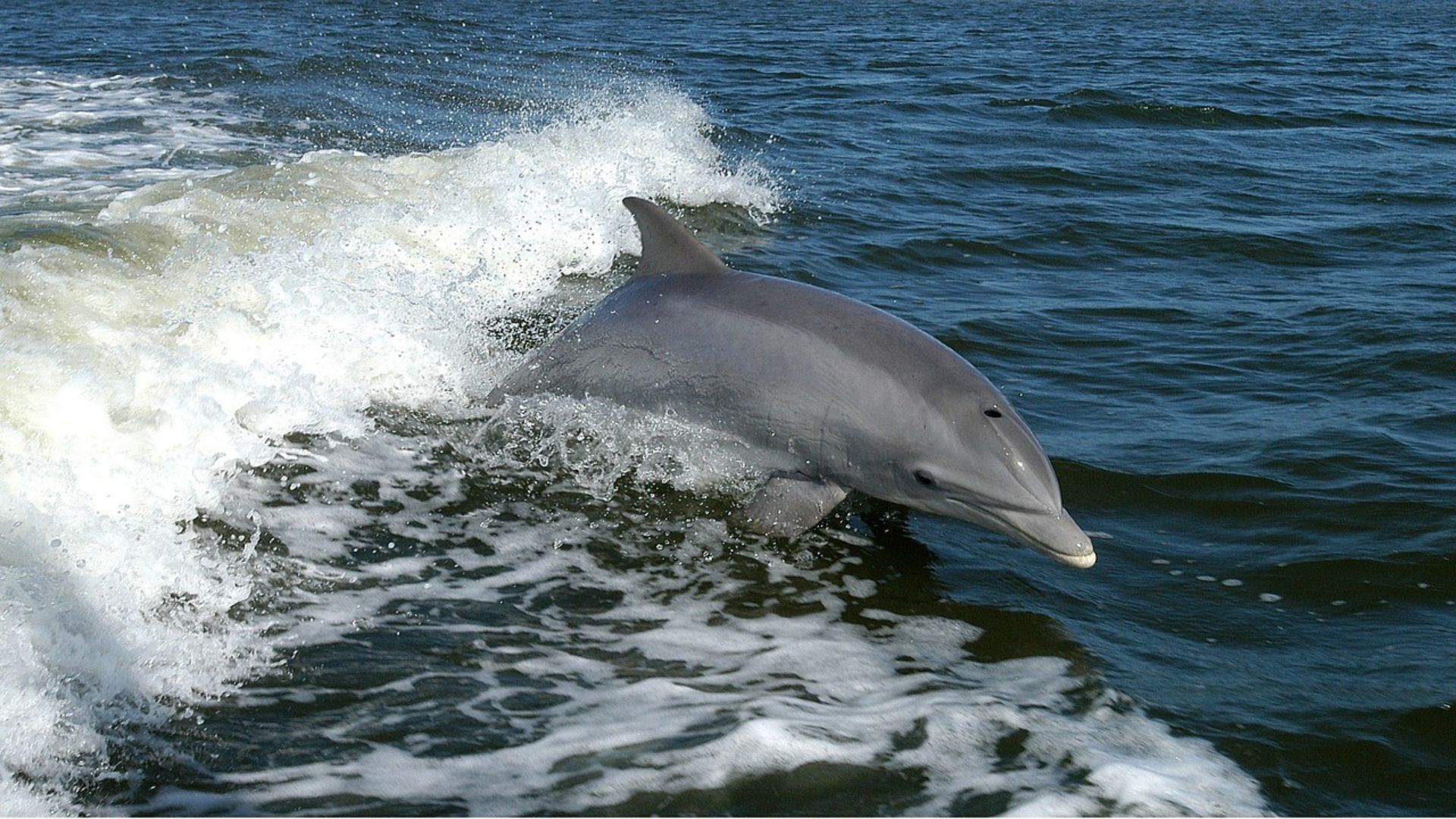
For decades, scientists have ranked bottlenose dolphins (Tursiops truncatus) among the planet’s most intelligent animals. Their cognitive feats rival great apes and even challenge long-held beliefs about what only humans can do. From mirror self-recognition to cultural traditions that span generations, these marine mammals continue to redefine “smart.”
A Brain Built for Brilliance
The bottlenose dolphin brain weighs about 1,500–1,700 g (3.3–3.7 lb)—larger than a human brain in absolute terms. More telling is the encephalization quotient (EQ), a measure of brain size relative to body size. Dolphins score 5.6, second only to humans (7.4–7.8) and far above chimpanzees (2.5).
“The dolphin neocortex is highly convoluted and packed with spindle cells—neurons linked to empathy, social awareness, and rapid decision-making,” explains Dr. Lori Marino, neuroscientist and former senior scientist at the Whale Sanctuary Project. “These features mirror the architecture we see in human and great-ape brains.”
Spindle cells, once thought unique to humans, appear in dolphins at densities three times higher than in our own brains, according to a 2022 study published in Anatomical Record.
Proof in the Mirror: Self-Awareness Confirmed
In 2001, researchers at the Dolphin Research Center in Florida marked dolphins with non-toxic paint while they watched in a mirror. The animals twisted and turned to examine the marks—clear evidence of self-recognition.
Only six species on Earth have passed the mirror test: humans, great apes, elephants, magpies, and two cetaceans—bottlenose dolphins and orcas. “Mirror self-recognition requires a sense of ‘I’ separate from the world,” says Dr. Diana Reiss, cognitive psychologist at Hunter College. “Dolphins possess it unequivocally.”
Signature Whistles: Names That Last a Lifetime
Every bottlenose dolphin develops a unique whistle within its first year. Others use this “signature whistle” the way we use names, even when the individual is absent.
A landmark 2013 University of St Andrews study found wild dolphins respond only to their own whistle, ignoring copies of others’. Remarkably, mothers teach calves their whistle, and separated pod members reunite decades later using these acoustic IDs.
“Signature whistles are the closest thing in nature to human proper names,” notes Dr. Vincent Janik, director of the Scottish Oceans Institute.
Cooperation, Culture, and Compassion
Dolphin societies are fission-fusion: fluid groups that split and merge like human friend circles. Alliances form, dissolve, and reform—sometimes across generations. High level of coordination is most visible in their cooperative hunting strategies, where roles are divided with remarkable precision.
In Shark Bay, Western Australia, certain matrilines teach calves to hunt using marine sponges as face masks. This “sponging” behavior, documented by the Shark Bay Dolphin Research Project, is passed culturally—never genetically—from mother to daughter. Only 57 individuals in a population of thousands use this tool, proof of cultural transmission.
Dolphins also display altruism. Rescuers worldwide report dolphins supporting injured companions at the surface to breathe. In 2018, a pod off New Zealand formed a protective raft around a swimmer having a heart attack until help arrived.
Problem-Solving and Metacognition
At the Dolphin Research Center, dolphins learn to press a “yes” or “no” paddle when uncertain about a task—evidence of metacognition (knowing what you know).
“They can choose to ‘opt out’ when a problem is too hard and still receive a smaller reward,” explains Dr. Reiss. “That level of self-monitoring is extraordinarily rare in the animal kingdom.”
Quick Facts Table
| Trait | Measurement | Notes |
| Brain weight | 1,500–1,700 g (3.3–3.7 lb) | Larger than human brain |
| Encephalization Quotient | 5.6 | 2nd highest after humans |
| Body length | 2–4 m (6.6–13 ft) | Varies by region |
| Weight | 150–650 kg (330–1,430 lb) | Coastal animals usually smaller |
| Lifespan (wild) | 40–60 years | Females often live longer |
| Signature whistle frequency | 3–40 kHz | Unique to each individual |
| Mirror test passed | Yes (2001, Reiss & Marino) | Only 6 species worldwide |
Intelligence Comparison Table
| Species | EQ | Mirror Test | Tool Use | Cultural Traditions | Symbolic Understanding |
| Human | 7.4–7.8 | Yes | Yes | Yes | Yes |
| Bottlenose Dolphin | 5.6 | Yes | Yes | Yes | Yes |
| Chimpanzee | 2.5 | Yes | Yes | Yes | Limited |
| Elephant | 1.9 | Yes | Yes | Yes | No |
| New Caledonian Crow | ~2.5 | No | Yes | Yes | No |
For a quick snapshot, explore these astonishing bottlenose dolphin facts.
Why Dolphin Intelligence Matters
Dolphins are apex indicators of ocean health. Their complex societies require clean, fish-rich waters and low noise pollution. When dolphins thrive, ecosystems balance.
Yet they face mounting threats: bycatch, plastic ingestion, sonar disorientation, and chemical runoff. The U.S. National Oceanic and Atmospheric Administration (NOAA) estimates over 300,000 cetaceans die annually in fishing gear alone.
Protecting dolphin intelligence means protecting the oceans that nurture it.
In the end, bottlenose dolphins remind us that minds evolve wherever survival demands connection, creativity, and care. They mourn, teach, invent, and forgive. They are not “almost human”—they are brilliantly dolphin, and the sea is wiser because of them.
References & Trusted Sources
- Marino, L. (2022). “Spindle neurons in cetaceans.” Anatomical Record.
- Reiss, D., & Marino, L. (2001). “Mirror self-recognition in the bottlenose dolphin.” PNAS.
- Janik, V. M. (2013). “Signature whistle use in dolphins.” Current Biology.
- Shark Bay Dolphin Research Project (2024). Cultural tool use reports.
- NOAA Fisheries (2025). Cetacean bycatch statistics.
- King, S. L., et al. (2021). “Cooperation with humans in bottlenose dolphins.” Proceedings of the Royal Society B.
FAQs
Do bottlenose dolphins really have names?
Yes. Each dolphin develops a unique signature whistle used by others to address it directly—functionally equivalent to a name.
How long can dolphins remember each other?
Studies show recognition after 20+ years of separation, based on signature whistles.
Can dolphins understand human pointing gestures?
Yes. They reliably follow human pointing and even pointing with crossed arms, demonstrating abstract comprehension.
Are dolphin emotions scientifically proven?
Brain imaging and behavioral studies reveal empathy, grief, and joy—supported by high spindle-cell density linked to social emotions.
Why do some dolphins wear sponges on their noses?
In Shark Bay, Australia, certain females use basket sponges as tools to protect their rostrum while foraging on the seafloor—a culturally transmitted skill.