Introduction
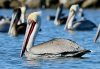
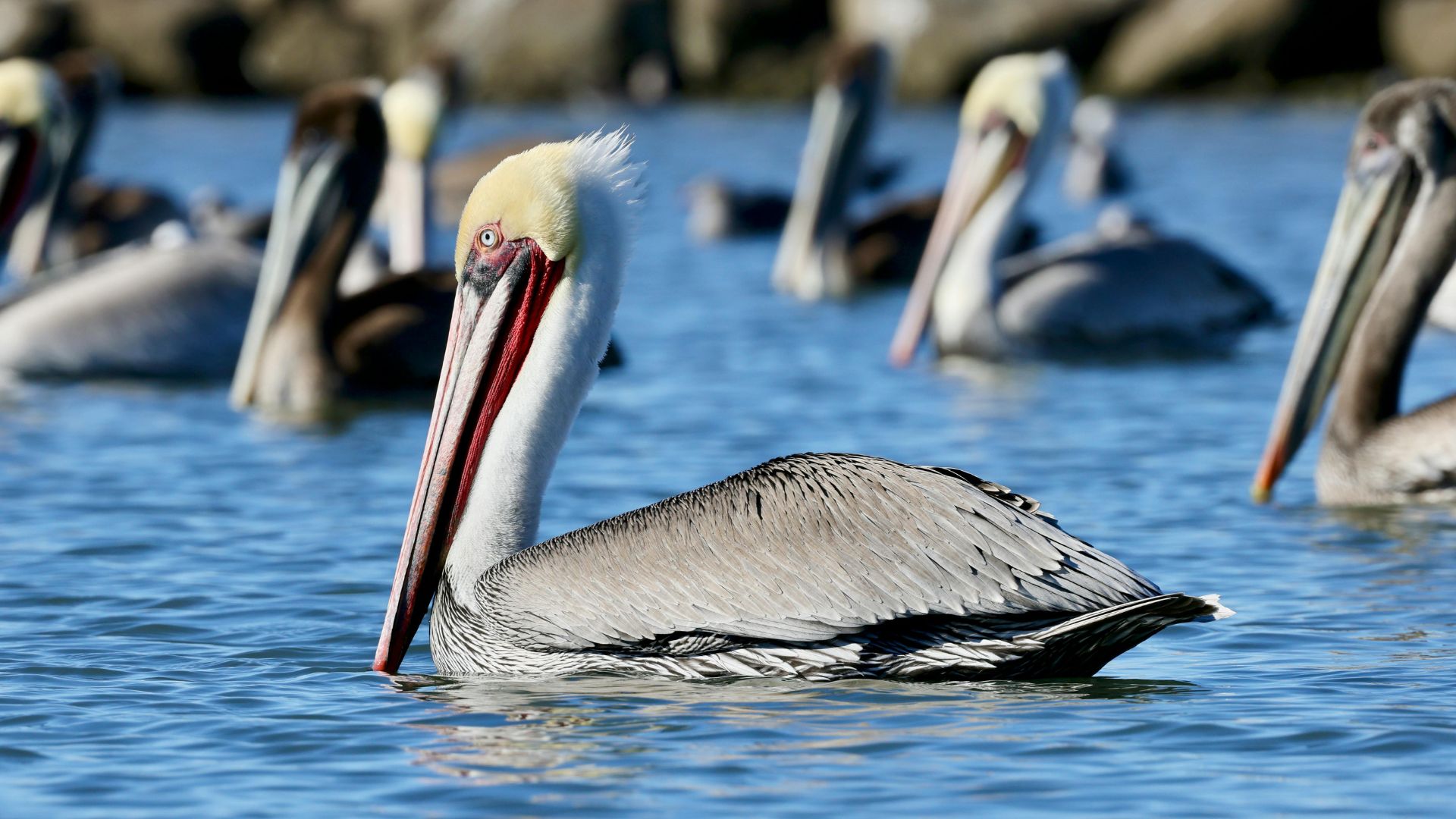
The Brown Pelican (Pelecanus occidentalis) is frequently observed floating calmly on the ocean surface between feeding flights. At first glance, this behavior may appear to be simple resting, but it reflects a combination of anatomical adaptations and energy-saving strategies that allow the bird to conserve metabolic energy. For a large seabird that weighs roughly 3–4.5 kilograms (7–10 pounds) and performs repeated high-impact plunge dives, minimizing unnecessary energy expenditure is essential.
Resting on the water allows Brown Pelicans to exploit natural buoyancy, aerodynamic flight efficiency, and behavioral strategies that reduce the energetic cost of foraging. Their bodies contain air sacs connected to the respiratory system and lightweight pneumatic bones that increase flotation, allowing them to remain stable on the water surface with minimal effort. At the same time, this floating behavior provides a strategic position for recovery after dives, thermoregulation, and scanning for fish near the surface.
Understanding why pelicans rest on the water reveals how biomechanics, buoyancy physics, and energy economics shape the daily behavior of large coastal seabirds.
1. Air Sacs and Lightweight Bones Create Natural Buoyancy
Brown Pelicans are anatomically adapted to float easily on water due to a combination of subcutaneous air sacs, pneumatic bones, and water-repellent plumage. Like many birds, pelicans possess hollow bones connected to the respiratory system, but in pelicans these structures are complemented by a network of air sacs located beneath the skin around the neck, chest, and abdomen.
These air-filled structures reduce overall body density and function as a natural flotation system. For a bird weighing 3–4.5 kg, remaining afloat without buoyancy assistance would require frequent paddling with the webbed feet. Instead, the air sacs increase displacement relative to body mass, allowing the pelican to float high on the water surface in accordance with Archimedes’ principle of buoyancy.
In addition to internal air spaces, the pelican’s dense feathers trap microscopic air layers between barbs and barbules, further increasing flotation while maintaining waterproofing. This combination of skeletal pneumaticity, dermal air sacs, and plumage insulation allows pelicans to remain afloat for extended periods with almost no muscular effort.
The result is an energy-efficient resting posture that supports long foraging sessions without requiring constant flight.
2. Buoyancy Helps Pelicans Recover After High-Impact Dives
Resting on water also plays a critical role in post-dive recovery, an important component of the pelican’s feeding strategy. Brown Pelicans hunt by plunge-diving from heights of roughly 9–20 meters (30–65 feet), striking the water at speeds approaching 60 km/h (about 40 mph) to capture fish near the surface.
During these dives, the pelican’s air sacs act as biological shock absorbers, cushioning the impact of water entry. When the bird hits the surface, the air sacs compress slightly and distribute pressure across the chest and abdomen, protecting internal organs from the sudden deceleration.
Immediately after the dive, these same air-filled structures restore buoyancy and help the pelican rapidly return to the surface. Observers often see pelicans “pop” back up within seconds after submerging.
Once afloat, the bird drains excess water from its expandable gular pouch, which may temporarily hold several liters of water during a successful strike, before swallowing the captured fish. Remaining on the water allows the pelican to restore breathing rhythm and recover from the muscular effort required for the dive.
This buoyant recovery phase enables pelicans to repeat multiple dives while minimizing unnecessary energy expenditure.
3. Floating Conserves Energy Compared with Continuous Flight
For a large seabird, powered flight is metabolically expensive because the bird must constantly generate lift through wing flapping. By resting directly on the water surface, Brown Pelicans avoid these continuous energetic costs.
Before landing on the water, pelicans often travel using low-altitude gliding techniques, including flight in ground effect—an aerodynamic phenomenon that occurs when a bird flies within approximately one wingspan of the water surface. In this zone, compressed airflow beneath the wings reduces induced drag and can lower flight energy costs by roughly 15–25 percent, according to aerodynamic studies of seabird flight.
Once the pelican settles on the water, however, lift generation is no longer required. The bird’s buoyancy supports its entire body weight, allowing it to remain stationary with minimal muscular activity.
Many seabirds alternate between short bursts of flight and extended floating periods, a strategy known as activity budgeting in behavioral ecology. This pattern allows pelicans to remain within productive feeding areas while conserving metabolic energy.
Floating on the water therefore serves as an efficient pause between active hunting phases.
4. Surface Resting Provides an Effective Foraging Position
Floating on the water is not purely a resting behavior; it also places pelicans in an advantageous position for detecting prey. Brown Pelicans feed primarily on small schooling fish, including anchovies, sardines, and menhaden, which often aggregate near the ocean surface.
When resting on the water, pelicans can continuously scan the surrounding area for visual signals indicating fish activity. These signals include surface ripples created by moving schools, flashes of reflected light from fish scales, or disturbances caused by predators pushing fish upward.
Because the bird is already positioned at the water surface, it can rapidly respond if prey appears nearby. Pelicans may launch directly into flight or make short surface dives without needing to climb to higher altitude first.
This behavior reduces the energetic cost of repeated takeoffs and allows pelicans to remain within active feeding zones for longer periods.
Floating therefore functions as both a resting phase and a low-energy observation platform, increasing foraging efficiency in coastal ecosystems.
5. Floating Helps Regulate Body Temperature and Maintain Safety
Resting on the water also contributes to thermoregulation and safety, two additional benefits of this behavior.
Large seabirds generate significant body heat during flight and diving activity. Brown Pelicans dissipate excess heat through gular fluttering, a cooling mechanism in which the thin skin of the throat pouch vibrates rapidly to increase evaporative heat loss. Floating on seawater enhances cooling because the lower body and feet remain in contact with water, which absorbs heat more efficiently than air.
In addition, resting on open water can reduce predation risk compared with remaining on shorelines where terrestrial predators may be present. Pelicans frequently float in loose groups or rafts, which improves collective vigilance and allows birds to detect potential threats more easily.
The combination of buoyancy, passive cooling from surrounding water, and group awareness makes the ocean surface a stable and relatively secure resting environment.
🔎 Key Takeaways
• Brown Pelicans rest on water primarily because air sacs, hollow bones, and buoyant plumage allow them to float effortlessly.
• These air sacs also function as shock absorbers during plunge dives, helping birds resurface quickly after striking the water.
• Floating significantly reduces metabolic energy expenditure compared with sustained powered flight.
• The water surface acts as a low-energy observation platform, allowing pelicans to watch for schools of fish.
• Resting on water aids thermoregulation through gular fluttering and conductive cooling from seawater contact.
• Floating in groups improves vigilance and safety while birds remain within productive feeding areas.