Introduction
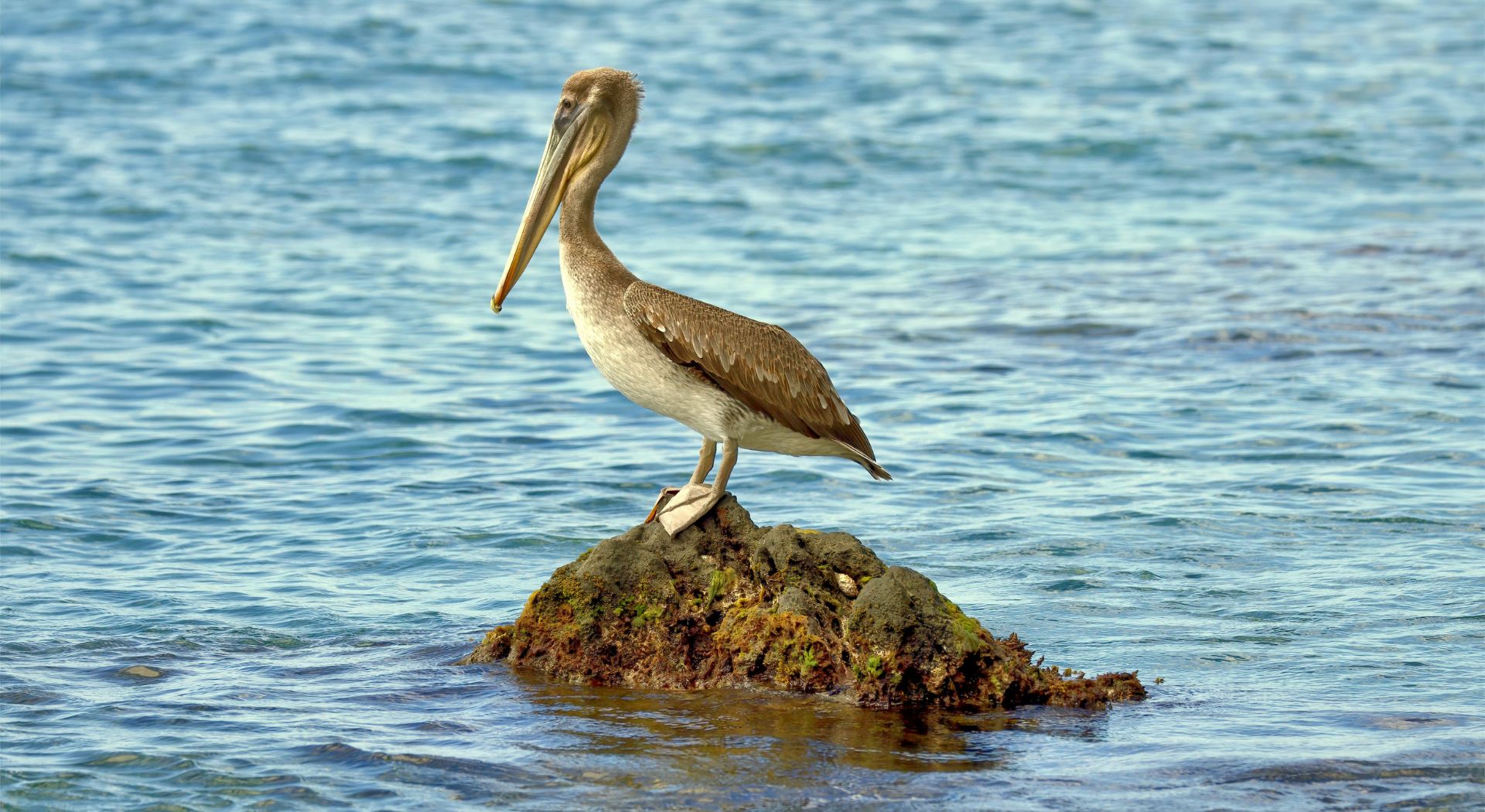
The Brown Pelican (Pelecanus occidentalis) undergoes a complex developmental process that transforms a fragile hatchling into one of the most specialized aerial fish hunters among seabirds. This life cycle involves distinct stages of growth, behavioral learning, and physiological development that typically span three to five years before full adulthood. Each stage—from egg incubation to juvenile learning and adult diving proficiency—plays a critical role in survival and reproductive success.
Research summarized by institutions such as the U.S. Fish and Wildlife Service (USFWS), the Smithsonian National Zoo & Conservation Biology Institute, and the Cornell Lab of Ornithology’s Birds of the World database shows that Brown Pelican development is closely tied to colonial breeding behavior and intensive parental care. Early stages require continuous protection and feeding, while later stages demand that juveniles master complex hunting techniques such as plunge-diving. Because only about 30% of young pelicans survive their first year, understanding the developmental sequence helps scientists evaluate breeding success, juvenile survival, and population stability in coastal ecosystems where pelicans function as major predators of forage fish.
1. Egg Development and Incubation Begin the Life Cycle
The Brown Pelican life cycle begins when breeding pairs establish nests in dense colonies on coastal islands, mangrove trees, shrubs, or occasionally on the ground in dune vegetation. Females typically lay two to three chalky white eggs during each breeding attempt, although clutch size may occasionally reach four eggs in favorable conditions.
Both parents participate in incubation, which lasts approximately 28–30 days. Unlike most birds that warm eggs with a brood patch on the abdomen, pelicans use a distinctive incubation strategy: they place their large webbed feet directly over the eggs, transferring heat through the highly vascularized skin of the feet. This method allows efficient temperature regulation while keeping the eggs stable within the nest.
Hatching occurs asynchronously and may take up to 31 hours from the first crack in the shell to full emergence. Because eggs hatch at slightly different times, the first chick often gains a size advantage over later hatchlings, which can influence early survival dynamics within the brood.
2. Newly Hatched Chicks Are Highly Vulnerable
Brown Pelican chicks hatch in an extremely undeveloped state. They are naked, pink, and blind, weighing only a small fraction of adult body mass. During the first days of life, chicks rely entirely on parental care for warmth, protection, and food.
Within 4–14 days, the chicks’ skin darkens and they develop a thick layer of gray or white down feathers that improves insulation. Parents feed the young through regurgitation, initially depositing partially digested fish onto the nest surface. As the chicks grow stronger, they begin reaching directly into the parent’s bill to obtain food.
Early survival is often limited by intense sibling competition. In broods where multiple chicks hatch, the oldest chick frequently dominates feeding interactions and may outcompete weaker siblings. Combined with environmental pressures such as food shortages or weather exposure, these factors contribute to high early mortality. Banding studies summarized by the Cornell Lab of Ornithology indicate that only about 30% of Brown Pelicans survive their first year.
3. Young Pelicans Form Crèches for Protection
As chicks continue growing, they become increasingly mobile within the colony. At roughly three to four weeks of age, many young pelicans leave their nests and gather in groups known as crèches, sometimes called “pods.”
These aggregations may contain dozens of chicks from multiple nests. Grouping behavior provides several advantages: it reduces individual predation risk through the dilution effect, improves thermal regulation through close contact, and allows parents to spend longer periods foraging at sea.
Despite the mixing of chicks within a crèche, adult pelicans are able to recognize and feed their own offspring, likely using vocal cues and location memory within the colony. This behavior is common among colonial seabirds and represents an adaptive strategy that balances chick protection with the energetic demands of long foraging trips required to supply growing young.
4. Fledging Marks the Transition to Independence
Young Brown Pelicans reach the fledging stage at approximately 10–12 weeks of age, when their wing feathers and flight muscles have developed enough to support flight. At this point juveniles begin leaving the nest area and exploring nearby shorelines.
Before achieving stable flight, young birds spend considerable time practicing wing movements, swimming, and short glides between nearby perches. Early flights are often brief and unsteady, but repeated attempts gradually strengthen flight muscles and coordination.
Parents may still provide occasional food during this transition, but feeding decreases as the juvenile becomes more mobile. Fledging represents a major developmental milestone because the young pelican must begin navigating coastal environments independently and locating suitable feeding areas.
5. Juvenile Pelicans Must Learn Complex Hunting Skills
Following fledging, juvenile pelicans enter a learning phase during which they must master the complex mechanics of plunge-diving. Young birds initially lack the timing and spatial precision required for successful hunting and frequently miss prey when attempting dives.
Juveniles typically practice diving in shallow coastal waters, where the reduced depth lowers the risk of injury during early attempts. Dives at this stage are often poorly angled or initiated from lower heights than those used by adults.
Repeated practice gradually improves coordination between visual targeting, wing folding, and body orientation during entry into the water. Because successful prey capture depends heavily on accurate dive timing, inexperienced juveniles often struggle to obtain sufficient food. This learning period contributes to the relatively low survival rate observed during the first year of life.
6. Plumage and Physical Changes Occur Over Several Years
Brown Pelicans undergo multiple plumage transitions as they mature from juveniles into adults. Newly fledged birds typically display brownish-gray upperparts and pale underparts, lacking the distinctive coloration of mature birds.
Over the next three to five years, pelicans experience several molts that gradually replace juvenile feathers with adult plumage. During this process, the head becomes progressively lighter, eventually developing the white or pale yellow crown characteristic of adults. Subadult birds also develop stronger wing muscles and improved flight control as they continue refining their foraging techniques.
This extended maturation period reflects the complexity of the pelican’s specialized hunting strategy. Developing both the physical strength and behavioral precision needed for repeated plunge-dives requires several years of growth and experience.
7. Adults Become Highly Efficient Plunge Divers
Brown Pelicans reach full sexual maturity at approximately three to five years of age. At this stage they possess complete adult plumage and have fully mastered the plunge-diving technique that defines the species.
Adult pelicans typically dive from heights of 15–20 meters (50–65 feet) above the water surface. As they enter the water, the bird rotates its body slightly—often toward the left—while subcutaneous air sacs beneath the skin cushion the impact and help the bird resurface quickly.
During the dive, the pelican’s expandable gular pouch captures fish along with water. The bird then drains the water from the pouch before swallowing the prey whole. Field observations show that experienced adult pelicans can achieve capture success rates exceeding 70–80%, making them highly efficient predators of schooling fish.
At this stage, the once-helpless hatchling has become a skilled aerial hunter fully adapted to life in coastal marine ecosystems.
Key Takeaways
• The Brown Pelican life cycle spans three to five years from egg to fully mature adult.
• Eggs incubate for 28–30 days, with parents warming them using their webbed feet rather than a typical brood patch.
• Newly hatched chicks depend entirely on parental care and are fed regurgitated fish during the early nestling stage.
• Around 3–4 weeks, chicks form protective groups called crèches, allowing parents to forage more efficiently.
• Young pelicans fledge at 10–12 weeks, marking the beginning of independent movement and learning to hunt.
• Juveniles gradually refine plunge-diving skills until adulthood, when experienced birds achieve high hunting success rates.