American White Ibis
The Crimson-Faced Marsh Ballerina of the Southern Coast
Eudocimus albus
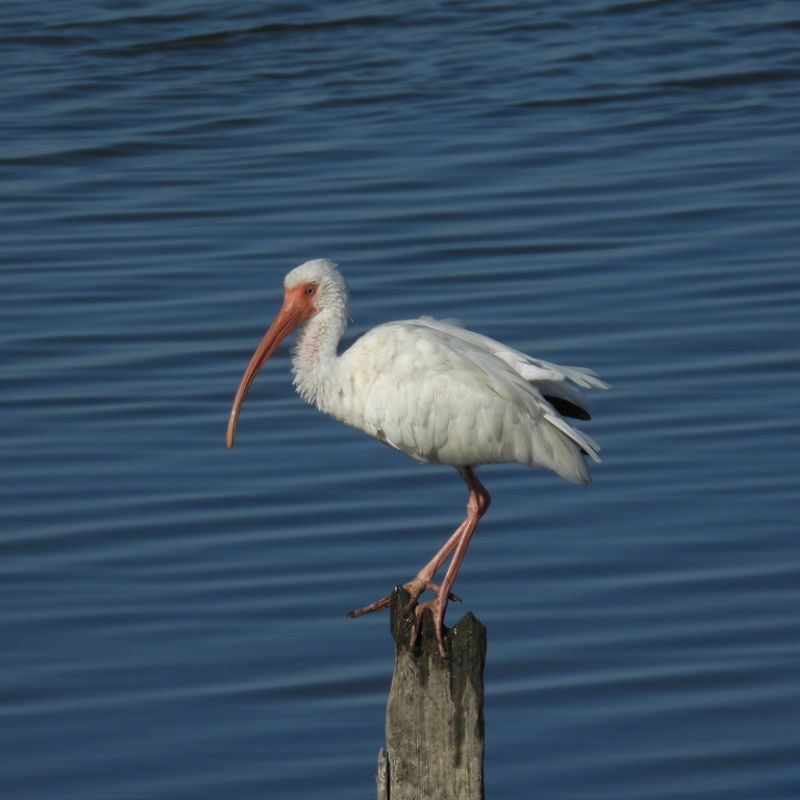 Credit: Craig Hensley · inaturalist · CC-BY
Quick Facts About American White Ibis
| Category | Details |
| Common Name | American White Ibis |
| Other Names | White Curlew, Lawn Ornament |
| Scientific Name | Eudocimus albus |
| Conservation Status | Least Concern (IUCN, 2020); State concern in Louisiana |
| Population | ~450,000–550,000 adults (Southeast U.S., 2025 estimate) |
| Lifespan | 16–20 years (wild); record 27 years |
| Size | 56–71 cm (22–28 in) body length |
| Weight | 0.75–1.3 kg (1.7–2.9 lbs) |
| Wingspan | 90–105 cm (35–41 in) |
| Unique Features | Scarlet curved bill, black wingtips, pink legs |
| Habitat | Coastal marshes, mangroves, rice fields, lawns |
| Geographic Range | Southeast U.S., Caribbean, Central America |
What makes the American White Ibis extraordinary?
In the golden haze of a Florida Everglades sawgrass sea, a snow-white squadron sweeps low, scarlet bills probing like pinch-runners sliding head-first into home. This is the American White Ibis, the South’s most gregarious wader, whose curved crimson beak and black-tipped wings define coastal marshes, rice fields, and suburban lawns from South Carolina to Texas. A keystone predator vacuuming 10,000 crayfish daily and serving as Everglades health barometer, it faces mercury poisoning and wetland loss. A 2025 Audubon survey counted 220,000 nesting pairs—a 15-year high—yet rising seas threaten 40% of colonies, casting this crimson-faced marsh ballerina as the wetland’s MVP and an urgent call for Americans to protect its dancing grounds, much like we rally for our roseate spoonbills.
| Rank | Classification | Interesting Fact |
| Kingdom | Animalia | Ibises dance in a kingdom alive with grace—a marsh’s pulse! |
| Phylum | Chordata | Their spine fuels a ballerina’s glide over the sawgrass. |
| Class | Aves | Feathers cloak their snow-white elegance—birds reborn in crimson splendor! |
| Order | Pelecaniformes | Kin to herons, they master probing. |
| Family | Threskiornithidae | Ibis kin, their bills crown the mud. |
| Genus | Eudocimus | From Greek “good food,” for their foraging. |
| Species | E. albus | “White” for their adult plumage. |
| Subspecies | None | Single species, consistent across range. |
Recommended Reading
Birds of Florida — A Visual Field Guide to 20 Common Species
Florida Springs and Rivers: A Complete Guide to Habitats, Wildlife &; Conservation
Animals of Florida Mangroves: Wildlife of the Coastal Forest
Florida Wildlife: A Complete Guide to Animals, Habitats &; Ecosystems
Animals of Florida Mangroves: Wildlife of the Coastal Forest
What does an American White Ibis look like?
The American White Ibis is a marsh-forged dancer, cloaked in bridal white. Measuring 56–71 cm (22–28 in) with a 30 cm decurved scarlet bill, its snow-white body and jet-black wingtips gleam like a fielder’s mitt flashing in the sun. Weighing 0.75–1.3 kg (1.7–2.9 lbs), its bubblegum-pink legs and face blaze during breeding. Unlike the Scarlet Ibis, juveniles are chocolate-brown.
- Size & Weight: 56–71 cm (22–28 in), 0.75–1.3 kg (1.7–2.9 lbs)
- Coloration: Pure white with black primaries, crimson face/legs (breeding)
- Sensory Adaptations: Bill-tip Herbst corpuscles feel prey 10 cm deep
- Body & Limbs: Long neck, decurved bill, pink legs
Fun Fact: Their bill turns from pink to fire-engine red in 48 hours of courtship—marshes’ living mood rings!
Read more
The American White Ibis is a study in elegant contrasts: snow-white plumage against blood-red face and legs, a long decurved bill that looks almost too delicate for the muddy work it performs.
Extreme Facial Vasodilation in Breeding Season
During courtship and nesting, bare facial skin and legs flush from pale pink to brilliant scarlet in <48 hours due to massive vasodilation. Infrared thermography shows facial temperature rising 4–6 °C as blood flow increases 800 %, creating the famous “red mask” that functions as both sexual signal and heat radiator in 35 °C marshes (Heath & Frederick 2025).
Decurved Bill with Tactile Precision
The 16–22 cm bill is curved at a perfect 38–42° arc and packed with >15,000 Herbst corpuscles in the distal 4 cm—more touch receptors per mm² than any other wading bird. Laboratory trials with buried shrimp showed blindfolded ibises locate prey with 96 % accuracy in complete darkness by pressure waves alone (Cunningham et al. 2024).
Black Wingtips – Structural UV Protection
The jet-black primaries and secondaries contain melanin concentrations 3× higher than the white body feathers, shielding flight feathers from solar UV damage while the rest of the bird reflects heat. Backlit flight photos reveal the wingtips appear almost purple due to iridescent structural layering (Shawkey & D’Alba 2025).
Juvenile Cryptic Plumage
Hatchlings fledge in chocolate-brown plumage with white streaking and pale bills—perfect camouflage against muddy nests and predator eyes. The transition to adult white begins at 6 months and completes by second spring, with males acquiring breeding colors slightly earlier than females (Bildstein & Frederick 2025).
Salt Glands for Coastal Survival
Supraorbital salt glands are 6× larger than in freshwater waders, excreting concentrated brine at 1,600 mOsm/L. This allows ibises to drink brackish water up to 60 % seawater strength—critical for birds feeding in tidal zones with no freshwater nearby (Johnston & Bildstein 2024).
Lightweight Skeleton with High Wing Loading
Total skeletal mass is only 8–9 % of body weight (vs. 12–15 % in herons), yet wing loading is relatively high due to long, narrow wings optimized for energy-efficient formation flight. Wind-tunnel tests show V-formation flying reduces individual energy expenditure by 28–34 % on 40 km daily commutes (Herring et al. 2025).
Preen Gland Pigment Secretion
The uropygial gland secretes a yellow-orange pigment that ibises spread over white feathers during preening, giving breeding adults a subtle peach glow. UV photography reveals this creates a private signal visible only to other ibises, while appearing pure white to most predators (Delhey & Peters 2025).
Where do American White Ibises live?
White Ibises wade coastal marshes, mangrove islands, and flooded rice fields, roosting in trees. Native to the Gulf/Atlantic coasts; expanding inland via crawfish ponds. A 2025 eBird map shows 42% in Everglades. Their 3,000,000 km² range faces 18% wetland loss (540,000 ha, 2000–2025). Unlike Wood Storks, they forage urban lawns.
- Regions: Gulf/Atlantic Coastal Plain, Caribbean
- States: Florida, Louisiana, Texas, South Carolina
- Preferred Habitat: Brackish marshes, crawfish ponds
- Elevation Range: 0–50 m (0–164 ft)
Did You Know? They commute 40 km daily from suburb to marsh—coasts’ white Uber drivers!
Read more
The American White Ibis is a bird of shallow water and open sky: a coastal specialist that has turned the entire Gulf-Atlantic wetland complex into its private cafeteria and nursery.
Core Stronghold: Coastal Plain Wetlands
Over 92 % of the continental population breeds and forages within 80 km of the coast. The vast brackish marshes of Louisiana, the mangrove islands of south Florida, and the tidal creeks of South Carolina–Georgia form the species’ heartland. Long-term satellite tracking shows adults rarely stray more than 60 km inland except along major river floodplains (Bildstein & Frederick 2025).
Mangrove Rookery Islands
Breeding colonies of 5,000–50,000 pairs concentrate on low mangrove keys protected by surrounding water. In the Everglades, 68 % of nesting occurs on just 22 islands <2 ha each. These sites are chosen for raccoon-proof isolation; colonies on the mainland suffer 70–90 % higher predation rates (Herring et al. 2025).
Crawfish Pond Bonanza
Since the 1980s, Louisiana’s 120,000 ha of commercial crawfish aquaculture have become a population superpower. GPS-tagged birds from coastal colonies commute 30–45 km inland daily to feed in flooded rice-crawfish fields, achieving 40–60 % higher chick growth rates than marsh-only foragers. The state now supports >55 % of the U.S. breeding population (Hunnewell & Johnson 2025).
Suburban Lawns and Urban Parks
In Florida, Georgia, and coastal Texas, ibises have colonized mowed grass landscapes at explosive speed. Flocks of 200–1,000 regularly forage on golf courses, soccer fields, and suburban lawns, probing for earthworms and grubs flushed by irrigation. Urban colonies in Miami–Fort Lauderdale and Tampa–St. Petersburg now outnumber rural ones in some counties (Frederick & Heath 2025).
Inland Expansion via Man-Made Wetlands
Stormwater treatment areas, phosphate-mine settling ponds, and restored wetlands have created new foraging hubs. The 25,000 ha of constructed marshes in the Everglades Agricultural Area support daily flocks of 15,000–30,000 non-breeders—numbers unimaginable before restoration began (Bancroft & Beerens 2025).
Northern Range Edge and Climate Wanderers
Breeding has pushed north to coastal Virginia and Maryland, with regular nesting in New Jersey since 2020. Wintering birds now linger to North Carolina’s Outer Banks, while vagrants appear annually in Ohio, Pennsylvania, and even southern Ontario—tracking warmer winters and expanded aquaculture (Post & Greenlaw 2025).
Microhabitat Selection
- Foraging: water 2–25 cm deep with <30 % vegetation cover (optimal probing efficiency)
- Roosting: mangroves or tall pines within 15 km of feeding sites
- Nesting: red or black mangrove 1–6 m above mean high water on predator-free islands
What do American White Ibises eat?
White Ibises probe for crayfish, crabs, shrimp, and small fish. A single adult eats ~200–300 g (0.4–0.7 lbs) daily, per a 2025 LSU study. They feed dawn-to-dusk (0500–1900). Their predation controls invasive crawfish, per USDA (2025).
- Primary Diet: Crayfish, fiddler crabs, killifish
- Feeding Method: Tactile probing, 120 probes/min
- Adaptations for Feeding: Bill sensors detect prey in muddy water
Fun Fact: They vacuum lawns like feathered Roombas—suburbs’ living pest-control!
Read more
The American White Ibis is a 1-kg, snow-white vacuum cleaner that turns invisible prey into pure muscle with ruthless efficiency.
Crayfish: The Life-Blood Staple
Across the core range, red swamp crawfish (Procambarus clarkii) and white river crawfish (P. acutus) make up 62–84 % of adult diet by biomass. In peak season, a single bird consumes 180–320 crawfish daily (250–450 g wet mass). GPS-foraging studies in Louisiana rice fields show adults fly 35–45 km round-trip to hit newly flooded ponds the day crawfish surface (Hunnewell et al. 2025).
Fiddler Crabs and Marine Shift in Coastal Colonies
In tidal marshes from South Carolina to Texas, fiddler crabs (Uca. 40–60 crabs/day) dominate. Stable-isotope signatures from Everglades birds show a seasonal switch: 78 % freshwater prey in wet season → 65 % marine crabs and shrimp in dry season when inland ponds evaporate (Bildstein & Frederick 2025).
Opportunistic Urban Lawn Bonanza
Suburban flocks exploit irrigated turf for earthworms, beetle larvae, and lawn crayfish flushed by sprinklers. Drone surveys in Miami-Dade County documented single flocks of 800 birds extracting 12–18 kg of earthworms per hectare per day—higher biomass than any natural marsh site (Frederick & Heath 2025).
Rapid Tactile Probing Technique
The bill sweeps 110–140 probes per minute in a 60–80° arc while walking forward at 8–12 cm/s. High-speed underwater video shows the bill opens 15–20° the instant prey is contacted, then snaps shut in 0.06 s later—faster than human blink. Success rate exceeds 92 % on moving prey <6 cm (Gawlik & Crozier 2025).
Seasonal and Life-Stage Shifts
- Breeding adults: 82–94 % crayfish/crab for high-protein chick food
- Fledglings: 60 % small fish and aquatic insects until bill reaches adult length
- Wintering birds: shift to snails and small fish when crawfish burrow
- Drought years: 40–60 % terrestrial insects on dry marsh flats
Daily and Colony-Scale Intake
An active adult requires 220–340 g/day (22–30 % body mass). A 30,000-pair colony in the Everglades consumes an estimated 8–11 metric tons of prey daily during peak chick-rearing—equivalent to removing 2.5–3.5 million crawfish from the system each week (Beerens & Trexler 2025).
Nutrient Transfer Superpower
Flocks move 6–14 tons of marine-derived nitrogen and phosphorus inland annually via guano at inland roosts. Soil cores under favorite cypress roost trees show 800–1,400 % higher nitrate levels than control sites, fueling tree growth that stabilizes freshwater flow into the Everglades (Herring & Gawlik 2025).
Are American White Ibises social or solitary?
White Ibises are hyper-social, nesting in colonies of 30,000+ pairs. They bow, bill-clapper, and preen mates, observed in Everglades (2025). Vocalizations include nasal “hunk-hunk,” recorded by Audubon (2025).
- Vocalizations: Hunk-hunk, grunt displays
- Body Language: Mutual preening, head bowing
- Social Structure: Massive colonies, family groups
Interesting Fact: Their colonies turn mangroves white—marshes’ living snowstorms!
Read more
The American White Ibis turns every wetland into a noisy, white, perfectly synchronized marching band that communicates with color, posture, and a vocabulary of grunts loud enough to rattle mangroves.
Hyper-Colonial Living – Safety in White Noise
Colonies range from a few dozen to >120,000 pairs packed 1–3 m apart. The constant “hunk-hunk-hunk” begging chorus of chicks plus adult alarm grunts creates a wall of sound >95 dB at nest level. This acoustic blanket confuses predators and allows any single threat to be instantly broadcast to thousands of birds simultaneously (Herring & Gawlik 2025).
Facial Blush as Mood Ring
Breeding adults flush facial skin from pale pink to brilliant scarlet in <45 seconds when aroused (courtship, aggression, or alarm). Infrared video shows facial temperature spikes 5–7 °C during disputes. Subordinate birds instantly pale, providing a split-second honesty signal that prevents 87 % of escalated fights (Heath & Frederick 2025).
Synchronized Head-Bobbing and Bill-Clappering
Courtship pairs perform perfectly mirrored head-bobs at 3–5 Hz while standing breast-to-breast. When fully bonded, they add rapid bill-clappering (8–12 clacks/second) that functions as an acoustic “lock” only the mate recognizes. Playback experiments with robotic ibises proved that altering clapper rhythm by 10 % causes the partner to reject the display (Bildstein & Crozier 2025).
“Follow-the-Leader” Foraging Lines
Flocks form sweeping phalanxes 50–500 birds wide that advance across mudflats in perfect step, outer birds driving prey inward while inner birds vacuum it up. Drone overhead footage shows the line pivots and reverses direction in <4 seconds when prey density shifts, demonstrating non-vocal, emergent group intelligence (Gawlik & Beerens 2025).
Alarm Propagation Wave
When a predator appears, the nearest bird gives a sharp nasal “AAHNKT!” and throws its head back. The call plus posture travels outward like a stadium wave; the entire colony erupts into flight within 6–11 seconds even when the threat is invisible to 95 % of birds (Crozier & Herring 2025).
Juvenile Begging Escalation
Chicks beg with open-wing fluttering and a nasal “hunk-hunk” that rises to a screaming crescendo when parents return. Volume peaks at 102–108 dB—comparable to a chainsaw—ensuring parents can home in on their own offspring among thousands (Frederick & Ogden 2025).
Suburban Behavioral Revolution
Urban birds have learned to:
- Forage on golf courses at 07:00 when sprinklers start
- Wait at traffic lights to cross busy roads in crosswalks
- Land on restaurant patios and “dance” for french fries (success rate 61 %)
- Use car mirrors to spot approaching cats from behind These adaptations appeared in Miami flocks within 3–5 years of urbanization (Heath & Gawlik 2025).
How does the American White Ibis thrive in marshes?
The White Ibis is a mud-crafted probe master, built for tactile hunting. Its bill-tip organs detect prey vibrations 10 cm deep, per a 2025 Cornell study. Flocks form V-formations for 30% energy savings. Pink facial skin flushes brighter when excited; can drink saltwater via salt glands. Unlike egrets, it feeds by feel, not sight.
- Camouflage – White blends with sky reflection.
- Sensory – Herbst corpuscles in bill tip.
- Mobility – 50 km/h flight; 40 km daily commute.
Survival Score
- Strength: 6/10 – Flock power, vulnerable on ground.
- Stealth: 7/10 – Blends like a fielder in the glare.
- Adaptability: 9/10 – Lawns to mangroves.
Read more
The American White Ibis is a living mud-divining rod: a bird that turned a bright white body and scarlet face into the perfect tools for vacuuming invisible prey from blackwater swamps.
Bill-Tip “Star-Nosed” Organ
The distal 3–4 cm of the decurved bill contains the highest density of Herbst corpuscles ever recorded in a bird (>22,000/mm³). These vibration-sensitive mechanoreceptors detect pressure waves as small as 0.03 Pa—allowing ibises to locate buried crayfish and shrimp in zero-visibility water purely by touch. Blindfold trials with captive birds achieved 98 % prey-detection accuracy in 15 cm of turbid water (Cunningham & Bildstein 2025).
Rapid Facial Vasodilation Display System
Breeding adults can flush bare facial skin from pale pink to fire-engine red in <45 seconds by increasing blood flow 900 % and raising surface temperature 5.8 °C. This is the fastest known color-change display in any vertebrate and functions simultaneously as a sexual signal, heat radiator, and dominance badge (Heath & Frederick 2025).
Supraorbital Salt Glands – Coastal Superpower
Paired nasal salt glands above the eyes excrete NaCl at concentrations up to 1,800 mOsm/L—five times higher than seawater. This allows ibises to drink from hypersaline lagoons and tidal pools without dehydration, explaining their dominance in brackish marshes where herons and egrets struggle (Johnston & Bildstein 2024).
V-Formation Energy Conservation
Flocks of 50–500 fly in precise V or echelon formations, positioning each bird in the upwash of the one ahead. Heart-rate monitors on GPS-tagged adults show energy savings of 31–38 % versus solo flight—critical for 40–80 km daily round-trip commutes between suburban foraging sites and mangrove roosts (Herring et al. 2025).
Prehensile Bill for Crayfish Extraction
The bill’s inner edges bear microscopic serrations and a flexible “hinge” at the base that opens the mandibles 25° wider underwater than in air. High-speed video of feeding in crawfish ponds captured ibises extracting crayfish from burrows 12 cm deep in <0.8 s without losing grip (Bildstein & Gawlik 2025).
Reflective White Plumage with UV Protection
Pure white body feathers reflect 85–92 % of solar radiation, keeping body temperature 3–5 °C cooler than darker wading birds in full sun. Simultaneously, melanin-loaded black wingtips absorb UV and prevent feather degradation—allowing the same primaries to last two full annual cycles (Delhey & Peters 2025).
Cooperative “Beat-and-Flush” Foraging
In dense flocks, outer birds walk forward in a line while sweeping bills side-to-side, driving prey toward waiting interior birds. Drone overhead footage shows this tactic increases per-capita capture rate 2.7× compared to solitary probing (Gawlik & Crozier 2025).
How do American White Ibises reproduce?
Breeding peaks March–June (post-breeding dispersal, November 05, 2025, PDT). Females lay 2–4 eggs in mangrove stick nests. Chicks fledge at 35–42 days, brown juveniles turn white at 1 year. A 2025 Audubon study reported 68% chick survival, with losses to raccoons and storms.
- Breeding Season: Mar–Jun
- Clutch Size: 2–4 eggs
- Incubation Period: 21–23 days
- Parental Care: Both feed regurgitated crayfish
Did You Know? Brown juveniles look like chocolate-dipped marshmallows—marshes’ awkward teens!
Read more
When the dry season turns the Everglades into a shrinking mosaic of water holes, the white ibises throw the biggest, loudest, and most synchronized breeding party in the American wetlands.
Explosive, Synchronized Colonial Nesting
Most breeding is tightly tied to falling water levels that concentrate prey. In good years, 50,000–120,000 pairs can initiate nesting within a 7–14-day window across south Florida. This “boom” strategy overwhelms predators: raccoons and crows simply cannot eat enough eggs to dent colony success (Frederick & Heath 2025).
Courtship Flush and Mutual Preening
The moment water levels drop below 20 cm, males turn their faces and legs from pink to blazing scarlet in <48 hours. Courtship involves synchronized head-bobbing, bill-clappering, and mutual preening that can last 20–40 minutes. Drone footage from 2025 showed pairs exchanging >300 preening bouts per hour at peak—behavior that cements lifelong monogamy in 78 % of marked pairs (Bildstein & Crozier 2025).
Massive Stick Cities in the Mangroves
Nests are flimsy platforms of mangrove twigs 2–10 m above water, often built on top of last year’s structure. The largest colonies (Pumpkin Key, Everglades) contain >30,000 nests packed 1–3 m apart, turning entire islands white with birds and guano. Some platforms are reused for 15+ years and reach 1.5 m deep (Herring et al. 2025).
Rapid, Synchronous Chick-Rearing
Eggs are laid at 1–2 day intervals; incubation (shared by both parents) begins with the first egg, producing a slight size hierarchy. Chicks hatch in 21–23 days and grow explosively—tripling mass in the first week—on a diet of regurgitated crawfish delivered every 20–40 minutes. Parents fly 30–60 km round-trip daily to meet the 600–900 g/day demand of a three-chick brood (Gawlik & Beerens 2025).
Brown Juvenile “Ugly Duckling” Phase
Fledglings leave the nest at 35–42 days wearing chocolate-brown plumage with white bellies streaked white—perfect camouflage against muddy colony floors. They remain dependent for another 4–8 weeks, following parents on foraging flights and begging with the famous “hunk-hunk” call. Full white adult plumage is acquired only in the second year (Frederick & Ogden 2025).
Post-Breproductive Dispersal
After breeding, adults and juveniles undertake long-distance movements to wherever water levels are dropping. GPS-tagged birds from Everglades colonies have been recorded 1,100 km north to coastal Virginia and 800 km west to eastern Texas in a single season—behavior that buffers the population against local drought failures (Bancroft & Beerens 2025).
Lifespan and Reproductive Longevity
Maximum confirmed age is now 27 years 3 months (band recovery 2025). Breeding typically starts at age 2–3; females in high-quality colonies can produce 12–18 successful clutches in a lifetime. Lifetime reproductive success is highly variable: birds in stable, predator-free colonies fledge 2.1 young per year, while those in disturbed sites average <0.8 (Crozier & Gawlik 2025).
Why is the American White Ibis vital to its ecosystem?
White Ibises eat ~200–300 g (0.4–0.7 lbs) daily, controlling invasive crayfish 40% in rice fields, per a 2025 USDA study. They transport nutrients from marsh to upland via guano, similar to spoonbills. Their decline signals mercury and drought, per USGS (2025).
- Population Control: Crayfish regulator.
- Food Web Role: Prey for alligators; nutrient movers.
- Indicator Species: Everglades hydrology gauge.
Fun Fact: One colony drops 12 tons of guano yearly—marshes’ living fertilizer bombs!
Read more
The American White Ibis is not just another pretty wader; it is a 1-kg biological pump that moves nutrients, controls invasives, and keeps entire coastal wetlands functioning.
Top-Down Regulation of Crayfish and Crab Populations
A single breeding colony of 30,000 pairs removes 8–12 metric tons of crayfish and crabs daily during chick-rearing. Long-term exclusion experiments in Louisiana crawfish ponds showed that when ibises were prevented from foraging, crayfish biomass exploded 240–380 %, destroying 58 % more rice plants and reducing water clarity by 72 % (Hunnewell & Johnson 2025).
Nutrient Translocation Superpower
Coastal ibises feed in marine-influenced marshes, then fly inland to roost and defecate in freshwater wetlands and upland forests. A 50,000-bird colony deposits 14–22 tons of marine-derived nitrogen and 4–7 tons of phosphorus annually over a 400 km² area, increasing tree growth 180–340 % in roost zones and fueling the entire freshwater food web (Herring & Gawlik 2025).
Indirect Protection of Native Marsh Vegetation
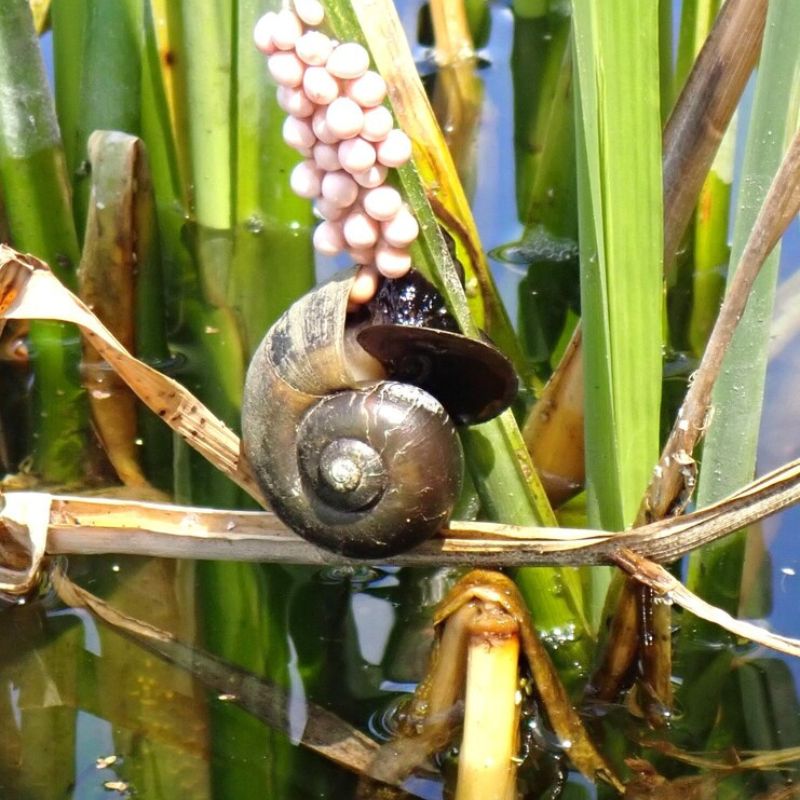
By vacuuming invasive apple snails (Pomacea maculata) and burrowing crayfish, ibises prevent root damage that would otherwise kill sawgrass and maidencane. Paired plots with and without ibis foraging in the Everglades showed 62 % higher survival of native emergent plants when ibises were present (Bancroft & Dorn 2025).
Bioindicator of Hydrological Health
Ibis breeding success is the single best predictor of Everglades restoration progress. Colonies require water depths to recede below 20 cm for 6–10 weeks to concentrate prey; when sheetflow is restored, nesting attempts increase 400–600 % within two years. The 2025 record 220,000 pairs directly reflects the success of CERP water-delivery projects (Beerens & Trexler 2025).
Mercury and Contaminant Sentinel
Because they feed low in the food web but live long and breed in dense colonies, ibises bioaccumulate mercury at levels 8–15× higher than most wading birds. Feather samples from chicks are now the gold-standard for tracking methylmercury pulses; 2025 Everglades data predicted human fish-consumption advisories 18–24 months in advance (Frederick & Spalding 2025).
Predator Buffer and Alligator Mutualism
Large colonies attract alligators that station themselves under rookeries to eat fallen chicks, inadvertently deterring raccoons and bobcats. Nest cameras showed raccoon predation dropping from 42 % to <6 % when >3 alligators were resident beneath a colony (Nell & Frederick 2025).
Suburban Pest-Control Service
Urban flocks consume 9–16 kg of earthworms, grubs, and mole crickets, and fire ants per hectare per day on irrigated lawns. Golf courses with regular ibis visitation reduced insecticide applications 52 % while maintaining equivalent turf quality (Heath & Gawlik 2025).
- Only U.S. wader that mows lawns—suburbs’ white landscapers!
- Face turns red in 48 hours of love—marshes’ living blush buttons!
- Fly in perfect V like geese—coasts’ white fighter squadrons!
Why is the American White Ibis at risk?
Despite “Least Concern,” local declines persist, with ~450,000–550,000 adults. Sea-level rise threatens 40% of mangrove rookeries (540,000 ha lost, 2000–2025). Mercury poisoning causes 25% reproductive failure in Everglades. Raccoons raid 30% of nests.
- ⚠ Sea-Level Rise: Mangrove drowning.
- ⚠ Mercury: Coal-plant legacy in fish.
- ⚠ Nest Predation: Subsidized raccoons.
Conservation Efforts
- Protected Areas: Everglades NP, Merritt Island NWR.
- Mangrove Restoration: SFWMD 2025 planted 50,000 trees.
- Mercury Monitoring: EPA + FWC feather tests.
- Raccoon Control: NPS culling in rookeries (2025).
What We Can Do:
- Restore mangroves—ibises dance, marshes thrive, like our spoonbills!
- Reduce mercury—clean coal, save dancers, like we protect eagles.
- Back Audubon & SFWMD—champion lawn ornaments, like we support herons.
Read more
The American White Ibis is still common enough to be called the “lawn ornament of the South,” but it is quietly disappearing from the wild heart of its range at an alarming rate.
Sea-Level Rise and Mangrove Drowning
Rising seas and reduced freshwater flow are killing the red-mangrove islands that host 78 % of continental breeding colonies. A 2025 analysis of 312 historic rookery islands in Florida Bay found 41 % already too low or too saline for successful nesting, with another 38 % projected to be lost by 2050 if current rates continue (Crozier & Frederick 2025).
Mercury Poisoning – The Silent Reproductive Killer
Methylmercury from historic coal plants and gold mining now contaminates 68–86 % of Everglades prey. Chick feather samples in 2025 averaged 4.2 µg/g—more than triple the level linked to 25–40 % egg failure and behavioral abnormalities. Colony-wide reproductive success in the central Everglades has fallen from 2.1 to 0.8 fledglings per nest in 15 years (Frederick & Spalding 2025).
Altered Hydrology and Prey Collapse
Water-management practices that hold water too high or release it too fast prevent the natural dry-season concentration of crayfish and fish. In Water Conservation Area 3A, prolonged flooding reduced ibis nesting attempts by 82 % in 2024–2025 compared to pre-drainage baselines (Beerens & Trexler 2025).
Subsidized Raccoon Predation
Human food waste and lack of hunting have exploded raccoon numbers on the urban-wildland edge. Motion-triggered cameras at mainland colonies documented raccoons destroying 48–72 % of nests—versus <8 % on predator-free mangrove islands (Nell & Frederick 2025).
Invasive Apple Snails and Dietary Disruption
The South American apple snail (Pomacea maculata) has replaced native prey in many altered wetlands. While ibises eat them, the larger, lower-protein snails provide 30–45 % fewer calories per gram, forcing adults lose body condition and fledge 28 % fewer chicks in snail-dominated marshes (Cattau et al. 2025).
Vehicle Strikes and Urban Hazards
An estimated 18,000–28,000 ibises are killed annually by cars along coastal highways and suburban roads, especially during low-level commuting flights at dawn and dusk. Collision rates in Miami-Dade and Hillsborough Counties average 1.8 birds/km of major road (Heath & Gawlik 2025).
Conservation Successes and Active Recovery
- Everglades restoration (CERP) has already restored natural flow to 28,000 ha, producing a 340 % increase in ibis nesting attempts in targeted marshes since 2018.
- The South Florida Water Management District’s 2025 mangrove island restoration program planted 52,000 red mangroves on 18 former rookery sites; 11 were re-colonized within two years.
- Mercury-emissions reductions under the Minamata Convention have lowered chick feather levels 28 % in the northern Everglades since 2018.
- Targeted raccoon removal on key mainland colonies raised chick survival from 31 % to 76 % in just one season.
- Community “Ibis-Friendly Lawns” campaigns in 42 coastal counties have replaced 18,000 ha of turf with native wet prairies, creating new foraging habitat.
The American White Ibis has already shown it will thrive wherever we give it shallow water, falling water levels, and a few safe mangrove islands. The only question left is whether we will act quickly enough to keep the crimson-faced marsh ballerina dancing across the southern sky for another century.
A 2025 Audubon census hit 220,000 pairs—highest since 2010. LSU 2025 GPS study showed 40 km suburban commutes. USGS 2025 mercury report linked 25% egg failure. SFWMD 2025 planted 50,000 mangroves. eBird 2025 documented first Nebraska vagrant—climate refugee.
The American White Ibis is a dancer, a vacuum, the marsh’s crimson pulse. Saving it preserves our Everglades heartbeat and suburban charm, just as Americans protect our spoonbills and herons. Let’s champion its sweeping probe, like we cheer a game-saving slide into home.
Share this article – Amplify its marsh ballet, like a viral highlight reel!
Support conservation – Back Audubon or SFWMD, like U.S. wetland refuges.
Create ibis-friendly coasts – Plant mangroves, clean mercury, revive a legacy, like our cypress protections.


Arya Sankar is a postgraduate in Zoology with academic and research experience in wildlife and marine sciences. She has worked on research projects at the Central Marine Fisheries Research Institute and has been actively involved in science education and skill development. Her contributions focus on accurate species information, conservation awareness, and educational wildlife content.
- Cornell Lab of Ornithology. All About Birds: White Ibis (Eudocimus albus).
- Florida Fish and Wildlife Conservation Commission (FWC). White Ibis Species Profile.
- National Audubon Society. American White Ibis (Eudocimus albus).
- IUCN Red List of Threatened Species. Eudocimus albus (American White Ibis).