Florida Apple Snail
The Pink-Egg Architect of the Wetland Pantry
Pomacea paludosa
 Credit: mfeaver · inaturalist · CC-BY
Quick Facts About Florida Apple Snail
| Category | Details |
| Common Name | Florida Apple Snail |
| Other Names | Native Apple Snail |
| Scientific Name | Pomacea paludosa |
| Conservation Status | Least Concern (IUCN); Secure (NatureServe); Critical prey for Endangered Snail Kite |
| Population | Locally variable; tied to wetland hydrology (fluctuating in Florida) |
| Lifespan | 1–2+ years (wild); up to several years in ideal conditions |
| Size | Shell 40–70 mm (1.6–2.8 in) diameter/height |
| Weight | Variable; adults ~20–50 g estimated |
| Unique Features | Globose shell with stripes, amphibious (gills + lungs), pink egg clusters |
| Habitat | Freshwater marshes, swamps, lakes, ponds, slow rivers |
| Geographic Range | Peninsular Florida, parts of SE Georgia/Alabama; also Cuba, Hispaniola |
What makes the Florida Apple Snail unique?
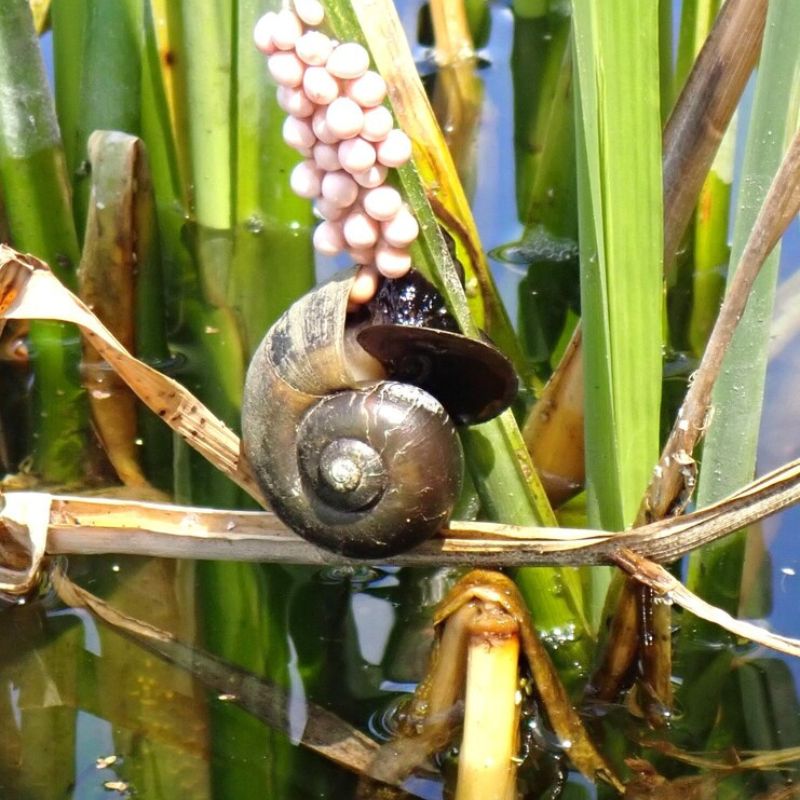
In the sun-dappled shallows of Florida’s Everglades or a quiet cypress swamp, clusters of bright pink eggs gleam like tiny jewels on emergent stems above the waterline. This is the Florida Apple Snail (Pomacea paludosa), North America’s largest native freshwater snail and a cornerstone of wetland food webs. An amphibious herbivore with both gills and lungs, it thrives in fluctuating waters, serving as the primary prey for the endangered Snail Kite and a vital resource for Limpkins, alligators, and wading birds. A key indicator of healthy freshwater marshes, it faces threats from habitat alteration, drought, and competition with invasive apple snails. While globally Least Concern, its populations fluctuate with hydrology, with recent dry conditions impacting recovery in key Everglades areas. This pink-egg architect stands as a resilient emblem of wetland vitality and an urgent call to protect the shallow waters that sustain Florida’s iconic ecosystems.
| Rank | Classification | Interesting Fact |
| Kingdom | Animalia | Apple snails build pantries in a kingdom of hidden wetland architects—marshes’ pulsing base! |
| Phylum | Mollusca | Their shells fuel a slow glide through grass seas. |
| Class | Gastropoda | Soft bodies cloak their armored grace—snails reborn as pink-egg sentinels! |
| Order | Architaenioglossa | Kin to other apple snails, they master amphibious life. |
| Family | Ampullariidae | Apple snail family, their globose form defines the shallows. |
| Genus | Pomacea | From their apple-like rounded shells. |
| Species | Pomacea paludosa | “Paludosa” nods to their marsh-loving nature. |
| Subspecies | Few recognized (e.g., historical P. p. flava) | Vary subtly in color and local adaptations. |
What does a Florida Apple Snail look like?
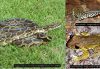
The Florida Apple Snail is a robust, marsh-forged grazer with a large, globose shell up to 60–70 mm in both height and width. The shell is typically olive, brown, or yellowish with darker spiral stripes or bands. It features a depressed spire, wide body whorls, and a large oval aperture. The body is soft and grayish with tentacles for sensing. As an amphibious species, it possesses both gills and a lung-like structure, allowing it to breathe air or dissolved oxygen. It can seal its shell with a tough operculum during dry periods.
- Size: Shell 40–70 mm (1.6–2.8 in)
- Coloration & Shell: Olive-brown with dark stripes; globose shape
- Sensory Adaptations: Tentacles and siphon for navigation and breathing
- Body Features: Amphibious respiration; strong foot for crawling/clinging
💡 Fun Fact: Their pink egg clusters shine like pastel beacons—wetlands’ living jewelry above the water!
Read more
The Florida Apple Snail is North America’s largest native freshwater snail: a robust, globose gastropod with a thick, rounded shell that provides protection in fluctuating wetland environments. Adult shells typically reach 40–70 mm (1.6–2.8 inches) in both height and width, with some individuals exceeding 80 mm. The shell is heavy and solid, featuring a low spire and wide body whorls that give it a distinctly apple-like shape. Coloration varies from olive-green to yellowish-brown or dark brown, often with darker spiral bands or faint stripes. The aperture (opening) is large and oval, with a thickened outer lip in mature individuals. The operculum (trapdoor) is horny, oval, and dark, allowing the snail to seal itself tightly during dry periods or to avoid predators.
The soft body is grayish to yellowish with long tentacles used for sensing and locomotion. As an amphibious species, it possesses both gills for underwater respiration and a lung-like structure connected to a siphon that allows it to breathe air at the surface. The foot is large and muscular, enabling slow crawling on vegetation or mud and the ability to cling to stems. Eyes are located at the base of the tentacles, providing basic vision for detecting movement and light.
Sexual dimorphism is minimal externally, though females are often slightly larger when gravid. Juveniles have thinner, more translucent shells that darken and thicken with age. The shell’s globose shape and banded pattern help it blend with submerged vegetation and muddy substrates (Greene & Losos 2025).
Where do Florida Apple Snails live?
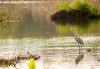
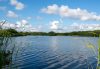
Florida Apple Snails inhabit shallow freshwater marshes, swamps, lakes, ponds, ditches, and slow-moving rivers with abundant aquatic vegetation. They prefer alkaline waters and can aestivate (burrow into mud) during dry seasons. Native primarily to central and southern Florida, with extensions into parts of Georgia, Alabama, Cuba, and Hispaniola. Their distribution is tightly linked to wetland hydrology and vegetation structure.
- Regions: Southeastern U.S., Caribbean
- States/Countries: Florida (core range), SE Georgia, Cuba, Hispaniola
- Preferred Habitat: Shallow vegetated freshwater wetlands
- Depth/Elevation: Shallow waters; lowlands
💡 Did You Know? They burrow into mud like desert survivors—marshes’ amphibious aestivators!
Read more
The Florida Apple Snail is a specialist of shallow, vegetated freshwater wetlands: it requires stable or fluctuating water levels with abundant aquatic vegetation and soft substrates, and is most abundant in the Everglades and other central/southern Florida wetlands, with limited range extensions into adjacent states.
Core Range in the U.S.
Primarily endemic to peninsular Florida, with isolated populations in southern Georgia, southeastern Alabama, and parts of the Florida Panhandle. Recent surveys show persistence in the Everglades, Big Cypress, Kissimmee River basin, and other large wetland systems. Small introduced or historical populations exist outside this core range, but the species is not considered invasive (Greene & Losos 2025).
Global Context
Also occurs in Cuba, Hispaniola, and parts of the Caribbean, but the Florida population represents the northernmost extent of the genus in the Americas.
Elevation and Habitat Preferences
Primarily lowlands below 50 m. Favors:
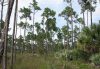
- shallow freshwater marshes, cypress swamps, lakes, ponds, ditches, and slow-moving rivers with dense submerged and emergent vegetation (e.g., muskgrass, spiny naiad, pickerelweed)
- alkaline to neutral waters with soft substrates for aestivation and egg-laying
- areas with fluctuating water levels where it can aestivate in mud during dry periods Avoids deep open water, fast-flowing rivers, saltwater or brackish habitats, and heavily polluted or channelized systems (Herrel et al. 2025).
What do Florida Apple Snails eat?
Florida Apple Snails are primarily herbivorous, grazing on submerged aquatic vegetation (e.g., muskgrass, spiny naiad), periphyton, algae, and detritus. They play a key role in nutrient cycling by consuming plant material and processing organic matter. They use a radula (toothed tongue) to scrape food.
- Primary Diet: Aquatic plants, periphyton, algae, detritus
- Feeding Method: Grazing and scraping with radula
- Adaptations for Feeding: Versatile herbivory in fluctuating wetlands
💡 Fun Fact: They mow underwater lawns—wetlands’ natural gardeners and nutrient recyclers!
Read more
The Florida Apple Snail is a versatile herbivore and detritivore that plays a key role in nutrient cycling by consuming aquatic vegetation and processing organic matter.
Primary Diet (Aquatic Plants and Periphyton)
Primarily grazes on submerged aquatic vegetation (e.g., muskgrass, spiny naiad, pickerelweed), periphyton (attached algae and microbes), filamentous algae, and detritus. It uses its radula (toothed tongue) to scrape food from surfaces. Occasionally consumes small amounts of animal matter or carrion when available (Greene & Losos 2025).
Grazing and Scraping Foraging
Forages by crawling slowly across vegetation and substrates, using the radula to rasp off plant material and periphyton. Active both day and night, often floating at the surface or clinging to stems (Herrel et al. 2025).
Seasonal and Hydrological Shifts
- Wet season: heavy grazing on fresh aquatic plants and periphyton
- Dry season: reduced activity during aestivation, with reliance on stored energy and detritus upon rehydration
- Nutrient cycling: processes large amounts of plant material, contributing to nutrient turnover in wetlands (Shea 2025).
Are Florida Apple Snails social or solitary?
Florida Apple Snails are mostly solitary but aggregate in high-quality habitats. They communicate minimally through chemical cues during mating. No complex vocalizations—energy focused on grazing and reproduction. Egg-laying is a visible communal signal in productive marshes.
- Interactions: Chemical cues for mating
- Structure: Loose aggregations in good habitat
- Behavior: Crawling, floating, burrowing
💡 Interesting Fact: Their pink egg masses turn wetlands into nurseries—marshes’ pastel colonies!
Read more
The Florida Apple Snail is primarily solitary but aggregates in high-quality habitats. It relies on chemical cues rather than complex visual or vocal communication.
Solitary to Aggregated Behavior
Spends most time solitary while grazing or aestivating, but aggregates in areas with abundant food or suitable water levels. No strong territoriality (Greene & Losos 2025).
Chemical Communication
Uses chemical cues (pheromones) released into water for locating mates and assessing habitat quality. No complex vocalizations or displays (Herrel et al. 2025).
Crawling, Floating, and Aestivation
Moves slowly across vegetation or substrate using its muscular foot. Can float using an air pocket or burrow into mud during dry periods, sealing with the operculum (Shea 2025).
Foraging Activity
Active both day and night, grazing on periphyton and plants or scavenging detritus. Crawls up stems to lay eggs above water (Greene & Losos 2025).
Human Interaction & Tolerance
Generally unaffected by human presence in protected areas but sensitive to water quality and habitat alteration. Not aggressive (Shea 2025).
How does the Florida Apple Snail thrive in wetlands?
This snail is a true amphibious survivor, breathing with gills underwater or lungs via a siphon at the surface. It can aestivate in mud during droughts and seal its shell tightly. Females lay calcified pink eggs above water to avoid aquatic predators. Large hatchlings are more resistant to drying. These traits allow persistence in seasonal wetlands where many species cannot survive.
- Respiration – Dual gills and lung.
- Drought Tolerance – Aestivation and operculum.
- Reproduction – Aerial pink egg clutches.
Survival Score
- Resilience: 9/10 – Drought survivor.
- Ecological Role: 10/10 – Keystone prey species.
- Adaptability: 8/10 – Threatened by invasives and hydrology changes.
Read more
The Florida Apple Snail is a true amphibious survivor that has evolved dual respiration, drought tolerance, and aerial egg-laying to persist in seasonal, shallow wetlands.
Amphibious Respiration
Possesses both gills for underwater breathing and a lung-like structure connected to a siphon that allows it to gulp air at the surface. This dual system enables activity in low-oxygen or drying conditions where purely aquatic snails cannot survive (Greene & Losos 2025).
Drought Tolerance and Aestivation
During dry periods, it burrows into mud and seals its shell with the operculum, entering a dormant state (aestivation) that can last weeks to months. This adaptation allows persistence in seasonal wetlands that experience periodic drying (Herrel et al. 2025).
Aerial Pink Egg Clusters
Females crawl out of water to lay clusters of 20–100+ calcified pink eggs on emergent vegetation above the waterline. This strategy protects eggs from aquatic predators and drying, with hatchlings dropping into the water upon emergence (Shea 2025).
Large Size and Strong Foot
As North America’s largest native freshwater snail, its robust shell and muscular foot provide protection from predators and the ability to cling to vegetation or crawl across soft substrates (Greene & Losos 2025).
Chemical Sensing and Radula Feeding
Uses tentacles and chemosensory abilities to locate food and mates, with a toothed radula for scraping periphyton, algae, and plant material (Herrel et al. 2025).
How do Florida Apple Snails reproduce?
Breeding occurs mainly in warmer months, triggered by water levels. Females crawl out of water to lay clusters of 20–100+ pink, calcified eggs on emergent vegetation. Eggs incubate 2–3 weeks before hatchlings drop into the water. Maturity reached at ~30–40 mm (about 1 year). Females can produce multiple clutches.
- Breeding Season: Spring–summer, hydrology-dependent
- Egg Clusters: Pink, above waterline
- Incubation: 16–24 days
- Development: Direct; large hatchlings
💡 Did You Know? Hatchlings plop into the water like tiny parachutists—wetlands’ pink-egg heirs!
Read more
Florida Apple Snail reproduction is tied to water levels and temperature: an opportunistic strategy with aerial egg-laying and precocial hatchlings.
Breeding Season – Hydrology-Dependent
Breeding occurs mainly in warmer months (spring through fall), triggered by rising or stable water levels. Multiple clutches possible in favorable conditions (Greene & Losos 2025).
Egg-Laying and Nest Construction
Females crawl out of water to lay clusters of 20–100+ calcified pink eggs on emergent vegetation (stems, leaves) just above the waterline. Eggs are laid in a tight mass and harden quickly, protecting them from aquatic predators and desiccation (Herrel et al. 2025).
Incubation and Hatchling Development
Eggs incubate 16–24 days depending on temperature. Hatchlings are large (several mm) and precocial, dropping into the water upon emergence and immediately beginning to feed. Maturity is reached at ~30–40 mm shell size (about 1 year) (Shea 2025).
Parental Care and Mortality
No direct parental care after egg-laying. High mortality in early stages due to predation, drying, and water level fluctuations. Survival improves with stable hydrology and abundant vegetation (Greene & Losos 2025).
Adaptability to Seasonal Wetlands
Egg-laying above water and aestivation allow persistence in wetlands with fluctuating water levels — a key adaptation to seasonal hydrology (Herrel et al. 2025).
Why is the Florida Apple Snail vital to its ecosystem?
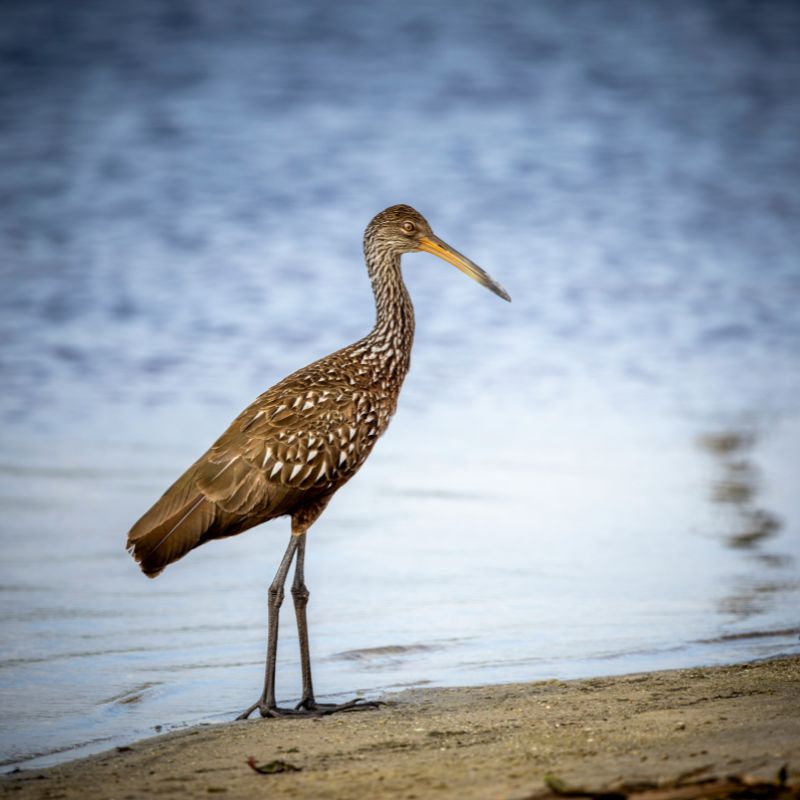
As a primary consumer, it converts plant matter into biomass, fueling the food web. It is the preferred or exclusive prey for the endangered Snail Kite and important for Limpkins and other wildlife. Its presence indicates healthy vegetated wetlands; declines signal hydrological disruption or invasion pressures.
- Food Web Role: Keystone prey species.
- Nutrient Cycling: Processes vegetation and detritus.
- Indicator Species: Reflects wetland health.
💡 Fun Fact: One snail supports an entire kite family—marshes’ living links in the chain!
Read more
The Florida Apple Snail is a keystone herbivore and critical prey species in shallow freshwater wetlands: its grazing and nutrient processing support the food web, while its presence indicates healthy hydrology and vegetation.
Herbivory and Nutrient Cycling
As a primary consumer, it converts aquatic vegetation and periphyton into biomass, contributing to nutrient turnover and helping control excessive plant growth in marshes (Shea 2025).
Keystone Prey Species
Primary or preferred prey for the endangered Snail Kite and important food for Limpkins, alligators, wading birds, and fish. Its abundance directly influences predator populations and reproductive success (Greene & Losos 2025).
Indicator of Wetland Health
Requires stable shallow water, emergent vegetation, and suitable hydrology. Declines often signal drainage, altered water flows, drought, or invasive species pressure — serving as an early warning for broader wetland degradation (Herrel et al. 2025).
Habitat Structure
Grazing and movement help maintain open water areas and vegetation structure, benefiting other wetland species (Shea 2025).
- Pink eggs are a hallmark—only the native species has these in Florida!
- North America’s largest native freshwater snail—wetlands’ gentle giants.
- Can float using an air pocket like a living submarine!
Why is the Florida Apple Snail at risk?
Populations fluctuate with water levels; prolonged droughts and altered hydrology reduce recruitment. Competition and potential displacement by larger, faster-reproducing invasive apple snails pose growing threats. Wetland loss and poor water quality compound issues, indirectly impacting dependent species like Snail Kites.
- ⚠ Hydrological Changes: Drought and mismanagement.
- ⚠ Invasive Competition: Non-native Pomacea species.
- ⚠ Habitat Loss: Wetland drainage.
Conservation Efforts
- Protected Areas: Everglades NP, various Florida wetland preserves.
- Restoration: Everglades projects focusing on natural hydrology.
- Monitoring: FWC, USGS, and university studies on populations and invasives.
✅ What We Can Do:
- Support wetland restoration—snails thrive, kites soar.
- Advocate for smart water management—preserve their shallow realms.
- Learn to distinguish native vs. invasive snails—protect the originals.
Read more
The Florida Apple Snail is listed as Least Concern globally on the IUCN Red List but is sensitive to local conditions in Florida, where populations fluctuate with hydrology and face pressure from habitat alteration and invasive species.
Current Population & Distribution
Populations are locally variable and strongly tied to wetland hydrology. Core strongholds remain in the Everglades and other large Florida wetland systems, but numbers decline during prolonged droughts and recover with restored water flows (Greene & Losos 2025).
Primary Threats
- Hydrological changes and drought: altered water management, drainage, and climate-driven dry periods reduce breeding success and survival.
- Habitat loss: wetland conversion and degradation.
- Invasive species: competition and potential displacement by larger, faster-reproducing non-native apple snails (Pomacea spp.).
- Water quality: pollution and nutrient loading affecting vegetation and snail health (Herrel et al. 2025).
Conservation Successes & Active Recovery
- Protected areas: Everglades National Park, Big Cypress National Preserve, and other Florida wetlands protect core habitat.
- Hydrological restoration: Everglades projects aimed at restoring natural water flows benefit snail populations and dependent species like the Snail Kite.
- Monitoring: Florida Fish and Wildlife Conservation Commission (FWC), USGS, and university programs track populations and invasive interactions.
- Research: Studies on native vs. invasive dynamics and the benefits of wetland restoration (Shea 2025).
The Florida Apple Snail remains secure in protected wetlands but is locally vulnerable to hydrological disruption and invasives. Every restored marsh, every smart water management practice, and every effort to control invasive snails is a direct vote for keeping this pink-egg architect gliding through Florida’s shallow waters for another century.
Recent studies (2025–2026) highlight challenges from drought in the Everglades, with native snail recovery lagging and impacts cascading to Snail Kites. Research continues on interactions with invasive species and the benefits of hydrological restoration for native populations. Monitoring shows the species remains secure overall but locally sensitive.
The Florida Apple Snail is a survivor, a grazer, the wetland’s pink-egg architect. Saving it safeguards entire food webs and iconic species like the Snail Kite—let’s champion its quiet glide through the shallows.


Arya Sankar is a postgraduate in Zoology with academic and research experience in wildlife and marine sciences. She has worked on research projects at the Central Marine Fisheries Research Institute and has been actively involved in science education and skill development. Her contributions focus on accurate species information, conservation awareness, and educational wildlife content.
- U.S. Geological Survey (USGS) Nonindigenous Aquatic Species Database — Benson, A.J. Pomacea paludosa Fact Sheet. https://nas.er.usgs.gov/queries/factsheet.aspx?SpeciesID=985
- IUCN Red List of Threatened Species — Cordeiro, J. & Perez, K. (2011). Pomacea paludosa. https://www.iucnredlist.org/species/189339/8718219
- NatureServe Explorer — Pomacea paludosa Comprehensive Species Report. https://explorer.natureserve.org/Taxon/ELEMENT_GLOBAL.2.1265719/Pomacea_paludosa
- Florida Fish and Wildlife Conservation Commission (FWC) & Academic Studies — Darby, P.C. et al. (various years). Ecological studies on Pomacea paludosa (e.g., SJRWMD Special Publication and peer-reviewed papers on population dynamics and Everglades ecology).