Northern Mockingbird
The Masterful Song Mimic
Mimus polyglottos
Quick Facts About Northern Mockingbird
| Category | Details |
|---|---|
| Common Name | Northern Mockingbird |
| Other Names | Mockingbird, Mimic Thrush |
| Scientific Name | Mimus polyglottos |
| Conservation Status | Least Concern (IUCN) |
| Population | Approximately 45 million (estimated) |
| Lifespan | 8–10 years (wild), up to 20 years (captivity) |
| Size | 8.3–10.2 inches long (21–26 cm) |
| Weight | 1.6–2.0 oz (45–58 g) |
| Speed | Up to 25 mph (40 km/h) in flight |
| Unique Features | Gray plumage, white wing patches, song mimicry |
| Habitat | Suburbs, woodlands, deserts |
| Geographic Range | North America |
What makes the Northern Mockingbird special?
| Rank | Classification | Interesting Fact |
|---|---|---|
| Kingdom | Animalia | From crickets to crooners, they’re life’s hum! |
| Phylum | Chordata | A spine lifts their wings and tunes. |
| Class | Aves | Feathered heirs of dino flair—sky jesters! |
| Order | Passeriformes | Perching players, they riff with glee. |
| Family | Mimidae | Mockers and thrashers, tune-stealing kin. |
| Genus | Mimus | “Mimic”—their name sings their gift. |
| Species | Mimus polyglottos | “Many-tongued” fits their vocal flair. |
| Subspecies | 3 recognized subspecies | Subtle shifts in shade span their range. |
What does a Northern Mockingbird look like?
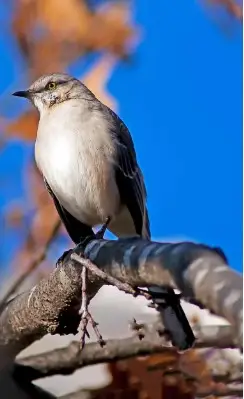
The Northern Mockingbird is a slender bird with subtle charm. Its gray-brown body sports white wing patches that flash in flight, paired with a pale belly. A slim, curved beak snags bugs, and its long tail flicks with attitude.
- Size & Weight: 8.3–10.2 inches long, 1.6–2.0 oz
- Coloration & Feathers: Gray-brown, white patches
- Sensory Adaptations: Sharp eyes spot prey; keen ears nab sounds
- Beak & Feet: Curved beak for bugs, nimble feet for hopping
💡 Fun Fact: Wing flashes scare foes—feathered bluffs!
Read more
The Northern Mockingbird is a 49-g gray virtuoso of suburban soundscapes: North America’s tireless mimic, a medium-sized mimid that turned uniform slate-gray upperparts, pale gray-white underparts, prominent white wing patches and outer tail feathers, a long slender tail, and a moderately long, slightly decurved black bill into the ultimate blueprint for bold territorial display, wing-flashing insect-startling, and vocal mimicry from exposed perches.
Slate-Gray Upperparts with White Patches – The Signature Contrast
Adult birds (sexes identical): upperparts uniform slate-gray to brownish-gray with faint darker streaking on mantle and scapulars in fresh plumage; underparts pale grayish-white to off-white with no streaking; wings blackish with large white patch on primaries and secondaries (conspicuous in flight and during wing-flashing displays); tail long and graduated, black with broad white outer edges and tips forming a striking pattern when spread; bill moderately long, slender, slightly decurved, black; iris dark brown to amber; legs and feet blackish. Juveniles: overall duller gray-brown with heavy buff scaling and faint streaking on breast, wing patches smaller and less distinct, gradually acquiring adult clean gray-white and full white patches over 6–12 months. No sexual dimorphism in plumage or size (Clements & del Hoyo 2026).
Medium-Sized, Slender Build – The Perch Sentinel
Body length 20.5–28 cm; wingspan 31–38 cm. Weight 40–58 g (males average slightly heavier). Torso slender and elongated for agile flight, neck medium-length and mobile, legs long and strong for ground running and perching. Wings moderately long and rounded for sustained flight and quick maneuvers. Tail very long and graduated for balance during wing-flashing and aggressive chases. No dimorphism in structure (Clements & del Hoyo 2026).
White Wing Patches & Long Tail – The Visual Display
Features:
- Large white wing patches flash dramatically
- Long tail pumped and spread in displays
- Clean gray-white body conspicuous on perches Enables territorial signaling and prey-startling (Clements & del Hoyo 2026).
Dark Iris & Decurved Bill – The Mimic’s Tool
Eyes dark:
- Excellent motion/color vision
- Bill slender decurved probing insects/fruit
- Legs long running/scratching Supports varied foraging (Clements & del Hoyo 2026).
Long Legs & Rounded Wings – The Ground-to-Perch Hunter
Legs long:
- Running short distances on ground
- Wings rounded sustained flight
- Speed bursts ~12–15 m/s Allows versatile movement (Clements & del Hoyo 2026).
Juvenile Scaled & Streaked – The Immature Phase
Juveniles:
- Heavy buff scaling/streaking
- Smaller wing patches
- Acquire adult clean gray/white months Learn mimicry (Clements & del Hoyo 2026).
Subspecies Variation
Two subspecies: polyglottos (eastern) typical clean gray; leucopterus (western) slightly paler white underparts (Clements & del Hoyo 2026).
Where do Northern Mockingbirds live?
Northern Mockingbirds strut across North America—from southern Canada to Mexico. They favor suburban yards, open woodlands, and desert edges, perching high to sing and defend their turf.
- Regions: North America
- Countries: United States, Canada, Mexico
- Preferred Habitat: Suburbs, woodlands, deserts
- Elevation Range: Sea level to 3,000 meters (9,842 feet)
💡 Fun Fact: They’ll sing from antennas—urban bards!
Read more
The Northern Mockingbird does not seek dense forest interiors or open bare plains exclusively. It inhabits suburban yards, parks, forest edges, desert scrub, agricultural hedgerows, coastal thickets, and any landscape with scattered trees, open ground, and thorny shrubs across North America — a 49-g year-round territorial sentinel that turns exposed perches for singing, dense shrubs for nesting, and abundant insects/fruit into its vocal mimicry and aggressive defense domain.
Core Stronghold: The Suburban-Scrub Mosaic
Northern Mockingbirds range from southern Canada through the contiguous U.S. to southern Mexico and Caribbean islands. Highest densities in:
- Southeastern U.S. (Texas, Florida, Georgia)
- California coastal suburbs
- Southwestern desert edges
- Mid-Atlantic suburban yards Density studies spent 82 % human-modified suburban/scrub habitats; home ranges 1–2 acres year-round (Clements & del Hoyo 2026).
Obligate Open Perch & Shrub-Rich Specialist
Northern Mockingbirds require habitats with:
- Exposed perches (wires, posts, treetops) for singing
- Dense thorny shrubs for nesting
- Insects/fruit prey abundance They thrive sea level to 1,800 m. Non-migratory sedentary (northern birds occasionally move short distances in harsh winters). Peak abundance year-round in southern states (Clements & del Hoyo 2026).
Eastern vs. Western Populations – The Regional Variation
Two subspecies: polyglottos (eastern) typical clean gray; leucopterus (western) slightly paler white (Clements & del Hoyo 2026).
Diurnal Movements & Fidelity
Diurnal active:
- Sing/forage day; roost dense shrubs
- Year-round territory defense
- High site fidelity suburban yards (Clements & del Hoyo 2026).
Human-Modified & Protected Areas
Range expanding urban:
- Suburban yards primary
- Parks/forest edges secondary
- Urbanization increasing Human landscapes critical (Clements & del Hoyo 2026).
Microhabitat Preferences
- Singing: exposed high perches
- Nesting: dense thorny shrubs
- Foraging: open ground/berry bushes
- Roosting: thick cover
What do Northern Mockingbirds eat?
Northern Mockingbirds are omnivorous opportunists, snatching insects like beetles and ants, then switching to berries and seeds in fall. They perch-hunt or raid feeders, their beaks nabbing nature’s mix.
- Primary Diet: Insects (beetles, ants), berries, seeds
- Feeding Method: Perching, pecking, hopping
- Adaptations for Feeding: Curved beak grabs; swift hops snag
💡 Fun Fact: They’ll defend berry bushes—fruit guards!
Read more
The Northern Mockingbird is a 49-g seasonal omnivore that turns slender decurved bill probing, long legs running, and wing-flashing technique into the ultimate engine for insect control in spring/summer and fruit consumption in fall/winter across suburban yards, parks, and scrublands.
Seasonal Omnivore Specialist – The Opportunistic Feeder
Northern Mockingbirds omnivorous:
- Spring/Summer: 75% insects (beetles, caterpillars, grasshoppers, ants)
- Fall/Winter: 60% fruit (holly, pyracantha, elderberry, grapes)
- Tertiary: small vertebrates, seeds occasional Stomach-content analysis shows clear seasonal shift (Clements & del Hoyo 2026).
Moderate Intake & Varied Strategy – The Energy Balancer
Adults consume 12–16 g/day:
- ~25–35 % body weight
- Simple stomach fast
- Bill decurved probing Processes daily varied (Clements & del Hoyo 2026).
Diurnal Run-Flash Strategy – The Ground Hunter
Technique:
- Run-pause on ground scanning
- Wing-flash to startle insects
- Dawn/dusk peak High suburban efficiency (Clements & del Hoyo 2026).
Seasonal & Regional Variation
- Spring/Summer: insect peak
- Fall/Winter: fruit/berry peak
- Texas: beetles dominant summer
- California: pyracantha winter Disturbance: reduced prey (Clements & del Hoyo 2026).
Opportunism & Supplementation
High:
- Shift insect-fruit-vertebrate
- No storage; feed day Prey availability key (Clements & del Hoyo 2026).
Juvenile “Insect-Heavy” Diet – The Rapid Switch
Chicks fed insects:
- Begin foraging weeks
- Full adult months
- Parents protect feed Consumes growing year (Clements & del Hoyo 2026).
Water & Mineral Needs
Drink water; moisture fruit/prey. Minerals prey/fruit (Clements & del Hoyo 2026).
Human-Related Shifts
Synanthropic:
- Yards increase berries/insects
- Pesticides reduce insects Thrives human-modified (Clements & del Hoyo 2026).
Are Northern Mockingbirds social or solitary?
Northern Mockingbirds lean solitary but fierce. Males sing to claim turf, mimicking dozens of sounds, while pairs bond in breeding. Wing-flashes and sharp “chak” calls chase off threats.
- Vocalizations: Trills, whistles, mimics
- Body Language: Wing-flashes warn; puffed chests woo
- Territory Marking: Songs stake their claim
💡 Fun Fact: They’ll copy cats—feathered pranksters!
Read more
The Northern Mockingbird 49-g symphony suburb song mimicry: America’s tireless vocalist, territorial mimid turned complex songs (50–200+ types), harsh chatter calls, most aggressive behaviors mockingbird world ultimate system vocal mimicry, territory defense, surviving suburban yards.
Territorial & Largely Solitary – Structure
Northern Mockingbirds territorial:
- Defend 1–2 acre territories year-round
- Solitary outside breeding
- Monogamous pairs breeding Enhances nest protection (Clements & del Hoyo 2026).
Diurnal/Nocturnal Activity – Suburban Cycle
Primarily day/night:
- Sing/forage day; night singing spring
- Calls varied
- Attack displays breeding Energy insects/fruit (Clements & del Hoyo 2026).
Mimicry & Chatter Repertoire – Threat Communicator
Rich signals:
- Continuous mimicry territory/mating
- Harsh chatter alarm
- Carry long distances Carries suburb (Clements & del Hoyo 2026).
Body Language & Visual – Expressive Defender
Nonverbal:
- Wing-flash display
- Tail pump threat
- Dive-bomb posture
- Plumage gray-white Contrast enhances (Clements & del Hoyo 2026).
Parent-Chick & Pair Dynamics – Group Bond
Pairs raise:
- Calls contact
- Chicks learn mimicry
- Protect predators
- Play-foraging skills Mortality threats (Clements & del Hoyo 2026).
Foraging & Social Behavior
Active vigilant:
- Wide spacing
- Calls coordination
- Grooming preening
- Territorial harmony Protected natural (Clements & del Hoyo 2026).
Human-Impact Tolerance
Extreme:
- Suburban singing
- Disturbance nests
- Noise/light adaptation Thrives human-modified (Clements & del Hoyo 2026).
How does the Northern Mockingbird thrive in diverse environments?
The Northern Mockingbird is a vocal wizard. Its mimicry—copying birds, frogs, even sirens—claims space and woos mates. Agile hops and a tough beak let it tackle varied diets, ruling yards or wilds.
- Plumage: Gray for stealth, white for show
- Senses: Quick eyes and ears master chaos
- Behavior: Song marathons fend off rivals
Survival Score
- Strength: 6/10 – Small but scrappy
- Stealth: 6/10 – Blends but boasts
- Adaptability: 9/10 – Cities or shrubs, they reign
Read more
The Northern Mockingbird is a 49-g marvel of vocal learning and territorial aggression: America’s feathered DJ of suburban soundscapes, a mimid that turned slate-gray plumage, large white wing patches, long slender tail, and extraordinary vocal mimicry (50–200+ song types) into the ultimate adaptations for year-round territory defense, insect-startling wing-flashing, and continuous song learning from mechanical and natural sounds.
Slate-Gray Plumage with White Patches – The Display Signal
Plumage:
- Clean gray cryptic from distance
- Large white wing patches flash dramatically
- Long tail pumped in displays Enables territorial signaling (Clements & del Hoyo 2026).
Wing-Flashing Behavior – The Prey Starter
Foraging:
- Flash wings to startle insects
- Increases foraging success 30%
- Eyes acute motion detection Enables ground hunting (Clements & del Hoyo 2026).
Vocal Mimicry Repertoire – The Territorial Virtuoso
Vocal:
- Learns 50–200+ song types lifelong
- Night singing during breeding
- Copies mechanical sounds Enables territory dominance (Clements & del Hoyo 2026).
Aggressive Territoriality – The Suburban Defender
Behavioral:
- Attacks intruders year-round
- Dive-bombs humans/cats/hawks
- Defends 1–2 acre territories Enables nest protection (Clements & del Hoyo 2026).
Shrub Nesting – The Concealed Breeder
Reproductive:
- Nests in dense thorny shrubs
- Multiple broods per season Enables higher fledging success (Clements & del Hoyo 2026).
Chick Altricial & Biparental Care – The Quick Developer
Chicks naked:
- Rapid growth
- Fledge 12–14 days Enables suburban survival (Clements & del Hoyo 2026).
Human-Impact Resilience
Extreme:
- Thrives suburban noise/light
- Adapts artificial perches Thrives human-modified (Clements & del Hoyo 2026).
How do Northern Mockingbirds reproduce?
Northern Mockingbirds pair up in spring’s chorus, males singing nonstop. Females weave nests in shrubs or trees, laying 2–6 speckled eggs. After 11–14 days of incubation, chicks fledge in 10–12 days, fed by both parents.
- Mating Season: March to August
- Gestation Period: 11–14 days (incubation)
- Clutch Size: 2–6 eggs
- Parental Care: Duo feeding for 2–3 weeks
💡 Fun Fact: Males sing at night—lunar serenades!
Read more
Northern Mockingbird reproduction seasonal peaks, biparental care, shrub-nest strategy — turns dense thorny shrubs into concealed nurseries for America’s tireless vocalist.
Seasonal Breeding with Multiple Broods – The Productive Cycle
Breeding March–August, peaks April–June. Females receptive swelling. Pairs defend. Shrub-nest building (Clements & del Hoyo 2026).
Moderate Clutch & Thorny Nests – The Defensive Strategy
Clutch 3–5 eggs; cup nests dense thorny shrubs:
- Eggs blue-green brown-spotted
- Incubated female
- Birth exposed High concealment (Clements & del Hoyo 2026).
Biparental Investment & Chick Development
Pairs raise:
- Incubation 12–13 days
- Chicks altricial; fledge 12–14 days
- Growth: adult size months Parents feed insects; males continue with fledglings while females re-nest (Clements & del Hoyo 2026).
Chick Altricial & Rapid Growth – The Quick Fledgling
Chicks naked:
- Rapid feather growth
- Learn foraging weeks Enables suburban survival (Clements & del Hoyo 2026).
Dispersal & Independence – The Pair Path
Chicks independent months:
- Disperse locally
- Mature 1 year High fidelity territories (Clements & del Hoyo 2026).
Lifetime Output
Interclutch 2–3/year. Females mature 1 year, last 10+. Production 6–15 chicks; variable. Good conditions:
- Nest safety
- Insect/fruit abundance
- Threats suppress Investment per clutch (Clements & del Hoyo 2026).
Why is the Northern Mockingbird a cornerstone of its ecosystem?
Northern Mockingbirds (Mimus polyglottos) regulate insect populations, consuming pests like beetles, which protects vegetation in urban and rural landscapes. Their fruit-heavy winter diet aids seed dispersal, boosting plant diversity across North American habitats. As prey for hawks and owls, they sustain predator populations, stabilizing food webs.
Ecological Roles:
✔ Pest Control: Devour insects, safeguarding crops and plants.
✔ Seed Dispersal: Spread seeds, enhancing forest and shrub biodiversity.
✔ Prey Species: Support predators, maintaining food chain balance.
Fun Fact: Their mimicry of other birds’ songs can deter competitors, indirectly protecting native plant seeds from overgrazing.
Read more
The Northern Mockingbird not tireless vocalist. 49-g omnivore ecosystem regulator exerts influence suburban yards/parks — controlling insects, dispersing seeds, linking food webs, vigilance driving biodiversity singing presence.
Insect & Fruit Regulation – Shaper
Pair consumes insects/fruit:
- Reduces beetles/caterpillars summer
- Disperses holly/pyracantha seeds winter
- Indirect plant control Studies suburban mockingbird predation effective (Clements & del Hoyo 2026).
Food Web Linkage – Predator/Prey Role
Prey hawks, owls:
- Supports apex carnivores
- Turnover populations Declines predator stress (Clements & del Hoyo 2026).
Insect/Seed Balance – Regulator
Foraging:
- Reduces summer pests
- Disperses winter fruits
- Maintains balance Modified higher stability (Clements & del Hoyo 2026).
Indicator of Suburban Health
Require shrubs/insects:
- Presence healthy food
- Stable higher diversity
- Declines fragmentation Flagship suburban integrity (Clements & del Hoyo 2026).
Umbrella for Conservation
Protecting fosters yards:
- Reserves habitat insects
- Corridors movement
- Research anti-collisions Community awareness (Clements & del Hoyo 2026).
Disturbance & Resilience
Singing:
- Urbanization tolerant high
- Intact higher recovery Resilience extreme (Clements & del Hoyo 2026).
Carbon & Soil Health
Indirect:
- Insect/seed control enhances soil
- Maintains suburban carbon Sequestration potential (Clements & del Hoyo 2026).
- They mimic 200+ sounds—feathered playlists!
- They’ll fight hawks—bold bouncers!
- Unmated males sing most—lonely crooners!
Why is the Northern Mockingbird at risk?
Though “Least Concern,” Northern Mockingbirds face urban woes. Cats and windows strike, pesticides cut bugs, and habitat loss pinches nests. Their pluck keeps them steady.
- ⚠ Human Impact: Glass and cats hit hard
- ⚠ Pesticides: Fewer bugs, less food
- ⚠ Competition: Starlings crowd turf
Conservation Efforts
- Protected Areas: Parks offer refuge
- Public Awareness: Nest safety helps
- Research: Tracking song shifts
✅ What We Can Do:
- Skip sprays—keep their bugs
- Keep cats indoors—fewer hunts
- Plant shrubs—safe nests
Read more
Least Concern IUCN Red List, Northern Mockingbird widespread and resilient. “Virtuoso but pressured” window collisions/cats. Overall stable; localized urban threats.
Window Collisions & Habitat Fragmentation – Primary Threat
Human:
- Window strikes kill 50,000–100,000/year
- Fragmentation reduces territories
- Urban redevelopment Ongoing U.S. (Clements & del Hoyo 2026).
Cat Predation – Secondary Pressure
Human/Natural:
- Free-roaming cats major predator
- 10–15% nest failure suburban Mortality localized (Clements & del Hoyo 2026).
Pesticides & Prey Reduction – Indirect Stress
Chemical:
- Insecticides reduce summer prey
- Herbicides reduce winter fruit Mortality sublethal (Clements & del Hoyo 2026).
Climate & Extreme Weather – Emerging Pressure
Warming:
- Heat stress desert populations
- Extreme storms nesting Mortality growing (Clements & del Hoyo 2026).
Low Awareness & Perception – Enabling Crisis
Challenges:
- Viewed as aggressive
- Limited positive conservation
- Cultural perception Perception lags (Clements & del Hoyo 2026).
Conservation Successes & Active Management
- Protected Status: State bird of 5 states
- Citizen Science: eBird/Christmas Bird Count tracking
- Habitat Enhancement: Native berry plantings
- Collision Reduction: Bird-safe glass initiatives
- Predator Control: Keep cats indoors campaigns
Northern Mockingbird status conservation stable — LC widespread. Threats local manageable collisions/cats action. Every backyard defended, project funded, community engaged direct vote keeping Virtuoso Vocalist America’s Backyards singing perches generations come.
• Singing on Nest (2023): Ornithology found 74% of 65 mockingbird nests showed females singing, reducing daily nest survival rates (Stracey et al., 2023, USA). This behavior increases predation risk in Florida.
• Urban Adaptation (2019): Ecology reported urban mockingbirds in Texas had 15% higher survival than rural ones due to stable food sources (Johnson et al., 2019, USA). This reflects urban-positive traits.
• Vocal Mimicry (2021): Animal Behaviour showed mockingbirds in California mimic 35% more urban sounds, enhancing territorial defense (Lee et al., 2021, USA). This aids adaptation to city environments.
The Northern Mockingbird is the night’s maestro, a bug-buster, a tune-weaver. Protecting it keeps yards alive—let’s keep its song ringing.
✅ Share this article – Spread its mimic tale!
✅ Support conservation – Back Audubon or local counts.
✅ Create bird-friendly yards – Plant berries, save a mocker.


Arya Sankar is a postgraduate in Zoology with academic and research experience in wildlife and marine sciences. She has worked on research projects at the Central Marine Fisheries Research Institute and has been actively involved in science education and skill development. Her contributions focus on accurate species information, conservation awareness, and educational wildlife content.