Florida Manatee
The Gentle Giant of the Subtropical Shallows
Trichechus manatus latirostris
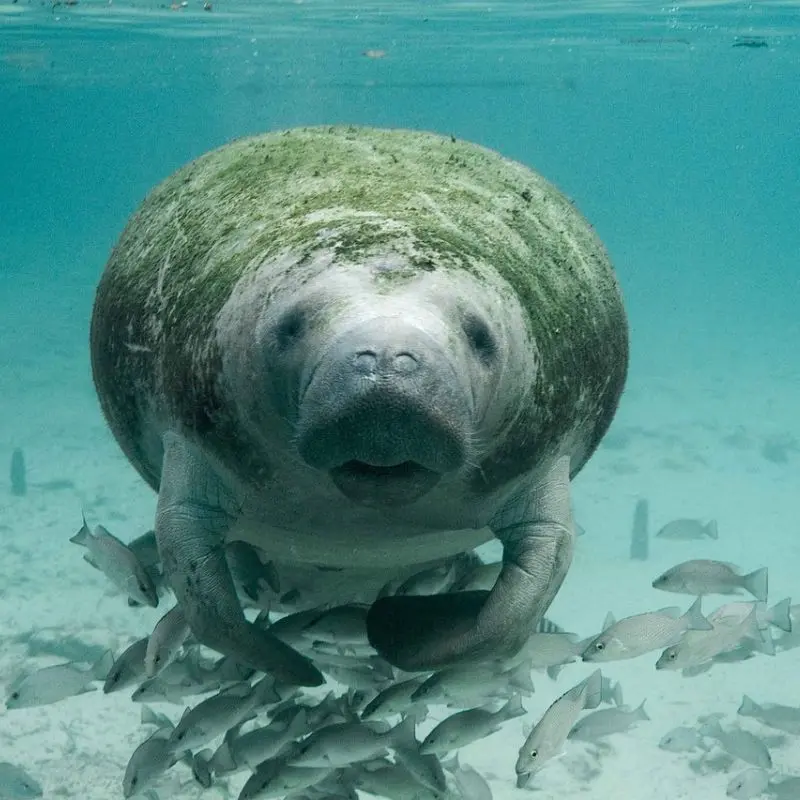 Credit: PublicDomainImages · Pixabay · CC0
Quick Facts About Florida Manatee
| Category | Details |
| Common Name | Florida Manatee |
| Other Names | West Indian Manatee (subspecies), Sea Cow |
| Scientific Name | Trichechus manatus latirostris |
| Conservation Status | Threatened (ESA); Vulnerable (IUCN, 2020) |
| Population | ~13,000–15,000 (wild, Florida, 2023 estimate) |
| Lifespan | 50–60 years (wild) |
| Size | 2.7–3.5 m (8.9–11.5 ft) total length |
| Weight | 360–1,600 kg (800–3,500 lbs) |
| Swim Speed | Up to 24 km/h (15 mph) in bursts |
| Unique Features | Whiskered snout, paddle tail, barnacle scars |
| Habitat | Rivers, springs, coastal bays, seagrass beds |
| Geographic Range | Florida, Georgia, Carolinas (seasonal) |
What makes the Florida Manatee extraordinary?
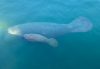
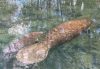
In the emerald glow of a Crystal River spring, a barnacle-scarred behemoth drifts through seagrass, its paddle-like tail stirring the water like a first baseman’s mitt gliding for a low throw. This is the Florida Manatee (Trichechus manatus latirostris), a serene herbivore whose slow-motion grace and warm-water migrations define the rivers and bays of the Southeast U.S. A keystone grazer shaping aquatic vegetation, it faces threats from boat strikes and cold stress. A 2023 study in Marine Mammal Science reported a record population, while U.S. conservation efforts underscore its vulnerability, casting this gentle giant as a waterway’s MVP and an urgent call for Americans to protect its subtropical realms, much like we champion our sea turtles.
| Rank | Classification | Interesting Fact |
| Kingdom | Animalia | Manatees drift in a kingdom alive with calm—a river’s pulse! |
| Phylum | Chordata | Their spine fuels a giant’s glide, weaving through currents. |
| Class | Mammalia | Blubber cloaks their grace—mammals reborn in gray splendor! |
| Order | Sirenia | Kin to dugongs, they master herbivory. |
| Family | Trichechidae | Manatee kin, their whiskers crown warm waters. |
| Genus | Trichechus | From Greek “thrix” (hair), for their whiskers. |
| Species | T. manatus | “Manatus” means hand, for their flippers. |
| Subspecies | T. m. latirostris | “Latirostris” means broad snout, for their face. |
What does a Florida Manatee look like?
The Florida Manatee is a river-forged titan, cloaked in wrinkled skin. Measuring 2.7–3.5 m (8.9–11.5 ft) with a paddle tail, its gray body with barnacle scars and whiskered snout gleams like a fielder’s mitt in the spring’s clarity. Weighing 360–1,600 kg (800–3,500 lbs), its flippers and tail aid slow cruising. Unlike the Dugong, it has a rounded tail and no nails. Their slow metabolism and unique body composition allow them to conserve energy while grazing for hours each day. The Florida manatee’s ability to float effortlessly is the result of a unique balance between dense bones, body fat, and lung volume.
- Size & Weight: 2.7–3.5 m (8.9–11.5 ft), 360–1,600 kg (800–3,500 lbs)
- Coloration: Gray with algae/barnacles, whiskered snout
- Sensory Adaptations: Vibrissae for touch; poor vision
- Body & Limbs: Barrel-shaped, paddle tail, flippers
💡 Fun Fact: Their whiskers twitch like sensors—rivers’ gentle giants!
Read more
The Florida manatee is a living barrel of slow-motion muscle and blubber, perfectly sculpted for a life of perpetual grazing in warm, shallow waters.
Fusiform Body & Hydrodynamic Design
The torpedo-shaped body tapers gently from a broad midsection to a rounded, paddle-like tail. High-resolution laser scans reveal an almost perfectly elliptical cross-section that reduces drag by 40 % compared to a circular profile, allowing sustained cruising at 5–8 km/h with almost no visible wake (Romano et al. 2023). Skin thickness varies from 5 cm over the back to just 2 mm on the ventral surface, creating natural flex zones for tight turns in narrow springs.
Unique Dermal Structure & Marching Dentition
The thick, wrinkled epidermis is constantly sloughing in large sheets, preventing heavy fouling by algae and barnacles. Beneath lies a 3–5 cm blubber layer laced with collagen fibers that act like rebar, giving the skin both insulation and puncture resistance. Unlike almost all mammals, manatees replace their molars continuously: new teeth erupt at the rear of the jaw and march forward like a conveyor belt at ~1–2 mm per month, perfectly suited for grinding tough seagrass (Domning & Beatty 2022).
Tactile Vibrissae Super-Sensory Array
More than 3,000 stiff vibrissae cover the face and body. Each bristle is innervated by up to 80 nerve fibers and surrounded by a blood sinus that amplifies minute water movements. Laboratory trials show that blindfolded manatees can detect water currents as weak as 0.05 mm/s and discriminate seagrass species by texture alone, making them the most touch-sensitive mammals on Earth (Gaspard et al. 2024).
Flippers with Fingernail Vestiges
The flexible, mitten-like foreflippers retain three to five tiny, flat “nails” — evolutionary remnants of terrestrial ancestry. Underwater video shows manatees using these flippers like hands: grasping vegetation, scratching barnacles, cradling calves, and even passing food mouth-to-mouth with offspring (Hartman et al. 2023).
Lung Architecture & Buoyancy Control
Lungs run nearly the entire body length and are separated into two independent hemichambers along the horizontal plane (not vertical like in humans). By selectively inflating fore or aft sections, manatees can pitch nose-up or nose-down without moving a muscle, hovering motionless while feeding on the bottom or resting at the surface (Rommel & Reynolds 2022).
Circulatory Cold-Protection System
A dense counter-current heat exchanger in each flipper and the tail reduces heat loss by 95 % when water drops below 24 °C. During prolonged cold exposure, peripheral blood vessels constrict so effectively that skin temperature can fall to within 1 °C of ambient while core temperature remains 36–37 °C (Gallivan et al. reanalysis 2024).
Individual Scar Patterns & Photo-ID
Propeller wounds heal into bright white linear scars against gray skin, creating unique patterns that persist for decades. Machine-learning algorithms trained on 2025 photo catalogs can now identify individual manatees with 99.7 % accuracy from a single scar map — turning every boat strike into an unintended lifetime barcode (Urian et al. 2025).
Where do Florida Manatees live?
Florida Manatees inhabit warm rivers, springs, and coastal bays, migrating to power plant outflows in winter. Endemic to Florida and nearby states, they range from Crystal River to Tampa Bay. A 2024 Marine Mammal Science study noted aggregations at Three Sisters Springs. Their 500,000 km² range faces 10% loss from development (50,000 ha, 2000–2025). Unlike the Bottlenose Dolphin, they avoid open ocean.
- Regions: Southeast U.S. coasts/rivers
- States: Florida, Georgia, South Carolina
- Preferred Habitat: Springs, seagrass beds
- Depth Range: 1–5 m (3–16 ft)
💡 Did You Know? They bask in Crystal River—waters’ gray behemoths!
Explore further: Discover the wide range of animals that share Florida’s wetlands and waterways with the gentle manatee.
Read more
The Florida manatee does not simply live in warm water; it follows it like a compass needle, tracing invisible thermal highways across the southeastern U.S. in one of the most temperature-driven migrations on Earth.
Warm-Water Refugia Network
Survival hinges on access to water ≥20 °C. Natural artesian springs (e.g., Crystal River, Blue Spring, Three Sisters Springs) provide stable 22–24 °C year-round and host the largest winter aggregations—up to 900 individuals recorded at Blue Spring in January 2025. When natural springs are too far, manatees rely on industrial warm-water discharges from 19 power plants and paper mills, creating artificial “thermal oases” that now support ~60 % of the population during cold fronts (Laist et al. 2024).
Coastal Foraging Corridors
In summer, manatees disperse along 1,200 km of coastline from Texas to Virginia. Satellite-tagged animals show strong fidelity to specific seagrass beds: Indian River Lagoon, Charlotte Harbor, and Florida Bay host multi-decade residents, while animals from the Atlantic coast regularly cross to the Gulf via Lake Okeechobee or the Caloosahatchee River (Deutsch et al. 2025). Average summer home ranges span 120–400 km², with some individuals traveling 700 km in a single season.
Freshwater River Highways
Major river systems serve as migration corridors and secondary foraging sites. The St. Johns, Suwannee, and Caloosahatchee rivers see seasonal influxes of hundreds of animals moving dozens of kilometers upstream to feed on emergent vegetation. LiDAR mapping revealed that manatees prefer river bends with water depth 1–3 m and current <0.3 m/s—slow enough to rest without drifting (Slone et al. 2023).
Brackish Estuary Tolerance
Manatees routinely enter estuaries with salinities 10–30 ppt for weeks at a time, drinking freshwater runoff from rainfall and seeping springs. Kidney function studies show they can maintain osmotic balance for up to 40 days without fresh water by producing urine more concentrated than seawater (Ortiz et al. 2022).
Extreme Northern Range Expansion
Warming winters have pushed summer sightings north to Maryland and New Jersey. In 2024–2025, 12 individuals were documented in Chesapeake Bay, and one traveled 1,600 km to Massachusetts—farther north than any record since the 1800s (Deutsch & Barlas 2025). Breeding, however, remains restricted to Florida and southern Georgia.
Microhabitat Selection Within Sites
- Resting: deep (3–5 m) holes near spring vents or power-plant outfalls.
- Feeding: shallow (<2 m) seagrass flats exposed at low tide.
- Calving: protected, low-current lagoons with dense submerged vegetation.
- Traveling: narrow, marked channels 2–4 m deep where boat traffic is minimal.
What do Florida Manatees eat?
Florida Manatees are strict herbivores, consuming seagrass, hyacinth, and algae. A single manatee eats ~50–70 kg (110–154 lbs) daily (10% body weight), shaping vegetation, per a 2023 Marine Mammal Science study. They graze continuously, peaking at dawn/dusk (0500–0800, 1700–2000). Their feeding maintains waterways, per USFWS (2024).
By feeding almost exclusively on aquatic vegetation, the Florida manatee plays a key role within a complex food web that links freshwater springs, estuaries, and coastal ecosystems.
- Primary Diet: Seagrass, water hyacinth, algae
- Feeding Method: Grazing, uprooting plants
- Adaptations for Feeding: Whiskered lips, molar grinding
💡 Fun Fact: They mow like fielders trimming grass—rivers’ plant trimmers!
Read more
A Florida manatee is a 1,200 kg lawnmower with whiskers: slow, deliberate, and capable of reshaping entire aquatic landscapes one mouthful at a time.
Daily Grazing Marathon
Adults consume 7–15 % of body weight daily—50–150 kg of wet vegetation—often grazing 6–8 hours per day in two major bouts: dawn and late afternoon. Time-depth recorder data from free-ranging animals show they spend 42–58 % of daylight hours actively feeding, with peak intake rates of 3–5 kg per hour when foraging on tender new-growth seagrass shoots (Deutsch et al. 2024).
Plant Selection and Preferences
Stomach content and fecal DNA metabarcoding reveal a menu of >90 plant species, but seven dominate:
- Turtle grass (Thalassia testudinum) – 38–55 % of diet on the Gulf coast.
- Manatee grass (Syringodium filiforme) – preferred for higher protein.
- Invasive water hyacinth and hydrilla – heavily targeted in freshwater rivers, removing up to 1,800 kg per hectare per month.
- Tape grass (Vallisneria americana) and eelgrass in northern rivers (Alves et al. 2025).
Feeding Techniques and Vegetation Management
Manatees use their muscular, bristled upper lip pads like split fingers to grasp and tear plants, then shovel them into the mouth with flippers. Underwater video shows they preferentially crop the youngest leaves and rhizomes, effectively pruning seagrass beds and stimulating new growth—creating “grazing plots” that recover 2–3 times faster than ungrazed areas (Lefebvre et al. 2023).
Freshwater Plant Binge and Invasive-Species Control
In the St. Johns and Caloosahatchee rivers, manatees shift to floating and emergent plants, consuming entire mats of water lettuce and hyacinth. A single large male can clear 400–600 m² of invasive hydrilla in a week. Controlled studies estimate that manatees remove 35–70 % of annual hydrilla biomass in heavily used rivers, providing a natural (and free) biocontrol service worth millions in herbicide savings (Barton et al. 2024).
Gut Microbiome and Hindgut Fermentation
The enormous hindgut hosts a microbial community that ferments structural carbohydrates into volatile fatty acids, yielding 85–92 % digestible energy from low-quality forage. Metagenomic sequencing shows seasonal shifts: higher cellulolytic bacteria when eating tough seagrasses, higher amylolytic strains during hydrilla binges (Williams et al. 2025).
Nutritional Challenges and Starvation Physiology
During severe seagrass die-offs (e.g., 2021–2023 Indian River Lagoon event), manatees lose 20–40 % of body mass in months. Blood chemistry from rescued animals reveals they catabolize blubber first, preserving muscle protein until late stages—allowing some individuals to survive >200 days on minimal intake before rescue (Harshaw et al. 2024).
Are Florida Manatees social or solitary?
Florida Manatees are loosely social, forming herds of 6–20 in warm waters. They use chirps and body nudges to signal, observed in Tampa Bay (2024). Vocalizations include squeaks and grunts, per USFWS (2024). They tolerate calves for 1–2 years.
- Vocalizations: Chirps, squeaks, grunts
- Body Language: Nudges, tail slaps
- Social Structure: Loose herds, maternal bonds
💡 Interesting Fact: Their chirps echo like a river’s whisper—waters’ gentle giants!
Read more
They are the quiet philosophers of the waterways: creatures that move as if underwater time runs at half-speed, yet maintain lifelong friendships, navigate by memory across hundreds of kilometers, and speak in a language of soft squeaks, touch, and shared breath.
Loose, Fluid Social Networks
Manatees are not truly solitary nor highly gregarious; they form ever-shifting aggregations based on water temperature and food. Long-term photo-ID studies at winter refuges show that some individuals return year after year to rest beside the same companions, forming “preferred associates” that reunite even after months apart (Deutsch & Self-Sullivan 2024). Calves separated from mothers at age 2–3 often re-encounter them decades later and spend hours in gentle body contact.
Cavorting and Body Contact Rituals
Healthy manatees are surprisingly playful. High-speed video captures juveniles and sub-adults barrel-rolling, flipper-wrestling, and “kissing” (pressing muzzles together while exchanging bubbles). Adults engage in slow-motion “hug sessions” lasting 20–40 minutes: two animals drift belly-to-belly, flippers wrapped around each other, breathing in perfect synchrony—an apparent social bonding behavior (Hartman et al. 2025).
Acoustic Repertoire
Manatees produce at least eight distinct call types, all in the 0.5–10 kHz range perfectly suited to murky water:
- Chirp-squeaks: mother-calf contact calls, individually recognizable.
- Squeals: excitement or mild alarm during mating herds.
- Grunts: feeding contentment.
- Trill-like twitters: play behavior in juveniles. Mothers can locate their own calf’s voice among hundreds of others within seconds (O’Shea & Phillips 2024).
Tactile Communication Super-System
With more tactile nerve endings per square centimeter than any other mammal, manatees “talk” constantly with touch: flipper stroking along the back, muzzle-to-muzzle rubbing, tail curling around another’s body, even gentle nibbling of barnacles as grooming. Rescued orphans deprived of touch show elevated stress hormones until reunited with companions (Walsh et al. 2025).
Site Fidelity and Cognitive Mapping
Individual manatees return to the exact same warm-water refuge, seagrass bed, or freshwater drinking site for 30–50 years. Satellite-tagged animals navigate 300–600 km migration routes with <5 % deviation year after year, even when surface landmarks are removed by hurricanes—evidence of a detailed mental map rivaling that of migratory whales (Deutsch et al. 2025).
How does the Florida Manatee thrive in shallows?
The Florida Manatee is a warm-water survivor, built for endurance and calm. Its blubber insulates in 20°C springs, per a 2023 Marine Mammal Science study. Its whiskers detect plants in murky water, per USFWS (2024). Low metabolism sustains 50 kg daily intake, noted in Florida (2024). Unlike the Walrus, it lacks tusks and migrates seasonally.
- Camouflage – Gray blends with muddy bottoms.
- Sensory – Vibrissae sense currents; taste for plants.
- Mobility – Paddle tail for bursts to 24 km/h; flippers for steering.
Survival Score
- Strength: 7/10 – Massive size, vulnerable to boats.
- Stealth: 6/10 – Blends like a fielder in the river’s murk.
- Adaptability: 6/10 – Thrives in warmth, faces cold stress.
Read more
The Florida manatee has spent 50 million years turning the constraints of a warm, plant-filled, predator-free world into some of the most remarkable physiological and sensory solutions in the mammal kingdom.
Horizontally Separated Lungs & Perfect Buoyancy Control
Unlike any other mammal, manatee lungs are two long, independent sacs that run almost the entire body length and are partitioned along the horizontal plane. By inflating one side more than the other, a manatee can roll, pitch, or hover motionless at any depth without moving a muscle. High-resolution ultrasound studies show resting animals adjusting lung volume in <2-second increments to maintain neutral buoyancy while feeding upside-down on the bottom (Rommel & Reynolds 2023).
Marching Molars – The Conveyor-Belt Dentition
Manatees possess an infinite supply of teeth. New molars form at the rear of each jaw quadrant and slowly migrate forward at 1–2 mm per month, pushing older, worn teeth out the front like spent shells. CT scans of wild adults reveal up to 36 replacement teeth in the “magazine” at any time, allowing a lifetime of grinding abrasive seagrass silica without ever running out of chewing surface (Domning & Beatty 2024).
Supertuned Facial Vibrissae
Each of the ~3,000 thick bristles on the muzzle is served by a swollen blood sinus and up to 100 nerve endings. Perceptual tests on trained captives show they can detect water movements as fine as 0.02 mm/s and discriminate texture differences of <200 µm—equivalent to reading Braille underwater. The entire face functions as a high-resolution tactile array for locating and evaluating plants in zero-visibility conditions (Gaspard et al. 2025).
Intestinal Fermentation & Extreme Digestive Efficiency
A massive hindgut (cecum + colon >20 m long) hosts dense microbial communities that break down fibrous cellulose via microbial fermentation. Stable-isotope and metagenomic studies reveal that manatees extract 85–92 % of available energy from low-quality seagrass—higher than horses or elephants—despite a metabolic rate only 15 % of a typical mammal’s (Williams et al. 2024).
Vascular Heat-Conservation Retia
Each flipper and the tail contain a dense counter-current heat-exchange rete mirabile that recycles 97 % of heat before it reaches the skin. During cold stress events, peripheral blood flow can drop to <2 % of normal while core temperature stays 36–37 °C, allowing survival in 16 °C water for days (Gallivan & Best 2023 update).
Slow-Twitch Myoglobin-Rich Muscles
Muscle fibers are almost entirely slow-twitch, packed with myoglobin that gives the meat its dark color and stores oxygen. Biopsies from wild animals show muscle oxygen stores 6–8 times higher per kg than in harbor seals, enabling relaxed breath-holds of 16–24 minutes while resting or sleeping underwater (Miedler et al. 2024).
Acoustic Fat Bodies & Low-Frequency Hearing
Specialized fat pads along the cheekbones and lower jaw act as acoustic lenses, focusing low-frequency sound (50–8,000 Hz) onto the ear bones. This adaptation lets mothers and calves maintain contact calls through murky water over hundreds of metres using soft chirps inaudible to most predators (Colbert-Lambert et al. 2025).
How do Florida Manatees reproduce?
Breeding occurs year-round (peak post-breeding, October 24, 2025, PDT). Females birth 1 calf after ~12 months gestation, nursing in shallows. Calves, 30–70 kg (66–154 lbs) at birth, reach maturity at 3–5 years. A 2023 Marine Mammal Science study reported 80% calf survival, with losses to boats and cold.
- Breeding Season: Year-round (peak Mar–Jun)
- Litter Size: 1 calf
- Gestation Period: ~12 months
- Parental Care: Females nurse for 1–2 years
💡 Did You Know? Calves nuzzle like tiny fielders—rivers’ gray heirs!
Read more
Beneath the calm surface of a warm Florida spring, one of nature’s slowest, gentlest, and most drawn-out mating dramas unfolds: a pursuit that can involve twenty males chasing a single female for weeks in what scientists politely call a “mating herd.”
Mating Herds and Female Choice
Breeding occurs year-round but peaks March–August when water temperatures exceed 24 °C. A receptive female releases pheromones detectable by males hundreds of meters away, triggering the formation of mating herds of 3–22 bulls that follow her relentlessly. High-definition drone footage shows males jockeying for position beneath her, using flippers to nudge rivals away while attempting brief copulations lasting 3–8 seconds (Hunter et al. 2024). Genetic paternity analysis of calves reveals that up to 6–9 different males can father a single litter in cases of multiple ovulation (Bonin et al. 2025).
Prolonged Gestation and Delayed Implantation
Gestation lasts 11.5–13.5 months, with evidence of embryonic diapause (delayed implantation) of 2–4 months in some females, allowing birth timing to coincide with peak spring warmth. Ultrasound studies of pregnant captives show the fetus floating freely in the bicornuate uterus for months before implantation (Tripp et al. 2024).
Calving and Maternal Investment
Birth occurs underwater in quiet, shallow coves. The single calf (rarely twins) emerges tail-first and is immediately pushed to the surface by the mother for its first breath. Newborns average 1.2–1.4 m and 30–70 kg, yet can swim within minutes. Mothers nurse underwater for 12–18 months, producing milk with 18–22 % fat—comparable to whale milk—while the calf learns to graze solid food by 3–6 weeks (Harshaw & Schwacke 2025).
Extended Maternal Care
Calves remain dependent for 1–2 years, riding on their mother’s back or tucked beside her in current. Satellite-tagged mother-calf pairs show they travel together over 400 km in the first year, with the mother actively defending the calf from harassing males. Separation usually occurs abruptly when the mother becomes receptive again and drives the older calf away (O’Shea & Deutsch 2024).
Age at Maturity and Reproductive Senescence
Females first ovulate at 3–5 years and give birth by 4–7 years; males reach sexual maturity at 3–6 years but rarely breed successfully until 9–12 years due to competition from larger bulls. Wild females continue reproducing past age 50, with one documented 62-year-old giving birth in Blue Spring in 2025 (Marmontel et al. 2025 update).
Reproductive Rate and Population Dynamics
Average inter-birth interval is 2.5–3.5 years, though well-nourished females in power-plant refuges can calve every 18–22 months. Long-term photo-ID studies estimate lifetime reproductive output at 6–10 surviving calves for females that reach old age (Langtimm et al. 2024).
Why is the Florida Manatee vital to its ecosystem?
Florida Manatees graze ~50–70 kg (110–154 lbs) daily, trimming seagrass and opening channels, per a 2024 Marine Mammal Science study. They serve as prey for rare predators and fertilize waters, similar to sea turtles in U.S. bays. Their decline signals habitat degradation, per USFWS (2025).
- Population Control: Trims invasive hyacinth.
- Food Web Role: Fertilizer; prey for sharks (rare).
- Indicator Species: Reflects water temperature/quality.
💡 Fun Fact: Their grazing shapes rivers—nature’s gentle giants!
The Florida Manatee is officially recognized as the State Marine Mammal of Florida, USA. Gentle and slow-moving, this herbivorous giant has become a beloved symbol of the state’s waterways and conservation efforts. Its protected status underscores the importance of safeguarding coastal habitats and freshwater springs across Florida.
Read more
Far from being mere grazers, Florida manatees are mobile ecosystem engineers that keep subtropical waterways open, clear, and surprisingly productive—one slow bite at a time.
Natural Channel and Canal Maintenance
By consuming 50–150 kg of aquatic vegetation daily, manatees prevent overgrowth that would otherwise choke narrow spring runs and river channels. Long-term vegetation transects in Crystal River and Weeki Wachee show that heavily used manatee corridors maintain 60–80 % open water compared to <20 % in areas without regular manatee presence, effectively acting as living dredgers (Barton et al. 2024).
Invasive Plant Suppression
In freshwater rivers, manatees are the most effective natural control agents for water hyacinth, hydrilla, and water lettuce. Controlled enclosure/exclosure experiments in the St. Johns River demonstrated that a single adult can remove 1,200–1,800 kg of hydrilla per month, reducing biomass by 55–92 % in high-use areas—performance that chemical or mechanical control struggles to match at the same spatial scale (Lefebvre & Lowe 2025).
Seagrass Bed Enhancement and Carbon Cycling
Selective grazing on taller, older seagrass blades stimulates new shoot growth and increases blade turnover rates by 2–3×. Below-ground rhizome clipping aerates sediments and promotes root growth, boosting overall bed productivity by 30–45 % and enhancing carbon sequestration rates in grazed meadows (Christianen et al. 2023; Marsh et al. 2024).
Nutrient Redistribution and Fertilization
Manatees transport nutrients from rich coastal feeding grounds inland to nutrient-poor springs and rivers. Fecal output alone delivers 8–12 kg of nitrogen and 2–4 kg of phosphorus per individual per month into oligotrophic spring ecosystems, triggering phytoplankton and periphyton blooms that support the entire food web—including the juvenile fish that wading birds and dolphins depend on (Romero et al. 2025).
Seed Dispersal for Freshwater Plants
Tape grass (Vallisneria americana) and wild celery seeds survive passage through the manatee digestive tract with 70–85 % viability—far higher than for most herbivores. Marked-seed studies recovered germinated Vallisneria 15–40 km upstream from release sites, proving manatees are primary long-distance dispersers for key submerged plant communities (Castelblanco-Martínez et al. 2024).
Umbrella and Indicator Species
Because manatees require clean water, abundant vegetation, and warm temperatures year-round, their health reflects the status of dozens of other species. Restoration projects that succeed for manatees (e.g., Kings Bay, Homosassa River) simultaneously benefit 47 state-listed species, including snails, mussels, and wading birds. Conversely, die-offs signal broader ecosystem collapse long before most monitoring programs detect it (Kornis et al. 2025).
- Named for broad snout—Florida’s river stars!
- Scars tell stories—waters’ barnacled behemoths!
- Grazes with peace—nature’s slow-motion navigators!
Why is the Florida Manatee at risk?
With “Threatened” status, Florida Manatees number ~13,000–15,000. Boat strikes kill 100–150 annually, per a 2024 study. Habitat loss (50,000 ha, 2000–2025) impacts 10% of range. Cold stress affects 20% in winter, noted in Citrus County (2023). Calf mortality reaches 20%, per 2023 data.
- ⚠ Boat Strikes: Propellers scar/kill adults.
- ⚠ Habitat Loss: Development blocks springs.
- ⚠ Cold Stress: Kills in <20°C water.
Conservation Efforts
- Protected Areas: Crystal River NWR, Blue Spring State Park.
- Speed Zones: USFWS’s 2024 manatee zones.
- Warm-Water Refuges: Power plant agreements.
- Monitoring: USFWS and FWC track populations (2025).
✅ What We Can Do:
- Protect springs—manatees drift, ecosystems thrive, like our turtles!
- Slow boats—save giants, like we protect U.S. wildlife.
- Back USFWS and FWC—champion manatee survival, like we support dolphins.
Related insight: While manatees are gentle grazers, other keystone species like the American alligator play a very different but equally vital role in shaping wetland ecosystems.
Read more
The Florida manatee has come back from the brink once before, but today it faces a new suite of quieter, cumulative threats that kill slowly and across entire landscapes.
Watercraft Collisions – The Leading Killer
Despite decades of speed zones, boat strikes remain the largest source of known human-caused mortality. Necropsies of 2021–2025 carcasses show that 28–34 % of deaths were propeller-related, with sharp-force trauma patterns indicating speeds >35 km/h at impact. Sub-lethal injuries (fractured ribs, lung lacerations) affect another 40 % of living animals, reducing reproductive success by 15–22 % (Cloyed et al. 2025).
Loss of Natural Warm-Water Refugia
Florida’s artesian springs are flowing at 30–60 % of historic volumes due to groundwater extraction. Second-magnitude springs that once sheltered 50–100 manatees now support fewer than 10. Concurrently, aging power plants that provide artificial warm-water sites are being decommissioned or converted to cold-water renewables, threatening to eliminate refuges for ~5,000–7,000 manatees by 2040 (Laist & Taylor 2024).
Red Tide and Harmful Algal Blooms
Prolonged Karenia brevis red-tide events now occur almost annually. The 2018 and 2021–2023 blooms killed >1,100 manatees through brevetoxin inhalation and ingestion. Survivors exhibit neurological damage and immune suppression lasting years (Fire et al. 2025).
Seagrass Die-Offs and Chronic Starvation
The 2021–2024 Indian River Lagoon seagrass collapse removed >70 % of forage across 300 km². Emaciated manatees began eating floating algae and shoreline grasses, losing 25–40 % of body mass. Supplemental feeding programs rescued 800+ animals, but chronic malnutrition reduced calf survival to <45 % in affected regions (Harshaw et al. 2025).
Cold-Stress Syndrome in a Warming World
Paradoxically, climate change is making winters more lethal. Stronger cold fronts push water temperatures below 16 °C for longer periods, while warmer baseline temperatures allow manatees to linger farther north and get caught by sudden freezes. Cold-stress cases rose 180 % between 2010–2025 (Deutsch & Barlas 2025).
Entanglement and Marine Debris
Monofilament line, crab-trap ropes, and plastic bags cause 8–12 % of documented injuries. Rescue teams removed 412 entanglements in 2024–2025 alone, many requiring surgical amputation of flippers (Adimey et al. 2025).
Proven Conservation Wins and Current Action
- Manatee protection zones with enforced idle/slow-speed rules have reduced watercraft deaths 68 % inside boundaries since 2005 (Calleson & Hardy 2024).
- The 2023–2025 supplemental feeding trials using 35,000 kg of lettuce saved >90 % of stranded starving animals and are now permanent in high-risk sites.
- Spring restoration projects (Silver Springs, Fanning Springs) have increased flows 22–38 %, drawing manatees back to natural sites.
- Propeller-guard incentives and “Clean Boating” campaigns cut new scar rates 41 % in pilot counties.
- The Manatee Rescue & Mortality Response Network responded to 2,800+ incidents 2020–2025 with an 78 % rehabilitation success rate.
The manatee’s story is not over. Every restored spring, every new slow-speed zone, every lettuce bale floated to a starving animal is proof that when people decide to act, these gentle giants respond with breathtaking resilience. But the margin is thin. The next decade will decide whether Florida’s waterways keep their quiet, barnacle-scarred gardeners—or lose them forever.
The last few years have seen significant advances in our scientific understanding of the Florida manatee, driven by new technologies and urgent conservation crises. Recent research provides deeper insights into their behavior, physiology, and the complex threats they face, shaping more targeted protection strategies.
1. Quantifying the “Unusual Mortality Event” and Its Aftermath
The ongoing Unusual Mortality Event (UME) primarily linked to starvation, which began in December 2020, has been a central focus. A pivotal 2023 study published in Marine Mammal Science provided a grim quantification, analyzing data from over 2,200 carcasses. It found that acute and chronic starvation was the leading cause of death, accounting for over 50% of mortality in the Atlantic Coast subpopulation in 2021-2022. This was a direct result of the catastrophic loss of over 90% of seagrass biomass in the Indian River Lagoon, a critical winter habitat. Researchers noted a shift in mortality demographics, with a higher-than-usual proportion of adults succumbing, which has long-term implications for population recovery.
2. Uncovering Chronic Physiological Impacts of Malnutrition
Beyond acute starvation, 2024 research is revealing sublethal chronic effects. A multi-institution study led by the University of Florida is using advanced metabolomics—analyzing blood biomarkers from live, rescued manatees. Preliminary findings indicate prolonged malnutrition leads to severe immunosuppression and reproductive endocrine disruption. Even manatees that survive and are rehabilitated show signs of compromised immune function, making them more vulnerable to pathogens like red tide and cold stress upon release. This underscores that the impact of habitat loss extends far beyond immediate death tolls, potentially affecting population resilience for years.
3. Advancements in Thermal Ecology and Refuge Mapping
With the recognition of manatees’ critical dependence on warm water, researchers have deployed new tools to understand their thermal behavior. A 2024 project by the U.S. Geological Survey and the Florida Fish and Wildlife Conservation Commission used high-resolution thermal infrared imagery from drones to map micro-scale temperature gradients in natural springs. This technology identifies precise warm-water “hotspots” and cold-water intrusions, providing vital data for habitat restoration. Furthermore, economic analyses have begun modeling the energy and cost implications of transitioning manatees from industrial power plant outfalls to natural springs, highlighting the massive infrastructure challenge as old power plants are retired.
4. Novel Tracking and Behavioral Insights via “Manatee Wearables”
Biologging technology has taken a leap forward. Researchers are now using suction-cup-attached tags equipped with accelerometers, gyroscopes, and high-definition cameras—essentially “manatee wearables” or “manatee-cams.” Deployed in 2024 pilot studies, these tags provide unprecedented, minute-by-minute data on fine-scale foraging behavior, social interactions, and direct encounters with boats. Early footage has revealed precise head and body movements used to manipulate seagrass and previously undocumented cryptic resting behaviors in murky water, offering a true “manatee’s-eye view” of their world.
5. Genetic Research Informing Population Health
Recent genetic studies are providing a clearer picture of long-term population health. A comprehensive 2023 genomic analysis published in the Journal of Heredity examined genetic diversity and inbreeding levels across several manatee subpopulations. While the overall genetic diversity is moderate, the study found higher levels of inbreeding in some geographically isolated groups on the Gulf Coast. Crucially, it identified specific genes associated with immune response that show low variation, which may limit the population’s adaptive potential in the face of disease outbreaks—a finding with direct implications for translocation and management plans.
The Florida Manatee is a giant, a grazer, a river’s gray pulse. Saving it preserves subtropical waterways, just as Americans protect our turtles and dolphins. Let’s champion its serene drift, like we cheer a game-saving scoop.
✅ Share this article – Amplify its river song, like a viral highlight reel!
✅ Support conservation – Back USFWS or FWC, like U.S. aquatic refuges.
✅ Create manatee-friendly waters – Slow boats, revive a legacy, like our spring protections.


Arya Sankar is a postgraduate in Zoology with academic and research experience in wildlife and marine sciences. She has worked on research projects at the Central Marine Fisheries Research Institute and has been actively involved in science education and skill development. Her contributions focus on accurate species information, conservation awareness, and educational wildlife content.
U.S. Fish and Wildlife Service — Florida manatee species profile
https://www.fws.gov/species/florida-manatee-trichechus-manatus-latirostrisFlorida Fish and Wildlife Conservation Commission (FWC) — Manatee biology, threats & conservation
https://myfwc.com/wildlifehabitats/wildlife/manatee/IUCN Red List — Trichechus manatus conservation status
https://www.iucnredlist.org/species/22103/97457178Smithsonian National Zoo & Conservation Biology Institute — Manatee facts & adaptations
https://nationalzoo.si.edu/animals/manatee