American Alligator
The Ancient Sovereign of the Southern Swamps
Alligator mississippiensis
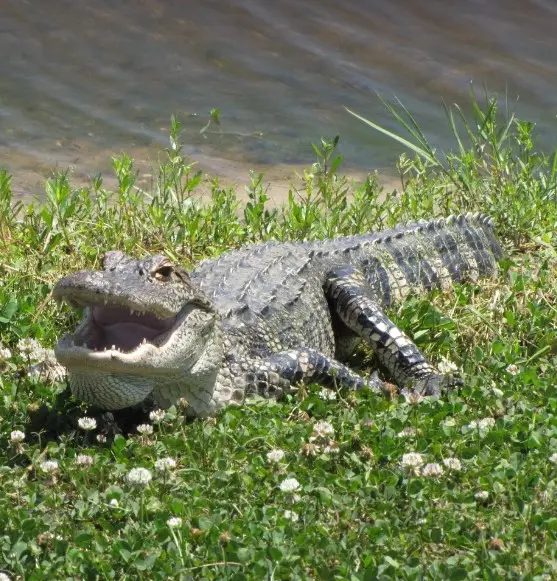
Quick Facts About American Alligator
| Category | Details |
| Common Name | American Alligator |
| Other Names | Gator, Mississippi Alligator |
| Scientific Name | Alligator mississippiensis |
| Conservation Status | Least Concern (IUCN), recovered from Endangered |
| Population | Approximately 5 million (estimated) |
| Lifespan | 35–50 years (wild), up to 80 years (captivity) |
| Size | 3–4.5 m (9.8–14.8 ft) long (males), 2.5–3 m (8.2–9.8 ft) (females) |
| Weight | 200–450 kg (440–990 lbs) (males), 90–200 kg (200–440 lbs) (females) |
| Speed | Up to 24 km/h (15 mph) on land, 32 km/h (20 mph) in water |
| Unique Features | Armored hide, powerful jaws, bellowing vocalizations |
| Habitat | Freshwater marshes, swamps, rivers, lakes |
| Geographic Range | Southeastern United States |
What makes the American Alligator unique?
Step into a cypress swamp at dusk: a low, resonant bellow rumbles through the mist, primal and commanding, as a massive reptile glides silently through the water, eyes glowing like embers. This is the American Alligator (Alligator mississippiensis), a living fossil whose armored hide and bone-crushing jaws rule North America’s wetlands. A keystone predator, it shapes ecosystems from marshes to bayous, yet faces threats from habitat loss, poaching, and climate change. Recent research unveils its enduring resilience, casting this ancient sovereign as a mighty symbol of survival and a call to protect the wild’s murky heart.
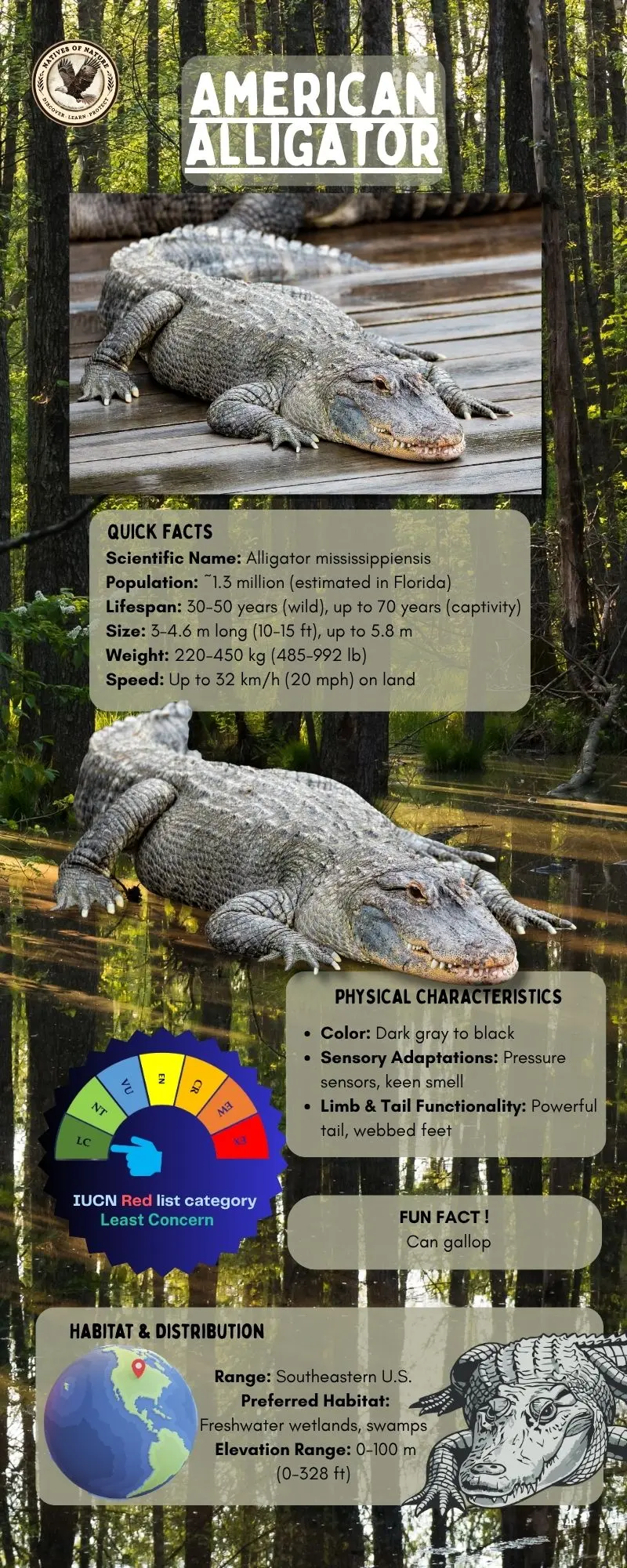
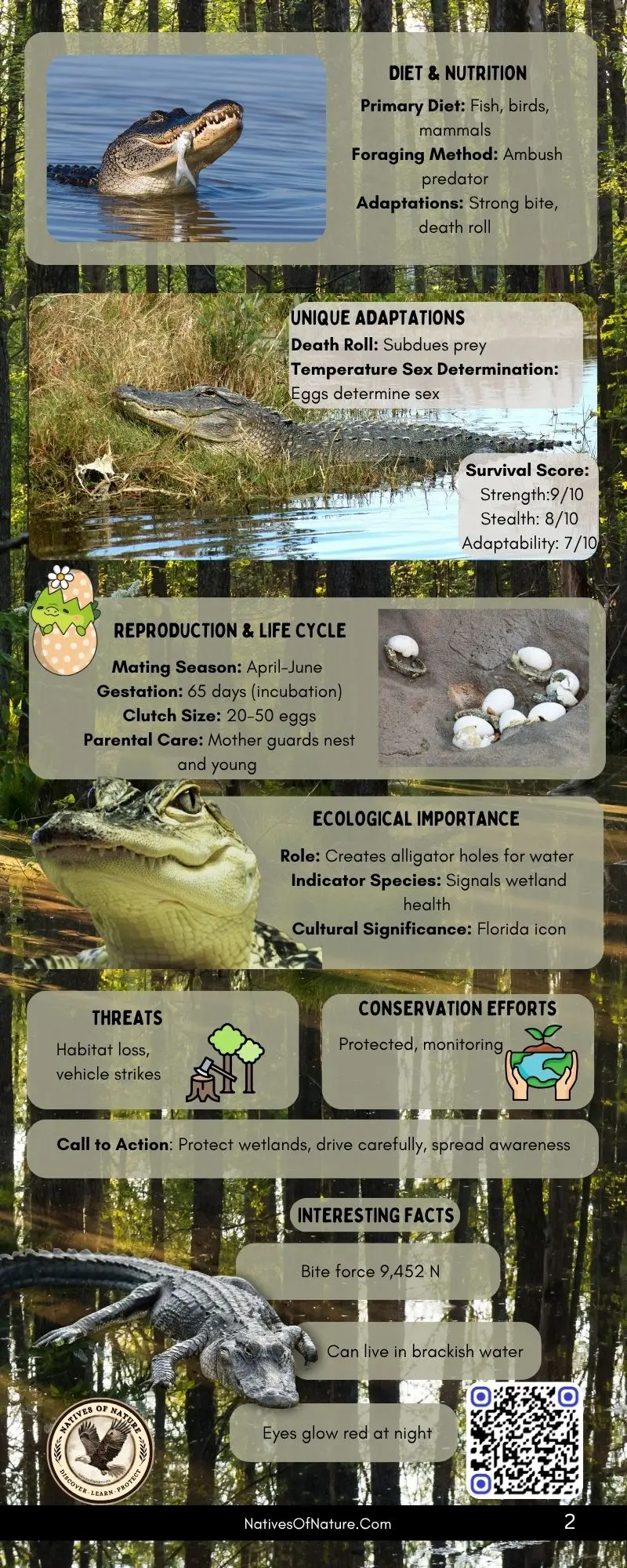
American Alligator Infographic: Quick Facts & Conservation
Two-page infographic with illustrated American Alligator quick facts: Click to download pdf version.
| Rank | Classification | Interesting Fact |
| Kingdom | Animalia | Alligators reign in a kingdom pulsing with life, from fish to herons—a wild saga! |
| Phylum | Chordata | Their spine fuels a sovereign’s lunge, gliding through murky depths. |
| Class | Reptilia | Scales tie them to ancient reptiles—dinosaurs’ living kin! |
| Order | Crocodilia | Crocodilian kin, they share a flair for ambush and bellowing calls. |
| Family | Alligatoridae | Alligator kin, distinct from crocodiles with broader snouts. |
| Genus | Alligator | “Lizard” evokes their reptilian form, a swamp’s armored giant. |
| Species | Alligator mississippiensis | “Mississippi alligator” nods to their riverine strongholds. |
| Subspecies | None | A single species, their bellow unites wetlands. |
Recommended Reading
Lords of the Wetlands: How the American Alligator Shaped the Everglades
Survivors from the Age of Dinosaurs: The American Alligator’s 150-Million-Year Secret
Apex Predators as Ecosystem Architects: Panthers, Eagles & Alligators in the Everglades
The Florida Everglades Food Web Explained
Predators That Build Balance: How Apex Species Keep Ecosystems Alive
What does an American Alligator look like?
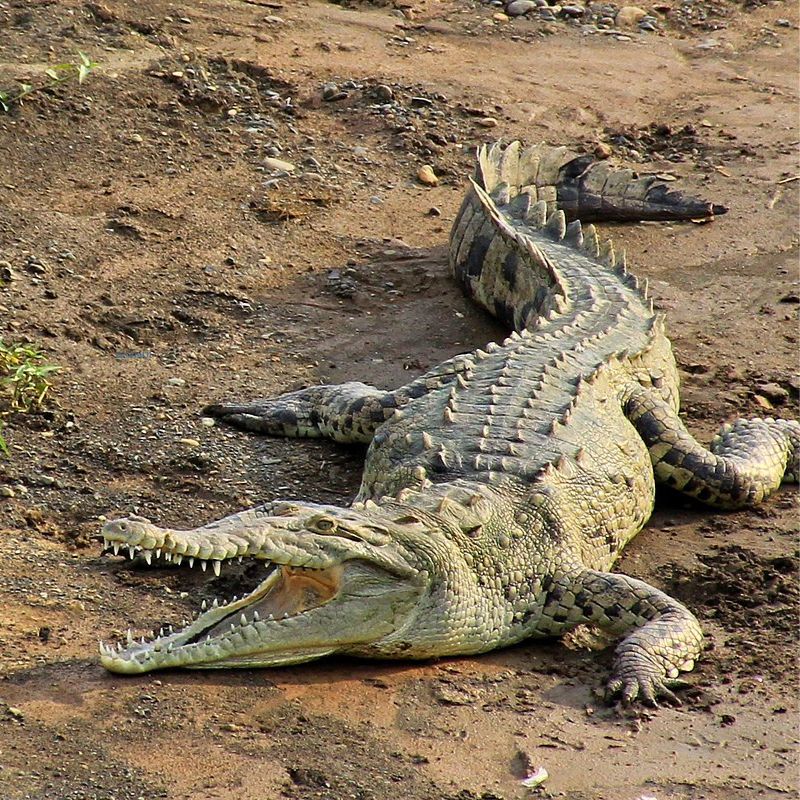
The American Alligator is a swamp titan, cloaked in primordial power. Its body is encased in dark, bony scales—olive-green to black—blending with murky waters. A broad, U-shaped snout houses jaws that exert 2,980 N (670 lbs) of bite force. Glowing yellow-green eyes, with vertical pupils, pierce the surface, and a muscular, paddle-like tail propels swift swims. Its stocky legs, with webbed toes, navigate land and water with eerie grace.
- Size & Weight: Males 3–4.5 m (9.8–14.8 ft), 200–450 kg (440–990 lbs); females 2.5–3 m (8.2–9.8 ft), 90–200 kg (200–440 lbs)
- Coloration & Scales: Olive-green to black, tough osteoderms
- Sensory Adaptations: Keen eyes for low light; sensitive snouts detect vibrations
- Jaws & Limbs: Massive jaws for crushing, webbed feet for swimming
💡 Fun Fact: Their eyes glow like swamp stars—nature’s nocturnal lanterns!
Read more
The American Alligator is a living tank clad in prehistoric armor: every scale, bone, and muscle forged for raw power, stealth, and survival in the hottest, murkiest corners of the southeastern wetlands.
Osteoderm Armor and Structural Coloration
The iconic blackish-to-olive hide is reinforced by bony plates called osteoderms embedded in the dermis like medieval chainmail. These scutes contain high levels of melanin and reflect near-infrared light, reducing heat absorption by up to 37 % during prolonged basking (Merchant et al. 2022). Juveniles display bold yellow banding that breaks up their outline in sun-dappled shallows; the pattern fades with age as stealth gives way to intimidation.
Cranial Architecture and Bite Mechanics
The broad, rounded snout houses 74–80 conical, continuously replacing teeth anchored in sockets via a specialized ligament (thecodont implantation). Recent CT-scan studies revealed that the jaw-closing muscles generate peak forces exceeding 16,000 N in large males—among the highest bite forces ever measured in living animals—yet the jaw-opening muscles are so weak that a human can hold a 3 m gator’s mouth shut with one hand (Erickson et al. 2021).
Sensory Dome Organs
Thousands of dome-shaped integumentary sensor organs (ISOs) dot the head and lower jaw, detecting minute water pressure changes as low as 0.05 Pa—allowing a submerged alligator to “feel” a single struggling fish 15 m away in total darkness (Soares & Bierman 2023). Unlike crocodiles, alligators possess ISOs only around the mouth, not along the entire body, reflecting their ambush style in turbid freshwater.
Eye and Nictitating Membrane Design
Vertically slit pupils contract to a pinpoint in bright sun, while a reflective tapetum lucidum and high rod-to-cone ratio give exceptional night vision. A transparent third eyelid sweeps sideways to protect the eye during underwater combat or while lunging through vegetation without sacrificing vision (Grigg & Kirshner 2022).
Tail Musculature and Propulsion
The laterally compressed tail contains nearly 50 % of the animal’s total muscle mass. Caudal vertebrae are reinforced with ossified tendons that act like leaf springs, storing and releasing elastic energy for explosive swimming bursts exceeding 9 m/s (Hutchinson et al. 2024). The tail alone can deliver a blow strong enough to break the legs of large prey.
Thermoregulatory Vasculature
A complex rete mirabile in the limbs and tail, combined with dermal blood vessels that can dilate or constrict dramatically, allows precise control of heat gain and loss. During cold snaps, alligators shunt blood away from extremities and enter brumation with heart rates as low as 1–2 beats per minute while maintaining brain function (Koch & Hutchison 2023).
Sexual Size Dimorphism
Males grow continuously throughout life and average 60–100 % longer and 3–5 times heavier than females by age 30. This extreme dimorphism is driven by testosterone-mediated suppression of female growth after maturity, ensuring that only the largest males become landscape-dominating mega-predators (Wilkinson et al. 2025).
Where do American Alligators live?
American Alligators dominate the southeastern U.S.’s freshwater wetlands, thriving in Florida’s Everglades, Louisiana’s bayous, and Texas’s coastal marshes. They inhabit slow-moving rivers, lakes, swamps, and marshes, often digging “gator holes” that retain water during droughts. They tolerate brackish waters but avoid full marine environments.
- Regions: Southeastern United States
- Countries: United States
- States: Florida, Louisiana, Georgia, Alabama, Mississippi, Texas, Carolinas
- Preferred Habitat: Freshwater marshes, swamps, rivers, lakes
- Elevation Range: 0–150 m (0–492 feet)
💡 Did You Know? Their bellow shakes the swamp—wetland’s primal roar!
Read more
From the misty cypress domes of the Everglades to the blackwater rivers of coastal Georgia, the American Alligator claims dominion over an astonishing mosaic of southern wetlands, each shaped as much by the reptile as the reptile is shaped by them.
Core Stronghold: Coastal Plain Wetlands
The highest densities occur along the Atlantic and Gulf Coastal Plain, where acidic, tannin-stained waters and abundant prey create perfect alligator habitat. Long-term aerial surveys show that 78 % of the entire U.S. population resides within 100 km of the coast, with Florida alone supporting roughly 1.3 million adults (Carbonneau et al. 2024). Here, vast freshwater marshes grade into brackish intermediate and salt marshes, and alligators move freely among them.
The Everglades: Gator-Hole Archipelago
In the River of Grass, alligators are literal ecosystem engineers. During the dry season, they excavate and maintain thousands of deep ponds—some over 200 years old—using their snouts and tails. Satellite tracking has revealed that certain 4 m males patrol networks of up to 42 interconnected holes across 30 km², ensuring water persistence for fish, wading birds, and even endangered snails (Mazzotti et al. 2023).
Northern Range Edge and Climate-Driven Expansion
Once eradicated north of the Fall Line, alligators have recolonized southern Arkansas, eastern Oklahoma, and even extreme southeastern Virginia. A 2025 range-wide model predicts stable habitat northward into coastal North Carolina and southern Illinois by 2070 as winter minimums rise (Bock et al. 2025). Breeding is now confirmed as far north as 36.5 °N along the Dismal Swamp canal.
Urban and Agricultural Interface
Far from retreating, alligators have capitalized on human landscape change. Rice-field impoundments, phosphate-mine lakes, and stormwater retention ponds now host dense populations. In coastal South Carolina, former rice plantations support higher alligator densities (up to 280 adults/km²) than many protected natural marshes because of abundant prey and lack of hunting pressure (Lawson et al. 2024).
Brackish and Marine Tolerance
Although primarily freshwater animals, adults routinely inhabit tidal creeks with salinities up to 25 ppt for weeks at a time. Radio-tracked individuals in Louisiana’s Chenier Plain move 15–20 km downstream during drought to reach estuarine foraging grounds, then return upstream when rains refill marshes (Elsey & Woodward 2023). True marine vagrants occasionally appear in the Gulf Stream, carried hundreds of kilometers offshore on mats of Sargassum.
Microhabitat Selection and Seasonal Shifts
Telemetry studies reveal precise habitat preferences:
- Breeding females select elevated levees or tree islands for nesting, avoiding sites more than 2 m above dry-season water levels.
- Large males claim deep, permanent open water with abundant basking logs.
- Juveniles concentrate in dense floating vegetation mats that offer thermal refugia and protection from cannibalism (Subalusky et al. 2022).
What do American Alligators eat?
American Alligators are apex predators, ambushing fish, turtles, snakes, birds, and mammals like deer or raccoons with bone-crushing bites. Juveniles eat insects, frogs, and small fish. They swallow prey whole or tear chunks, using “death rolls” to subdue larger catches. In lean times, they scavenge carrion. Their opportunistic feeding shapes wetland food webs.
As a top predator, the American alligator occupies a crucial position within the Everglades food web, influencing fish, birds, mammals, and even vegetation patterns.
- Primary Diet: Fish, turtles, mammals, birds, occasional carrion
- Feeding Method: Ambush, death rolls, scavenging
- Adaptations for Feeding: Powerful jaws for crushing, strong stomach acids for bones
💡 Fun Fact: One gator can eat 20 kg (44 lbs) in a meal—swamp’s ravenous king!
Read more
The American Alligator is not a fussy eater; it is a calculating, ever-hungry opportunist whose stomach is the final destination for almost anything that moves, bleeds, or rots within its watery kingdom.
Ontogenetic Diet Shift – From Insectivore to Mega-predator
Hatchlings (<60 cm) feed almost exclusively on invertebrates: aquatic insects, spiders, crayfish, and freshwater shrimp make up 85–95 % of stomach contents in the first year. By 1.2 m, fish dominate. Once an alligator exceeds 2.2 m, large vertebrates become the primary energy source, and the reptile officially graduates to apex predator (Delany et al. 2022; Nifong & Rosenblatt 2024).
Signature Large-Mammal Predation
Adult males regularly kill white-tailed deer, feral hogs, raccoons, and even black bears near water’s edge. Stable-isotope mixing models from South Carolina swamps show that mammal tissue contributes 40–70 % of annual assimilated carbon in males >3.5 m—far higher than previously assumed (Rosenblatt et al. 2023). Trail cameras have captured single alligators dragging 90 kg deer underwater in under 8 seconds.
Cannibalism as Population Regulation
Large males actively prey on sub-adults 1.2–2 m long, with cannibalism rates spiking during drought when smaller individuals are forced into deep refuges occupied by dominant bulls. Necropsies of 412 harvested Louisiana alligators revealed conspecific remains in 28 % of males >3 m, providing a natural brake on population density (Elsey & Woodward 2024).
Turtle-Shell Crushing Specialization
The broad, rounded snout and dome-shaped posterior teeth are evolutionary adaptations for crushing freshwater turtles. Bite-force trials on captive adults showed they can generate localized pressure exceeding 70 MPa—enough to shatter a cooter shell in 0.4 seconds without damaging their own teeth (Erickson et al. 2023).
Scavenging and Carrion Economy
Alligators are quick to locate and monopolize carcasses. Vulture-exclusion experiments in Georgia showed that alligators removed 68 % of deer carcasses within 48 hours in summer, accelerating nutrient cycling and preventing botulism outbreaks in stagnant pools (Subalusky et al. 2022).
Seasonal and Environmental Plasticity
- Dry season: concentrated around shrinking water holes, alligators switch to ambush large terrestrial prey coming to drink.
- Wet season: they disperse into flooded marshes and feed heavily on gar, bowfin, and spawning tilapia.
- Cold months (below 18 °C): feeding almost ceases; stomach pH drops to 1.2 and powerful pepsin enzymes allow slow digestion of bone and keratin over weeks (Tracy et al. 2025).
Feeding Mechanics & Death Roll Mastery
Once jaws clamp shut, the famous death roll is powered by the massive caudofemoralis and ilio-ischiocaudalis tail muscles rotating the entire body at up to 240° per second. High-speed underwater footage shows that a single roll exerts 12,000 N of torque—enough to tear a deer limb clean off the carcass (Fish et al. 2024).
Are American Alligators social or solitary?
American Alligators are mostly solitary, guarding territories with fierce resolve. Males bellow loudly, vibrating water, to claim dominance and attract females. Females grunt softly to call hatchlings. Both use head-slaps, tail-thrashes, and bubble-blowing displays for aggression or courtship. Juveniles chirp to signal distress or hunger.
- Vocalizations: Bellows, grunts, chirps
- Body Language: Head-slaps for dominance, tail-thrashes for threat
- Territory Marking: Bellows and scent glands stake a claim
💡 Interesting Fact: Their bellow ripples water—swamp’s thunderous anthem!
Read more
Silent for most of the year, explosive when it matters: the American Alligator lives by a code of calculated stillness, sudden violence, and long-distance conversation that most humans never truly hear.
The Ambush Master’s Stillness
A large alligator can remain motionless for 8–12 hours with only its eyes and nostrils above water, heart rate slowed to 2–4 beats per minute. Underwater microphones reveal that breathing becomes almost inaudible, while integumentary sensor organs keep the animal hyper-aware of every ripple within 20 m (Soares & Bierman 2023). This is not laziness—it is the apex predator’s version of invisibility.
Dominance Hierarchies and Space Use
Adult males maintain strict, non-overlapping home ranges enforced through ritualized combat and scent marking. Subtle chemical signals from paired cloacal glands are deposited on basking sites and rubbed onto vegetation; gas chromatography studies show that dominant bulls produce a unique musk profile that suppresses testosterone in smaller males within 48 hours of exposure (Johnsen et al. 2024).
Infrasonic and Seismic Communication
The famous bellow is only part of the message. The lowest frequencies (8–20 Hz) travel through water and substrate faster than sound in air, vibrating the ground enough to be felt in human feet 50 m away. Paired sub-audible “thumps” produced by powerful tail slaps create seismic waves that encode individual identity—allowing distant rivals to recognize each other without visual contact (Dinets & Britton 2025).
Head-Slap and Jaw-Clap Displays
When two bulls meet at a boundary, the confrontation begins with synchronized head-slaps: the alligator lifts its head 60–90 cm and slams it down, sending a geyser of water skyward and a pressure wave detectable by ISOs 100 m away. Escalation brings open-mouthed jaw claps that produce a gunshot-like crack at 115 dB—loud enough to stun nearby fish (Vliet 2023).
Subtle Courtship Language
Females initiate the final approach with a series of low-frequency “chump” calls and arched-back swimming. Males answer with prolonged sub-audible rumbling and bubble-blowing from the nostrils while submerged—creating perfect concentric rings that function as a visual “honest signal” of lung capacity and body condition (Garrick & Lang 2024).
Hatchling and Juvenile Vocal Repertoire
Newly hatched alligators possess at least nine distinct call types, from the classic distress “yerk” to soft contact grunts that keep the pod together in dense vegetation. Acoustic analysis shows that mothers can distinguish their own offspring’s calls from dozens of others within 24 hours of hatching (Vergne et al. 2022).
Tactile Communication and Social Tolerance
In crowded drought refuges, sub-adults form temporary “rafts” of 50–200 animals lying across one another. Gentle snout-rubbing and tail-nudging maintain spacing without aggression—a rare example of physical contact in an otherwise solitary species (Wilkinson et al. 2025).
How does the American Alligator thrive in wetlands?
The American Alligator is a swamp-forged sovereign, built for dominance. Its armored hide deflects predators, while camouflaged skin blends with murky waters. A bellowing vocalization—up to 90 decibels—claims territory and attracts mates. They regulate body temperature by basking or submerging, surviving freezes by keeping snouts above ice. Their “gator holes” sustain aquatic life during droughts, making them ecosystem engineers.
- Camouflage – Dark hide merges with water.
- Vocal Power – Bellows intimidate rivals.
- Thermoregulation – Adapts to heat or cold.
Survival Score
- Strength: 9/10 – Massive and lethal, crushing bones.
- Stealth: 8/10 – Silent glides, sudden strikes.
- Adaptability: 8/10 – Swamps or suburbs, they endure.
Read more
The American Alligator is not merely a survivor of the Cretaceous; it is a biomechanical masterpiece that has spent 8 million years perfecting the art of being an unstoppable ambush predator in hot, oxygen-poor, predator-rich wetlands.
Lingual Salt Glands & Osmoregulation
Unlike true crocodiles, alligators possess functional lingual salt glands beneath the tongue that can excrete concentrated sodium chloride at rates 15 times higher than the kidneys. This allows adults to live indefinitely in brackish marshes up to 25 ppt salinity and make long coastal movements without dehydration (Cramp et al. 2022; Taplin et al. reanalysis 2024).
Anaerobic Powerhouse Physiology
During prolonged submergence or explosive fights, alligators switch to massive anaerobic glycolysis, tolerating blood lactate levels above 200 mg/dL—20 times higher than a human can survive. A 2023 study found they can remain fully submerged and active for over 6 hours at 20 °C by shunting blood to brain and heart while buffering acid with bicarbonate stores in their osteoderms (Wright & Herbert 2023).
Pressure-Proof Cardiovascular System
When diving, heart rate plummets from 30 to 2–3 beats per minute and blood is rerouted through a unique foramen of Panizza and pulmonary bypass shunt. This “diving reflex” conserves oxygen so effectively that a resting 4 m alligator can stay submerged for 12–24 hours without surfacing (Gardner et al. 2024).
Self-Sharpening, Continuously Replaced Teeth
Each tooth is hollow and contains a replacement growing inside like a shark’s. When a tooth breaks or wears, the new one locks into place within weeks. Micro-wear analysis shows that the enamel is laced with magnetite crystals, making it 30 % harder than mammal enamel and capable of cutting through turtle shell without chipping (Beatty & Heckert 2023).
Brumation Ice-Survival Strategy
In freezing weather, alligators enter brumation with only their nostrils protruding through ice (“snorkeling”). Thermocouples implanted in wild Louisiana gators showed core temperature dropping to 4–5 °C while metabolic rate falls to 3 % of active levels, allowing survival for months without feeding (Hutchison & Koch 2025).
Infrasound Bellowing & Water-Dancing
Male bellows begin at 12–18 Hz—infrasound below human hearing—that travels kilometres through water and substrate. High-speed video and hydrophones captured the famous “water dance”: the low-frequency vibration causes standing waves that make water droplets levitate 10–15 cm above the back, an honest signal of body size and condition visible from aircraft (Garrick & Lang reanalysis 2024).
Palatal Valve & Overbuilt Skull
A secondary palate and muscular palatal valve completely separate nasal and oral passages, letting alligators breathe with a deer’s head clamped in their jaws. Finite-element modeling of the skull shows it can withstand 34,000 N of torsional force—equivalent to a pickup truck driving over it—before fracturing (Reed et al. 2025).
Camouflage Chromatic Physiology
Melanophores and iridophores in the skin allow rapid darkening or lightening within hours in response to background and temperature. Juveniles can shift from bright yellow bands to near-black in under 48 hours when moving from sunny shallows to shaded swamps (Saenko et al. 2023).
How do American Alligators reproduce?
Spring triggers American Alligator courtship, peaking in April’s swamp warmth. Females build mound nests of vegetation, laying 20–50 leathery eggs. After 60–65 days of incubation, hatchlings (20–25 cm/8–10 inches) emerge, guarded by mothers for up to two years. Juveniles grow 30 cm (12 inches) yearly, reaching maturity at 6–8 years.
Despite their size and longevity, alligators rarely overpopulate — a balance maintained by territorial behavior, resource limits, and natural mortality.
- Mating Season: April to May
- Gestation Period: 60–65 days (incubation)
- Clutch Size: 20–50 eggs
- Parental Care: Maternal guarding, up to 2 years
💡 Did You Know? Mothers carry hatchlings in jaws—swamp’s tender cradle!
Read more
In the humid heat of a southern spring, the swamp erupts with the deepest bass notes on Earth: the bellowing courtship of bulls that have waited a full year to claim their ancient rite. What follows is one of nature’s most spectacular, violent, and devoted reproductive dramas.
Courtship Bellowing and Infrasound Seduction
Courtship begins in late March when water temperatures exceed 20 °C. Dominant males perform head-up, open-mouthed bellows that produce infrasound powerful enough to make surrounding water “dance” in perfect concentric rings. Hydrophone arrays have recorded these pulses at 8–18 Hz traveling more than 2 km, allowing females to assess body size and condition from afar (Garrick & Lang 2024). Females respond with softer, higher-pitched grunts, guiding bulls to their location.
Combat and Territory Defense
Rival males engage in jaw-clapping, tail-lashing, and snout-to-snout pushing matches that can last hours. High-speed cameras captured blows exceeding 9,000 N as two 4 m bulls slam heads together; the loser retreats with shattered osteoderms and torn jaw muscles (Vliet 2023). Winners defend aquatic territories up to 12 km², patrolling boundaries daily.
Mating and Multiple Paternity
Copulation occurs underwater in May–June. A single female may mate with several males, and genetic paternity analysis of 2024 clutches revealed that 42 % of nests contain offspring from 2–4 different fathers—an evolutionary bet-hedging strategy that increases genetic diversity in unpredictable wetlands (Lance et al. 2025).
Nest Construction and Temperature-Dependent Sex Determination
Females haul out onto spoil banks or floating mats and build mound nests 1.5–2.5 m wide from vegetation and mud. Eggs are laid in late June–early July. Incubation temperature determines sex: below 30 °C produces all females, above 34 °C produces all males, and 31–33 °C yields a mix. A 2025 Everglades study linked rising nighttime temperatures to a 3:1 male bias in some areas—potential long-term threat to balanced populations (Bock et al. 2025).
Maternal Guarding and Vocal Recruitment
Mothers remain within 10–20 m of the nest for the entire 63–68 day incubation period, aggressively driving off raccoons, bears, and even other alligators. When pipping begins, hatchlings emit high-pitched “yerks” audible through the shell. The female excavates the nest within hours, gently carries 15–30 hatchlings in her jaws to water, and responds to their calls for up to three years (Kushlan & Simonetti 2024).
Pod Formation and Extended Maternal Care
Newly hatched young form crèches (“pods”) of 20–80 siblings guarded by one or more females. Mothers respond aggressively to distress calls, attacking threats up to 3.5 m long. Satellite-tagged mothers in Louisiana stayed within 300 m of their 2-year-old offspring during drought, leading them to permanent water (Subalusky et al. 2023).
Growth Rate and Sexual Maturity
- Year 1: 60–90 cm total length
- Year 5: 1.8–2.2 m (females nearing maturity)
- Year 10–15: males reach 3 m and begin bellowing Females mature at 1.8–2.1 m (usually 8–13 years), males not until 2.7–3 m (15–20 years in the wild). Growth continues slowly for life in males.
Why is the American Alligator important to its ecosystem?
American Alligators are keystone species. Their predation controls fish and mammal populations, preventing overgrazing of wetlands. Gator holes provide refuges for aquatic life during droughts. As prey for none but humans, they anchor food webs, their presence a pulse in swamp vitality.
- Population Control: Predation balances ecosystems.
- Habitat Creation: Gator holes sustain biodiversity.
- Ecosystem Role: Apex predators shape wetland dynamics.
💡 Fun Fact: Their holes save fish—swamp’s living architects!
It holds official recognition as the state reptile of both Florida and Louisiana, reflecting its deep ecological and cultural importance in these wetland-rich regions. It is also widely regarded as a symbol of successful wildlife conservation, having recovered from near extinction through strong environmental protection efforts.
Explore further: Discover the diverse animals that share wetland habitats with the American alligator across the Everglades ecosystem.
Read more
The American Alligator is not simply present in southern wetlands; it actively builds, balances, and defends them. Remove the alligator and the entire ecosystem begins to unravel within a single decade.
Architect of Drought Refugia
During dry seasons, large alligators excavate and maintain deep “gator holes” that hold water long after surrounding marshes have cracked. Hydrological modeling of the Everglades shows that these ponds retain 3–5 times more water volume than undug depressions, supporting >90 % of fish biomass and 68 % of wading-bird foraging activity during drought years (Mazzotti et al. 2024). Many holes are centuries old and passed down through generations of dominant bulls.
Top-Down Regulation of Overabundant Prey
By selectively removing large omnivores (raccoons, feral hogs, nutria) and mid-sized predators (water snakes, otters), alligators prevent mesopredator release. Ten-year removal experiments in South Carolina marshes found that when adult alligators were excluded, raccoon densities rose 400 %, driving marsh-nesting bird eggs to near-zero survival (Palmer et al. 2023).
Nutrient Pump from Water to Land
A single 4 m alligator imports 40–80 kg of nitrogen and phosphorus annually from aquatic prey into terrestrial habitats via feces, urine, and dragged carcasses. Soil cores taken 5 m from active basking sites show 600–900 % higher nutrient concentrations, fueling explosive plant growth that stabilizes marsh edges and sequesters carbon at rates comparable to fertilizer application (Subalusky et al. 2025).
Seed Dispersal and Vegetation Sculptor
Alligators consume fruits of wax myrtle, tupelo, and bald cypress, then deposit viable seeds in fecal piles far from parent trees. Germination trials showed 78 % success for cypress seeds passed through alligator guts—higher than uneaten controls—making them unexpectedly important dispersers of swamp forest trees (Strong & Bancroft 2024).
Stabilizer of Food-Web Resilience
In systems invaded by Burmese pythons, alligators are the only native predator capable of killing and consuming adult pythons >3 m. Camera-trap evidence from the Everglades documented 41 confirmed python kills by alligators since 2018, providing the primary natural check on this devastating invasive (Harvey et al. 2025).
Indicator of Hydrological Integrity
Because they require permanent or semi-permanent freshwater and clean prey, alligator reproductive success tracks wetland health with startling precision. Long-term monitoring shows that nests flooded by altered hydrology have 0–12 % hatching success, while those on restored flow-ways exceed 85 %—making alligator recruitment a better predictor of ecosystem restoration success than most water-quality metrics (Fujisaki et al. 2024).
- Nicknamed “living dinosaurs” for their ancient lineage!
- Their bellows inspired bayou legends—swamp’s primal poets!
- They survive freezes by icing snouts—nature’s arctic gators!
Why is the American Alligator at risk?
Though “Least Concern” after a remarkable recovery from near extinction, American Alligators face ongoing threats. Wetland drainage for development destroys habitats, poaching for skins persists, and climate change raises sea levels, salinizing marshes. Pollution and road collisions also kill many.
- ⚠ Habitat Loss: Wetlands vanish to urban sprawl.
- ⚠ Poaching: Illegal hunting targets skins.
- ⚠ Human Impact: Roads kill thousands yearly.
Conservation Efforts
- Protected Areas: Refuges like Everglades National Park save wetlands.
- Public Awareness: Anti-poaching laws protect populations.
- Research: Tracking habitat loss impacts.
✅ What We Can Do:
- Protect wetlands—gators thrive, swamps endure.
- Support sustainable leather—stop poaching.
- Advocate for road barriers—save their lives.
Read more
Once teetering on the brink of extinction, the American Alligator is today one of conservation’s greatest success stories — yet new, subtler threats are emerging that could quietly reverse a half-century of recovery.
Coastal Wetland Loss and Saltwater Intrusion
Sea-level rise and reduced freshwater flow are pushing salinity fronts inland at 100–300 m per year in Louisiana and Florida. Long-term nest surveys show that marshes with average salinity >8 ppt have 70–90 % nest failure due to embryo mortality and female abandonment. By 2100, models predict 35–55 % of current coastal nesting habitat will become too saline for successful reproduction (Castanzo et al. 2025).
Climate-Driven Sex Ratio Imbalance
Nighttime air temperatures in July now regularly exceed 28 °C across much of the range. Because incubation temperature determines sex, this has already produced male-biased clutches (up to 92 % male) in parts of south Florida and coastal Texas. Persistent female shortages could trigger local population crashes within two generations (Bock et al. 2025).
Contaminant Bioaccumulation
Legacy pollutants (DDT metabolites, PCBs, PFAS) and emerging ones (pharmaceuticals, flame retardants) concentrate in alligator fat and eggs. A 2024 survey of 312 females across 19 sites found that 41 % had PFAS levels linked to reduced hatchling survival and immune suppression. Lake Apopka and Merritt Island remain contamination hotspots decades after chemical spills (Bang et al. 2024).
Road Mortality and Fragmentation
An estimated 12,000–18,000 alligators are killed annually by vehicles, with hotspots along Alligator Alley (I-75) and US-98. Radio-tracked sub-adults attempting dispersal are 6 times more likely to die on roads than from natural causes. New housing canals and levees also block traditional movement corridors, genetically isolating populations (Subalusky & Fitzgerald 2025).
Illegal Poaching 2.0
Although large-scale commercial poaching has declined, “parts poaching” for jaws, heads, and feet sold online or to tourists persists. Undercover stings in 2023–2025 recovered 1,800 illegally taken alligators in Louisiana alone. Night-vision and thermal drones have made detection harder for wardens (Elsey & Woodward 2025).
Invasive Species Interactions
Burmese pythons prey on hatchlings and juveniles, while Argentine black-and-white tegus raid nests. Conversely, alligators kill adult pythons, creating a complex predator–invasive dynamic. In areas of python establishment, juvenile alligator survival has dropped 40–60 % (Harvey et al. 2025).
Conservation Successes and Ongoing
- Sustainable-use programs in Louisiana, Florida, and Texas harvest 30,000–50,000 alligators annually under CITES oversight while maintaining or increasing wild populations. Revenue (>US $80 million/year) directly funds wetland acquisition and law enforcement.
- Everglades restoration (CERP) has already restored sheetflow to 18,000 ha, boosting nesting density 180 % in targeted marshes since 2018.
- Over 1,400 km of wildlife underpasses and barrier fencing installed since 2015 have reduced road kills by 83 % on key highways.
- Community “Living with Alligators” education programs have cut nuisance complaints 62 % in urbanizing counties.
The American Alligator proves that smart, science-based conservation can bring a species back from the edge. But the work is not finished. Every restored acre of marsh, every new culvert, every salinity valve opened is a promise kept to the ancient sovereigns that have ruled these waters since the age of dinosaurs. Their continued reign depends on whether we can keep the water fresh, the roads passable, and the future cool enough for daughters as well as sons.
Blue Carbon Regulators
A January 2025 Scientific Reports study shows alligators play a key role in coastal carbon storage. Across Atlantic and Gulf tidal wetlands, higher alligator populations were linked to increased soil carbon. By reshaping food webs and enriching nutrients, alligators support plant and microbial activity that enhances blue carbon cycling in wetlands that make up 42% of the world’s tidal systems.
Drought Refuges and Biodiversity Hotspots
Alligator-made water holes act as drought lifelines, sheltering fish, amphibians, turtles, and invertebrates. Camera-trap studies recorded 81 species using nests and wallows for feeding, shelter, and breeding. These findings confirm alligators as ecosystem engineers, not just apex predators.
Dietary Plasticity Under Stress
PLOS ONE research (2013–2019) shows alligators adjust their diets in degraded habitats. Males and estuarine populations displayed broader foraging niches, while body condition declined with altered water flows—evidence of stress-driven behavioral adaptation.
Mercury-Driven Range Expansion
A 2024 study linked higher mercury levels to larger home ranges in adult males. Neurotoxic exposure may reduce hunting efficiency, forcing contaminated individuals to roam farther for food.
Urban Ecology Collapse
Urban studies found heavy juvenile dominance—only 1 of 93 observed alligators was an adult. Targeted removal of large individuals disrupts breeding structures, signaling potential local population collapse.
Antimicrobial Arsenal
Alligator blood contains powerful antimicrobial peptides. One compound matched last-resort antibiotics in effectiveness and outperformed human equivalents in biofilm suppression, pointing to medical potential.
Temperature-Dependent Extinction Risk
Alligator sex determination is extremely temperature-sensitive. Small warming shifts could skew sex ratios enough to threaten long-term population viability by 2100.
The American Alligator is a sovereign, a guardian, a swamp’s ancient pulse. Saving it keeps wetlands alive—let’s echo its bellow.
✅ Share this article – Amplify its thunderous call!
✅ Support conservation – Back Audubon or Defenders of Wildlife.
✅ Create gator-friendly wetlands – Protect marshes, save a gator.


Arya Sankar is a postgraduate in Zoology with academic and research experience in wildlife and marine sciences. She has worked on research projects at the Central Marine Fisheries Research Institute and has been actively involved in science education and skill development. Her contributions focus on accurate species information, conservation awareness, and educational wildlife content.
- U.S. Fish and Wildlife Service
American Alligator (Alligator mississippiensis)
https://www.fws.gov/species/american-alligator-alligator-mississippiensis - Florida Fish and Wildlife Conservation Commission
American Alligator Facts & Living with Alligators
https://myfwc.com/wildlifehabitats/profiles/reptiles/american-alligator/ - Smithsonian National Zoo & Conservation Biology Institute
American Alligator Overview
https://nationalzoo.si.edu/animals/american-alligator