She hadn’t seen her son in twelve years. One rising trill cuts through the Scottish dawn—and from twenty meters away, the adult calf whips around, racing straight to her. This is not instinct. She just called him by name.
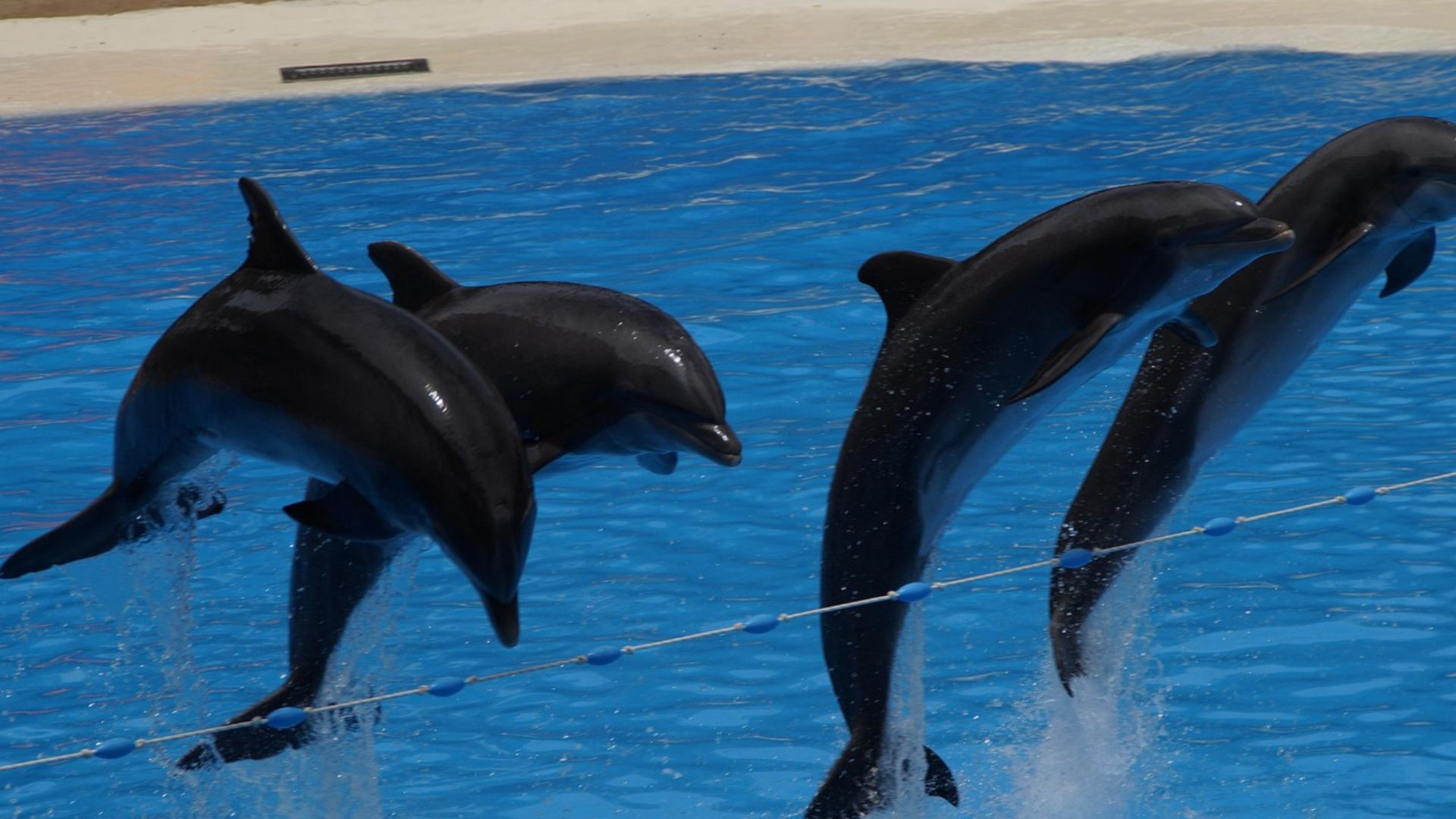
Beneath the waves, bottlenose dolphins speak a language of lifelong acoustic signatures so precise that scientists rank it among the closest analogues to human names in the animal kingdom. Decades of field recordings, playback experiments, and brain-imaging studies reveal a communication system built on identity, emotion, and memory—one that holds fluid, multi-generational societies together across thousands of kilometers of ocean.
The Discovery That Rewrote the Rules
In the 1960s, Melba and David Caldwell noticed captive dolphins repeating certain whistles obsessively. By the 1990s, Dr. Vincent Janik at the University of St Andrews turned those hunches into proof: every dolphin invents a 100 % unique signature whistle within its first year—and keeps it for life.
Play a recording of a dolphin’s own whistle underwater and it spins toward the speaker, often answering back. Play a stranger’s and it swims away. “That was the moment we realized they were broadcasting identity the way humans say ‘Hey, it’s Sarah,’” Janik reflects. Complex whistle patterns and signature calls suggest advanced cognition and long-term memory in bottlenose dolphins.
A 2023 study in Proceedings of the Royal Society B pushed the boundary further: wild Scottish dolphins still recognize childhood friends’ whistles after 20+ years apart—the longest social memory ever documented in a non-human species.
Crafting a Name: Vocal Learning in Action
Dolphin calves don’t inherit whistles—they invent them. Between 1–4 months old, they listen to the acoustic tapestry around them, copy fragments (especially ~30 % from mom), then sculpt something entirely new.
Even identical twins sound different.
Woods Hole Oceanographic Institution’s 30-year Sarasota dataset shows the core contour stays stable for 50+ years, with only tiny tweaks for emotion or context. Dr. Laela Sayigh, who has tracked the same individuals since 1984, says: “We can blind-identify a dolphin from a single whistle the way you recognize your best friend’s voice on the phone.”
Calling Across the Blue: Names in Conversation
In murky water or at night, visibility collapses to zero. Sound becomes everything.
- Mothers and calves exchange whistles 300–1,000 times daily—more than any other non-human pair.
- Males in lifelong alliances mimic each other’s whistles with 99 % accuracy to coordinate hunts or court females.
- Separated pod members reunite by copying the absent friend’s exact signature—sometimes across 20 km (12 mi) using the deep-sound channel.
The 2013 PNAS experiment that sealed the deal: dolphins deliberately copy an ally’s whistle to re-establish contact, then pause for a reply. This call-and-response is the clearest evidence of referential communication in the wild.
The Full Acoustic Orchestra
Signature whistles make up 40–60 % of all vocalizations. The rest is a symphony:
- Echolocation clicks – up to 600 per second, detecting a golf ball at 110 m (360 ft) (Smithsonian).
- Burst-pulse squawks – arguments, flirtations, victory screams.
- Harmonized distress wails – summon help from kilometers away.
- Synchronized alliance whistles – male coalitions performing acoustic dominance displays.
Dr. Stephanie King, Shark Bay Dolphin Project: “The same whistle can sound playful, urgent, or mournful depending on rhythm and amplitude. It’s tone of voice, dolphin-style.”
Quick Facts Table
| Trait | Measurement | Notes |
| Signature whistle length | 0.2–2 seconds | Stable for 50+ years |
| Frequency range | 3–40 kHz | Inaudible to humans above 20 kHz |
| Recognition after separation | 20+ years (Scotland, 2023) | Longest social memory outside humans |
| Mother-calf daily exchanges | 300–1,000 | Highest rate in any species |
| Mother influence on calf whistle | ~30 % | Creates family “accents” |
| Maximum range (deep water) | 20–25 km (12–15 mi) | Via SOFAR channel |
| Echolocation click rate | Up to 600/second | Detects golf-ball-sized fish at 110 m |
| Whistle uniqueness in 200-dolphin pod | 100 % distinct | Zero overlap in large datasets |
Communication Complexity: Where Dolphins Rank
| Species | Vocal Learning | Individual Names | Referential Use | Emotional Modulation | Social Memory |
| Human | Yes | Yes | Yes | Yes | Lifetime |
| Bottlenose Dolphin | Yes | Yes | Yes | Yes | 20+ years |
| Elephant | Yes | Limited rumbles | Limited | Yes | 10+ years |
| Parrot | Yes | Learned calls | No | Yes | Years |
| Chimpanzee | No | No | Gestures only | Yes | Decades |
| Dog | Limited | No | No | Yes | Years |
The Brain Behind the Voice
Dolphin temporal lobes—the auditory processing centers—are proportionally larger than in any primate. Spindle-cell density linked to empathy is three times higher than in humans. NOAA Fisheries’ 2024 brain-mapping confirms: the neural hardware for theory of mind is all there.
When the Ocean Gets Too Loud
Ocean noise has doubled every decade since 1950 (NOAA 2025). In shipping lanes, signature-whistle detection drops 70 %. Mothers lose calves permanently. Alliances fracture. Chronic stress spikes cortisol, crashes reproduction.
The Marine Mammal Commission now classifies underwater noise as a pollutant on par with oil spills. Solutions exist: quieter propellers, speed restrictions, acoustic sanctuaries. Protecting dolphin names means giving the sea back its silence.
Communication becomes especially important during cooperative hunting, where coordinated movements increase success rates.
The Living Language of Connection
Every whistle is a thread in an invisible web that spans generations, oceans, and lifetimes. Bottlenose dolphins do not merely survive—they converse, reconcile, teach, mourn, and call one another home across decades.
In a world that grows louder by the day, their voices remain one of nature’s clearest reminders: true intelligence is measured not by what we say, but by how deeply we listen—and how faithfully we answer when someone calls us by name.
References
- Janik, V. M., et al. (2023). “Long-term memory of signature whistles.” Proceedings of the Royal Society B.
- King, S. L., & Janik, V. M. (2013). “Bottlenose dolphins can use learned vocal labels.” PNAS.
- Shark Bay Dolphin Research Project (2025). Annual acoustic report.
- Fripp, D., & Tyack, P. L. (2022). “Signature whistle development.” Marine Mammal Science.