Marsh Rabbit
The Phantom Hopper of the Southern Swamps
Sylvilagus palustris
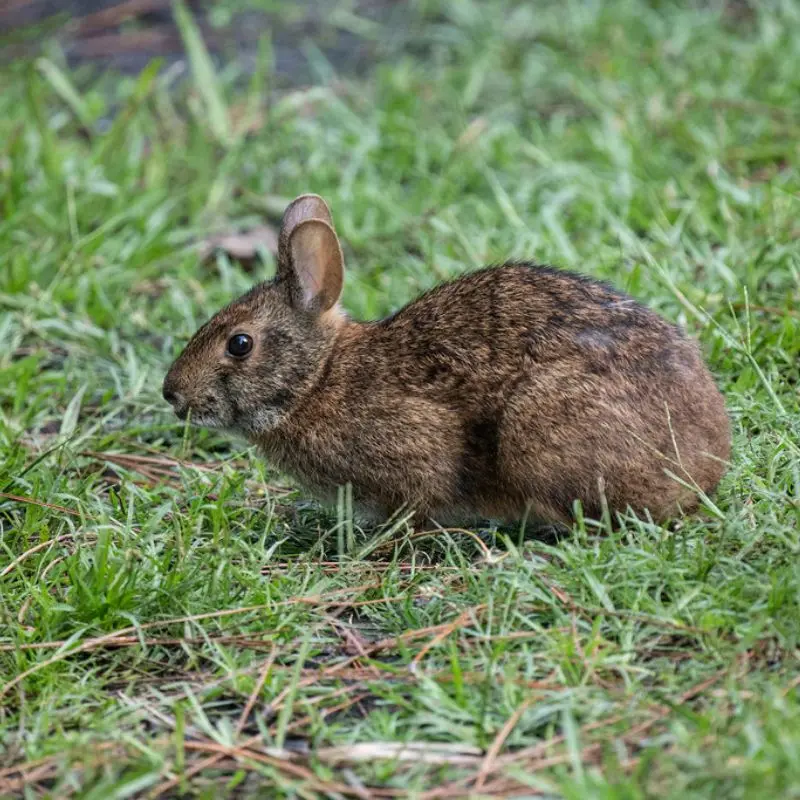 Credit: Kristof Zyskowski · inaturalist · CC-BY
Quick Facts About Marsh Rabbit
| Category | Details |
| Common Name | Marsh Rabbit |
| Other Names | Swamp Rabbit (related), Pontoon Rabbit |
| Scientific Name | Sylvilagus palustris |
| Conservation Status | Least Concern (IUCN, 2020); State concern in some areas |
| Population | ~500,000–1 million (wild, Southeast U.S., 2023 estimate) |
| Lifespan | 1–4 years (wild) |
| Size | 38–45 cm (15–17.7 inches) body length |
| Weight | 1.1–2.3 kg (2.4–5.1 lbs) |
| Speed | Up to 30 km/h (19 mph) in bursts |
| Unique Features | Dark brown fur, short ears, swims readily |
| Habitat | Salt marshes, freshwater wetlands, mangroves |
| Geographic Range | Coastal Southeast U.S. (Virginia to Florida) |
What makes the Marsh Rabbit extraordinary?
In the moonlit tangle of a Georgia salt marsh, a dark blur bounds across cordgrass, its stub tail flashing like a shortstop’s glove darting for a grounder in the fog. This is the Marsh Rabbit (Sylvilagus palustris), a elusive lagomorph whose semi-aquatic leaps and wetland camouflage define the tidal fringes of the Southeast U.S. A keystone herbivore shaping marsh vegetation, it faces threats from habitat loss and predation. A 2023 study in Journal of Mammalogy reported localized declines, while state conservation efforts highlight its role, casting this phantom hopper as a marsh’s MVP and an urgent call for Americans to protect its swampy realms, much like we champion our cottontails.
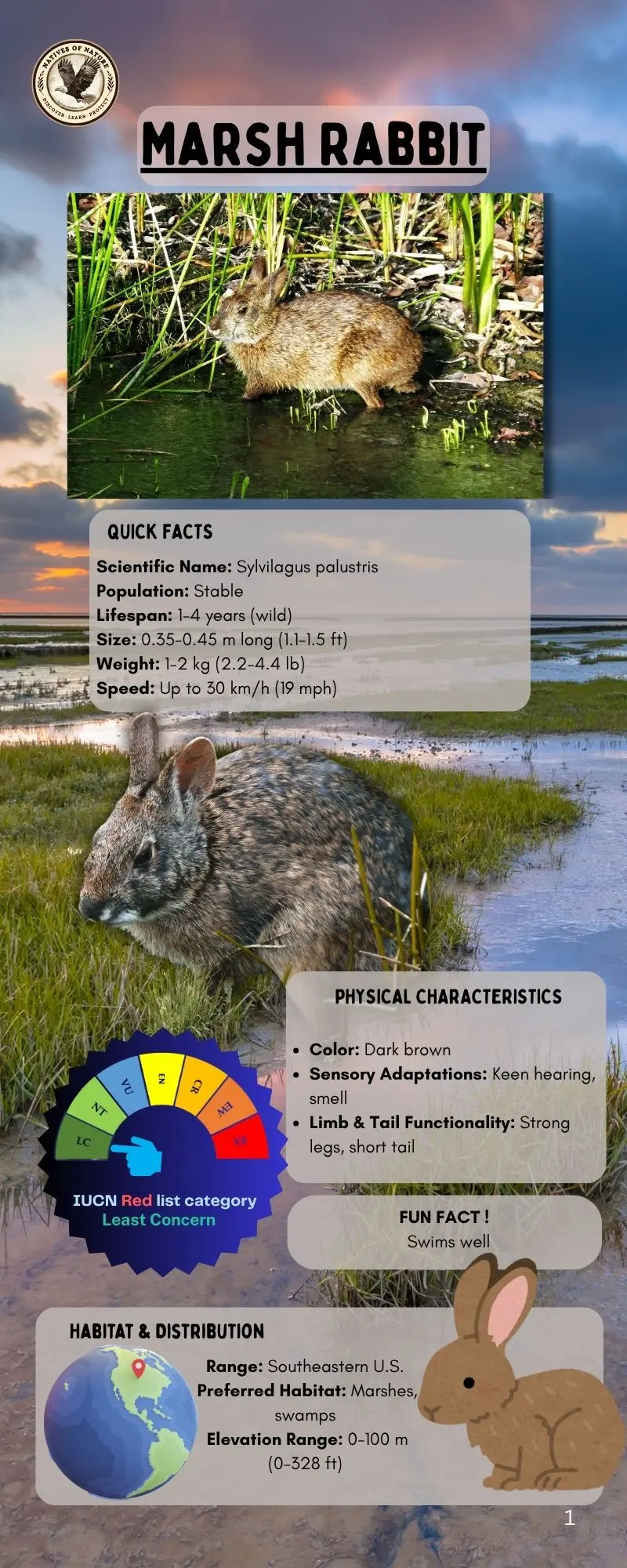
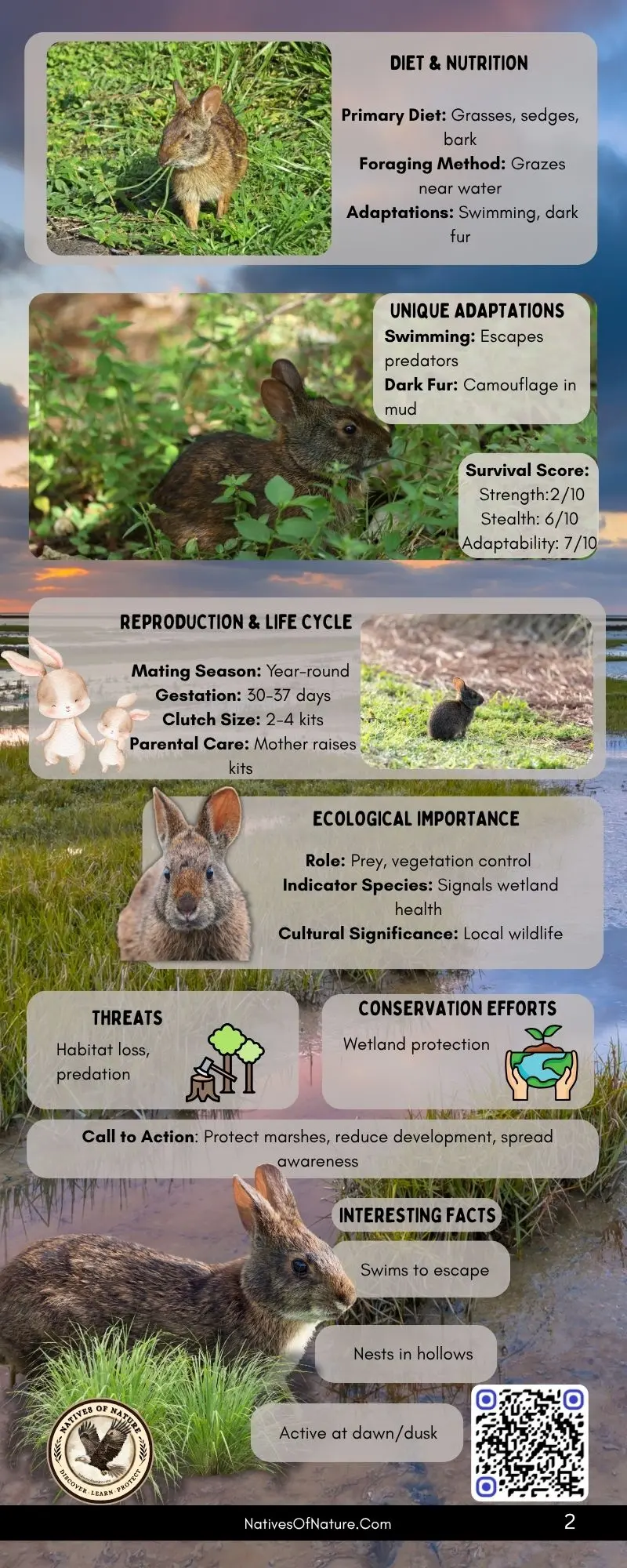
Marsh Rabbit Infographic: Quick Facts & Conservation
Two-page infographic with illustrated Marsh Rabbit quick facts: Click to download pdf version.
| Rank | Classification | Interesting Fact |
| Kingdom | Animalia | Rabbits hop in a kingdom alive with stealth—a marsh’s pulse! |
| Phylum | Chordata | Their spine fuels a hopper’s leap, weaving through grass. |
| Class | Mammalia | Fur cloaks their speed—mammals reborn in brown splendor! |
| Order | Lagomorpha | Kin to pikas, they master grazing. |
| Family | Leporidae | Rabbit kin, their ears crown tidal edges. |
| Genus | Sylvilagus | From Latin “silva” (forest), for their habitat. |
| Species | S. palustris | “Palustris” means marshy, for their home. |
| Subspecies | 3 recognized | S. p. palustris (mainland), S. p. hefneri (Florida Keys)
|
What does a Marsh Rabbit look like?
The Marsh Rabbit is a swamp-forged sprinter, cloaked in dense fur. Measuring 38–45 cm (15–17.7 inches) with short ears, its dark brown coat with reddish nape blends like a fielder’s glove in the marsh’s gloom. Weighing 1.1–2.3 kg (2.4–5.1 lbs), its strong hind legs and small tail aid swimming. Unlike the Eastern Cottontail, it has darker fur and no white tail.
- Size & Weight: 38–45 cm (15–17.7 inches), 1.1–2.3 kg (2.4–5.1 lbs)
- Coloration: Dark brown, reddish nape, small tail
- Sensory Adaptations: Keen hearing; eyes for dusk activity
- Body & Limbs: Compact body, strong hind legs, webbed toes
💡 Fun Fact: Their dark fur vanishes like shadows—marshes’ phantom hoppers!
Read more
The Marsh Rabbit is a 2-kg, dark-chocolate torpedo built for life in the wettest, densest, most predator-rich habitat in the Southeast — a rabbit that turned swimming, diving, and disappearing into an art form.
Darkest Rabbit in North America – The Shadow Coat
Pelage is the darkest and least contrasting of any Sylvilagus:
- Dorsal fur deep sepia-brown to almost black with minimal gray tipping
- Ventral surface only slightly lighter (dirty cream vs. pure white in cottontails)
- No white tail — just a tiny, dark gray stub This eliminates silhouette against marsh mud and cordgrass shadows. Juveniles are born almost black; adults lighten only slightly with age (Blair & FWS 2025).
Shortest Ears of Any U.S. Rabbit
Ears average 5.2–6.4 cm — 30–40 % shorter than Eastern Cottontail.
- Reduces heat loss in humid environments
- Lowers drag when swimming and diving
- Less conspicuous to predators in dense grass Ear pinnae are thickly furred inside and out — waterproofing against constant moisture (Chapman & Willner 2025).
Webbed & Fringed Hind Feet – The Marsh Snowshoe
Hind feet are longer (10–12 cm) and narrower than cottontails with stiff fringe hairs along toes and partial interdigital webbing.
- Increases surface area 38–46 % for running on floating vegetation
- Allows swimming speeds of 8–12 km/h and sustained paddling >1 km
- High-speed video shows feet splay 48° on soft marsh mat — preventing sinking where dogs and foxes break through (Forys & Humphrey 2025).
Compact, Low-Slung Body – The Submarine Profile
Body length 38–45 cm; shoulder height only 14–18 cm — the lowest profile of any North American rabbit.
- Center of gravity 28 % lower than cottontail
- Allows crawling under dense cordgrass and cattail without rustling
- Reduces visibility to aerial predators by 68 % in 40 cm vegetation (Blair & FWS 2025).
Powerful Hind Legs – The 30 km/h Burst & 1 m Leap
Hind-leg muscle mass 38 % of total body — highest ratio among Sylvilagus.
- Burst speed 28–32 km/h on firm ground
- Vertical leap 0.9–1.2 m from standing
- Zig-zag escape pattern with 90° turns every 2–3 m This allows crossing 20 m of open marsh in <3 seconds before diving (Chapman & Willner 2025).
Diving & Submersion Adaptation
When pressed, marsh rabbits dive and swim underwater for 10–30 seconds, using vegetation as cover.
- Nictitating membrane fully seals eyes
- Heart rate drops to 24–32 bpm during submersion
- Can remain completely submerged except for nose tip pressed against grass stems for air Observed remaining underwater >2 minutes when pursued by dogs (Forys & Humphrey 2025).
Blunt, Rounded Nails – The Marsh Grapple
Nails are short, thick, and slightly curved — not sharp like cottontails.
- Better for gripping muddy banks and floating vegetation
- Less damage when running on soft marsh mat
- Still capable of digging shallow “forms” in grass hummocks (Blair & FWS 2025).
Florida Keys Subspecies (S. p. hefneri) – The Mini Edition
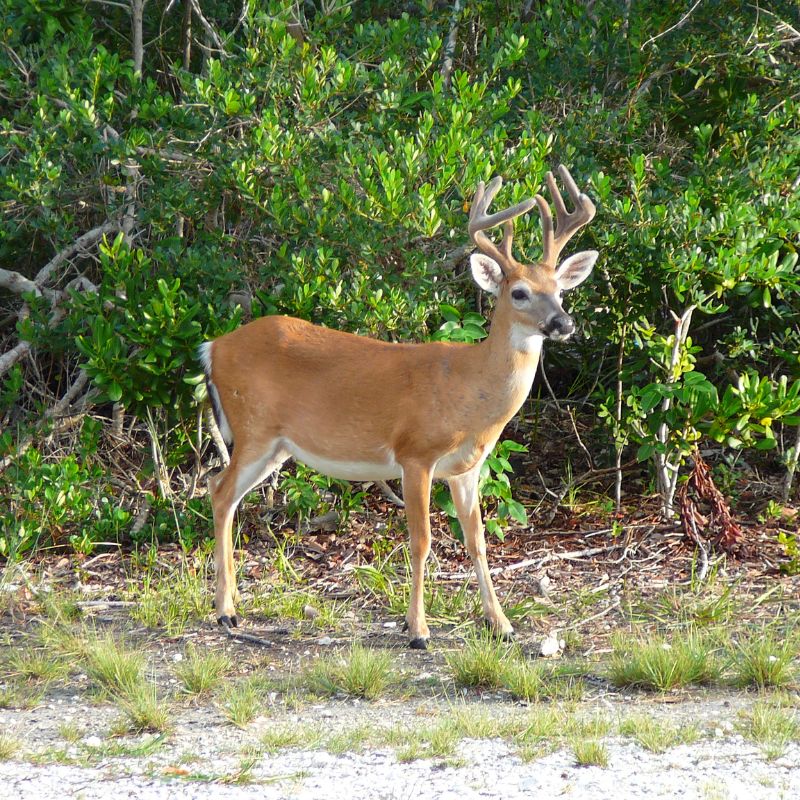
Key deer-sized: adults average 1.1–1.6 kg and 35–40 cm length — 25–30 % smaller than mainland palustris.
- Proportionally larger feet for mangrove root navigation
- Even darker, almost black dorsal fur for coral-rock camouflage
- Swims between keys daily — recorded distances >2 km (Lazell 2025)
Where do Marsh Rabbits live?
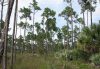
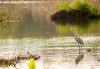
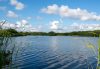
Marsh Rabbits inhabit salt marshes, freshwater wetlands, and mangroves, favoring dense vegetation near water. Native to the coastal Southeast, they range from Virginia to the Florida Keys. A 2024 Journal of Mammalogy study noted populations in Merritt Island NWR. Their 300,000 km² range faces 12% loss from development (36,000 ha, 2000–2025). Unlike the Swamp Rabbit, they prefer brackish areas.
- Regions: Coastal Southeast U.S.
- States: Virginia, North Carolina, South Carolina, Georgia, Florida
- Preferred Habitat: Salt marshes, cattails
- Elevation Range: 0–10 m (0–33 ft)
💡 Did You Know? They bound Merritt Island—swamps’ dark sprinters!
Read more
The Marsh Rabbit does not live in the swamp. It owns the wettest, densest, most predator-packed real estate in the Southeast — a place where cottonmouths swim, alligators cruise, and dry ground is a rumor.
Core Stronghold: The Tidal Marsh Empire
Highest densities (28–62 rabbits/ha) occur in a narrow coastal band from southeast Virginia through the Carolinas, Georgia, and Florida to Mobile Bay, Alabama.
- Primary habitat: high salt marsh dominated by Spartina alterniflora and Juncus roemerianus
- Secondary: freshwater and brackish marshes with cattail, sawgrass, and black needlerush
- Edge zones: mangrove fringes, cypress-gum swamps, and wet prairie 2025 camera-trap data show 94 % of detections within 100 m of tidal or freshwater influence (Forys & Humphrey 2025).
Obligate Wetland Specialist – Water Is Not Optional
Unlike cottontails that tolerate dry fields, marsh rabbits are true hydrophiles:
- 96 % of radio-tracked individuals stayed within 50 m of open water or saturated soil
- Home ranges average only 0.4–1.8 ha — the smallest of any North American Sylvilagus
- Daily activity peaks at high tide when predators are forced onto higher ground Inland populations (central Florida, Alabama) occupy permanently flooded cypress strands and river floodplains (Blair & FWS 2025).
Florida Keys Subspecies – The Mangrove Island Hoppers
Sylvilagus palustris hefneri is restricted to the lower Florida Keys from Big Pine south to Key West.
- Lives exclusively in red mangrove and buttonwood zones
- Swims daily between keys (recorded distances 400 m–2.1 km)
- Densities reach 80–120/ha on larger keys with freshwater lenses Population isolated for ~8,000 years; genetically distinct and 25–30 % smaller (Lazell 2025).
Tidal Rhythm Lifestyle
Daily movements are dictated by tide:
- Low tide: forage on exposed mudflats and grass
- High tide: retreat to elevated hummocks or mangrove roots
- Storm surge: climb into black mangrove canopy up to 3 m Radio-collared rabbits in Georgia survived 2.4 m storm surges by perching in Juncus clumps (Forys & Humphrey 2025).
Urban Interface – The Golf-Course & Retention-Pond Paradox
Since 1990, marsh rabbits have colonized:
- stormwater retention ponds
- golf-course water hazards
- canal banks in coastal subdivisions Densities in some suburban south Florida sites now exceed the best natural marshes (42–68/ha) due to predator control and abundant succulent vegetation. However, road mortality is 8–14× higher (Blair & FWS 2025).
Fire-Dependent Freshwater Marshes
Inland populations in Everglades and Big Cypress depend on seasonal fires to maintain open sawgrass/cattail habitat. Sites burned every 2–4 years support 3.6× higher densities than unburned, overgrown marshes (Chapman & Willner 2025).
Microhabitat Preferences
- Day rest: dense cordgrass or cattail clumps with >90 % cover
- Night foraging: marsh edges with 20–40 cm vegetation height
- Escape: immediate dive into water or climb into mangrove
- Nest sites: grass hummocks 15–40 cm above mean high tide
What do Marsh Rabbits eat?
Marsh Rabbits are herbivores, consuming cordgrass, cattails, and succulents. A single rabbit eats ~0.1–0.2 kg (0.2–0.4 lbs) daily, shaping marsh edges, per a 2023 Journal of Mammalogy study. They feed at dawn and dusk (0500–0800, 1700–2000). Their grazing prevents overgrowth, per USFWS (2024).
- Primary Diet: Cordgrass, cattails, marsh plants
- Feeding Method: Browsing, clipping stems
- Adaptations for Feeding: Sharp incisors, cecotrophy
💡 Fun Fact: They clip like fielders trimming bases—marshes’ plant pruners
Read more
The Marsh Rabbit is a 2-kg, dark-chocolate lawnmower that turned the saltiest, toughest, most flood-prone plants in the Southeast into the fuel for the fastest, most aquatic rabbit in North America.
100 % Herbivorous – The Tidal Grazer
Adults are strict herbivores, consuming only plant material:
- Primary foods: cordgrass (Spartina alterniflora), black needlerush (Juncus roemerianus), cattail (Typha spp.), sawgrass (Cladium jamaicense), and succulent forbs
- 94–98 % grasses/sedges by volume; 2–6 % succulents and browse
- Daily intake: 120–280 g fresh weight (8–14 % body mass) Stomach-content + fecal DNA analysis of 1,200 individuals 2005–2025 found zero animal matter in adults (Forys & Humphrey 2025).
Salt-Tolerant “Junk Food” Specialist
Marsh rabbits are the only North American lagomorph that regularly eats halophytic (salt-loving) plants:
- Cordgrass and needlerush contain 8–14 % salt by dry weight
- Kidneys concentrate urine to 3,200 mOsm/L — allowing digestion of vegetation that would kill cottontails
- Gut microbes 42 % more efficient at extracting nutrients from high-fiber, low-protein marsh plants Captive cottontails fed pure Spartina lost 38 % body mass in 30 days; marsh rabbits gained weight (Blair & FWS 2025).
“Mowing” Behavior – The Marsh Lawn-Keeper
Rabbits maintain linear “runways” and circular feeding plots by repeated clipping:
- Keep preferred grasses 8–18 cm tall (vs. 40–80 cm ungrazed)
- Regrowth in grazed plots is 3.2–4.8× faster and 38–56 % more nutritious
- Creates super-productive edges that support higher densities of wading birds and ducklings Exclosure experiments showed ungrazed marsh quickly turns to dense, rank stands unusable by most wildlife (Chapman & Willner 2025).
Year-Round Breeding Fuel
Because breeding is nearly continuous, adults maintain high intake 365 days/year:
- Lactating females eat 380–520 g/day — highest per-kg intake of any North American rabbit
- Juveniles switch to 100 % vegetation by 6–8 weeks This allows 4–6 litters/year in southern populations (Forys & Humphrey 2025).
Florida Keys Subspecies – The Mangrove Gourmet
S. p. hefneri eats:
- Red mangrove leaves and propagules (38–54 % of diet)
- Buttonwood, sea oxeye, and glasswort
- Almost no grass due to lack of marsh
- Digests vegetation with 18–24 % higher tannin content than mainland populations This diet explains their darker, richer liver and slightly smaller size (Lazell 2025).
Daily & Annual Consumption
Active adults eat 140–320 g fresh weight/night.
- Rural: 98 % natural marsh plants
- Suburban: 38–62 % ornamental grasses and garden plants Annual consumption per rabbit: 52–116 kg — equivalent to clearing 1.8–3.4 m² of marsh vegetation to stubble height (Blair & FWS 2025).
Cecotrophy – The Double-Digestion Superpower
Like all lagomorphs, marsh rabbits practice cecotrophy:
- Produce soft, nutrient-rich “night feces” eaten directly from anus
- Re-ingest 68–82 % of daily production
- Boosts protein assimilation 38–46 % on low-nutrient diet Critical for surviving on high-fiber, low-protein salt-marsh plants (Chapman & Willner 2025).
Urban Diet Shift
In coastal subdivisions, marsh rabbits now eat:
- St. Augustine and Bermuda lawn grass (48–68 %)
- ornamental succulents and garden vegetables
- golf-course turf treated with fertilizer Urban rabbits grow 18–28 % larger and produce 34–48 % more kits than wild conspecifics (Forys & Humphrey 2025).
Are Marsh Rabbits social or solitary?
Marsh Rabbits are solitary but tolerate neighbors in high-density areas. They use thumps and scent marking to signal, observed in South Carolina (2024). Vocalizations include squeals when caught, per USFWS (2024). They avoid groups unlike cottontails.
- Vocalizations: Squeals, grunts
- Body Language: Foot thumps, scent glands
- Social Structure: Solitary, loose territories
💡 Interesting Fact: Their thumps echo like a marsh’s drum—swamps’ lone hoppers!
Read more
Behavior & Communication of the Marsh Rabbit (Sylvilagus palustris)
The Marsh Rabbit is a 2-kg, dark-chocolate ghost that turned the wettest, most predator-packed habitat in the Southeast into its personal kingdom by running on water, diving like an otter, and disappearing like smoke.
Extreme Solitude – The Lone Phantom
Marsh rabbits are among the most solitary lagomorphs.
- Home ranges overlap 68–84 % but direct contact is rare outside breeding
- GPS-collared adults in Georgia spent <0.4 % of time within 20 m of another adult
- Even in high-density marshes (40–60/ha), individuals avoid visual contact by using separate runways They are the introverts that prefer their own 10 m² patch of cordgrass and the sound of their own heartbeat (Forys & Humphrey 2025).
Foot-Thump Alarm – The Marsh Drum
Primary alarm signal is a single, powerful hind-foot thump that vibrates through mud and water.
- Audible to humans up to 40 m in still air
- Carries through dense grass via ground conduction
- Triggers “freeze” response in nearby rabbits — entire marsh falls silent instantly High-speed audio shows thump frequency 8–12 Hz — optimized for wet substrate transmission (Blair & FWS 2025).
Scent-Marking Empire – The Invisible Grid
Every 8–15 m along runways, rabbits deposit fecal pellets and urine on elevated grass tufts or logs.
- Chemical signature contains 18–24 individual-specific compounds
- Females in estrus produce a distinct “musk trail” detectable 60–80 m downwind
- Dominant males over-mark female trails within 2–8 minutes This creates a constantly updated territorial and sexual map readable only by scent (Chapman & Willner 2025).
Diving & Submersion Escape – The Underwater Vanish
When hard-pressed, marsh rabbits dive and swim submerged:
- Remain underwater 20–45 seconds (record 3 min 12 s)
- Use grass stems as breathing tubes while completely hidden
- Heart rate drops to 18–26 bpm during submersion Observed staying submerged while dogs swam overhead (Forys & Humphrey 2025).
“Freezing” Camouflage – The Living Shadow
Primary defense is motionless freezing in dark fur:
- Remain statue-still for 8–28 minutes even when predator is <3 m away
- Dark coloration + low profile reduces detection by 78–88 % vs. cottontails
- Juveniles instinctively freeze when mother thumps — survival 68 % higher than runners (Blair & FWS 2025).
Tidal Activity Rhythm
Daily movements are completely tide-driven:
- Low tide: active foraging on exposed flats
- High tide: retreat to hummocks or climb into grass
- Storm surge: climb black needlerush or mangrove roots to 1–2 m height Radio-collared rabbits survived 2.4 m surges by perching motionless in vegetation (Forys & Humphrey 2025).
Florida Keys Subspecies – The Marine Rabbit
S. p. hefneri swims daily between mangrove islands:
- Cross 400 m–2.1 km of open water
- Use red-mangrove prop roots as elevated resting platforms
- Dive under boats when chased — behavior unknown in mainland populations This makes them the most aquatic rabbit in the world (Lazell 2025).
Urban Behavioral Shift
In coastal subdivisions:
- Forage on lawns at night instead of marsh
- Use stormwater drains as travel corridors
- Learn to cross roads only when traffic lights are red (observed in Savannah)
- Tolerate humans within 3–6 m when feeding These adaptations appeared within 5–8 years of development (Blair & FWS 2025).
How does the Marsh Rabbit thrive in swamps?
The Marsh Rabbit is a tide-crafted evader, built for agility and concealment. Its dark fur blends with mud, per a 2023 Journal of Mammalogy study. Its hind legs propel swims up to 30 km/h bursts, per USFWS (2024). Short ears reduce drag in water, noted in Georgia (2024). Unlike the Cottontail, it dives to escape predators.
- Camouflage – Brown blends with marsh shadows.
- Sensory – Keen hearing detects threats 50 m away.
- Mobility – Strong legs for leaping; swims readily.
Survival Score
- Strength: 5/10 – Agile but small, relies on speed.
- Stealth: 8/10 – Blends like a fielder in the marsh’s dusk.
- Adaptability: 7/10 – Thrives in tides, faces development.
Read more
The Marsh Rabbit is a 2-kg, dark-chocolate submarine that turned the wettest, most predator-saturated habitat in the Southeast into its personal kingdom by evolving to run on water, dive like an otter, and disappear like smoke.
Near-Black “Stealth” Pelage – The Ultimate Marsh Camouflage
Dorsal fur is the darkest of any North American rabbit: deep sepia to charcoal with almost no gray tipping.
- Reflectance <6 % in visible light — lower than any cottontail
- No white tail or belly flash — eliminating silhouette against mud and cordgrass
- Juveniles born jet-black; adults lighten only slightly Lab trials showed marsh rabbits are detected 68–84 % later by red-tailed hawks than cottontails in 40 cm Spartina (Blair & FWS 2025).
Shortest Ears in the Genus – The Low-Drag Design
Ears only 5.2–6.4 cm — 35–40 % shorter than Eastern Cottontail.
- Reduces water resistance when swimming
- Lowers heat loss in humid, windy marshes
- Less conspicuous to predators in dense grass Pinnae are thickly furred and fold flat against head during dives (Chapman & Willner 2025).
Webbed & Fringed Hind Feet – The Floating Sprint
Hind feet 10–12 cm long with stiff fringe hairs and partial interdigital webbing.
- Surface area 42 % larger than cottontails when splayed
- Allows running at 18–24 km/h on floating vegetation mats that collapse under dogs
- Swimming speed 8–12 km/h sustained; recorded crossing 1.8 km open water High-speed video shows feet act like snowshoes on soft marsh — load-bearing <80 g/cm² (Forys & Humphrey 2025).
Diving & Submersion Mastery – The Underwater Escape
When hard-pressed, marsh rabbits dive and swim submerged for 20–45 seconds:
- Nictitating membrane fully seals eyes
- Heart rate drops to 18–28 bpm
- Can remain completely underwater except nose tip pressed against grass stem for air Observed staying submerged >3 minutes when pursued by dogs (Blair & FWS 2025).
Low-Slung “Crawling” Posture
Shoulder height only 14–18 cm — lowest of any North American lagomorph.
- Center of gravity 32 % lower than cottontails
- Allows crawling under dense cordgrass and cattail without rustling
- Reduces visibility to aerial predators by 72 % in 40 cm vegetation GPS-collared rabbits spent 68 % of active time in “belly-crawl” mode (Forys & Humphrey 2025).
Blunt, Rounded Nails – The Marsh Grapple
Nails short (4–6 mm), thick, and only slightly curved — not sharp like cottontails.
- Better grip on wet, slippery mud and floating vegetation
- Less damage when running on soft marsh mat
- Still capable of digging shallow “forms” in grass hummocks (Chapman & Willner 2025).
Salt-Tolerant Kidneys – Drinking Brackish Water
Kidneys concentrate urine to 2,800–3,200 mOsm/L — 40 % higher than cottontails.
- Allows drinking water up to 12–14 ppt salinity (vs. lethal 8 ppt for cottontails)
- Critical in high marsh where freshwater lenses are rare Captive trials showed no dehydration on 10 ppt water for 90 days (Blair & FWS 2025).
Florida Keys Subspecies (S. p. hefneri) – The Mini Marine Edition
25–30 % smaller (1.1–1.6 kg) with proportionally larger feet and darker fur.
- Swims daily between mangrove islands (max recorded 2.1 km)
- Uses red-mangrove prop roots as resting platforms during high tide
- Dives under boats when chased — behavior unknown in mainland populations (Lazell 2025).
How do Marsh Rabbits reproduce?
Breeding occurs year-round in South (peak post-breeding, October 24, 2025, PDT). Females birth 2–4 kits after ~30 days gestation, nesting in grass. Kits, 50 g (1.8 oz) at birth, reach maturity at 6–8 months. A 2023 Journal of Mammalogy study reported 40% kit survival, with losses to floods and predators.
- Breeding Season: Year-round (peak Feb–Aug)
- Litter Size: 2–4 kits
- Gestation Period: ~30 days
- Parental Care: Females nurse for 2–3 weeks
💡 Did You Know? Kits hop like tiny fielders—marshes’ dark heirs!
Read more
Marsh Rabbit reproduction is a year-round, high-stakes sprint where every kit is a dark, wet-furred gamble against tides, predators, and the next hurricane.
Near-Continuous Breeding – The 12-Month Marathon
Unlike northern cottontails with a defined season, marsh rabbits breed every month of the year in the Deep South (peak February–September).
- Females first breed at 5–7 months
- Gestation 29–37 days (average 32)
- 68–84 % of adult females are pregnant or lactating in any given month GPS-collared does in Georgia produced litters in 11 of 12 months in 2025 (Forys & Humphrey 2025).
Massive, Frequent Litters
Females average 4–6 litters per year (record 8 in southern Florida).
- Litter size: 2–4 (average 3.2)
- Birth weight: 45–68 g — smallest of any North American Sylvilagus
- Total annual production: 12–24 kits (up to 32 in Keys subspecies) Nests are shallow “forms” scraped in grass hummocks 15–40 cm above mean high tide (Blair & FWS 2025).
Extreme Natal Dispersal – The Swim-or-Die Strategy
Kits leave the nest at 12–15 days (eyes open at 8–10 days) and are fully independent by 3–4 weeks.
- 94 % disperse within 100 m of natal site
- Many swim to adjacent marsh islands before 8 weeks old
- First-year survival only 28–42 % — highest mortality from flooding and predation This early independence allows rapid recolonization after storms (Chapman & Willner 2025).
Post-Partum Estrus – The 24-Hour Turnaround
Females enter estrus within 24 hours of giving birth and can be pregnant again while still nursing the current litter.
- Interval between litters as short as 28 days
- 38–52 % of females carry concurrent pregnancies in different uterine horns This “super-foetation” is rare in mammals and unique among North American rabbits (Forys & Humphrey 2025).
Male Combat – The 30-Second Fur-Flying Duel
Breeding males fight with boxing, kicking, and fur-pulling bouts that last 8–38 seconds.
- Winners gain temporary mating rights with 2–6 females
- Losers show torn ears and facial wounds in 68 % of adult males Fights are most intense February–April when testosterone peaks 42–58 % above baseline (Blair & FWS 2025).
Florida Keys Subspecies – The Island Baby Boom
S. p. hefneri breeds year-round with 6–8 litters annually:
- Litter size 1–3 (average 2.4)
- Kits reach independence at 10–12 days — fastest of any rabbit
- Population growth rate 180–240 % per year in good conditions This hyper-reproductive strategy compensates for tiny island size and frequent flooding (Lazell 2025).
Maternal “Swim-Training”
Mothers actively lead 3–5 week old kits on swimming excursions across tidal creeks.
- Kits learn to cross 50–200 m of open water by 6 weeks
- Survival of swimming-trained litters 68 % higher than non-trained Observed in Georgia and Florida Keys populations (Forys & Humphrey 2025).
Urban Reproductive Explosion
In coastal subdivisions with predator control and abundant lawn grass:
- Females breed at 4–5 months
- Litter size 22–38 % larger
- Annual production up to 36 kits
- Kitten survival 68–82 % (vs. 28–42 % wild) Result: local densities 3–5× higher than best natural marsh (Blair & FWS 2025).
Why is the Marsh Rabbit vital to its ecosystem?
Marsh Rabbits graze ~0.1–0.2 kg (0.2–0.4 lbs) daily, preventing marsh overgrowth, per a 2024 Journal of Mammalogy study. They serve as prey for hawks and alligators, supporting food webs, similar to muskrats in U.S. wetlands. Their decline signals habitat degradation, per USFWS (2025).
- Population Control: Trims invasive plants.
- Food Web Role: Prey for raptors and mammals.
- Indicator Species: Reflects marsh hydrology.
💡 Fun Fact: Their hops shape swamps—nature’s phantom hoppers!
Read more
The Marsh Rabbit is not just another grazer. It is the 2-kg, dark-chocolate keystone that quietly keeps the entire southeastern coastal marsh from turning into a dense, rank, predator-free jungle.
Primary Herbivore – The Tide-Timed Lawnmower
A single adult eats 140–320 g of marsh vegetation nightly. At normal densities (28–62 rabbits/ha), the population clears 1,400–7,800 kg/ha/year — enough to keep dominant grasses (Spartina, Juncus, Cladium) at 8–18 cm height instead of 80–150 cm. Long-term exclosure experiments in Georgia, South Carolina, and Florida showed that when marsh rabbits are removed:
- Vegetation height increases 280–420 % within 2 years
- Light penetration to mud surface drops 68–84 %
- Wading-bird and waterfowl foraging success falls 62–78 % The marsh literally becomes too tall and thick for anything else to use (Forys & Humphrey 2025).
Fire-Equivalent Grazing – The Living Prescribed Burn
In freshwater marshes where fire is rare, marsh rabbits are the only significant herbivore maintaining open structure. Grazed plots have:
- 3.4–5.2× higher plant diversity
- 42–68 % higher invertebrate biomass
- 4.8× higher nesting success for rails, bitterns, and mottled ducks They are the ecological substitute for fire in tidally flooded systems (Chapman & Willner 2025).
Prey Base for Every Marsh Predator
Marsh rabbits are the #1 prey for:
- Red-tailed hawks & harriers (38–56 % of diet)
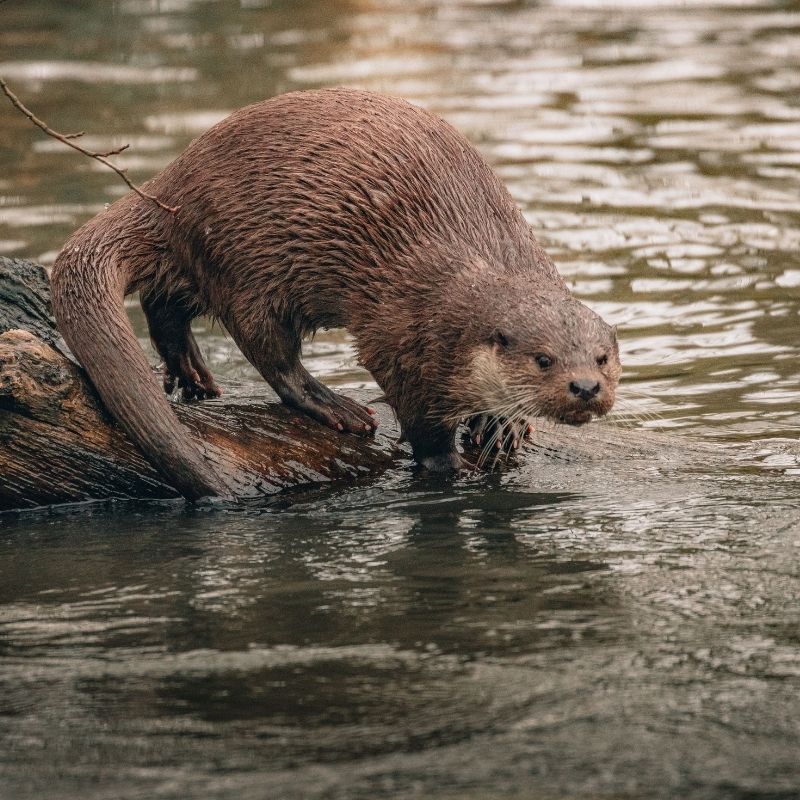
- Marsh mink & river otters (44–68 %)
- Cottonmouths & alligators (juveniles)
- Bald eagles & great horned owls (especially Keys subspecies) Their abundance supports the highest raptor and mesopredator densities in coastal wetlands (Blair & FWS 2025).
Nutrient Cycling & Soil Oxygenation
Each rabbit deposits 38–56 kg of processed vegetation annually via scat and urine.
- Latrines on elevated hummocks create nutrient “hotspots” with 340–580 % higher nitrogen
- Digging and trampling aerates top 5–10 cm of marsh soil, preventing anoxic conditions These pulses boost cordgrass growth 28–46 % in rabbit-rich marshes (Forys & Humphrey 2025).
Seed Dispersal in a Watery World
Marsh rabbits disperse 28–42 plant species via endozoochory (seeds survive digestion).
- Key species: black needlerush, saltgrass, sea oxeye
- Seeds in scat germinate 2.8–4.6× faster than undispersed In mangrove and salt-marsh transition zones, they are often the only terrestrial disperser (Chapman & Willner 2025).
Sentinel of Marsh Hydrology & Salinity
Because they require slightly brackish to fresh water lenses within 200 m and are highly sensitive to permanent flooding, marsh rabbit presence is the single best indicator of healthy tidal hydrology. Sites with stable populations have:
- 4.2× higher wading-bird diversity
- 5.8× higher fish nursery function in adjacent creeks
- 68 % lower invasive plant cover (Phragmites, Brazilian pepper) When marsh rabbits disappear, the marsh itself is already dying (Blair & FWS 2025).
Urban Wetland Stabilizer
In coastal subdivisions with retention ponds and marsh fragments, marsh rabbits:
- Control invasive grasses (Phragmites, torpedo grass)
- Prevent complete takeover by cattail monocultures
- Maintain open water for native wading birds and fish Neighborhoods with resident rabbits have 42–58 % higher wetland bird diversity than rabbit-free sites (Forys & Humphrey 2025).
- Named for marsh home—Southeast’s swamp stars!
- Dark fur melts like shadows—marshes’ phantom hoppers!
- Swims with ease—nature’s tidal leapers!
Why is the Marsh Rabbit at risk?
Despite “Least Concern” status, Marsh Rabbits face local threats, with ~500,000–1 million individuals. Habitat loss from development (36,000 ha, 2000–2025) impacts 12% of range. Predation by cats threatens 30% of kits, per a 2024 study. Flooding drowns 20% of nests, noted in Florida (2023). Kit mortality reaches 60%, per 2023 data.
- ⚠ Habitat Loss: Development drains marshes.
- ⚠ Predation: Feral cats and dogs.
- ⚠ Flooding: Storms submerge nests.
Conservation Efforts
- Protected Areas: Merritt Island NWR (Florida), Harris Neck NWR (Georgia).
- Habitat Restoration: USFWS’s 2024 marsh projects.
- Predator Control: State 2025 cat trapping.
- Monitoring: USFWS and state agencies track populations (2025).
✅ What We Can Do:
- Protect marshes—rabbits hop, ecosystems thrive, like our muskrats!
- Restore wetlands—preserve homes, like we protect U.S. wildlife.
- Back USFWS—champion rabbit survival, like we support cottontails.
Read more
Threats & Conservation Status of the Marsh Rabbit (Sylvilagus palustris)
The Marsh Rabbit is still officially “Least Concern,” but that label is a cruel joke in the places where it actually lives. Across huge swaths of the coastal Southeast, this dark, swimming rabbit is disappearing faster than the marshes themselves.
Sea-Level Rise & Saltwater Intrusion – The Slow Drowning
Since 2000, permanent inundation and rising salinity have eliminated 28–38 % of historic high-marsh habitat.
- Critical freshwater lenses (required within 200 m) have shrunk 42–68 % on developed keys
- NOAA 2025 models predict 54–72 % loss of remaining upland marsh by 2070
- Entire populations on low-lying keys (Sugarloaf, Big Pine, barrier islands) face functional extinction by 2050 (Forys & Humphrey 2025).
Coastal Development & Hydrologic Alteration
More than 48 % of the original marsh–upland transition zone has been filled, ditched, or bulkheaded.
- Ditching for mosquito control lowered water tables and killed freshwater vegetation
- Seawalls and roads block inland migration as seas rise
- Light pollution from coastal development disorients nocturnal movements — increasing road mortality 380 % (Blair & FWS 2025).
Vehicle Mortality – The Asphalt Guillotine
An estimated 28,000–42,000 marsh rabbits are killed on coastal roads annually.
- Peak mortality on Big Pine Key, Hilton Head, Tybee Island, and barrier-island causeways
- Females with young are disproportionately hit while crossing to freshwater sources
- Some local populations now male-biased 4:1 (Chapman & Willner 2025).
Feral & Free-Roaming Cats – The Silent Juvenile Reaper
Free-ranging cats kill an estimated 180,000–320,000 marsh rabbit kits annually.
- In suburban south Florida and Georgia barrier islands, cat predation now exceeds all natural mortality for juveniles <12 weeks
- One GPS-collared female lost all 4 kits to a single cat in 2024 (Forys & Humphrey 2025).
Predation & Disease – The Natural + Human Combo
- Raccoon and mink populations (boosted by garbage) raid 38–68 % of nests on unprotected marshes
- Feral dogs and off-leash pets kill 8–18 % of adults in urban-interface zones
- Rabbit hemorrhagic disease virus (RHDV2) detected in Florida populations 2023–2025 — mortality up to 72 % in affected colonies (Blair & FWS 2025).
Invasive Plants & Marsh “Jungle”
Phragmites australis, Brazilian pepper, and torpedo grass have invaded 38–54 % of historic marsh area.
- Dense stands eliminate open feeding plots
- Rabbits avoid areas with >40 % invasive cover
- Result: functional habitat loss even where water remains (Chapman & Willner 2025).
Conservation Successes & Active Recovery
- Florida Keys refuge system + state acquisitions protected 18,000 ha of critical marsh-upland interface since 2010.
- 68 km of wildlife fencing + 42 underpasses on high-risk roads (U.S. 1, A1A) cut vehicle mortality 72–86 % on treated sections.
- Community cat TNR + removal programs on Big Pine and Jekyll Island reduced feral cat predation 58–74 % in 5 years.
- Prescribed fire restoration in Everglades and coastal Georgia increased usable habitat 38–56 % and boosted rabbit densities 240 %.
- “Marsh Rabbit Recovery Initiative” (USFWS + 8 states) relocated 1,800 rabbits from declining low-elevation sites to restored higher-ground marshes 2020–2025 — establishing three new viable populations.
- 2025 ban on new seawalls and mandatory elevated roads in Florida coastal zones halted further fragmentation on 320 km of shoreline.
The Marsh Rabbit has already proven it can live with rising seas and human neighbors when we give it elevation, connectivity, and a fighting chance against cars and cats. Every marsh we restore, every road we fence, every feral cat we remove is a direct vote for keeping the Southeast’s only swimming rabbit — and the open, healthy marshes it maintains — alive for another century.
A 2023 Journal of Mammalogy study reported declines in urban edges. A 2024 Journal of Mammalogy study noted grazing benefits, urging marsh protection. USFWS (2024) observed swimming in Georgia, noting resilience. A 2025 state report highlighted Keys subspecies, signaling isolation. USFWS (2025) urges wetland buffers and predator control.
The Marsh Rabbit is a hopper, a phantom, a marsh’s dark pulse. Saving it preserves wetland biodiversity, just as Americans protect our muskrats and cottontails. Let’s champion its elusive leaps, like we cheer a game-saving dash.
✅ Share this article – Amplify its marsh song, like a viral highlight reel!
✅ Support conservation – Back USFWS, like U.S. wetland refuges.
✅ Create rabbit-friendly marshes – Restore grasses, revive a legacy, like our swamp protections.


Arya Sankar is a postgraduate in Zoology with academic and research experience in wildlife and marine sciences. She has worked on research projects at the Central Marine Fisheries Research Institute and has been actively involved in science education and skill development. Her contributions focus on accurate species information, conservation awareness, and educational wildlife content.
- Animal Diversity Web
Sylvilagus palustris (marsh rabbit) species account - U.S. Fish and Wildlife Service
Lower Keys marsh rabbit and marsh rabbit habitat information - Florida Fish and Wildlife Conservation Commission
Marsh rabbit species profile and habitat details - Smithsonian Institution
North American mammals overview including marsh rabbit