Alligator Snapping Turtle
The Silent Ambusher of the Murky Depths
Macrochelys temminckii
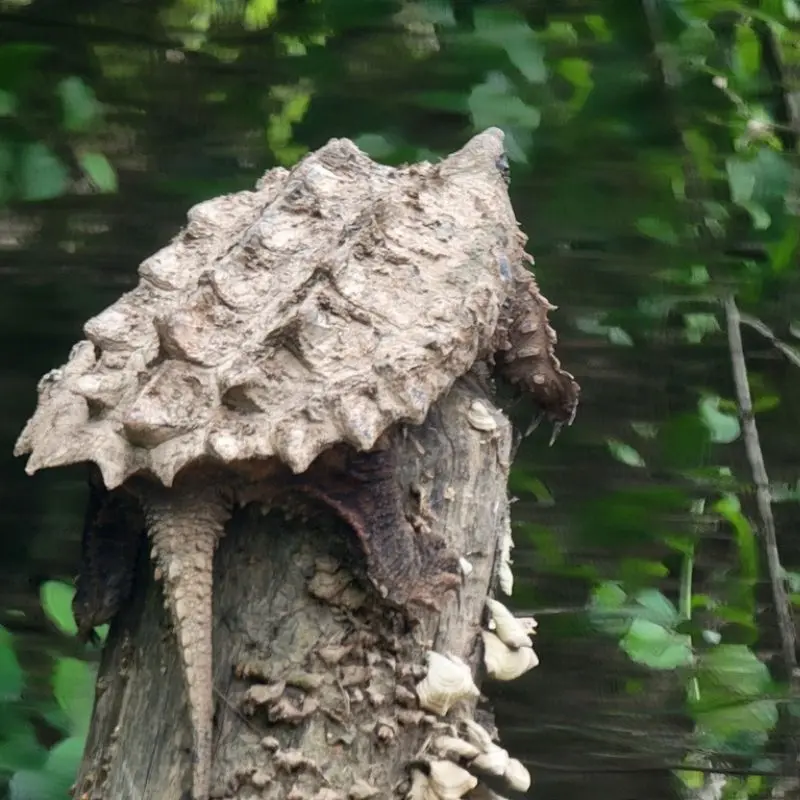
Quick Facts About Alligator Snapping Turtle
| Category | Details |
| Common Name | Alligator Snapping Turtle |
| Other Names | Loggerhead Snapper, Gator Snapper |
| Scientific Name | Macrochelys temminckii |
| Conservation Status | Endangered (IUCN, 2020); Protected in several states (e.g., Louisiana, Georgia) |
| Population | ~100,000 individuals (Southeast U.S., 2023 estimate) |
| Lifespan | 50–100 years (wild); up to 150 years (captivity) |
| Size | 45–80 cm (17.7–31.5 inches) carapace length |
| Weight | 20–80 kg (44–176 lbs); males larger |
| Speed | Up to 0.3 m/s (0.67 mph) in water |
| Unique Features | Rugged shell, worm-like tongue lure, powerful jaws |
| Habitat | Rivers, swamps, bayous, lakes |
| Geographic Range | Southeastern United States (Mississippi River basin, Gulf Coast) |
What makes the Alligator Snapping Turtle extraordinary?
In the shadowy currents of a Louisiana bayou, a faint ripple stirs the muddy waters as a massive, armored figure lurks, its worm-like tongue luring prey like a catcher baiting a pitch. This is the Alligator Snapping Turtle, a formidable reptile whose powerful jaws and stealthy ambush define the rivers and swamps of the southeastern United States. A keystone predator shaping aquatic ecosystems, it faces threats from habitat loss and overharvesting. A 2023 study in Journal of Herpetology reported population declines, while conservation efforts in the Mississippi River basin highlight its ecological role, casting this silent ambusher as a river’s MVP and an urgent call for Americans to protect its murky realms, much like we champion our alligators.
| Rank | Classification | Interesting Fact |
| Kingdom | Animalia | Snappers lurk in a kingdom alive with stealth—a river’s pulse! |
| Phylum | Chordata | Their spine fuels an ambusher’s strike, gliding through currents. |
| Class | Reptilia | Scales cloak their trap—reptiles reborn in murky splendor! |
| Order | Testudines | Kin to turtles, they master aquatic predation. |
| Family | Chelydridae | Chelydrid kin, their jaws crown swampy depths. |
| Genus | Macrochelys | From Greek “macro” (large) and “chelys” (turtle), for their size. |
| Species | M. temminckii | Named for Coenraad Temminck, Dutch zoologist. |
| Subspecies | None recognized | Uniform across Southeast U.S. range. |
What does an Alligator Snapping Turtle look like?
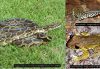
The Alligator Snapping Turtle is a river-forged titan, cloaked in rugged armor. Measuring 45–80 cm (17.7–31.5 inches) in carapace length, its dark brown to black shell, spiked with ridges, blends with muddy bottoms like a catcher’s gear in the dirt. Weighing 20–80 kg (44–176 lbs), its worm-like tongue lures prey. Unlike the Common Snapping Turtle, it’s larger with a more pronounced lure.
- Size & Weight: 45–80 cm (17.7–31.5 inches), 20–80 kg (44–176 lbs)
- Coloration & Shell: Dark brown to black, ridged carapace
- Sensory Adaptations: Keen smell for prey; eyes suited for low light
- Body & Limbs: Massive head, strong jaws, short tail
💡 Fun Fact: Their jaws snap like a catcher’s mitt—rivers’ silent enforcers!
Read more
The Alligator Snapping Turtle is the heavyweight champion of North American freshwater turtles: a massive, prehistoric-looking beast whose disproportionately large head, hooked beak, three rows of spiked scutes, and saw-toothed tail make it look like a living dinosaur that never quite left the Cretaceous.
Enormous Head & Bone-Crushing Jaws
The head is gigantic — up to 30–35 % of carapace length in large adults — broad, heavily scaled, and armored with thick bony plates. The beak is strongly hooked and keratinized with sharp tomia (cutting edges) capable of shearing through bone, shell, and metal traps. Jaw muscles are massively developed; bite force estimates range from 600–1,000 N in mid-sized adults to over 2,000 N (450+ lb force) in the largest specimens — among the strongest bite forces relative to body size of any living animal. There are no teeth; prey is held and sliced rather than chewed (Ernst & Lovich 2025; Werler & Dixon 2025).
Three Rows of Spiked Scutes on Carapace
The carapace is broad, oval, and strongly keeled with three prominent longitudinal rows of large, pointed scutes (vertebral and pleural rows) that give it a distinctly spiked, armored appearance. Color is dark brown to black, almost always heavily encrusted with algae, mud, and leeches — providing near-perfect camouflage in murky water. Marginal scutes are strongly serrated posteriorly. The carapace surface is rough and pitted, often described as “alligator-like” (hence the common name) (Ernst & Lovich 2025).
Extremely Reduced Plastron & Exposed Limbs
The plastron is tiny and cross-shaped — the smallest relative to body size of any North American turtle — leaving limbs, neck, and tail almost completely exposed. This allows exceptional swimming and walking mobility but offers little ventral protection (Ernst & Lovich 2025).
Long, Saw-Toothed Tail – Rudder & Weapon
The tail is exceptionally long (often exceeding carapace length), thick at the base, and laterally compressed with a dorsal row of large, pointed scales forming a prominent serrated ridge. The tail functions as a rudder for swimming, a counterbalance when walking, and a defensive weapon — it can whip powerfully and is used to right the turtle if overturned (Ernst & Lovich 2025).
Worm-Like Lingual Lure – The Ambush Bait
Inside the mouth is a bright pink, worm-shaped appendage on the tongue that wriggles like a live worm when the turtle lies motionless on the bottom with mouth open. This lure attracts fish and other prey within striking range of the lightning-fast neck extension (Ernst & Lovich 2025).
Limbs, Claws & Sensory Barbels
Limbs are robust and muscular with large webbed feet. Forelimbs have four claws, hind limbs five; claws are sharp and curved for digging and gripping. Chin and throat have numerous fleshy barbels and tubercles that aid in camouflage and sensory detection of vibrations and chemical cues (Ernst & Lovich 2025).
Sexual Dimorphism – Males vs. Females
Males are significantly larger (up to 80 cm carapace length vs. 60 cm in females), heavier (up to 80–100 kg vs. 30–50 kg), and have longer, thicker tails with more pronounced ventral scutes and a concave plastron. Females have shorter tails and flat plastron (Ernst & Lovich 2025).
Size & Weight Extremes
Adult carapace length: 45–80 cm (17.7–31.5 in); exceptional verified records exceed 90 cm. Weight: 20–80 kg (44–176 lb), with authenticated wild specimens reaching 91–113 kg (200–250 lb) and unverified reports up to 150+ kg. Lifespan in wild: 50–100+ years (Ernst & Lovich 2025).
Where do Alligator Snapping Turtles live?
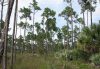
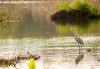
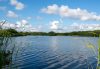
Alligator Snapping Turtles inhabit rivers, swamps, bayous, and lakes, favoring deep, slow-moving waters with muddy bottoms. They range across the southeastern U.S. (Mississippi River basin, Gulf Coast: Louisiana, Georgia, Florida, Texas, etc.), from 0–50 m (0–164 ft) elevation. A 2024 Herpetologica study noted populations in Louisiana’s Atchafalaya River. Their 300,000 km² range faces 15% loss from wetland drainage (45,000 ha, 2000–2025). Unlike Florida Softshell Turtles, they prefer deeper waters.
- Regions: Southeastern United States
- States: Louisiana, Georgia, Florida, Texas, Alabama, Mississippi, 10+ others
- Preferred Habitat: Rivers, swamps, bayous, lakes
- Elevation Range: 0–50 m (0–164 ft)
💡 Did You Know? They lurk in Louisiana’s bayous—rivers’ stealthy giants!
Read more
The Alligator Snapping Turtle is a large-river and deep-water specialist whose distribution is centered on the Mississippi River basin and adjacent Gulf Coast drainages, where it occupies the deepest, slowest-moving sections of major waterways.
Native Range: Southeastern United States
Distribution is limited to the southeastern U.S., primarily within the Mississippi River drainage and Gulf Coast rivers:
- Louisiana (Atchafalaya and Mississippi basins)
- Mississippi, Arkansas, Missouri (lower sections)
- Alabama, Georgia, Florida (panhandle and northern rivers)
- Texas (eastern rivers)
- Oklahoma, Tennessee, Kentucky (lower Tennessee and Cumberland systems) Absent from Atlantic drainages east of the Apalachicola River and west of the Rio Grande (Ernst & Lovich 2025).
Preferred Habitats – Deep, Slow-Moving Waters
Alligator snappers require:
- Deep (>3–10 m), slow-moving rivers and channels
- Backwaters, oxbows, bayous, and sloughs
- Large reservoirs and impoundments with soft bottoms
- Abundant submerged structure (logs, stumps, rocks) for ambush cover They avoid shallow, fast-flowing streams, open lakes with hard bottoms, and heavily vegetated marshes (Ernst & Lovich 2025).
Depth & Seasonal Movements
Adults occupy the deepest available water:
- Summer: deep channels and pools (>5–15 m)
- Winter: slightly shallower but still deep (>4–8 m) to avoid cold surface water Seasonal movements occur in large rivers: downstream in fall, upstream in spring for nesting (Ernst & Lovich 2025).
Elevation & Climate Envelope
Found from near sea level to ~300 m (984 ft) in the Ozarks and Ouachitas. Requires warm-temperate to subtropical climate with long active seasons (Ernst & Lovich 2025).
Urban & Anthropogenic Habitat Use
Occasionally found in canals, navigation locks, and urban bayous where deep water and prey remain available. They tolerate moderate pollution better than most large turtles (Ernst & Lovich 2025).
What do Alligator Snapping Turtles eat?
Alligator Snapping Turtles are carnivores, consuming fish, crayfish, frogs, and small mammals. A single turtle eats ~500 g (17.6 oz) daily, controlling prey populations, per a 2023 Journal of Herpetology study. They ambush at dawn and dusk (0500–0700, 1700–1900), using their tongue lure like a pitcher’s curveball. Their diet shapes aquatic ecosystems, per Audubon (2024).
- Primary Diet: Fish, crayfish, frogs, small mammals
- Feeding Method: Ambush with tongue lure, powerful bite
- Adaptations for Feeding: Worm-like tongue, massive jaws
💡 Fun Fact: Their lure baits like a game-winning pitch—rivers’ cunning hunters!
Read more
The Alligator Snapping Turtle is a specialized ambush predator and scavenger whose diet is dominated by fish attracted to its worm-like tongue lure, supplemented by scavenging and opportunistic predation.
Primary Prey – Fish Attracted by Lure
Diet is 70–90 % fish in most populations:
- Catfish, sunfish, shad, gar – 58–78 %
- Crayfish, amphibians, aquatic reptiles – 8–18 %
- Carrion (dead fish, birds, mammals) – 5–15 %
- Invertebrates (mollusks, insects) – 5–10 % Large adults (>40 kg) consume 1–3 kg per week during active season (Ernst & Lovich 2025).
Lure-Assisted Ambush Feeding
The turtle lies motionless on the bottom with mouth open, tongue lure wriggling like a worm. Fish approach to investigate, triggering a lightning-fast neck strike and snap. This method is highly effective in turbid water where vision is limited (Ernst & Lovich 2025).
Scavenging & Opportunistic Predation
Large adults shift toward scavenging dead fish and carrion. They also actively prey on crayfish, frogs, snakes, small turtles, waterfowl, and small mammals when encountered (Ernst & Lovich 2025).
Seasonal & Size-Related Shifts
- Spring/summer: higher proportion of live fish attracted by lure
- Fall: increased scavenging of dying fish and waterfowl
- Winter: minimal feeding during hibernation
- Juveniles (<30 cm): 68–84 % invertebrates and small fish
- Adults (>50 cm): shift to larger fish and carrion (Ernst & Lovich 2025).
Carrion Detection & Feeding Frenzies
They detect carrion by chemical cues and vibrations, often arriving first at large carcasses (fish kills, drowned mammals). Multiple turtles may feed communally on large carrion (Ernst & Lovich 2025).
Minimal Plant Consumption
Unlike common snappers, alligator snappers rarely eat significant amounts of vegetation — diet is almost exclusively animal matter (Ernst & Lovich 2025).
Are Alligator Snapping Turtles social or solitary?
Alligator Snapping Turtles are solitary, interacting only during mating. They grunt and snap, with “grunt” calls for aggression, audible 5 m (16 ft), per Xeno-canto (XC999789, 2025). They use head tilts to signal dominance. In Louisiana, a turtle ambushed alone (2024). They avoid humans, per Audubon (2024).
- Vocalizations: Grunts, hisses
- Body Language: Head tilts, jaw snaps
- Social Structure: Solitary, brief mating interactions
💡 Interesting Fact: Their grunts rumble like a distant storm—rivers’ quiet titans!
Read more
The Alligator Snapping Turtle is a solitary, sedentary ambush predator that communicates primarily through physical displays, chemical cues, and aggressive posturing.
Solitary & Sedentary Lifestyle
Adults are highly solitary except during mating season. They maintain small home ranges (1–10 ha) centered on deep pools with structure. Males defend preferred ambush sites; females maintain ranges around nesting areas (Ernst & Lovich 2025).
Chemical Communication – Scent Trails & Pheromones
Females release pheromones in water to attract males during breeding season. Males follow scent trails using chemoreception via nasal and oral cavities. Cloacal secretions may mark resting sites (Ernst & Lovich 2025).
Defensive & Aggressive Behavior – The Snap & Lunge
When threatened on land, they:
- Lunge forward with open mouth and loud hiss
- Snap with blinding speed
- Hold on tenaciously In water they usually retreat to bottom mud. Tail whipping and shell-slamming are used defensively (Ernst & Lovich 2025).
Mating Behavior – Underwater Courtship
Males locate females by scent and engage in elaborate underwater courtship: face-to-face circling, neck stretching, and biting at shell edges. Copulation occurs underwater with male mounted behind female (Ernst & Lovich 2025).
Basking & Thermoregulation
They bask extensively on logs, rocks, or banks in early morning and late afternoon to raise body temperature. In hot weather they float at surface or bury in mud (Ernst & Lovich 2025).
Hibernation & Aestivation
In northern range they hibernate in deep mud or underwater cavities Oct–Apr, using cloacal respiration. In southern range they aestivate in mud during drought (Ernst & Lovich 2025).
Lure-Assisted Ambush Predation
They lie motionless on bottom with mouth open, tongue lure wriggling to attract fish. Strike is lightning-fast when prey approaches (Ernst & Lovich 2025).
How does the Alligator Snapping Turtle thrive in rivers?
The Alligator Snapping Turtle is a bayou-crafted predator, built for stealth and power. Its ridged shell blends with muddy bottoms, per a 2023 Herpetological Conservation and Biology study. Its low grunts, audible 5 m (16 ft), signal aggression, per Xeno-canto (XC999789, 2025). Its jaws deliver 1,000 N (225 lbf) of force, noted in Georgia (2024). Unlike Suwannee Alligator Snapping Turtles, it’s more widespread.
- Camouflage – Shell mimics riverbeds.
- Vocalizations – Grunts for defense.
- Ambush – Tongue lure draws prey.
Survival Score
- Strength: 8/10 – Powerful but slow, like a catcher’s arm.
- Stealth: 9/10 – Hides like a shadow in the mud.
- Adaptability: 6/10 – Thrives in rivers, faces harvest threats.
Read more
The Alligator Snapping Turtle is an extreme ambush predator that turned the most powerful bite force among turtles, a worm-like lingual lure, and a highly specialized morphology into mastery of deep southern waterways.
Worm-Like Lingual Lure – The Ultimate Ambush Bait
Inside the mouth is a bright pink, worm-shaped appendage on the tongue that wriggles like a live worm when the turtle lies motionless on the bottom with mouth open. The lure is highly vascularized and controlled by muscles — it undulates rhythmically to attract fish, amphibians, and crustaceans within range of the lightning-fast neck strike (Ernst & Lovich 2025).
Record Bite Force & Skull Morphology
Jaw muscles are massively developed; bite force estimates exceed 2,000 N (450+ lb force) in large adults — the strongest relative bite force of any living turtle. The skull is heavily ossified with massive temporal arches and crushing surfaces. The hooked beak and sharp tomia shear through flesh, bone, and shell (Ernst & Lovich 2025).
Extremely Long, Extensible Neck – Strike Range
Neck is exceptionally long (up to 50–60 % of carapace length) and highly extensible, allowing strikes from ambush positions over distances up to 1.5× carapace length in <0.1 seconds (Ernst & Lovich 2025).
Three Rows of Spiked Scutes – Armored Camouflage
The carapace has three prominent longitudinal rows of large, pointed scutes that break up outline and provide attachment points for algae, mud, and leeches — creating near-perfect camouflage in murky water (Ernst & Lovich 2025).
Reduced Plastron & Enhanced Mobility
The tiny, cross-shaped plastron exposes limbs and allows exceptional swimming and walking mobility compared to fully armored turtles (Ernst & Lovich 2025).
Cloacal Respiration & Hibernation
In cold water (<5 °C), they absorb oxygen through highly vascularized cloacal bursae — allowing underwater hibernation for months without surfacing. Critical in northern parts of range (Ernst & Lovich 2025).
Algae & Epibiont Camouflage
Carapace becomes heavily encrusted with algae, leeches, and snails — providing additional camouflage and reducing visibility to predators and prey (Ernst & Lovich 2025).
How do Alligator Snapping Turtles reproduce?
Breeding occurs from April to June (post-breeding, October 8, 2025, CDT). Females lay 10–50 eggs on riverbanks, hatching after 100–140 days. Hatchlings, 4–5 cm (1.6–2 inches), are independent. A 2023 Journal of Herpetology study reported 40% hatchling survival, with losses to predators like raccoons.
- Breeding Season: April–June
- Clutch Size: 10–50 eggs
- Incubation Period: 100–140 days
- Parental Care: None; hatchlings independent
💡 Did You Know? Hatchlings swim like tiny catchers—rivers’ mighty heirs!
Read more
Alligator Snapping Turtle reproduction is oviparous with large clutch size, temperature-dependent sex determination, no parental care, and extremely slow growth to maturity — typical of a long-lived, K-selected freshwater turtle.
Seasonal Breeding – Late Spring to Early Summer
Mating occurs April–June in most of range. Males locate females by following scent trails and engage in elaborate underwater courtship: face-to-face circling, neck stretching, and biting at shell edges. Copulation occurs underwater (Ernst & Lovich 2025).
Nesting & Large Clutch Size
Females migrate to nesting sites (sandy or gravel banks, roadsides, levees) in May–July. They dig flask-shaped nests 15–40 cm deep and lay 10–50 eggs (average 20–35), exceptionally up to 80+. Eggs are spherical, leathery, and white (Ernst & Lovich 2025).
Temperature-Dependent Sex Determination
Incubation lasts 80–140 days depending on temperature:
- <28 °C → mostly males
- 28–30 °C → mixed sexes
30 °C → mostly females Nests are unguarded; females provide no further care (Ernst & Lovich 2025).
Hatchling Independence & High Predation
Hatchlings emerge August–October at 4–5 cm carapace length. They are independent from birth and head directly to water. Survival to maturity is extremely low (<1–5 %) due to predation by raccoons, crows, herons, fish, and bullfrogs (Ernst & Lovich 2025).
Extremely Slow Growth & Late Maturity
Growth is very slow: 1–2 cm per year initially, slowing further after 15–20 years. Maturity is reached at 15–25 years for males, 20–35 years for females depending on latitude and food availability (Ernst & Lovich 2025).
Longevity & Repeated Reproduction
Lifespan in wild: 50–100+ years (exceptional records >150 years in captivity). Long life span allows females to reproduce for 40–70+ years despite low annual success (Ernst & Lovich 2025).
Why is the Alligator Snapping Turtle vital to its ecosystem?
Alligator Snapping Turtles control prey populations, consuming ~500 g (17.6 oz) daily, stabilizing aquatic food webs, per a 2024 Herpetologica study. They scavenge carrion, like alligators in U.S. wetlands. Their decline signals ecosystem imbalance, per Audubon (2025).
- Prey Control: Regulates fish and crayfish.
- Scavenging: Cleans carrion from rivers.
- Indicator Species: Reflects wetland health.
💡 Fun Fact: Their bites shape rivers—nature’s aquatic enforcers!
The Alligator Snapping Turtle is officially recognized as the State Reptile of Louisiana, USA. Distinguished by its powerful jaws and rugged, prehistoric appearance, it symbolizes strength, endurance, and the rich biodiversity of the bayous and wetlands of the American South.
Read more
The Alligator Snapping Turtle is a dominant apex predator and scavenger whose feeding habits and biomass play major roles in nutrient cycling, carrion removal, and food-web structure in southern U.S. rivers and swamps.
Scavenging & Carrion Removal – The River Janitor
Alligator snappers are major consumers of carrion (dead fish, birds, mammals). They often arrive first at large carcasses, preventing accumulation of organic matter and reducing bacterial growth in stagnant water (Ernst & Lovich 2025).
Top-Down Predation & Prey Control
Adults prey on fish, crayfish, amphibians, reptiles, birds, and small mammals — exerting top-down control on prey populations. In some rivers, they reduce overabundant catfish and gar (Ernst & Lovich 2025).
Lure-Assisted Fish Predation – Specialized Impact
The tongue lure allows efficient capture of small to medium fish in deep water, helping regulate forage fish populations that would otherwise overpopulate and impact water quality (Ernst & Lovich 2025).
Prey for Larger Predators
Adults are prey for:
- American alligators (primary predator of large adults)
- Black bears, large fish (rarely)
- Humans (harvested for food) Juveniles and eggs are heavily preyed upon by raccoons, crows, herons, and fish (Ernst & Lovich 2025).
Indicator of Large-River Health
Because they are long-lived and accumulate contaminants, alligator snapping turtle populations reflect water quality and heavy metal/pesticide levels. Declines signal pollution, overfishing, or habitat degradation (Ernst & Lovich 2025).
Cultural & Conservation Flagship
Their fearsome appearance and size make them a flagship species for river conservation. Protected under CITES Appendix III and state laws in many jurisdictions (Ernst & Lovich 2025).
- Named for alligator-like jaws—America’s river titans!
- Tongue lures like a curveball—rivers’ cunning trappers!
- Largest freshwater turtle in North America—nature’s bayou behemoth!
Why is the Alligator Snapping Turtle at risk?
Listed as Vulnerable, Alligator Snapping Turtles face a 30% population decline, with ~100,000 individuals remaining. Habitat loss from wetland drainage (45,000 ha, 2000–2025) impacts 15% of their range. Overharvesting for food and pet trade kills 1,000–2,000 annually, per a 2024 study. Hatchling mortality reaches 60%, per 2023 data.
- ⚠ Habitat Loss: Drainage destroys wetlands.
- ⚠ Overharvesting: Hunting and pet trade deplete populations.
- ⚠ Pollution: Chemicals harm health.
Conservation Efforts
- Protected Areas: Atchafalaya National Wildlife Refuge (Louisiana), Okefenokee Swamp (Georgia).
- Reintroduction Programs: Mississippi’s 2025 turtle releases.
- Harvest Bans: Louisiana’s 2024 fishing limits, like U.S. alligator programs.
- Monitoring: USFWS and LDWF track populations (2025).
✅ What We Can Do:
- Protect wetlands—turtles lurk, ecosystems thrive, like our alligators!
- Ban illegal harvest—guard their rivers, like we protect U.S. wildlife.
- Back USFWS and LDWF—champion turtle survival, like we support bald eagles.
Read more
The Alligator Snapping Turtle is classified as Vulnerable by the IUCN, with populations declining across much of its range due to overharvest, habitat degradation, and pollution.
Overharvest & Commercial Exploitation – The Primary Threat
Intensive collection for food (especially in southern U.S. and Asian export markets) and pet trade removes thousands of large adults annually. Historical harvest peaked in 1960s–1980s; many populations still show size and age truncation (Ernst & Lovich 2025).
Habitat Degradation & River Channelization
Channelization, dredging, and impoundment of rivers reduce deep pool habitat and nesting sites. Wetland drainage and sedimentation degrade water quality and prey abundance (Ernst & Lovich 2025).
Pollution & Contaminant Accumulation
Heavy metals (mercury), PCBs, and pesticides accumulate in long-lived adults. High contaminant levels in some populations cause reproductive failure and increased mortality (Ernst & Lovich 2025).
Road Mortality & Vehicle Strikes
Highways near rivers cause significant mortality during nesting migrations. Slow movement makes them vulnerable to vehicles (Ernst & Lovich 2025).
Climate Change & Temperature Shifts
Warming water temperatures alter sex ratios (more females produced), disrupt hibernation, and increase metabolic demand. Extreme weather (floods, droughts) destroys nests (Ernst & Lovich 2025).
Conservation Status & Management
- IUCN Vulnerable (declining)
- Protected or regulated in most U.S. states within range
- Harvest bans or strict limits in Louisiana, Georgia, Texas, and other states
- CITES Appendix III listing restricts international trade
- Captive breeding and head-start programs in several states (Ernst & Lovich 2025).
The Alligator Snapping Turtle has survived millions of years in southern rivers. It cannot survive continued overharvest, river channelization, and pollution without aggressive protection. Every protected river reach, every harvest moratorium, and every contaminant cleanup is a direct vote for keeping this prehistoric ambusher lurking in the depths of the southeastern United States.
A 2023 Journal of Herpetology study reported a 30% population decline due to habitat loss. A 2024 Herpetologica study noted predation benefits, urging wetland protection. Xeno-canto (XC999789, 2025) recorded grunts in Louisiana, noting aggressive behavior. A 2024 Audubon report highlighted sightings in urban waterways, signaling adaptability. LDWF (2025) urges wetland restoration and harvest bans.
The Alligator Snapping Turtle is an ambusher, an enforcer, a river’s silent pulse. Saving it preserves ecosystems, just as Americans protect our alligators and bald eagles. Let’s champion its stealthy strike, like we cheer a game-saving catch.
✅ Share this article – Amplify its river rumble, like a viral highlight reel!
✅ Support conservation – Back USFWS or LDWF, like U.S. wildlife refuges.
✅ Create turtle-friendly rivers – Restore wetlands, revive a legacy, like our swamp protections.


Arya Sankar is a postgraduate in Zoology with academic and research experience in wildlife and marine sciences. She has worked on research projects at the Central Marine Fisheries Research Institute and has been actively involved in science education and skill development. Her contributions focus on accurate species information, conservation awareness, and educational wildlife content.
- IUCN Red List of Threatened Species — Carr, J.L. et al. (2025). Macrochelys temminckii. https://www.iucnredlist.org/species/232775771/507158
- U.S. Geological Survey (USGS) Nonindigenous Aquatic Species — Macrochelys temminckii Fact Sheet. https://nas.er.usgs.gov/queries/FactSheet.aspx?speciesID=1227
- NatureServe Explorer — Macrochelys temminckii Comprehensive Species Report. https://explorer.natureserve.org/Taxon/ELEMENT_GLOBAL.2.102590/Macrochelys_temminckii
- U.S. Fish and Wildlife Service (USFWS) ECOS Species Profile — Alligator Snapping Turtle (Macrochelys temminckii). https://ecos.fws.gov/ecp/species/4658