
Introduction
The bald eagle (Haliaeetus leucocephalus) undergoes a well-defined life cycle that transforms it from a vulnerable hatchling weighing only a few ounces into a large apex predator with a wingspan exceeding 2 meters (6–7.5 feet). This development typically spans 4–5 years, during which the bird progresses through distinct stages involving rapid growth, behavioral learning, and physiological maturation.
Understanding the bald eagle life cycle is scientifically important because it reveals how delayed maturity, high early mortality, and extended parental care shape long-lived raptors. Unlike many birds that mature within a year, bald eagles invest several years in growth and skill acquisition before reproduction.
Field observations and long-term monitoring by the U.S. Fish and Wildlife Service and the National Park Service provide detailed developmental timelines, showing how early vulnerability transitions into ecological dominance through successive life stages.
1. Egg and Incubation Stage Lasts About 35 Days
The bald eagle life cycle begins with egg laying, typically once per year during the breeding season. Females usually lay 1–3 eggs, with two eggs being most common. Eggs hatch asynchronously, typically 1–3 days apart, creating a size hierarchy among siblings.
Both parents share incubation duties, maintaining egg temperatures around 35–38°C (95–100°F) for approximately 34–36 days. The female performs a greater proportion of incubation, while the male contributes by hunting and nest defense. Continuous thermal regulation is essential because embryonic development is highly sensitive to temperature variation.
Eggs are incubated in large nests known as eyries, constructed from sticks and lined with grasses. Many nests exceed 2 meters in diameter, and long-term reuse can result in structures weighing hundreds of kilograms or more.
Biologically, asynchronous hatching acts as a risk-buffering strategy: if food becomes limited, smaller chicks are less likely to survive, ensuring at least one offspring reaches fledging.
2. Hatchling to Nestling Stage (0–10 Weeks) Involves Rapid Growth
After hatching, eaglets emerge covered in white down and weigh approximately 80–100 grams (≈3 ounces). They are fully dependent on parental care for thermoregulation and feeding.
During the first 10–14 days, one adult remains almost constantly at the nest to provide warmth, while the other delivers food. Feeding occurs through regurgitation, with adults tearing prey into small pieces.
Growth during this stage is exceptionally rapid. Nestlings can gain 100–150 grams per day, reaching 3–4 kilograms by 8–10 weeks—close to adult mass. Feather development progresses from insulating down to juvenile contour feathers, enabling improved temperature regulation.
Sibling competition is common due to asynchronous hatching. The older chick often dominates feeding, and facultative siblicide may occur in resource-limited conditions. Studies indicate that a significant proportion of early nestling mortality occurs within the first 2–3 weeks, often linked to food competition.
This stage demonstrates how rapid growth and competitive dynamics influence survival outcomes in raptors.
3. Fledgling Stage (10–14 Weeks) Marks First Flight Development
At approximately 10–12 weeks, eaglets achieve fledging, developing sufficient wing strength and feather structure for flight. By this stage, body mass approaches adult levels, and wingspans can exceed 1.8 meters.
Initial flights are short and unstable, often covering only tens of meters. Over the next 4–6 weeks, fledglings remain near the nest, continuing to receive food while refining flight coordination, landing precision, and prey handling.
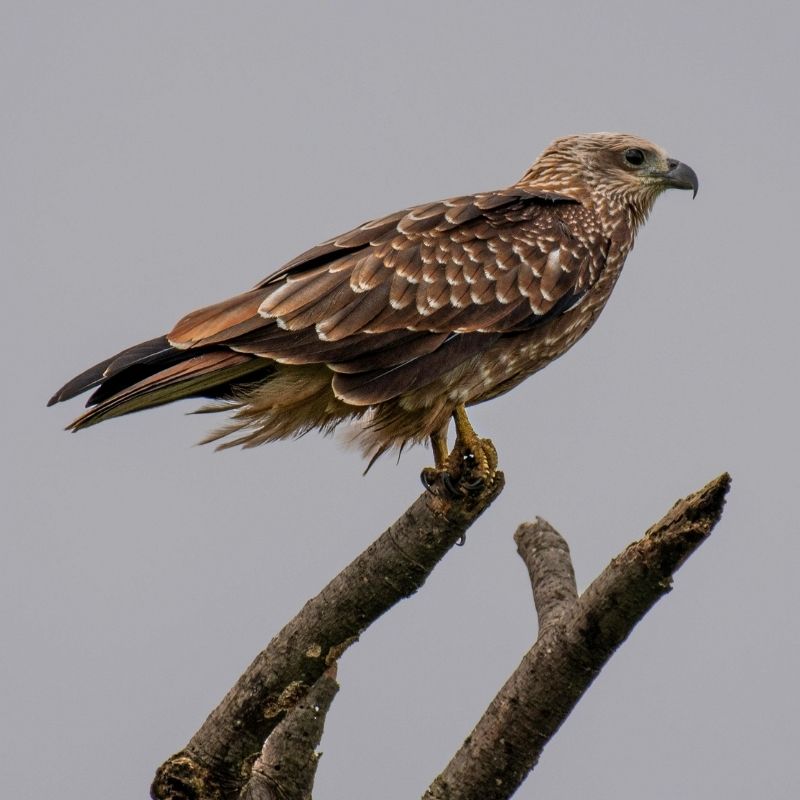
Juvenile plumage at this stage is dark brown with irregular white mottling, lacking the distinctive adult coloration. This coloration may provide camouflage against varied backgrounds.
Mortality risk remains high during this period. Estimates suggest that 30–40% of fledglings may not survive their first year, due to starvation, collisions, or inexperience.
Physiologically, this stage marks the transition from growth to functional independence, where neuromuscular coordination and flight efficiency become critical for survival.
4. Juvenile and Sub-Adult Stage (1–4 Years) Focuses on Learning and Survival
Following dispersal from the natal area, juvenile bald eagles enter a prolonged developmental phase lasting 1–4 years. During this time, they exhibit wide-ranging movements, often traveling hundreds of kilometers in search of food and suitable habitats.
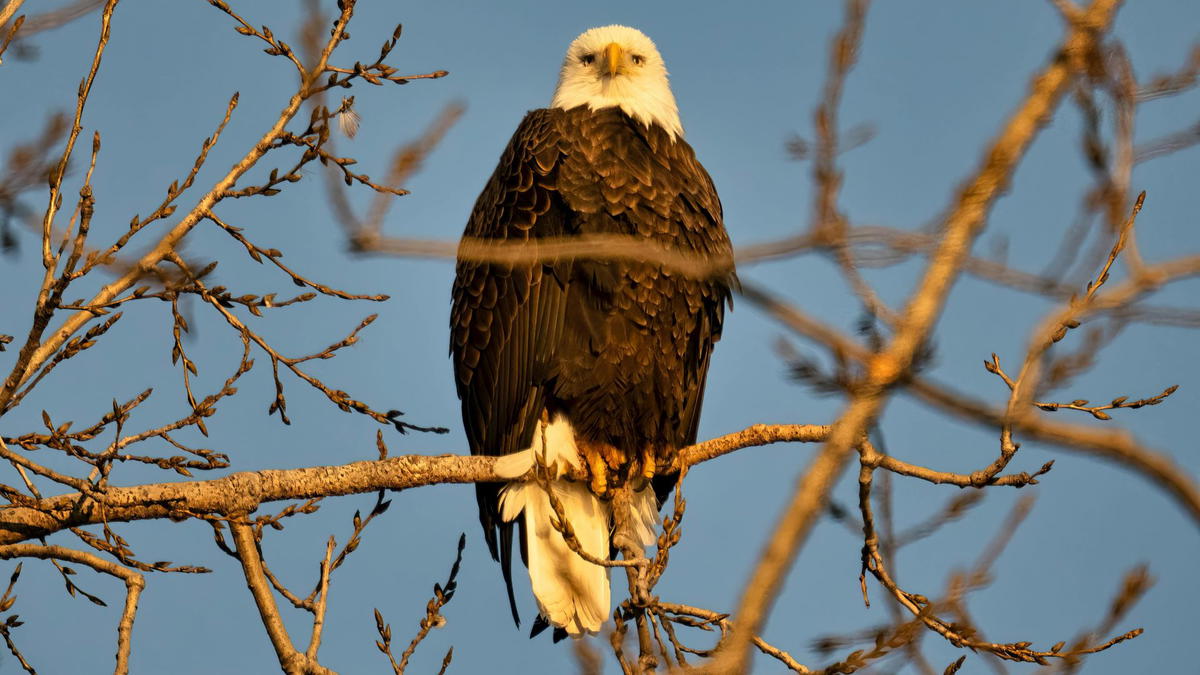
Plumage changes occur gradually through successive molts. Juveniles transition from uniformly dark brown to increasingly mottled patterns, eventually developing the characteristic white head and tail by 4–5 years of age. These visible changes allow researchers to estimate age classes in the field.
Mortality is highest during the first year, with estimates ranging from 50–70%, primarily due to inexperience in hunting and environmental hazards. Survival improves significantly after the first year.
Behaviorally, juveniles rely heavily on scavenging and kleptoparasitism, often stealing food from other birds, while gradually improving hunting efficiency. Studies indicate that juvenile hunting success rates are substantially lower than those of adults.
This stage highlights the importance of learning, dispersal, and selective survival, which determine progression to reproductive maturity.
5. Adult Stage (5+ Years) Represents Full Maturity and Reproduction
Bald eagles reach sexual maturity at approximately 4–5 years of age, coinciding with the acquisition of full adult plumage and bright yellow bill and eyes. At this stage, individuals establish territories and begin breeding.
Adults are typically monogamous, forming long-term pair bonds and exhibiting strong site fidelity by returning to the same nesting territory annually. Nests may be reused and expanded for decades, sometimes becoming among the largest tree nests of any bird species.
With wingspans of 1.8–2.3 meters, adults function as apex predators, efficiently capturing fish, birds, and carrion. Hunting proficiency is significantly higher than in juveniles due to experience and refined motor skills.
Wild lifespan commonly ranges from 20 to 30 years, with some individuals exceeding this. Annual adult survival rates are high, often estimated at 85–90%, which is typical of long-lived raptors.
Ecologically, adult bald eagles occupy the top trophic level, and their longevity combined with delayed reproduction represents a life-history strategy focused on survival and repeated breeding success.
Key Takeaways
• Bald eagle development spans 4–5 years, reflecting delayed maturity typical of large raptors.
• Incubation lasts about 35 days, with biparental care and asynchronous hatching.
• Nestlings grow rapidly, increasing body mass by over 40× within 10 weeks.
• Fledging occurs at 10–12 weeks, followed by a high-risk learning phase.
• Juvenile mortality is highest in the first year, often 50–70%, before stabilizing.
• Adults exhibit high survival rates and long lifespans, supporting repeated reproduction.