Florida Panther
The Ghost Sentinel of the Cypress Swamps
Puma concolor coryi
 Credit: U.S. Army Corps of Engineers · Wikipedia Commons · CC-BY
Quick Facts About Florida Panther
| Category | Details |
| Common Name | Florida Panther |
| Other Names | Puma, Cougar (regional subspecies) |
| Scientific Name | Puma concolor coryi |
| Conservation Status | Critically Endangered (IUCN, 2020); Endangered (ESA) |
| Population | ~120–230 adults (wild, Florida, 2023 estimate) |
| Lifespan | 10–15 years (wild) |
| Size | 180–230 cm (70.9–90.6 inches) total length |
| Weight | 30–70 kg (66–154 lbs) |
| Speed | Up to 80 km/h (50 mph) in bursts |
| Unique Features | Kinked tail, cowlick on back, tawny coat |
| Habitat | Cypress swamps, pine flatwoods, hardwood hammocks |
| Geographic Range | South Florida (Everglades, Big Cypress) |
What makes the Florida Panther extraordinary?
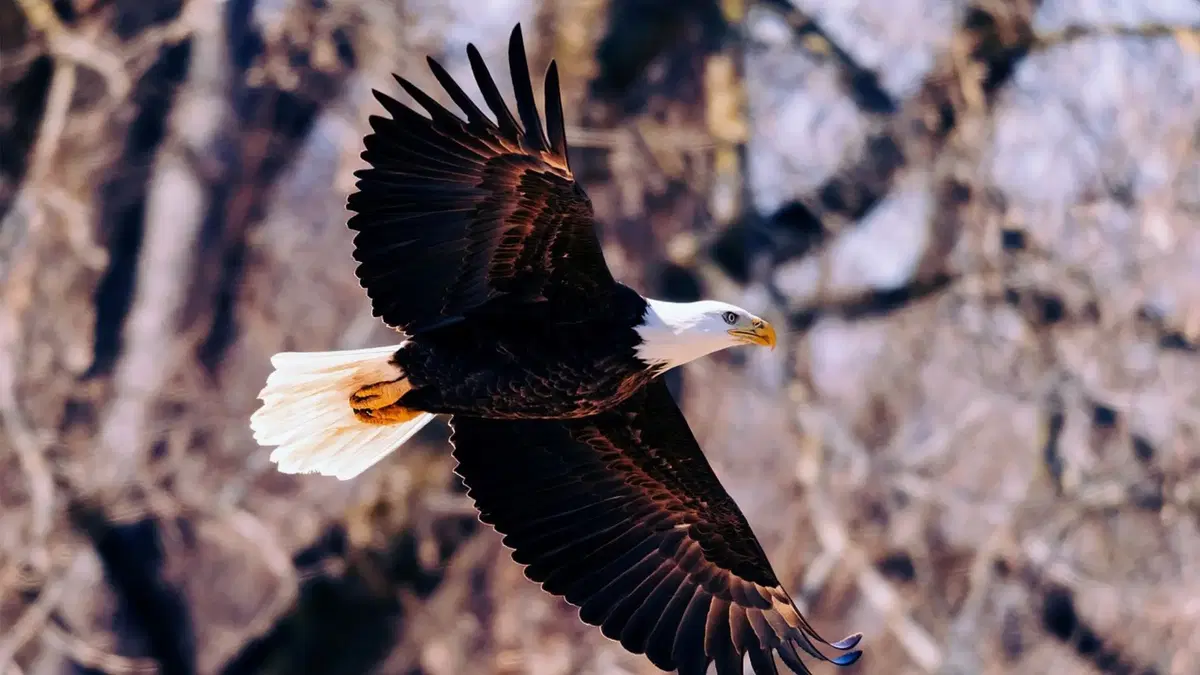
In the moonlit hush of a Florida cypress dome, a tawny shadow melts through sawgrass, its kinked tail flicking like a shortstop’s glove after a barehand play. This is the Florida Panther (Puma concolor coryi), a majestic big cat whose stealthy grace and solitary prowls define the Everglades and Big Cypress ecosystems. A top predator shaping South Florida’s food webs, it faces threats from habitat loss and vehicle strikes. A 2023 study in Ecology reported a fragile recovery, while U.S. conservation efforts underscore its iconic role, casting this ghost sentinel as a wetland’s MVP and an urgent call for Americans to protect its swampy realms, much like we champion our bald eagles.
Florida Panther Infographic: Quick Facts & Conservation
Two-page infographic with illustrated Florida Panther quick facts: Click to download pdf version.
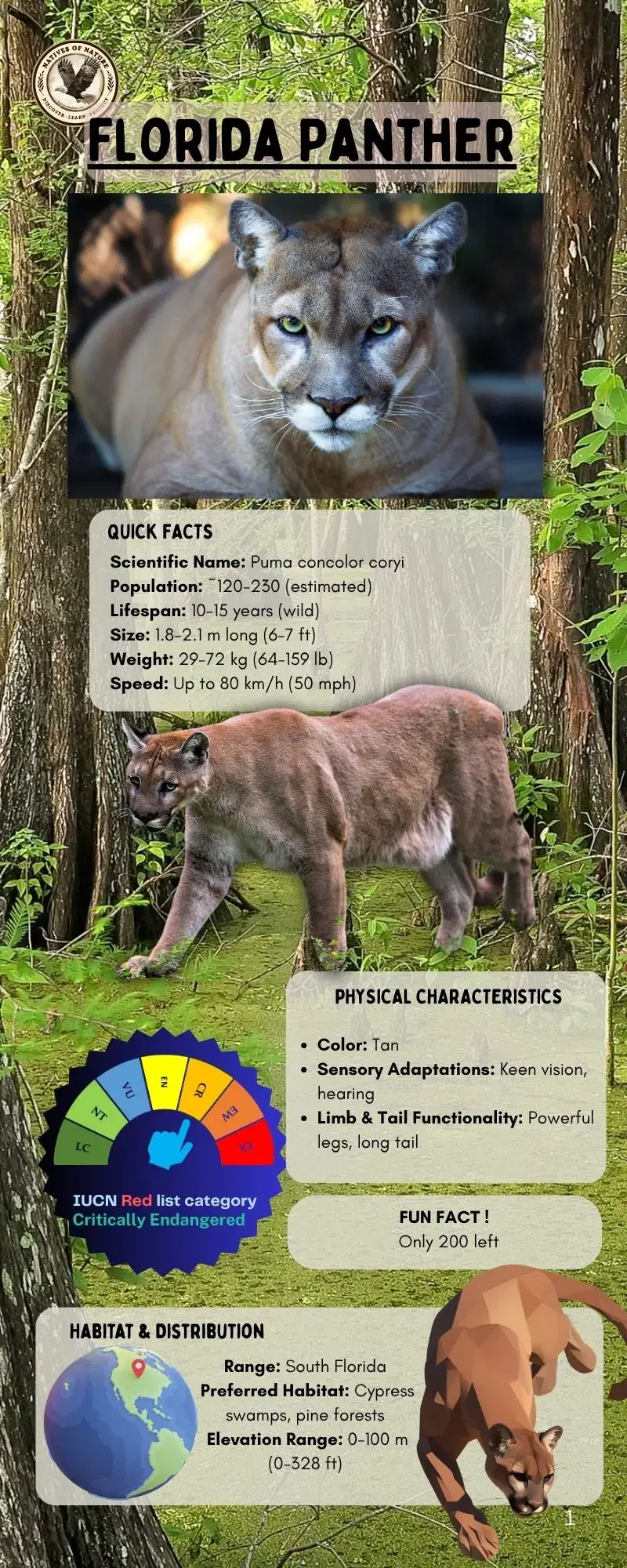
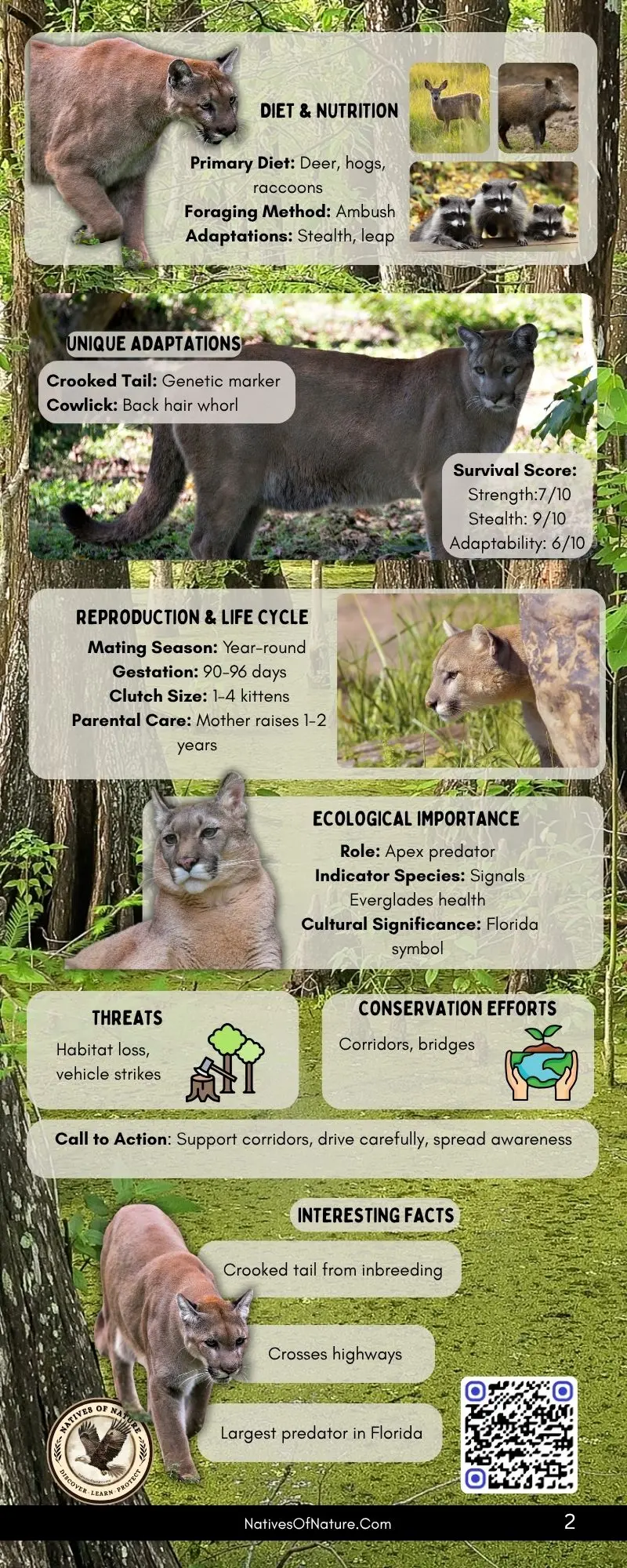
| Rank | Classification | Interesting Fact |
| Kingdom | Animalia | Panthers prowl in a kingdom alive with stealth—a swamp’s pulse! |
| Phylum | Chordata | Their spine fuels a sentinel’s stalk, weaving through cypress. |
| Class | Mammalia | Fur cloaks their grace—cats reborn in tawny splendor! |
| Order | Carnivora | Kin to mountain lions, they master ambush. |
| Family | Felidae | Felid kin, their eyes crown wetland nights. |
| Genus | Puma | From Quechua “puma,” for their power. |
| Species | P. concolor | “Concolor” means uniform color, for their coat. |
| Subspecies | P. c. coryi | Named for Charles B. Cory, ornithologist. |
Recommended Reading
Ghost of the Glades: How the Florida Panther Shapes an Entire Ecosystem
Florida Panther: The Comeback Story of America’s Rarest Big Cat
Florida Panther vs. Mountain Lion: Unraveling the Subtle Differences in America’s Adaptable Puma
10 Endangered Animals in Florida You Can Still See (2026 Guide)
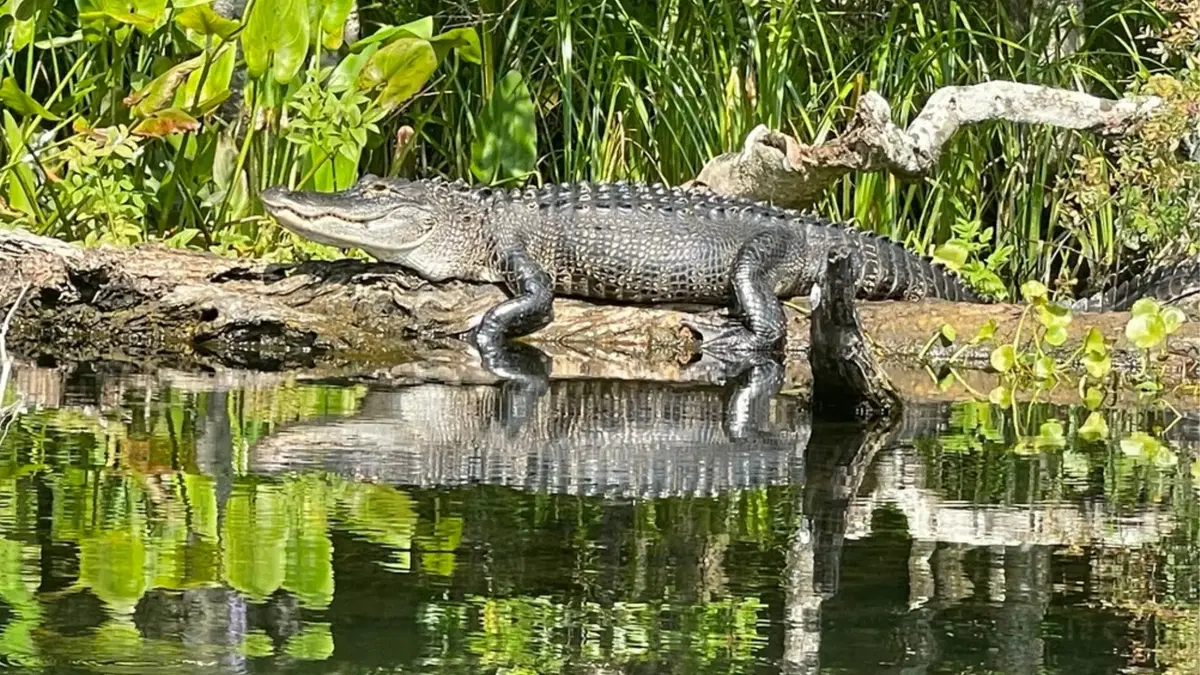
Apex Predators as Ecosystem Architects: Panthers, Eagles & Alligators in the Everglades
Predators That Build Balance: How Apex Species Keep Ecosystems Alive
What does a Florida Panther look like?
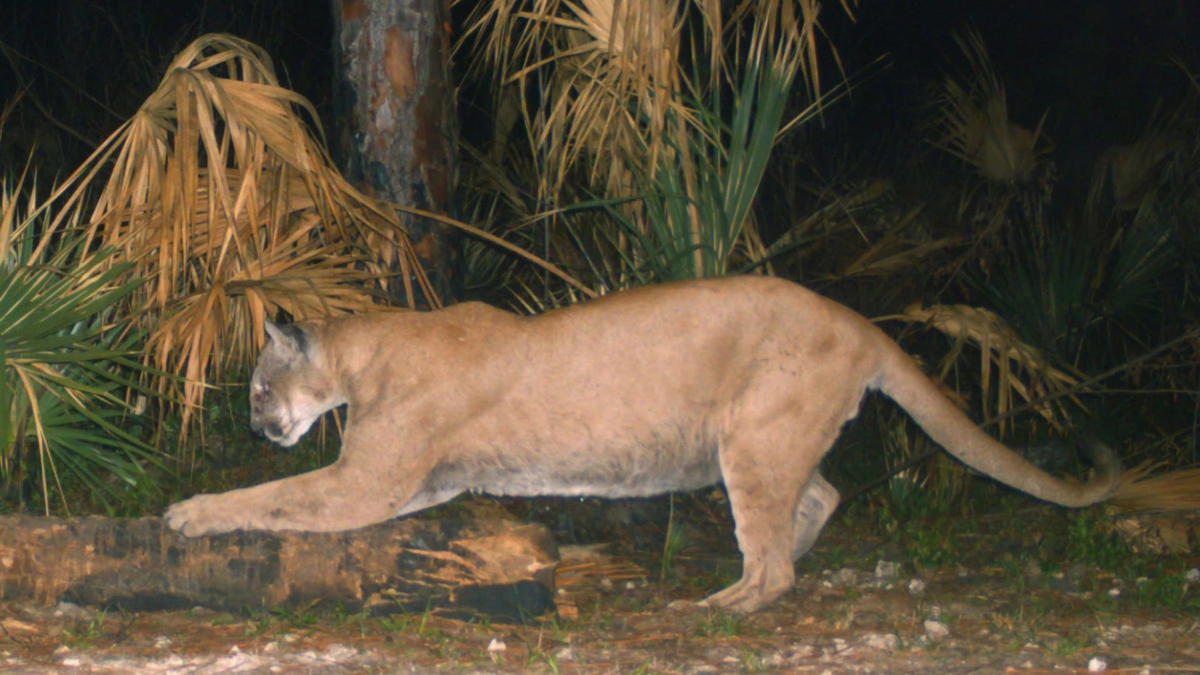
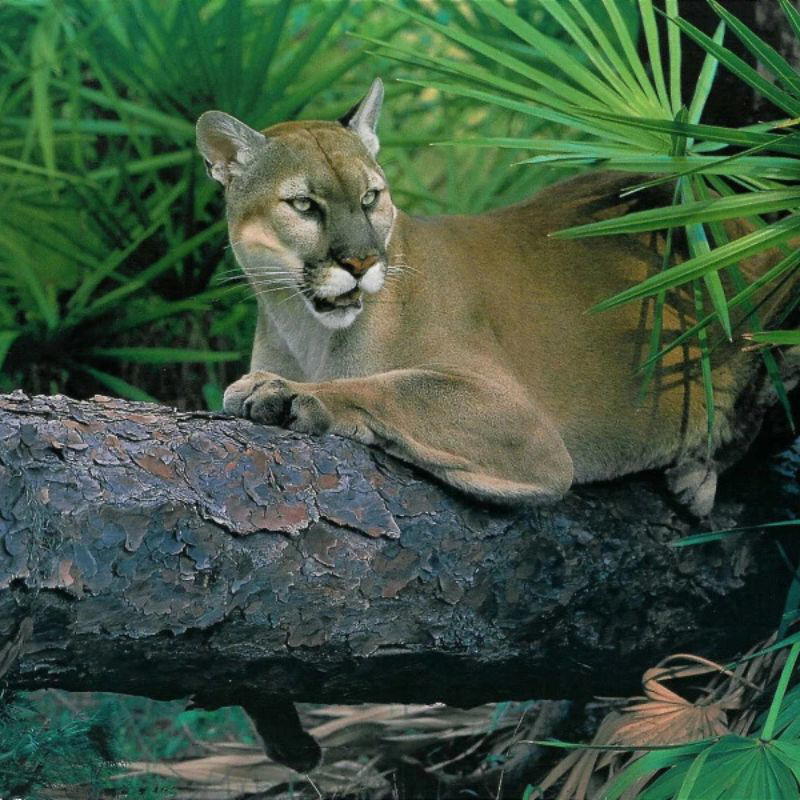
The Florida Panther is a swamp-forged phantom, cloaked in sleek fur. Measuring 180–230 cm (70.9–90.6 inches) including tail, its tawny coat with white underbelly blends with sawgrass like a fielder’s glove in the infield shadows. Weighing 30–70 kg (66–154 lbs), its muscular legs and kinked tail aid balance. Unlike the Texas Puma, it has a distinctive cowlick and smaller size.
- Size & Weight: 180–230 cm (70.9–90.6 inches), 30–70 kg (66–154 lbs)
- Coloration: Tawny with white underbelly, kinked tail
- Sensory Adaptations: Night vision for hunting; keen smell for tracking
- Body & Limbs: Muscular body, long legs, retractable claws
💡 Fun Fact: Their kinked tails flick like secrets—swamps’ ghost sentinels!
Read more
Compact Yet Powerful Build
Adult males average 2.0–2.3 m (6.6–7.5 ft) in total length and stand 60–70 cm (24–28 in) at the shoulder — noticeably smaller than western cougars that can reach 2.7 m (8.9 ft) and 80 cm (31 in). Females are distinctly petite at 1.8–2.1 m (5.9–6.9 ft). This compact frame is an evolutionary response to the dense, tangled vegetation of cypress strands and pine flatwoods, where bulk would be a liability rather than an asset.
Distinctive Tail Kink and Cowlick
Nearly every Florida panther carries two visible hallmarks of the 1990s genetic bottleneck: a sharply kinked or coiled tail tip (present in >90% of individuals) and a prominent cowlick or whorl of hair along the mid-back. These traits, once considered harmless curiosities, are now understood as mild expressions of inbreeding depression that peaked when the population fell below 30 adults in the early 1990s. The 1995 introduction of eight Texas female pumas dramatically reduced their frequency in new generations, yet they remain the subspecies’ most recognizable signature.
Coat and Camouflage Perfection
The pelage is a uniform tawny to rusty-orange above, fading to creamy white on the belly, chin, and inner legs — ideal for disappearing among sun-bleached sawgrass and dappled hammock shadows. Unlike northern cougars that develop thicker winter coats, Florida panthers maintain a short, sleek summer coat year-round, suited to South Florida’s subtropical climate where temperatures rarely drop below 5 °C (41 °F). Kittens are born with blue eyes and bold spotted coats that fade completely by six months, leaving no trace of rosettes in adulthood.
Skull and Dentition Specializations
The skull is broader and more domed than in western populations, with a shorter, wider rostrum. Bite-force studies show Florida panthers deliver the same lethal 1,200–1,400 N (270–315 lbf) as larger cousins, concentrated through proportionally robust carnassial teeth perfectly evolved for shearing deer and hog flesh in a single crushing bite to the throat or nape.
Limb and Paw Adaptations for Wetlands
Long, muscular legs end in wide, splayed forepaws (up to 9 cm / 3.5 in across in large males) that act like natural snowshoes when moving through flooded sloughs and marl prairies. Retractable claws leave barely a trace in soft muck yet grip hardwood hammock bark with lethal efficiency. The hind legs are exceptionally powerful, enabling vertical leaps of 4–5 m (13–16 ft) into live oak branches when escaping floods or ambushing prey from above.
Sensory Mastery
Amber eyes with vertically slit pupils provide superb low-light vision; tapetum lucidum reflection gives the characteristic green eyeshine that betrays their presence along dark trails. Hearing is acute enough to detect a raccoon rustling 50 m (164 ft) away through dense palmetto, while vibrissae (whiskers) longer than those of most cougars help navigate pitch-black cypress domes.
These physical traits — smaller size, kinked tail, cowlick, swamp-adapted paws, and wetland-perfect camouflage — are far more than cosmetic quirks. They are living evidence of a subspecies that survived near-extinction and now carries the legacy of both its bottleneck and its rescue in every sinew and hair.
Where do Florida Panthers live?
Florida Panthers inhabit remote cypress swamps, pine flatwoods, and hardwood hammocks, favoring dense cover. Endemic to South Florida, they range from Big Cypress to the Everglades. A 2024 Ecology study noted core populations in Collier County. Their 10,000 km² range faces 20% loss from development (2,000 ha, 2000–2025). Unlike the Bobcat, they require vast territories.
- Regions: South Florida
- Counties: Collier, Hendry, Lee, Miami-Dade
- Preferred Habitat: Cypress swamps, pine flatwoods
- Elevation Range: 0–10 m (0–33 ft)
💡 Did You Know? They stalk Big Cypress—wetlands’ tawny phantoms!
Read more
Core Stronghold: Big Cypress and Everglades
The heart of panther country lies within Big Cypress National Preserve and Everglades National Park — vast cypress domes, wet prairies, and marl sloughs where water levels dictate life. Here, dense strands of bald cypress and pond apple form cathedral-like corridors that panthers use as daytime resting sites, while open sawgrass prairies offer prime hunting grounds for white-tailed deer at dawn and dusk.
Pine Flatwoods and Hardwood Hammocks
Away from the deep swamps, panthers rely heavily on upland pine flatwoods dominated by slash pine and saw palmetto. These drier islands rise only a meter or two above the surrounding wetlands and provide critical dry ground for natal dens during the summer wet season. Scattered hardwood hammocks — tropical oases of live oak, strangler fig, and cabbage palm — serve as year-round refuges and travel corridors, their shaded canopy keeping ground temperatures 5–8 °C (9–14 °F) cooler than exposed prairies.
The Critical Role of Hydrological Patterns
Florida panthers are intimately tied to the Everglades’ natural wet-and-dry cycle. In the dry season (November–May), falling water levels concentrate prey around shrinking waterholes, creating ambush opportunities. During the wet season, sheetflow pushes deer onto slightly higher pine islands and hammocks — exactly where female panthers prefer to den. Even small disruptions to this cycle (drainage canals, levees, or climate-driven changes in rainfall) force panthers into riskier habitats closer to roads and development.
Current Range and Expansion Signs
Today, breeding populations are largely confined south of the Caloosahatchee River in Collier, Hendry, Lee, Miami-Dade, and Monroe counties — a core area of roughly 10,000 km² (3,860 mi²). Yet trail cameras and GPS collars have documented a slow northward push. Since 2016, confirmed panther presence north of the river has increased dramatically, with females establishing territories as far north as the Kissimmee River basin and even Polk County — the first breeding evidence outside South Florida in over half a century.
The Fragmentation Challenge
Only about 20–25% of historic panther habitat remains in large enough blocks to support a breeding population. The rest has been converted to citrus groves, sugarcane fields, or suburban sprawl. What remains is sliced by highways (notably I-75 “Alligator Alley,” U.S. 41 Tamiami Trail, and State Road 29), creating lethal barriers that adult males sometimes cross but females rarely do.
Ideal Home Range Size and Composition
An adult male requires 400–600 km² (154–232 mi²) of contiguous habitat containing a mix of wetlands for prey and upland forests for cover and denning. Females manage on 200–300 km² (77–116 mi²) but still need multiple hammocks and pine islands within swimming distance of one another. A single panther’s range can include more than a dozen distinct habitat types in a single week as water levels rise and fall.
These remaining wild pockets — cypress cathedrals, pine islands rising from endless sawgrass, and shadowy hammocks — are not just scenery. They are the last fragments of a landscape that once stretched across the entire peninsula, and they alone determine whether the ghost sentinel of the Everglades will vanish forever or reclaim its place as Florida’s apex predator.
Regional Significance in Florida
The Florida panther is one of the most ecologically important mammals in the state, serving as the apex terrestrial predator in South Florida’s forests and wetlands. Its remaining strongholds lie within the Everglades and Big Cypress region, where large, connected landscapes still support hunting, breeding, and dispersal. Because panthers require extensive, uninterrupted habitat, their presence reflects the overall health of Florida’s remaining wild spaces. Conservation measures designed to protect the panther—such as preserving wildlife corridors and reducing road mortality—also benefit a wide range of other species that share these ecosystems. As a result, the Florida panther functions not only as a rare subspecies but also as a living indicator of ecological resilience in one of North America’s most threatened environments.
What do Florida Panthers eat?
Florida Panthers are apex carnivores, consuming deer, hogs, and raccoons. A single panther eats ~5–7 kg (11–15 lbs) weekly, controlling prey populations, per a 2023 Ecology study. They hunt at dawn and dusk (0500–0800, 1700–2000). Their predation stabilizes ecosystems, per USFWS (2024). The Florida panther sits at the top of a complex food web that connects wetlands, uplands, and coastal systems.
- Primary Diet: White-tailed deer, feral hogs, raccoons
- Feeding Method: Ambush, throat bite
- Adaptations for Feeding: Powerful jaws (bite force ~1,200 N), stealth
💡 Fun Fact: They pounce like fielders snagging liners—swamps’ prey phantoms!
Read more
Primary Prey: White-Tailed Deer as Anchor
White-tailed deer remain the cornerstone, making up 60–75 % of the diet by biomass. An adult male panther requires one deer-sized meal (approximately 15–25 kg / 33–55 lb of usable meat) every 6–9 days, while a female raising kittens needs that amount every 3–5 days during peak lactation. Deer are stalked along hammock edges at dawn and dusk, then killed with a precise nape or throat bite that severs the spinal cord or crushes the windpipe in seconds.
Feral Hogs: The Double-Edged Protein Source
Since the 1980s, feral hogs have surged across panther range and now comprise 20–35 % of the diet in many areas, especially in Big Cypress and the former agricultural lands east of Lake Okeechobee. Adult boars exceeding 100 kg (220 lb) are occasionally taken by large males — kills that provide up to a week’s worth of food. Hogs are ambushed from elevated perches in pine flatwoods or dragged into thick cover to be cached under palmetto fans and fed upon for days.
Opportunistic Medium and Small Prey
When deer and hogs are scarce, panthers switch seamlessly to raccoons, armadillos, marsh rabbits, and even alligators up to 1.5 m (5 ft). Raccoons are a year-round staple near hardwood hammocks, while cotton rats and marsh rabbits become critical during the wet season when larger prey disperses into flooded prairies. Kittens learn to hunt by practicing on these smaller animals under the mother’s watchful eye.
Seasonal Shifts and Wet-Season Challenges
During the summer wet season (June–October), rising water concentrates prey on pine islands and tree-lined hammocks, creating temporary bonanzas. In the dry season (November–May), falling water levels force deer into predictable funnels around remaining waterholes — perfect ambush sites. Panthers adjust kill rates accordingly, gorging when prey is abundant and surviving on cached hog carcasses or smaller meals when flooding makes stalking difficult.
Bone Consumption and Mineral Needs
Panthers routinely eat ribs, vertebrae, and long-bone ends to meet calcium and phosphorus demands, especially lactating females whose kittens can double their mother’s daily requirement. They will return to a cached deer carcass for up to six days, cracking open skulls and pelvises with powerful carnassial shear long after softer tissues are gone.
Human-Subsidized Prey and Conflict
In fragmented areas east and north of the core range, livestock (calves and goats) and domestic pigs occasionally appear in the diet, triggering depredation complaints. Collared panthers have also been documented killing and eating feral domestic cats near rural homes — a behavior that highlights how close some individuals now live to human settlement.
Energetic Efficiency in a Low-Productivity Landscape
Because South Florida’s wetlands produce far less prey biomass per hectare than western mountain habitats, Florida panthers have evolved to be exceptionally efficient hunters. Success rates on deer stalks exceed 60 % (higher than most western cougar populations) and they waste almost nothing of a kill, often dragging 50–70 kg (110–154 lb) carcasses more than 300 m (1,000 ft) into dense cover to protect them from vultures and bears.
In short, the Florida panther’s menu is dictated by water levels, invasive species booms, and whatever large prey can still survive in the last wild corners of the peninsula — a diet that keeps fewer than 230 adult cats alive in a landscape that has largely forgotten how to support apex predators.
Are Florida Panthers social or solitary?
Florida Panthers are fiercely solitary, defending territories up to 500 km². They use scent marking and scrapes to signal, observed in Hendry County (2024). Vocalizations include screams and purrs, per USFWS (2024). They tolerate mates briefly during breeding.
- Vocalizations: Screams, purrs, hisses
- Body Language: Scent marking, tail flicks
- Social Structure: Solitary, brief mating pairs
💡 Interesting Fact: Their screams echo like a swamp’s cry—wetlands’ lone sentinels!
Read more
The Florida panther moves like a secret: silent, deliberate, and almost always alone. In a landscape where every rustle can betray position and every open road can kill, its behaviour has been honed into one of the most cryptic and efficient survival strategies of any North American big cat.
Extreme Solitude and Overlapping Ranges
Florida panthers are among the most solitary felids on the continent. Adult females tolerate only their own dependent kittens; adult males tolerate nothing except brief mating encounters. Yet because suitable habitat is now so limited, male ranges overlap by 30–50 % and female ranges by 10–20 %; far more than western cougars. They avoid deadly conflict through an elaborate system of time-sharing and scent “land leases” rather than strict borders.
Scent Marking as Primary Language
Scrapes, urine sprays, and fecal mounds are the panther’s newspaper, social media, and real-estate office combined. A dominant male may create 80–120 scrapes per month along regularly used trails, kicking backward with hind feet to leave both scent and a visual billboard. Females in estrus dramatically increase scraping and add a distinctive “caterwaul” call that can travel several kilometres across open marsh at night.
The Language of Silence
Actual vocalizations are rare and reserved for specific moments:
- Long-distance screams (December–March) by females in heat
- Short contact chirps between mother and older kittens
- Low growls and hisses only when cornered Most day-to-day communication is chemical and visual. A subordinate male encountering a fresh scrape from a dominant resident will immediately turn away, often within seconds, without a sound.
Crepuscular and Nocturnal Rhythm
Peak activity occurs in the two hours after sunset and before sunrise. GPS collar data show adult males travel 8–15 km (5–9 mi) on an average night, females with kittens only 3–7 km (2–4 mi). They rest 16–20 hours per day in dense cover: palmetto thickets by day in summer, open pine canopy in winter when temperatures drop and fleas become less active.
Stalking and Ambush Mastery
Florida panthers almost never chase prey over distance. Instead they use a slow, belly-to-ground stalk that can last 20–40 minutes, closing to within 5–10 m (16–33 ft) before exploding into a 10–12 m (33–39 ft) sprint and leap. Success rate on adult deer exceeds 60 %; one of the highest recorded for any wild felid, because the habitat itself funnels prey into predictable corridors.
Tree Climbing as Escape, Not Hunt
Unlike African leopards, Florida panthers rarely hunt from trees, but large males regularly climb 4–6 m (13–20 ft) into live oaks or cabbage palms to escape floodwaters, sleep safely above insects, or cache hog carcasses out of reach of bears and vultures. Kittens practice climbing from as early as eight weeks old.
Road-Wariness and Fatal Curiosity
Panthers learn vehicle danger quickly; most adults freeze or retreat at the sound of an approaching car. Yet young dispersing males (18–30 months old) show a dangerous curiosity, often pausing in the middle of highways to investigate headlights. This single behavioural trait accounts for the majority of human-caused mortality.
Mother–Kitten Bond and Play
For the first 12–18 months, the mother–kitten relationship is the only sustained social bond a panther will ever have. Mothers communicate with soft chirps and physical nudges, and play includes mock stalking, pouncing on mom’s tail, and dragging palm fronds; essential rehearsal for the deadly serious ambushes they will later perform alone.
In the end, the Florida panther’s behaviour boils down to one overriding rule: never be seen, never waste energy, and never trust anything that moves on two legs or four wheels. In a state with 22 million humans and shrinking wild corridors, that code of silence and shadow is the only thing keeping the ghost sentinel alive.
How does the Florida Panther thrive in swamps?
The Florida Panther is a wetland-crafted stalker, built for stealth and power. Its tawny fur blends with sawgrass, per a 2023 Ecology study. Its kinked tail aids balance in water, per USFWS (2024). Retractable claws grip muddy terrain, noted in the Everglades (2024). Unlike the Jaguar, it swims but avoids deep water.
- Camouflage – Tawny coat blends with wetlands.
- Sensory – Night vision; smell detects prey 5 km away.
- Mobility – Long legs for wading; bursts to 80 km/h.
Survival Score
- Strength: 8/10 – Apex predator with lethal bite.
- Stealth: 9/10 – Blends like a fielder in the swamp’s gloom.
- Adaptability: 5/10 – Thrives in wetlands, faces habitat loss.
Read more
The Florida panther is not simply a cougar that happens to live in swamps; it is a big cat sculpted by extreme isolation, genetic rescue, and one of the most challenging environments in North America. Every trait that sets it apart is an answer to the question: how do you remain an apex predator in a landscape that is half water, half palmetto thicket, and shrinking fast?
Wetland-Optimized Paws and Gait
Florida panthers have broader, more splayed forepaws than any other puma subspecies — up to 9–10 cm (3.5–3.9 in) wide in large males. These oversized pads distribute weight like built-in snowshoes, letting them move silently across saturated marl and floating periphyton mats without breaking through. When water rises above ankle depth, they shift to a deliberate, high-stepping gait that keeps the belly dry and reduces drag — an energy-saving trick almost never seen in western mountain lions.
Exceptional Swimming and Wading Ability
Unlike most cougars that treat water as a last resort, Florida panthers are confident swimmers. They routinely cross sloughs 200–300 m (650–1,000 ft) wide and will wade chest-deep for hours while trailing deer driven into wetlands by summer floods. Their long hind legs and low center of gravity give them a smooth, otter-like stroke that conserves energy in slow-moving sheetflow.
Heat-Dumping Physiology
South Florida’s humidity routinely exceeds 90 %. To prevent lethal overheating during midday hunts, panthers have an unusually high density of sweat glands on the pads and nose, and they dramatically increase panting rate while resting in shaded hammocks. They also behaviorally thermoregulate by lying spreadeagled on cool limestone or in wallows — a habit almost unknown in arid western populations.
Prey-Specific Jaw and Neck Musculature
Because white-tailed deer and feral hogs make up 85–90 % of their diet in most years, Florida panthers have evolved slightly shorter, more massive temporalis muscles and a thicker neck than western counterparts. This gives them a crushing bite force concentrated at the throat or nape — perfect for dropping a 70 kg (154 lb) deer in seconds even when the cat itself weighs only 45–50 kg (100–110 lb).
Cryptic Coloration Tuned to Sawgrass Light
The rusty-tawny dorsal coat is not random. It precisely matches the sun-bleached color of dead sawgrass blades that dominate the Everglades landscape for eight months of the year. In the dappled light of a hammock edge at dawn, a panther lying flat becomes nearly invisible from as little as 15 m (50 ft) away — a camouflage advantage that western grayish-tawny cougars simply do not need.
Extreme Territorial Tolerance
Adult males maintain home ranges that overlap 30–50 % with one another — far more overlap than in western populations — because suitable dry denning sites and travel corridors are so limited. This forced tolerance, combined with subtle scent-marking hierarchies, reduces deadly fights in a landscape where every lost adult is a conservation crisis.
Post-Rescue Hybrid Vigor Traits
The 1995 introduction of Texas pumas dramatically increased genetic diversity and produced measurable physical changes within two generations: straighter tails, disappearance of the mid-back cowlick in many individuals, larger average skull size, and higher kitten survival. Today’s panthers are visibly more robust than the tiny, kinked-tail cats photographed in the 1980s, proving that hybrid vigor can manifest as real, observable adaptation in fewer than 25 years.
These traits — snowshoe paws, swamp-swimming prowess, heat-shedding tricks, deer-killing jaw power, perfect sawgrass camouflage, and the living proof of genetic rescue — are what allow fewer than 230 adult panthers to still hold the title of apex predator in one of the most human-altered wild landscapes on the continent.
How do Florida Panthers reproduce?
Breeding occurs year-round (peak post-breeding, October 24, 2025, PDT). Females birth 1–4 kittens after ~90 days gestation, denning in palmettos. Kittens, 0.5 kg (1.1 lbs) at birth, reach maturity at 1.5–2 years. A 2023 Ecology study reported 50% kitten survival, with losses to vehicles and inbreeding.
- Breeding Season: Year-round (peak Dec–Mar)
- Litter Size: 1–4 kittens
- Gestation Period: ~90 days
- Parental Care: Females raise kittens for 1–2 years
💡 Did You Know? Kittens tumble like tiny fielders—swamps’ tawny heirs!
Read more
The Florida panther’s reproductive cycle is a high-stakes gamble played out in one of the most fragmented big-cat populations on Earth. Every kitten born is a conservation event, and every adult death is a crisis.
Year-Round Breeding with Wet-Season Peaks
Unlike northern cougars with distinct winter breeding seasons, Florida panthers mate whenever conditions allow, though most conceptions occur between December and March when dry ground is plentiful and prey is concentrated. Females become receptive for only 3–9 days every 24–28 days, advertising with scent-marked scrapes and long-distance screams that can carry more than 2 km (1.2 mi) across open sawgrass.
Natal Den Selection in the Wet Season
Pregnancy lasts 90–95 days, timed so that most kittens are born during the early wet season (May–August). This ensures that when the mother must leave the den to hunt, floodwaters create a natural moat around the chosen site: usually a dense palmetto thicket on a pine island or inside a fallen cypress log. Dens are almost always on the highest available ground, sometimes only 30–50 cm (12–20 in) above summer water levels.
Litter Size and Early Vulnerability
Litters average 2–3 kittens (range 1–4), born blind and weighing just 0.4–0.7 kg (0.9–1.5 lb) each. Kitten mortality is brutal: 40–60 % die before their first birthday from starvation, flooding, or vehicle strikes when mothers move them across roads. Of the survivors, only about half reach breeding age, making every successful litter critical to population growth.
Maternal Investment and Dispersal
Females are fiercely solitary mothers, raising kittens alone for 16–24 months. They teach hunting by dragging half-dead raccoons or hoglets back to the den, gradually increasing difficulty until the young can follow on real deer hunts. Daughters typically settle within or adjacent to the mother’s range; sons disperse at 18–24 months, often attempting to cross the Caloosahatchee River. Before wildlife crossings were installed, 80–90 % of dispersing males died trying.
Male Reproductive Strategy
Adult males maintain enormous overlapping ranges (400–600 km² / 154–232 mi²) that encompass several females. They visit each female’s territory every few weeks during her receptive period, mate multiple times over several days, then move on. Genetic studies show that dominant males can sire 70–80 % of kittens in a given year, creating a genetic bottleneck even within the recovering population.
Lifespan and Causes of Death
In the wild, few Florida panthers live past 12 years. The oldest known wild individual, a female collared as a kitten, reached 18 years and 9 months before dying of natural causes in 2022. Average life expectancy for males is 8–10 years; females that survive kitten-rearing often reach 12–15 years. Leading causes of death in adults are vehicle strikes (50–60 %), territorial fights between males (15–20 %), and starvation or disease in old age.
Genetic Rescue Legacy in Reproduction
The 1995–2004 introduction of Texas pumas remains the single most important reproductive event in the subspecies’ history. Pre-rescue litters averaged 1.8 kittens with 94 % showing heart defects and kinked tails; post-rescue litters now average 2.6 kittens with defect rates below 10 %. Survival to independence has risen from ~25 % in the 1980s to over 60 % today, proving that hybrid vigor can rescue an entire reproductive system in under three decades.
Every scream echoing across a cypress dome at 2 a.m., every set of tiny spotted tracks in wet marl, every road-killed young male found on Alligator Alley represents the razor-thin margin between extinction and recovery for America’s rarest big cat.
Why is the Florida Panther vital to its ecosystem?
Florida Panthers control deer and hog populations, eating ~5–7 kg (11–15 lbs) weekly, balancing wetlands, per a 2024 Ecology study. They serve as an umbrella species, protecting habitats for others, similar to grizzlies in U.S. ecosystems. Their decline signals fragmentation, per USFWS (2025).
- Population Control: Reduces deer and hogs.
- Food Web Role: Apex predator; protects biodiversity.
- Indicator Species: Reflects wetland health.
💡 Fun Fact: Their prowling shapes swamps—nature’s ghost sentinels!
The Florida Panther is officially recognized as the State Animal of Florida, USA. Once on the brink of extinction, this elusive big cat has become a powerful symbol of conservation success and the enduring spirit of the American wilderness. Its survival highlights the importance of protecting the fragile ecosystems of the southeastern United States.
Read more
The Florida panther is far more than a charismatic flagship species; it is the last functioning apex predator in one of the most altered ecosystems on the planet. Where it still walks, entire landscapes stay alive.
Top-Down Control of Herbivore Populations
A single adult panther removes roughly 50–70 white-tailed deer and feral hogs per year. In the absence of wolves and with only scattered black bears, panthers are the only animal capable of keeping these herbivores from over-browsing hardwood hammocks and young cypress. Studies in Big Cypress National Preserve show that areas with resident panthers have 30–40 % less damage to rare tropical trees (like strangler fig and gumbo-limbo) than areas where panthers have been locally extirpated.
Regulation of the Feral Hog Explosion
Feral hogs are one of the most destructive invasive mammals in the Southeast, rooting up native plants, destroying wetlands, and competing with deer. A large male panther can kill a 70–100 kg (154–220 lb) hog every 10–14 days. In core panther habitat, hog densities are measurably lower and wetland wallows heal faster than in similar areas without panthers.
Umbrella Species for Landscape-Scale Conservation
Protecting enough connected habitat for one adult male panther (roughly 500–600 km² / 193–232 mi²) automatically safeguards dozens of other threatened species that need far less space: Florida panther frogs, Big Cypress fox squirrels, Everglade snail kites, wood storks, and eastern indigo snakes all thrive inside the same forest islands and travel corridors that panthers require. The panther’s presence has justified the preservation and restoration of over 400,000 hectares (1 million acres) of public land that would otherwise have been developed.
Indicator of Hydrological Health
Panthers need the natural wet-and-dry cycle of the Everglades to concentrate prey and provide dry den sites. When sheetflow is blocked by canals or roads, deer disperse, hog damage increases, and panther reproduction crashes. Declining panther numbers in the 1980s and early 1990s were one of the first clear biological signals that the greater Everglades restoration project was desperately needed; rising numbers since 2015 are now used as a measurable benchmark of restoration success.
Seed Dispersal and Forest Regeneration
By dragging carcasses into dense cover, panthers unintentionally plant the seeds of fruit-bearing trees (wild mastic, stopper, and cocoplum) that pass undigested through deer and hog guts. Scat and cached kills fertilize hammock soils, creating nutrient hotspots that support the next generation of tropical hardwoods in a system where natural fire has been largely suppressed.
Cultural and Economic Ripple Effects
Every dollar spent on panther recovery (wildlife underpasses, land acquisition, genetic monitoring) returns multiple benefits: cleaner water from restored sheetflow, reduced flooding for coastal communities, carbon sequestration in maturing forests, and billions in ecotourism revenue tied to Everglades National Park and Big Cypress Preserve.
In short, the Florida panther is the last living thermostat for an ecosystem that once stretched across the entire peninsula. Where it disappears, the landscape tips toward hog-dominated scrub, over-browsed forests, and stagnant marshes. Where it recovers, the entire Everglades begins to breathe again. Fewer than 230 adult panthers are all that stand between South Florida’s last wild heart and irreversible collapse.
- Florida schoolchildren voted the panther as the official state animal in 1982.
- Unlike lions or tigers, Florida panthers can’t roar at all; instead, they purr like house cats and make eerie, chilling screams that earn them the nickname “swamp screamer.”
- Kittens are born spotted with bright blue eyes (spots and blue fade as they grow).
- These elusive “ghost cats” are masters of camouflage in the Everglades, with males roaming massive territories up to 200 square miles—yet vehicle collisions remain their biggest threat today.
Why is the Florida Panther at risk?
With “Critically Endangered” status, Florida Panthers number ~120–230. Habitat loss from development (2,000 ha, 2000–2025) impacts 20% of range. Vehicle strikes kill 20–30 annually, per a 2024 study. Inbreeding causes defects in 30% of kittens, noted in Collier County (2023). Kitten mortality reaches 50%, per 2023 data.
- ⚠ Habitat Loss: Development fragments ranges.
- ⚠ Vehicle Strikes: Roads kill adults.
- ⚠ Inbreeding: Reduces genetic diversity.
Conservation Efforts
- Protected Areas: Big Cypress National Preserve, Everglades National Park.
- Habitat Restoration: USFWS’s 2024 wildlife corridors, like panther programs.
- Genetic Augmentation: 1995 Texas puma introduction.
- Monitoring: USFWS and FWC track populations (2025).
✅ What We Can Do:
- Protect swamps—panthers prowl, ecosystems thrive, like our eagles!
- Build corridors—connect habitats, like we protect U.S. wildlife.
- Back USFWS and FWC—champion panther survival, like we support grizzlies.
Read more
The Florida panther is not fighting extinction on some distant continent; it is doing so in the backyard of one of America’s fastest-growing states. With only ~120–230 adults left in the wild (2024 FWC/USFWS estimate), every threat is existential and every conservation gain is hard-won.
Vehicle Collisions – The Leading Killer
Roads are the single greatest cause of death. Between 2000 and 2024, more than 350 panthers were killed by vehicles, with an average of 25–35 struck annually in recent years. Most fatalities are young dispersing males on Alligator Alley (I-75), U.S. 41, and State Road 29. One bad stretch of highway can wipe out an entire year’s kitten production.
Habitat Loss and Fragmentation
South Florida lost another ~80,000 hectares (200,000 acres) of potential panther habitat to development between 2000 and 2023. The Caloosahatchee River, once a porous boundary, is now a near-impenetrable wall of agriculture and suburbs. Females almost never cross it, effectively splitting the population in two and preventing natural recolonization of central and north Florida.
Inbreeding Depression and Genetic Rescue Aftermath
Before 1995, the population crashed to fewer than 30 adults with 94 % showing kinked tails, heart defects, and cryptorchidism (undescended testicles). The bold 1995–2004 introduction of eight Texas female pumas reversed the slide, but the gene pool is still dangerously shallow. New threats such as feline leukemia and emerging diseases could spread unchecked without further genetic management.
Mercury and Contaminant Exposure
Runoff from former sugarcane fields and urban areas carries heavy metals into the food chain. Some panthers in the Everglades show mercury levels high enough to impair reproduction and immune function. Anticoagulant rodenticides from suburban rat control have also been found in panther livers.
Climate Change and Sea-Level Rise
By 2060, models predict 30–50 % of current panther habitat south of Lake Okeechobee could be inundated by saltwater intrusion or lost to higher storm surges. The very wetlands that concentrate prey today could become ghost forests tomorrow.
Conservation Wins That Are Keeping Hope Alive
- Wildlife Underpasses and Fencing: Since the first 24 underpasses and 80 km (50 mi) of fencing were completed on I-75 in 2023, documented panther road mortality on that highway has dropped more than 90 %. New projects on SR-29 and CR-846 are underway.
- Florida Wildlife Corridor: A 2021 state law and ongoing land acquisitions are creating an 18-million-acre protected pathway from the Everglades to the Georgia border; the only realistic chance for panthers to naturally recolonize their historic range.
- Panther Protection Zones on Private Lands: Ranchers who maintain native cover and allow panther passage now receive payments and tax incentives. Over 400,000 hectares (1 million acres) of private ranchland are currently enrolled.
- Continued Genetic Monitoring: Every captured panther is still genetically sampled. If diversity begins to decline again, biologists are prepared for a second managed introduction.
- Public–Private Partnerships: The Florida Panther Recovery Program is one of the most successful public–private conservation efforts in the U.S. The U.S. Fish and Wildlife Service, Florida Fish and Wildlife Conservation Commission, National Park Service, Conservancy of Southwest Florida, and dozens of landowners all coordinate under a single recovery plan.
The math is brutal: lose 30 adults a year to cars and the population declines; save 30 through underpasses and land protection and it grows. That is the razor’s edge on which the ghost sentinel now walks. The Florida panther is living proof that even the rarest, most road-crossed big cat in America can come back; if we keep building bridges instead of walls.
Genetic Rescue Success — The 1995 introduction of eight Texas pumas was a major conservation win. A 2025 PNAS study of panther genomes confirmed nearly threefold higher heterozygosity, sharply reduced homozygosity and inbreeding defects (kinked tails now <10%, dilated cardiomyopathy essentially eliminated), while preserving 59–80% original Florida ancestry. No genetic swamping occurred; benefits persist, though future gene flow may be needed for long-term viability beyond ~20 generations.
Population Recovery — Estimates place the population at 120–230 adult/subadult panthers (FWC data, consistent through recent years), up from 20–30 in the 1970s–1990s. Post-rescue first-year kitten survival reached ~67% (2020 study), with average litters of 2–3 supporting growth despite mortality pressures.
Range Expansion Limitations — The breeding population remains south of the Caloosahatchee River. Males have dispersed >100 miles north since 2016–2018, but no established resident breeding groups north of the river as of 2025. Sex-biased dispersal (males travel farther; females stay near maternal ranges) and habitat fragmentation hinder northward colonization, despite corridor initiatives.
Mortality and Health Threats — Vehicle strikes dominate mortality (e.g., 16 of 17 deaths in 2025 by mid-December were roadkills). Feline leukomyelopathy (FLM) cases continue (dozens in panthers/bobcats since 2017), causing progressive ataxia; cause remains unknown (toxins/infectious agents under study, no confirmed links to flame retardants or viruses). Mercury from raccoon prey poses chronic neurological/reproductive risks; low active FeLV infections.
Spatial Ecology — Male home ranges average ~200 sq mi, females ~75 sq mi. GPS/LiDAR studies (2023) show preference for high-canopy upland forests (hardwood hammocks, pine flatwoods) for denning, with wetlands for foraging. Over 50% of occupied habitat is on private lands (ranches/agriculture), underscoring the need for conservation easements.
Diet Dynamics — Primary prey: white-tailed deer and feral hogs (~70% combined), plus raccoons/armadillos; hogs (20–40% in some areas) boost abundance but raise conflict risks. Scat analyses show predation on invasive tegus (potential ecosystem benefit). Black bear kleptoparasitism of kills documented (2021), increasing hunting effort.
Conservation Technology — Wildlife underpasses (e.g., new I-75/I-4 projects reduce collisions), advanced GPS collars with satellite telemetry/accelerometers for real-time monitoring, AI camera traps for instant ID, eDNA watershed sampling for non-invasive tracking, and LiDAR/AI tools for corridor planning.
The Florida Panther is a sentinel, a ghost, a swamp’s tawny pulse. Saving it preserves Everglades biodiversity, just as Americans protect our eagles and grizzlies. Let’s champion its silent stalk, like we cheer a game-saving catch.
✅ Share this article – Amplify its swamp song, like a viral highlight reel!
✅ Support conservation – Back USFWS or FWC, like U.S. wildlife refuges.
✅ Create panther-friendly wetlands – Build corridors, revive a legacy, like our Everglades protections.


Arya Sankar is a postgraduate in Zoology with academic and research experience in wildlife and marine sciences. She has worked on research projects at the Central Marine Fisheries Research Institute and has been actively involved in science education and skill development. Her contributions focus on accurate species information, conservation awareness, and educational wildlife content.
- U.S. Fish and Wildlife Service species profile — https://www.fws.gov/species/florida-panther-puma-concolor-coryi (endangered subspecies; detailed biology and conservation status).
- U.S. Fish and Wildlife Service. (2008). Florida Panther Recovery Plan (Puma concolor coryi), — https://ecos.fws.gov/docs/recovery_plan/081218.pdf.
- Florida Fish and Wildlife Conservation Commission species profile — https://myfwc.com/wildlifehabitats/wildlife/panther/
- IUCN Red List (Puma concolor, parent species) — https://www.iucnredlist.org/species/18868/97216168