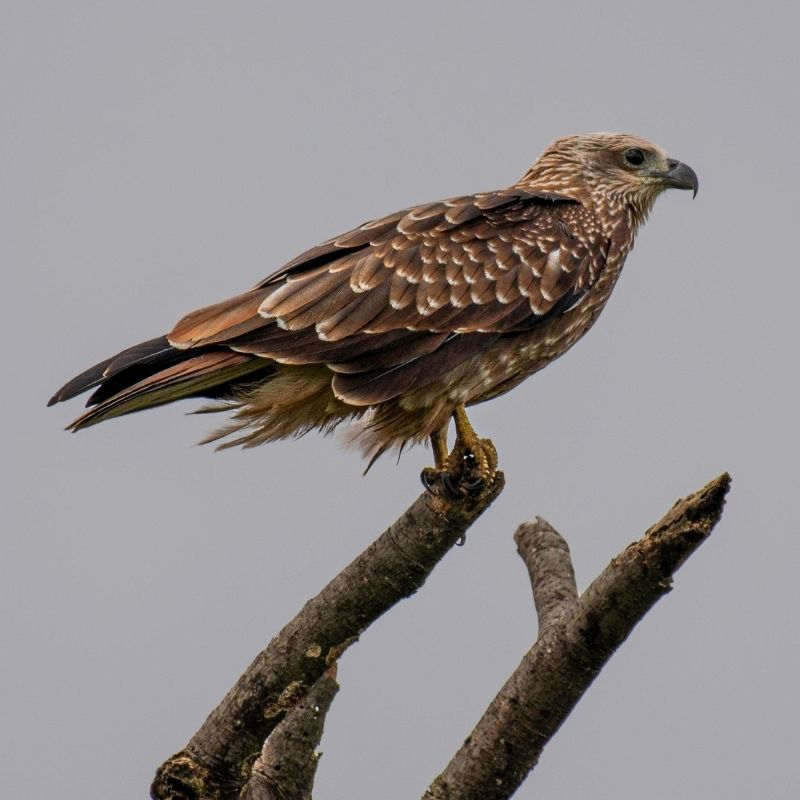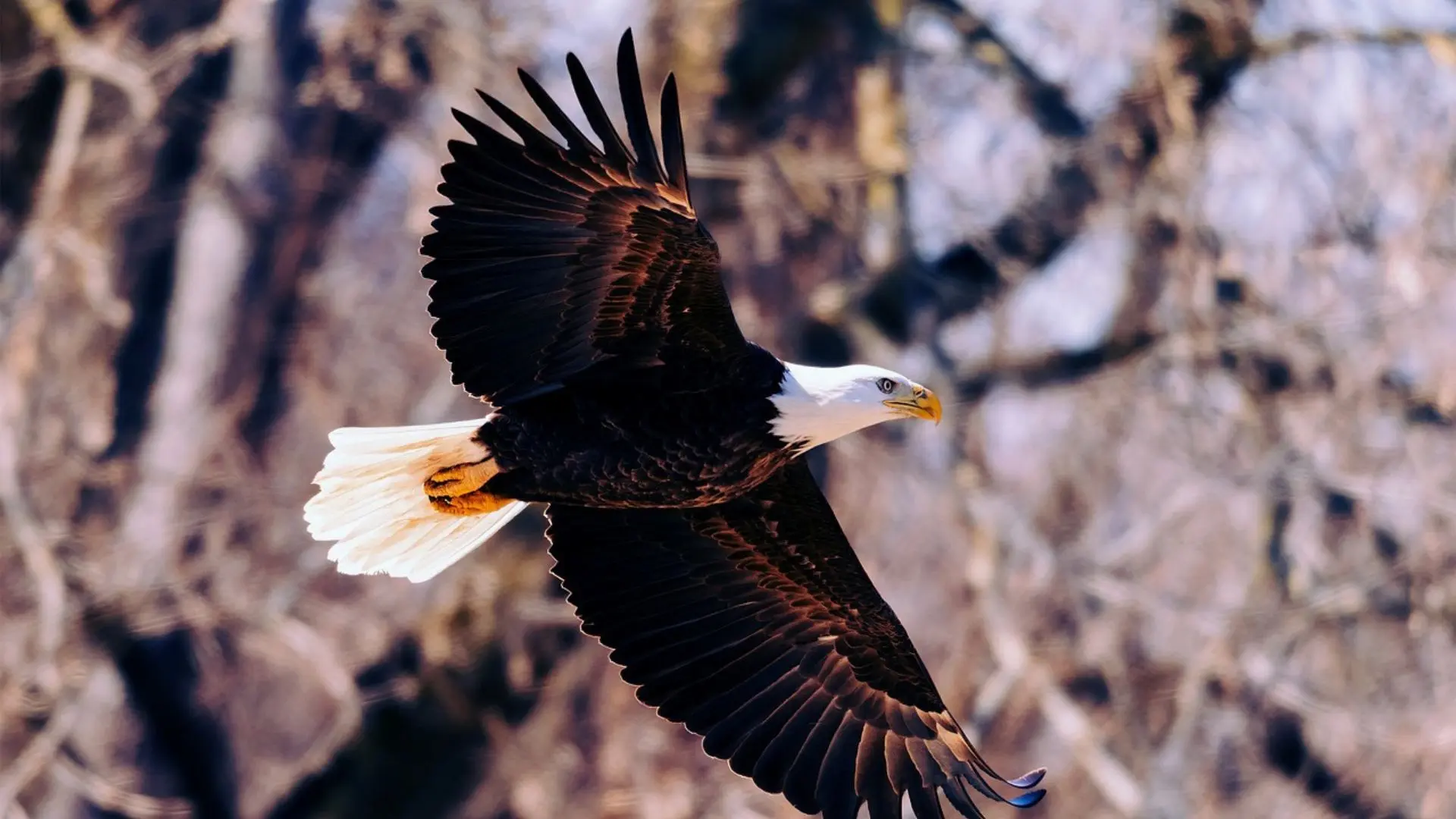
Bigger than a pickup truck. Deeper than you’re tall. Used for over three decades — here’s the remarkable story behind the Bald Eagle’s colossal nest.
Nature’s Skyscraper: Record-Breaking Homes in the Wild
No bird in North America builds a home as massive—or as enduring—as the Bald Eagle (Haliaeetus leucocephalus).
These nests are architectural marvels of the animal world.
| Metric | Typical | Record |
| Width | 2–4 m (6–13 ft) | 2.9 m (9.5 ft) |
| Depth | 1–2 m (3–6 ft) | 6 m (20 ft) |
| Weight | 450–900 kg (1,000–2,000 lb) | 2.7 tonnes (6,000 lb) |
🪵 Florida’s record nest stood for 36 years before collapsing under its own weight.
“Bald Eagles don’t just build nests—they build ecosystems.”
— U.S. Fish & Wildlife Service (USFWS)
Nest Size Comparison Table
| Species | Average Diameter | Average Depth | Maximum Recorded Weight |
| Bald Eagle | 1.5–1.8 m (5–6 ft) | 0.6–1.2 m (2–4 ft) | 2,700 kg (3 tons) |
| Golden Eagle | 1.2–1.5 m (4–5 ft) | 0.3–0.6 m (1–2 ft) | 180 kg (400 lbs) |
| Osprey | 0.9–1.2 m (3–4 ft) | 0.3–0.5 m (1–1.5 ft) | 135 kg (300 lbs) |
| Red-tailed Hawk | 0.7–0.9 m (2–3 ft) | 0.1–0.3 m (0.5–1 ft) | 14 kg (30 lbs) |
Built for Life: Why Eagles Build So Big
These massive nests aren’t just a show of strength—they’re a lifetime investment in family, protection, and survival.
Here are the five main reasons they grow to legendary size:
- Lifetime Partnership – Mated pairs stay together for life, adding new branches every breeding season.
- Weatherproof Design – Reinforced yearly to withstand wind, rain, and snow.
- Chick Safety – Deep, bowl-shaped centers keep eaglets secure before they can fly.
- Territory Signal – A towering nest warns rivals: “This territory is taken.”
- Multiuse Hub – The nest doubles as dining area, lookout post, and training ground for fledglings.
Each year’s rebuild adds weight and strength—turning a simple structure into a fortress in the treetops.
Family Heirlooms of the Sky
- Eagles reuse the same nest for decades, repairing and expanding it yearly.
- Abandoned nests become vital shelters for owls, herons, raccoons, or squirrels—small worlds thriving inside a larger one.
- Some nests have been passed down through generations of eagles for 30+ years.
“Eagle nests are living architecture — built layer by layer, like tree rings of family history.”
— Cornell Lab of Ornithology
Perfect Placement: Why Location Matters
Bald Eagles are strategic architects.
They choose nesting sites with the precision of engineers:
- Near Water: lakes, rivers, and coastlines for easy fishing.
- High Elevation: usually 15–40 m (50–130 ft) up, giving clear visibility.
- Strong Support: mature pines, cottonwoods, or cliffs that can bear up to a tonne (2,200 lb).
In coastal regions like Alaska, where tall trees are rare, eagles adapt—nesting on cliffs, rock ledges, or even human-built platforms.
The Genius of Reuse
Rebuilding each year might seem repetitive, but it’s one of the eagle’s greatest survival hacks.
- Every layer compresses the structure below, strengthening the foundation.
- Fresh moss, grass, and pine needles provide insulation and waterproofing.
- Reusing saves time and energy, letting adults focus on hunting and caring for chicks.
According to USGS, reused nests can gain over 90 kg (200 lb) in weight annually.
Engineering Perfection: Nature’s Blueprint
| Structural Element | Function | Benefit |
| Wide base of large sticks | Stability | Prevents collapse under weight |
| Tightly packed core | Drainage & insulation | Keeps eggs dry and warm |
| Cup-shaped center | Cradle for eggs | Prevents rolling & injury |
| Sloped outer walls | Wind resistance | Aerodynamic stability |
Each branch and twig is placed with precision, often using over 1,000 individual sticks gathered from hundreds of metres away.
Architects of the Ecosystem
Even when eagles abandon them, their nests remain ecological treasures.
- Smaller birds (owls, herons, ravens) reuse them.
- Rodents and insects find refuge within the compact structure.
- Mosses and fungi colonize old layers, enriching the surrounding soil.
In this way, the Bald Eagle functions as a keystone engineer — shaping habitats long after it departs.
From Endangered to Iconic
In the 1960s, Bald Eagle populations collapsed due to hunting, habitat loss, and pesticide contamination (especially DDT).
By 1967, they were officially listed as endangered across the U.S.
But their recovery stands as one of conservation’s greatest triumphs:
| Milestone | Year | Impact |
| Listed as Endangered | 1967 | Protection begins |
| Endangered Species Act | 1973 | Strict nesting safeguards |
| Delisted (Recovered) | 2007 | 316,000+ eagles across U.S. |
Today, active nests are protected by federal law—cutting or disturbing an occupied nest can result in heavy fines or imprisonment under the Bald and Golden Eagle Protection Act.
Quick Facts Summary
| Trait | Detail |
| Scientific Name | Haliaeetus leucocephalus |
| Average Nest Size | 2–4 m (6–13 ft) wide |
| Record Nest | 2.9 × 6 m (9.5 × 20 ft), ~2.7 tonnes (6,000 lb) |
| Average Tree Height | 15–40 m (50–130 ft) |
| Typical Lifespan of Nest | 10–30+ years |
| U.S. Population | >316,000 individuals |
| Conservation Status | Least Concern (Recovered) |
Conclusion: Architecture of Survival
The Bald Eagle’s nest is more than a home — it’s a monument to patience, precision, and persistence.
Each stick tells a story of devotion; each rebuild, an act of renewal.
By constructing the largest nests in North America, these raptors prove that nature’s greatest strength often lies not in force — but in commitment.
To protect their nests is to protect the legacy of the skies — the soaring symbol of resilience that defines wild America.
References
- U.S. Fish & Wildlife Service – Bald Eagle Biology
- Cornell Lab of Ornithology – Bald Eagle Life History
- U.S. Geological Survey – Eagle Ecology
- Smithsonian National Zoo – Bald Eagle Facts
- Florida Fish & Wildlife Conservation Commission – Nesting Data
FAQs
1. How long does it take a Bald Eagle to build a nest?
Building a new nest usually takes 4 to 6 weeks, though experienced pairs can finish faster. Reused nests require less time, as eagles simply add fresh sticks, grass, and moss on top of the existing base before each breeding season.
2. Do Bald Eagles reuse the same nest every year?
Yes. Most Bald Eagle pairs reuse the same nest for many years—sometimes for 30 years or more. Each season they add new layers, which can increase the nest’s weight by 90 kilograms (200 pounds) annually, eventually turning it into a massive, multi-generational structure.
3. What materials do Bald Eagles use to build their nests?
Their nests are made primarily of sticks and branches, lined with soft moss, grass, feathers, and seaweed for insulation. Eagles carefully choose sturdy branches for the outer structure and finer materials for the inner “bowl” that cradles the eggs.
4. Where do Bald Eagles usually build their nests?
Bald Eagles prefer tall, sturdy trees—often 15 to 40 meters (50 to 130 feet) above ground—near large bodies of water. In areas without tall trees, such as Alaska’s coastlines or Florida’s wetlands, they may build on cliffs, ground rises, or man-made platforms.
5. Why do Bald Eagles build their nests so high?
Building high provides both safety and strategy. Elevated nests protect eggs and eaglets from predators and flooding while giving adults a commanding view of their hunting grounds and potential threats
6. How do Bald Eagles choose where to build their nest?
Both mates participate in selecting the nesting site. They typically pick a location within 1 to 3 kilometers (0.6–2 miles) of a steady food source and test several branch sites by bringing sticks before settling on the best one
7. What happens if a Bald Eagle nest falls or collapses?
If a nest collapses—usually due to storms or sheer weight—the pair often rebuilds on the same tree or nearby. Eagles are incredibly persistent; many will begin reconstruction within days, often using sticks salvaged from the fallen nest.
8. Do Bald Eagles build new nests after their mate dies?
Yes. If one mate dies, the surviving eagle typically pairs with a new partner and continues to use the same nest. Sometimes, the new pair modifies or expands the existing structure to fit their own nesting needs.
9. What is the largest Bald Eagle nest ever recorded?
The largest on record was found in St. Petersburg, Florida. It measured 2.9 meters (9.5 feet) across, 6 meters (20 feet) deep, and weighed about 2.7 tonnes (6,000 pounds). It was used continuously for 36 years before collapsing under its own weight
10. Are Bald Eagle nests protected by law?
Absolutely. Under the Bald and Golden Eagle Protection Act, USA it is illegal to destroy or disturb an active eagle nest. Even unoccupied nests that are regularly reused are protected. Penalties can include fines up to $100,000 and imprisonment in America.