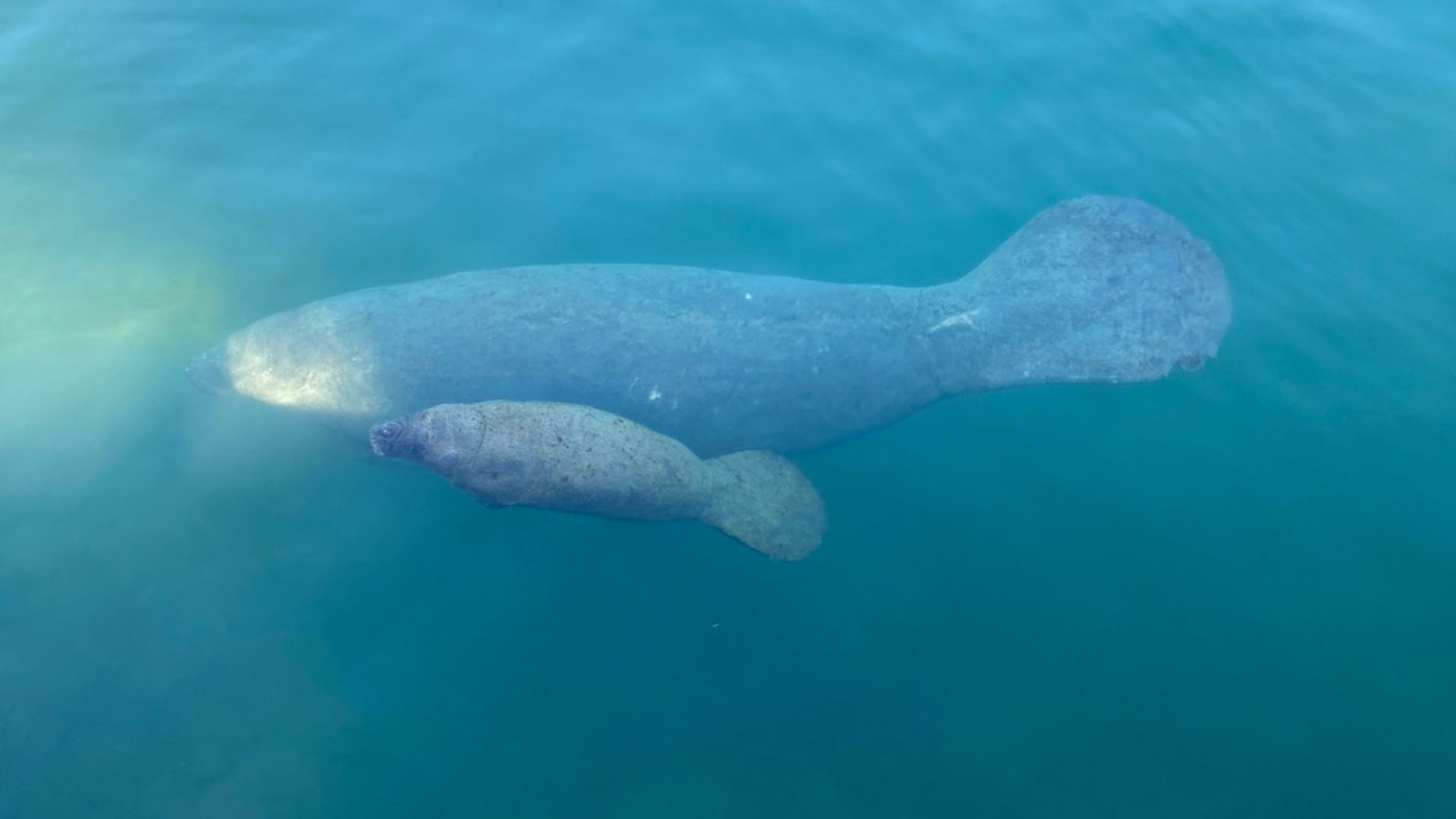
Picture a 550 kg (1,200 lb) mammal that must find fresh water every 48 hours—yet lives in a rising sea.
One centimeter of sea-level rise steals one football field of seagrass.
By 2050, Florida could lose 40 % of its meadows.
This is the manatee’s climate reckoning—quiet, relentless, and already underway.
Cold Stress in a Warming World
Manatees cannot shiver. Their 2.5 cm (1 in) blubber layer insulates like a thin sweater.
Water below 20 °C (68 °F) for 72 hours triggers cold-stress syndrome: skin lesions, immune collapse, starvation.
In 2023, 539 manatees died from cold stress alone—7 % of the population.
“Warmer averages mask killer extremes,” warns USGS Sirenia Project leader Dr. Cathy Beck. “A late February freeze after a mild winter is now the deadliest scenario.”
Saltwater Invasion: The Freshwater Drought
Manatees cannot rely on seawater for hydration. Their kidneys demand fresh or brackish sources.
Sea-level rise has pushed the salt front 28 km (17 miles) up the Caloosahatchee River since 1990.
Result: 1,800 ha of freshwater tape grass dead in 2024—enough to feed 260 adults for a year.
The Coastal Squeeze Explained
Natural retreat blocked.
- Behind: seawalls, highways, condos.
- In front: 10 cm (4 in) of sea rise since 2000. Mangroves and marshes trapped. NOAA projects 58 % mangrove loss by 2070—nursery for 80 % of commercial fish species.
Seagrass Under Siege: A Three-Pronged Assault
| Threat | Mechanism | 2025 Impact | 2050 Projection |
| Light starvation | Runoff + deeper water | 22 % beds too murky | 40 % loss |
| Red tide blooms | 1.8 °C warmer water + nutrients | 6-month events (up from 3) | 9 months/yr |
| Wasting disease | Labyrinthula thrives >25 °C | 6,200 ha infected (2023) | 50 % beds vulnerable |
Indian River Lagoon UME: 2,873 manatees dead since 2019—starvation listed on 91 % of necropsies.
Mega-Storms: The New Normal
Hurricane Ian (2022) displaced 1,143 manatees; 47 stranded in parking lots.
Idalia (2023) scoured 3,100 ha of seagrass in one surge.
FWC now deploys drone thermal teams within 6 hours of landfall.
Shifting Corridors, Rising Risks
Northern range expansion: 87 manatees summered in Virginia in 2024.
Return trip? A November cold snap stranded 29 in North Carolina.
New routes lack 10-knot zones—boat strikes jumped 34 % in uncharted waters.
Disease Accelerator
Seagrass wasting disease doubled infection rates above 25 °C (77 °F).
2024 outbreak: 8,400 ha lost in Banana River alone.
Calves born into famine: 31 % lower survival.
Quick Facts – Verified 06 Nov 2025
- Seagrass consumed daily: 45–82 kg (100–180 lb)
- Sea-level rise 2025: 11.4 cm (4.5 in) above 2000 baseline
- Mangrove carbon sink: 1,030 tons/km²
- Red tide brevetoxin LD50: 0.08 mg/kg manatee tissue
- Population estimate: 7,520 (FWC synoptic Jan 2025)
Solutions Scaling Now
- Living shorelines: 42 km planted since 2022—63 % surge reduction.
- Seagrass super-strains: Halodule wrightii hybrids survive 32 °C; 1,200 ha restored.
- Warm-water 2.0: Solar-thermal arrays at Crystal River keep 22.5 °C without fossil fuels.
- Dynamic speed zones: AI buoys activate when satellite tags enter new corridors.
The Grazers Who Hold the Coast Together
One manatee recycles 30 tons of vegetation yearly—fertilizing meadows that:
- Sequester 40,000 tons CO₂/km²
- Buffer 90 % of wave energy
- Shelter 1 million juvenile fish/ha
Lose the manatee, lose the living seawall.
A Future Still in Reach
By 2050, a calf born today will graze in meadows 30 cm deeper.
That future bends on three actions:
- Restore 5,000 ha of seagrass by 2030 (already 28 % funded).
- Retrofit 12 power plants with clean warm-water tech.
- Enforce dynamic boat zones coast-wide.
The manatee does not roar.
It grazes.
And in that slow, deliberate bite, it reminds us:
Save the meadow, save the coast, save ourselves.
References & Trusted Sources
- NOAA Tides & Currents – Sea-Level Trends Florida 2025
- FWC Manatee Mortality Database – 2025 YTD (live)
- USGS Sirenia Project – Climate Vulnerability Model 2050
- Save the Manatee Club – “Seagrass 2030 Roadmap”
- National Geographic – “The Starving Sea Cows” (2024)
- IPCC AR6 – Coastal Ecosystems Chapter
FAQs
How much seagrass has Florida lost since 2020?
Over 20,000 ha—equivalent to 37,000 football fields.
Can manatees survive on freshwater plants alone?
Temporarily, but calorie density is 60 % lower; winter starvation risk triples.
Will warmer winters eliminate cold stress deaths?
No—extreme swings increase late-season strandings by 120 % per model.
What’s the #1 climate threat to manatee calves?
Brevetoxin in mother’s milk; 2023 red tide caused 42 % calf mortality.