Introduction
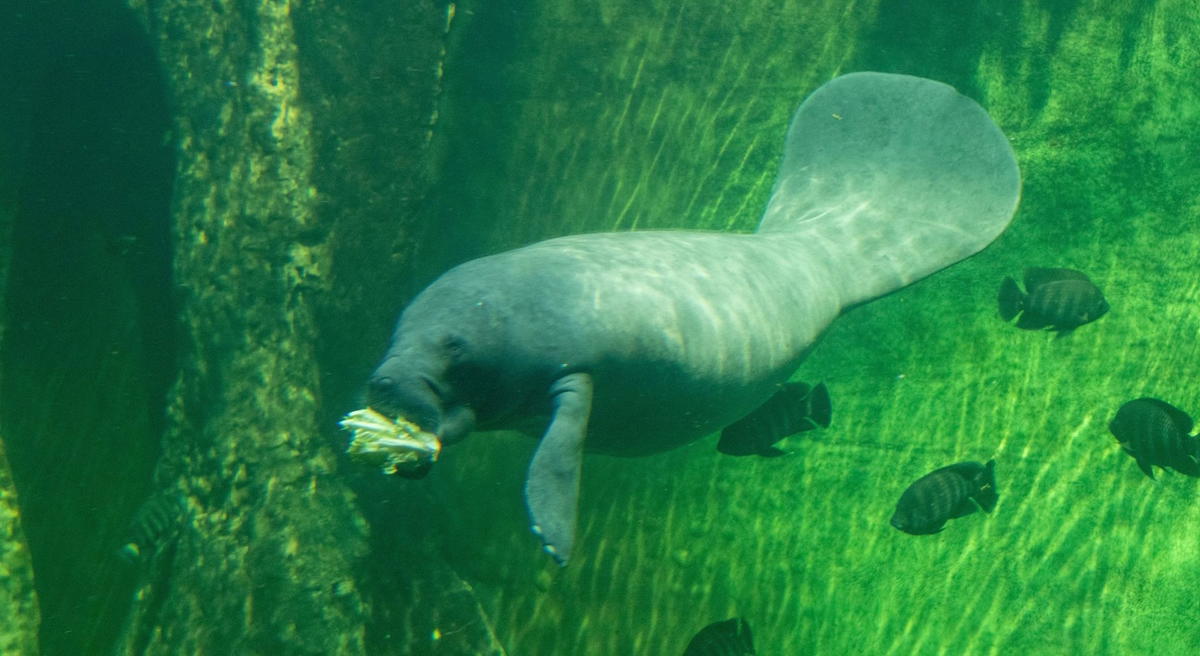
The Florida manatee (Trichechus manatus latirostris) breathes air even while resting, requiring a highly specialized respiratory strategy to remain submerged without continuous activity. Unlike fish, manatees must surface to inhale, yet they are capable of extended rest periods lasting several hours. This creates a physiological challenge: maintaining oxygen supply while minimizing movement and energy expenditure.
To solve this, manatees rely on a combination of prolonged breath-holding, efficient gas exchange, and neurological control of breathing behavior. During rest, they can remain submerged for up to 15–20 minutes, far longer than their typical active breathing interval of 3–5 minutes.
Understanding how Florida manatees breathe while resting is scientifically important because it demonstrates how respiratory physiology, sleep patterns, and behavioral control integrate in aquatic mammals. These mechanisms allow manatees to rest deeply while still maintaining essential oxygen intake without fully waking or expending unnecessary energy.
1️⃣ Manatees Can Hold Their Breath for Up to 20 Minutes While Resting
Florida manatees extend their breath-hold duration significantly during rest, remaining submerged for up to 15–20 minutes compared to 3–5 minutes during active swimming.
This extended apnea is possible because resting reduces oxygen demand. Heart rate slows (a form of bradycardia), and metabolic activity decreases, allowing stored oxygen in the lungs, blood, and muscle tissues to last longer. Hemoglobin and myoglobin play key roles in storing and transporting oxygen efficiently during these periods.
Biologically, this adaptation allows manatees to remain motionless at the bottom or near the surface without frequent surfacing. It minimizes energy expenditure and disturbance during rest.
This extended breath-holding capacity is the foundation of how manatees manage respiration while resting, enabling long, uninterrupted periods of inactivity.
2️⃣ Unihemispheric Sleep Allows Semi-Conscious Breathing
Florida manatees use unihemispheric slow-wave sleep, where one hemisphere of the brain remains active while the other rests. This allows them to maintain basic functions such as breathing control, posture, and environmental awareness even during sleep.
Because breathing in mammals is voluntary rather than purely automatic, manatees must initiate each breath. Unihemispheric sleep ensures that the animal remains partially aware of its need to surface. In some cases, one eye may remain open, reflecting activity in the opposite brain hemisphere.
Biologically, this allows manatees to rise to the surface, inhale, and return to resting depth without fully waking. This process can occur repeatedly over several hours, creating a cycle of rest and brief surfacing.
This neurological adaptation is critical, as it prevents drowning while enabling deep rest, making it a key mechanism in how manatees breathe while resting.
3️⃣ Automatic Surfacing Requires Minimal Effort
While resting, Florida manatees often surface automatically with minimal muscular effort. This is facilitated by their near-neutral buoyancy and slight positive buoyancy when lungs are filled with air.
As oxygen is consumed and carbon dioxide accumulates in the blood, respiratory drive increases, triggering subtle movement coordinated by the awake brain hemisphere. In many cases, manatees drift upward or use gentle tail movements to reach the surface.
Biologically, this process is highly energy-efficient. Instead of actively swimming upward, manatees rely on buoyancy and minimal motion to reach the surface, take a rapid breath, and sink back down.
This automatic or semi-automatic surfacing behavior allows continuous respiration without interrupting rest, reducing overall energy expenditure.
4️⃣ Efficient Breathing Maximizes Oxygen Intake
Florida manatees have an exceptionally efficient respiratory system. With each breath, they can exchange approximately 90% of the air in their lungs, compared to about 10–15% in humans.
This high exchange rate allows rapid replenishment of oxygen and removal of carbon dioxide during very short surface intervals—often completed in 1–2 seconds. A single breath can sustain several minutes of submergence, and during rest, it supports extended breath-holding.
Biologically, this efficiency reduces the frequency of surfacing required, allowing longer rest periods with fewer interruptions. It also minimizes time spent at the surface, which may reduce exposure to environmental disturbance.
This high-efficiency respiration is a central adaptation enabling manatees to balance breathing needs with prolonged rest underwater.
5️⃣ Nostrils Seal Automatically to Prevent Water Entry
Florida manatees breathe through two nostril openings (nares) located on the top of the snout. These nostrils are equipped with muscular valves that close automatically when the animal submerges.
This prevents water from entering the respiratory tract while resting underwater. The valves remain tightly sealed until the manatee surfaces, at which point they open briefly for inhalation and exhalation.
Biologically, this mechanism operates reflexively and requires no conscious control, ensuring that respiration remains efficient and the lungs stay dry during extended submergence. The dorsal placement of the nostrils allows breathing with minimal exposure above the water surface.
This simple but effective anatomical feature is essential for safe underwater rest and efficient breathing cycles.
6️⃣ Resting Positions Support Efficient Breathing Cycles
Florida manatees rest in a variety of positions, including lying on their belly, side, or occasionally floating near the surface in a posture sometimes described as “logging.”
These positions are not random; they support efficient breathing cycles. Bottom-resting, often in shallow water (about 1–3 meters / 3–10 feet), allows stability and minimal movement, while near-surface resting reduces the distance needed to surface for air.
Biologically, posture influences buoyancy and the effort required to reach the surface. For example, a manatee resting just below the surface can inhale with minimal movement, conserving energy, whereas bottom-resting individuals rely more on buoyancy-assisted ascent.
This flexibility in resting posture allows manatees to adapt their breathing strategy to environmental conditions while maintaining efficient oxygen intake.
Key Takeaways
• Florida manatees can hold their breath for up to 15–20 minutes while resting, compared to 3–5 minutes when active.
• Unihemispheric sleep allows them to remain partially conscious and control breathing.
• They surface automatically using buoyancy and minimal movement.
• Each breath exchanges about 90% of lung air, maximizing oxygen intake.
• Nostril valves close underwater to prevent water entry.
• Resting positions help minimize effort and support efficient breathing cycles.