Introduction
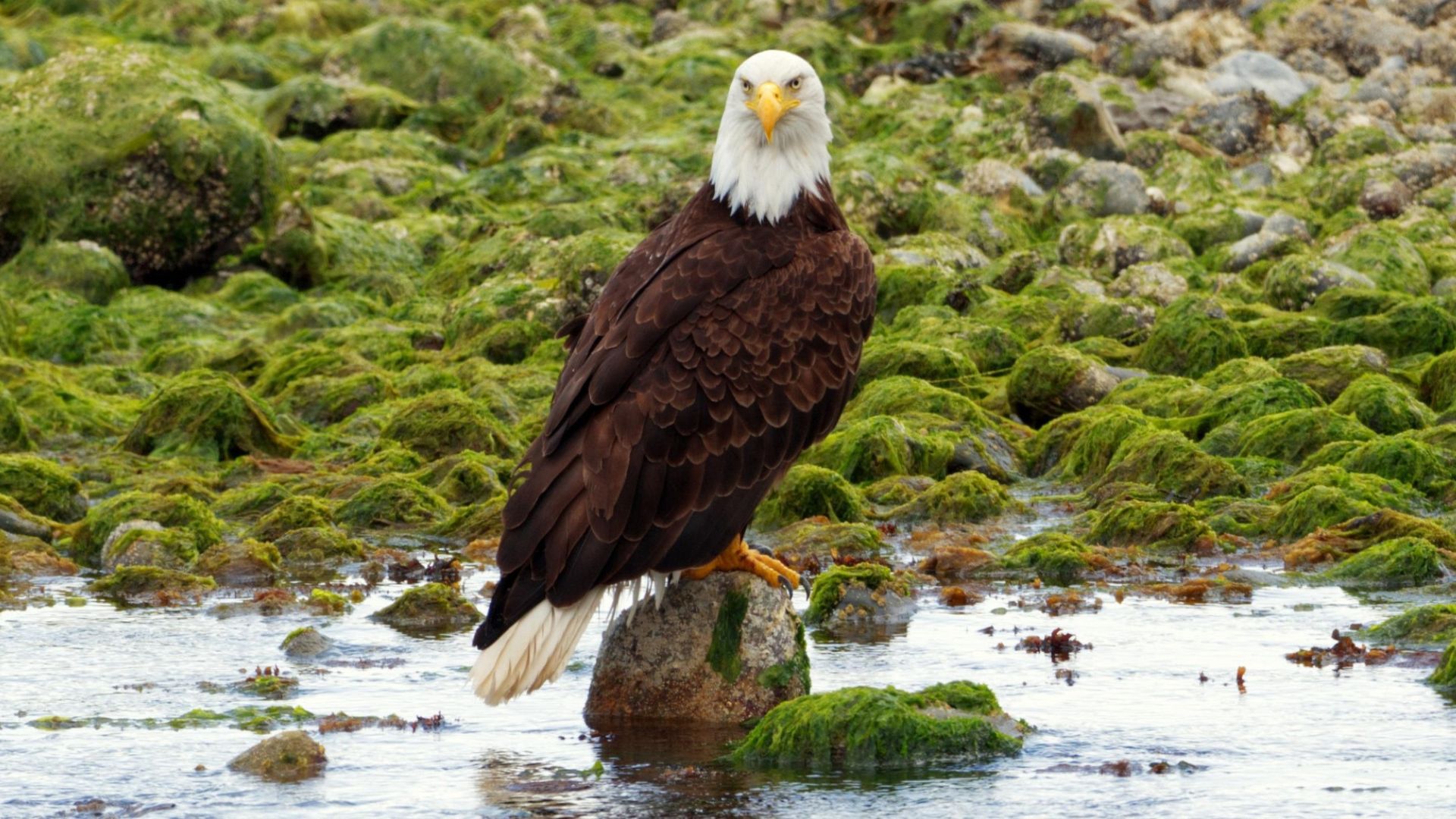
The bald eagle is a powerful raptor often associated with strength and predatory ability, yet its actual risk to humans is widely misunderstood. Scientific observations and wildlife agency records show that bald eagles are not dangerous to people under normal conditions. Instead, they are classified as large wild animals that can defend themselves when threatened, particularly near nesting sites.
Understanding whether bald eagles are dangerous is important because misinformation can lead to unnecessary fear or unsafe behavior around wildlife. Data collected by organizations such as the U.S. Fish and Wildlife Service and the Alaska Department of Fish and Game indicate that while these birds possess strong talons and hunting abilities, their behavior is shaped by energy efficiency and risk avoidance rather than aggression toward humans. Population recovery to over 300,000 individuals in the contiguous United States has increased human–eagle encounters, making accurate, science-based risk assessment essential.
The following evidence-based facts clarify the real risks posed by bald eagles, focusing on their behavior, physical limitations, and ecological role.
1. Risk to Adult Humans Is Extremely Low
Scientific records show no verified cases of bald eagles attacking or carrying away adult humans. Despite their reputation, they do not recognize humans as prey.
Bald eagles typically weigh 3–6.3 kg (6.5–14 pounds), with females larger than males, but their skeletal structure is lightweight and adapted for flight. Their bones are pneumatic (hollow and air-filled), reducing body mass but limiting resistance to high-impact physical encounters.
Their hunting strategy is specialized for capturing fish and small vertebrates using talons, not for grappling with large terrestrial animals. Engaging with a human would present high injury risk with no energetic benefit, making such behavior evolutionarily unfavorable.
In most encounters, bald eagles avoid humans entirely, usually flying away when approached.
2. Nest Defense Can Lead to Aggressive Behavior
The primary situation in which bald eagles may appear dangerous is during nesting season, typically from late winter through summer. They are highly territorial around nests (aeries), which can exceed 2–3 meters in diameter and weigh hundreds of kilograms.
If a person approaches too closely—often within 100–120 meters (300–400 feet)—an eagle may perform defensive behaviors such as vocalizations, low passes, or dive-bombing. In rare cases, talon contact may occur, resulting in superficial injuries such as cuts or punctures.
These behaviors are not predatory but defensive, driven by parental investment and the need to protect eggs or chicks. Wildlife agencies, including the U.S. Fish and Wildlife Service, recommend maintaining buffer distances of at least 300–400 feet to minimize disturbance.
This response reflects a common avian defense strategy where risk-taking increases temporarily to ensure reproductive success.
3. Physical Strength Is Significant but Limited
Bald eagles possess strong talons capable of exerting approximately 300–400 pounds per square inch (psi) of grip pressure, allowing them to immobilize prey efficiently. However, their lifting capacity is constrained by aerodynamic limits.
Most individuals can carry about 1.5–2 kg (3–4 pounds) in sustained flight, with upper estimates reaching 3–3.5 kg (6–8 pounds) under optimal conditions such as wind assistance. This corresponds to roughly 30–60% of body weight, consistent with biomechanical limits in large birds.
Because lift generation depends on wing loading and muscle power, these constraints prevent eagles from carrying large animals, including children. Reports suggesting otherwise are not supported by observational or experimental data.
Their strength is therefore optimized for prey capture and handling, not for transporting heavy loads.
4. Small Pets and Livestock Face Moderate Risk
While humans are not typical targets, bald eagles can occasionally prey on small animals. This includes pets such as small dogs or cats (generally under 2–3 kg) and livestock such as chickens or young lambs.
Documented cases are relatively rare and typically occur in open habitats near water bodies where eagles forage. These events are opportunistic rather than routine, often involving vulnerable or unattended animals.
Energetically, eagles select prey that maximizes caloric gain relative to effort and risk. The limitation imposed by flight capacity restricts attacks to animals that can be subdued and, in many cases, partially lifted or consumed on-site.
Compared to other predators, such as coyotes, bald eagles represent a minor source of livestock loss.
5. Bald Eagles Prefer Scavenging and Low-Risk Feeding
Bald eagles are facultative scavengers and frequently obtain food without active hunting. They feed on carrion or steal prey from other birds, particularly the osprey.
This behavior reduces energy expenditure and lowers injury risk compared to capturing live prey. It also reflects optimal foraging theory, where animals maximize net energy gain by selecting the least costly feeding strategy.
Scavenging plays a significant role in their ecology, especially during winter when fish availability declines. Eagles often rely on carcasses of fish, mammals, or hunter remains, demonstrating flexibility in feeding behavior.
This preference for low-risk food acquisition further explains why aggressive interactions with humans are uncommon.
6. Human Activity Poses Greater Risk to Eagles Than Vice Versa
Scientific evidence shows that humans pose a far greater threat to bald eagles than the reverse. One of the most significant factors is lead poisoning from ingesting fragments in animal carcasses left by hunters.
A large-scale study across 38 U.S. states found that approximately 47% of sampled bald eagles showed signs of chronic lead exposure, with measurable effects on survival and reproduction. Even very small lead fragments can impair neurological function and flight capability.
Additional threats include habitat disturbance, collisions with power infrastructure, and historical impacts from pesticides such as DDT, which caused severe eggshell thinning before being banned.
This reversal of risk highlights that bald eagles are more affected by human activity than humans are by them, emphasizing the importance of conservation practices and responsible wildlife interaction.
Key Takeaways
• Bald eagles pose extremely low risk to adult humans and do not treat humans as prey.
• Defensive behavior occurs mainly near nests and is driven by parental protection, not aggression.
• Their grip strength is high, but flight mechanics limit carrying capacity to about 3–4 pounds.
• Small pets and livestock may occasionally be vulnerable, though incidents are rare.
• Eagles rely heavily on scavenging and low-risk feeding strategies.
• Human activities, particularly lead exposure, represent the greatest threat to eagle populations.