Introduction
The bald eagle (Haliaeetus leucocephalus) is one of the most recognizable birds of prey in North America, yet it is also one of the most misunderstood. Popular media, folklore, and cultural symbolism have created persistent myths about their appearance, behavior, and abilities. Many of these misconceptions—ranging from exaggerated strength to inaccurate vocalizations—do not align with scientific observations.
Understanding these myths is important because they influence how people perceive wildlife, often leading to unrealistic expectations or misinformed conservation attitudes. Scientific research from organizations such as the U.S. Fish and Wildlife Service (USFWS), National Geographic, and the National Audubon Society provides clear evidence that corrects these inaccuracies. In Florida, bald eagles are a familiar sight near lakes, rivers, and coastal habitats. Despite their visibility, many myths about their behavior and abilities persist
This article examines nine common myths about bald eagles and explains the biological reality behind each one, using measurable data and behavioral science to separate fact from fiction.
1. Myth: Bald Eagles Are Actually Bald
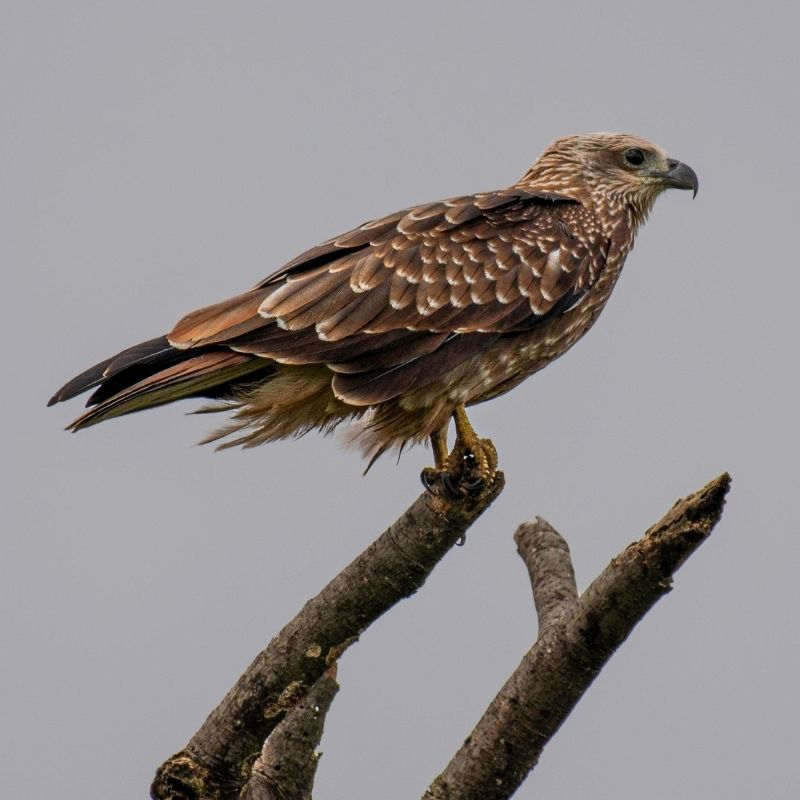
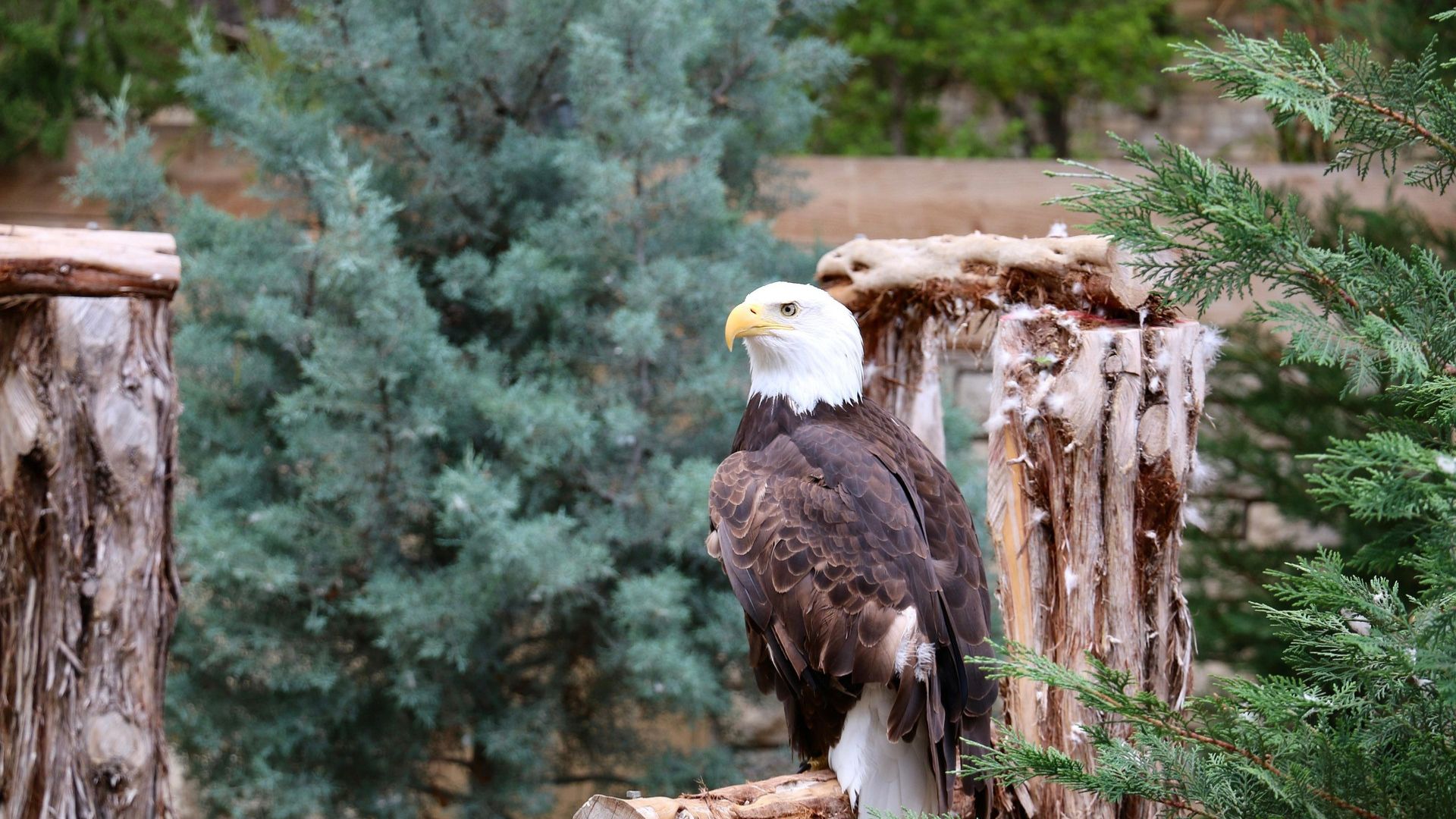
Bald eagles are not bald. The term “bald” originates from the Old English word balde, meaning “white-headed.” Adult bald eagles develop their distinctive white head and tail after approximately 4–5 years of age, while the rest of the body remains dark brown.
From a biological perspective, bald eagles are fully feathered across their bodies, with only the beak (including the cere) and feet lacking feathers. These featherless areas are typical among raptors and improve feeding hygiene and thermoregulation.
The white head is not a sign of hair loss or aging but a result of age-dependent plumage maturation controlled by molting cycles and melanin distribution. Juveniles are uniformly dark and acquire white feathers gradually over successive molts.
Scientific significance: The name reflects historical linguistics rather than anatomy, illustrating how terminology can mislead biological interpretation.
2. Myth: The Famous “Eagle Screech” Is Real
The iconic, powerful screech associated with bald eagles in movies is inaccurate. In reality, bald eagles produce high-pitched chirps, whistles, and cackling calls with relatively low amplitude compared to other large raptors.
Film and television commonly substitute the call of the red-tailed hawk (Buteo jamaicensis), whose descending scream carries over long distances and sounds more dramatic. Acoustic recordings archived by ornithological databases confirm that bald eagle vocalizations are comparatively weak.
Biologically, bald eagle calls function in short-range communication, particularly between mates and between adults and nestlings. They are not adapted for long-distance territorial advertisement.
Scientific significance: This myth demonstrates how media representation can override empirical acoustic data and distort public understanding.
3. Myth: Bald Eagles Are Pure, Noble Hunters
While bald eagles are capable predators, they are best described as opportunistic generalist feeders. In many regions, fish comprise 70–90% of their diet, but a significant proportion of food intake also comes from scavenging and kleptoparasitism.
Field observations show that bald eagles frequently harass ospreys, forcing them to drop fish—a behavior that can account for 10–25% of prey acquisition in some areas. This strategy aligns with optimal foraging theory, where animals maximize energy gain relative to effort.
Scavenging on carrion, including fish carcasses and ungulates, further reduces energy expenditure compared to active hunting. Historically, this behavior led to criticism by observers such as Benjamin Franklin, though it is biologically efficient.
Scientific significance: Bald eagles are energy-optimizing foragers rather than strictly active hunters.
4. Myth: Bald Eagles Mate for Life No Matter What
Bald eagles are generally monogamous and form long-term pair bonds, but the idea of unconditional lifelong mating is inaccurate. If one partner dies, the surviving eagle typically forms a new pair bond within the next breeding season.
Long-term studies by USFWS and banding programs show that pair bonds persist primarily because they improve territory defense and reproductive success, not due to permanent exclusivity. In some cases, pair replacement can also occur after repeated breeding failure.
Eagles often return to the same nesting territory annually, and maintaining a partner enhances coordination in incubation and chick provisioning.
Scientific significance: Monogamy in bald eagles is a functional reproductive strategy, not an irreversible lifelong bond.
5. Myth: Eagles “Reborn” Themselves at Old Age
The claim that bald eagles live up to 70 years and undergo a dramatic “rebirth” process is biologically false. Wild bald eagles typically live 15–25 years, with documented maximum ages around 30–38 years based on banding records.
From a physiological standpoint, breaking the beak or removing feathers would prevent feeding and thermoregulation, leading to मृत्यु rather than renewal. Feather replacement occurs gradually through molting cycles regulated by hormonal changes.
No avian species exhibits self-inflicted regeneration behavior. The myth likely originated from misinterpretations of molting combined with non-scientific narratives.
Scientific significance: This claim contradicts established principles of avian physiology and life-history biology.
6. Myth: Bald Eagles Live Only in the U.S. and Canada
Although strongly associated with the United States, bald eagles are native to all of North America, including northern Mexico. Their distribution is determined by habitat availability, particularly access to large water bodies and suitable nesting structures.
Population density is highest in Alaska and Canada, but wintering and resident populations extend into Mexican states such as Baja California and Sonora. Range maps from USFWS and ornithological surveys confirm this broader distribution.
This pattern reflects ecological constraints rather than political boundaries, as bald eagles track prey availability across latitudes.
Scientific significance: Species distribution is governed by environmental factors, not national borders.
7. Myth: Bald Eagles Cannot Handle Heavy Prey
Bald eagles cannot carry heavy prey in sustained flight beyond approximately 30–40% of their body weight, but they are not forced to abandon such catches. When prey is too heavy, eagles may use their wings to swim in a breaststroke-like motion, dragging the prey to shore.
This behavior is supported by their low body density and partially water-resistant plumage, which allow temporary buoyancy. Field observations confirm that eagles can remain afloat while gripping large fish such as salmon.
Additionally, eagles can release prey voluntarily if necessary, preventing exhaustion or drowning.
Scientific significance: Behavioral flexibility allows eagles to exploit large prey despite aerodynamic limitations.
8. Myth: Bald Eagles Only Live on High Mountains
Bald eagles do not primarily inhabit mountain environments. They are most commonly found near lakes, rivers, estuaries, and coastal regions, where fish availability is high.
They build nests in tall trees close to water, often within 1–2 km of feeding areas, although cliff nesting may occur in treeless regions. Their nests are the largest of any bird species, sometimes exceeding 2–3 meters in diameter and over 1,000 kg after repeated use.
Habitat selection is driven by food accessibility and structural support, not elevation. Confusion with golden eagles, which favor mountainous terrain, likely contributes to this myth.
Scientific significance: Nest placement reflects resource optimization rather than altitude preference.
9. Myth: Bald Eagle Talons Lock Permanently
Bald eagle talons do not lock permanently. They operate through a passive tendon-locking mechanism (flexor tendon system) that allows the foot to remain closed without continuous muscular effort.
When gripping prey, tendon tension maintains the पकड़, reducing ऊर्जा expenditure. However, eagles can actively release this grip by contracting opposing muscles that extend the toes.
Grip strength can reach approximately 300–400 psi, sufficient to puncture and hold prey, but it remains fully controllable. Cases of birds failing to release prey are typically due to external factors such as entanglement, not biological limitation.
Scientific significance: The talon mechanism is an energy-efficient adaptation, not a permanent locking system.
Key Takeaways
• Bald eagles are not bald; the name derives from Old English meaning “white-headed”
• Their actual call is a weak chirp, not the dramatic screech used in media
• They are opportunistic feeders that rely on scavenging and kleptoparasitism
• Pair bonds are stable but not permanent if a mate dies or breeding fails
• Lifespan myths and “rebirth” stories are biologically impossible
• Their range includes all of North America, including Mexico
• Eagles can swim with heavy prey but are limited in flight carrying capacity
• Habitat is strongly tied to water, not mountains
• Talons are powerful but fully controllable, not permanently locked