Introduction
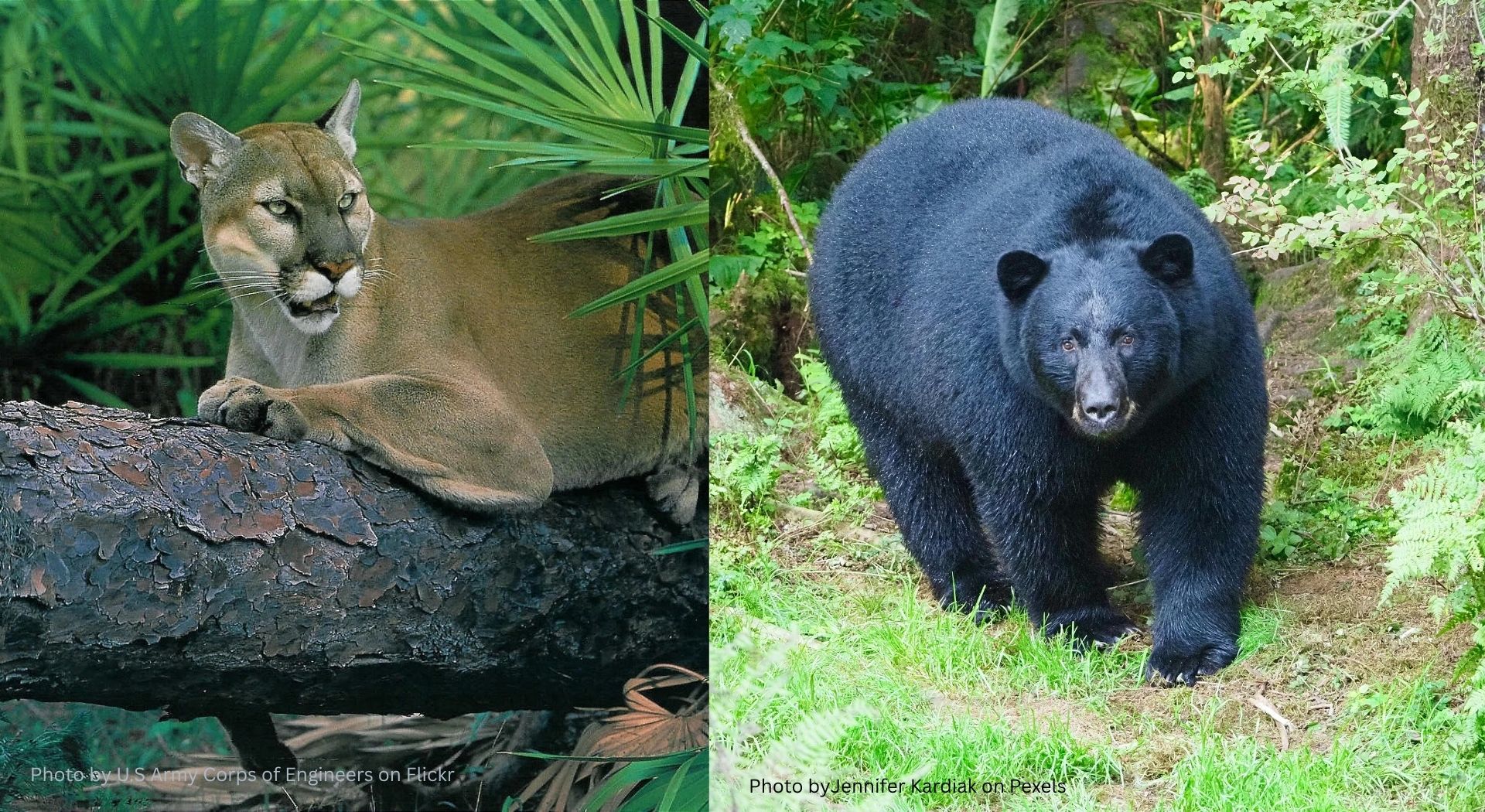
The Florida panther (Puma concolor coryi) and the Florida black bear (Ursus americanus floridanus) are the two largest terrestrial mammals in Florida, yet they belong to entirely different taxonomic groups—Felidae (cats) and Ursidae (bears), representing distinct evolutionary lineages within Carnivora. Despite overlapping habitats in South Florida’s forests and wetlands, they differ substantially in morphology, diet, locomotion, and ecological roles.
Confusion between the two can arise because both are wide-ranging, elusive mammals that may use similar landscapes and occasionally encounter each other at shared resources such as carcasses. However, their biological strategies diverge sharply: the panther is an obligate carnivore specialized for ambush predation, whereas the black bear is a dietary generalist deriving most of its energy from plant material.
This comparison examines measurable differences in body size, feeding ecology, biomechanics, spatial use, and conservation status to clarify how these species differ and how those differences structure their interactions in the wild.
Quick Comparison Table
| Feature | Florida Panther | Florida Black Bear |
| Scientific Name | Puma concolor coryi | Ursus americanus floridanus |
| Taxonomic Classification | Family Felidae (subspecies of cougar) | Family Ursidae (subspecies of American black bear) |
| Geographic Range | South Florida (restricted) | Florida statewide |
| Habitat Preference | Forested wetlands, pinelands | Forests, swamps, mixed habitats |
| Average Size | 27–72 kg (60–160 lb) | 59–159 kg (130–350 lb) |
| Key Physical Difference | Slender, long-tailed predator | Large-bodied, short-tailed omnivore |
| Behavioral Difference | Solitary ambush hunter | Omnivorous forager/scavenger |
| Conservation Status | Endangered (USFWS) | Least Concern (IUCN, recovering locally) |
1. Body Size and Weight Advantage
The most significant difference between the Florida panther and Florida black bear is body mass. Adult male panthers typically weigh 45–72 kg (100–160 lb), whereas male black bears commonly reach 113–159 kg (250–350 lb), making them approximately 2–3 times heavier. Skeletal proportions also differ: bears possess thicker limb bones and a pronounced shoulder musculature, while panthers have elongated limbs optimized for stride length and acceleration.
This disparity reflects divergent functional demands. Panthers require a lightweight, flexible frame to execute rapid ambush attacks on prey, while bears benefit from bulk that supports digging, climbing, and resource defense.
Ecologically, body mass determines dominance in contested resources. Field observations from the Florida Fish and Wildlife Conservation Commission (FWC) show that larger bears routinely displace panthers from carcasses, illustrating how size translates directly into competitive advantage.
2. Diet and Feeding Strategy
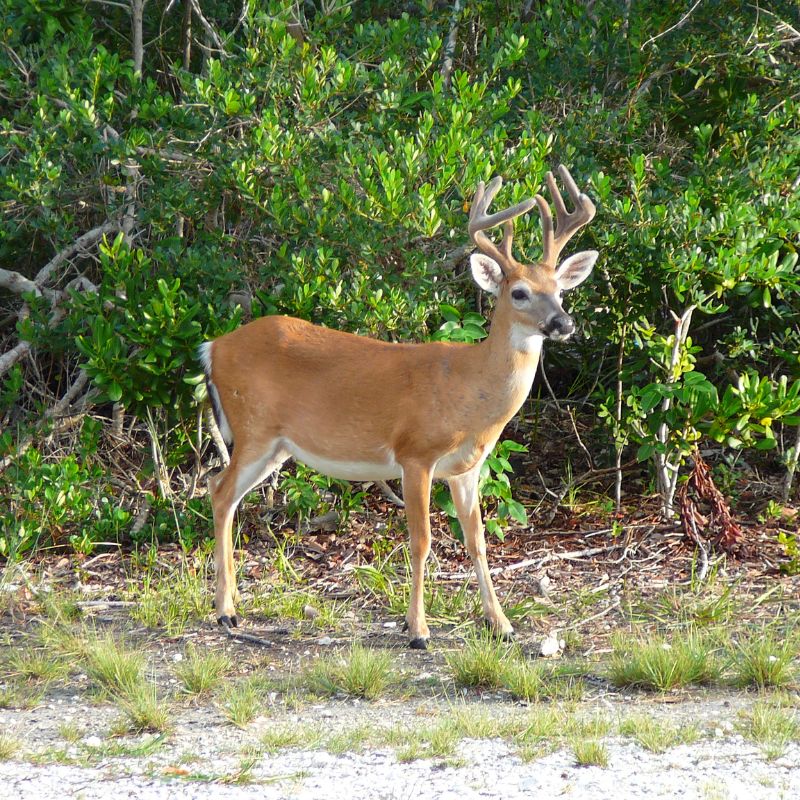
Florida panthers are obligate carnivores, with diets dominated by white-tailed deer and feral hogs, typically weighing 30–100 kg. Their digestive physiology and dentition are adapted for processing animal tissue, with limited ability to utilize plant matter.
Florida black bears, in contrast, are omnivores whose diet consists of approximately 70–85% plant material (acorns, berries, palmetto fruit), 10–20% insects, and a small proportion of vertebrates or carrion. This dietary flexibility is supported by generalized molars and a digestive system capable of processing fibrous foods.
This fundamental difference reduces direct trophic overlap. Panthers depend on consistent prey availability, whereas bears can switch food sources seasonally. As a result, bears exhibit greater ecological resilience, while panthers are more sensitive to fluctuations in prey populations.
3. Hunting vs Foraging Behavior
The Florida panther is a specialized ambush predator that relies on stealth, short approach distances (often <20 meters), and rapid acceleration (up to ~56 km/h or 35 mph). Successful kills depend on precision and timing, as repeated chases are energetically costly.
In contrast, the Florida black bear is primarily a forager, spending extended periods moving slowly (typically 2–5 km/h) while searching for food. Active predation is rare and usually limited to small or vulnerable prey such as fawns.
This behavioral divergence reflects metabolic strategy. Panthers require high-protein intake to sustain muscular activity, whereas bears meet energy needs through a combination of carbohydrates, fats, and opportunistic protein sources.
Consequently, panthers are energy-limited predators, while bears function as opportunistic generalists with lower dependence on any single food type.
4. Strength vs Agility
Florida black bears possess greater absolute strength due to higher body mass, dense musculature, and powerful forelimbs capable of delivering substantial force. Their claws, though non-retractable, are adapted for tearing and digging.
Florida panthers, while strong relative to size, are optimized for agility. Their flexible spine, retractable claws, and limb proportions enable rapid acceleration, sharp directional changes, and precise control during prey capture.
This represents a biomechanical trade-off: bears maximize force output and endurance, while panthers maximize speed and maneuverability.
In ecological interactions, this means bears can dominate physical encounters, whereas panthers rely on avoidance and escape strategies rather than direct confrontation.
5. Locomotion and Movement Patterns
Panthers are digitigrade, walking on their toes, which increases stride efficiency and reduces ground contact time—key for stealth and speed. Adult males may maintain home ranges exceeding 500 km², reflecting the need to locate sufficient prey.
Bears are plantigrade, walking on the entire foot. This provides stability and load-bearing capacity but reduces speed. Typical bear home ranges are smaller, often 40–150 km² depending on habitat productivity.
This locomotor difference reflects ecological roles. Panthers require rapid movement and large territories to hunt mobile prey, whereas bears exploit localized, abundant food resources.
As a result, panthers are more vulnerable to habitat fragmentation, while bears can persist in more heterogeneous and human-modified landscapes.
6. Interaction at Carcasses (Resource Competition)
When both species encounter the same carcass, outcomes are determined primarily by size and dominance rather than predatory ability.
Florida black bears frequently displace panthers from kills, even when the panther is the original predator. This behavior represents kleptoparasitism, where one species appropriates food obtained by another.
For panthers, this has measurable energetic consequences. Losing a carcass forces additional hunting effort, increasing energy expenditure and risk of injury.
For bears, scavenging represents an efficient foraging strategy that supplements plant-based diets with high-protein resources.
This interaction highlights how differences in body size and diet shape competitive dynamics between species occupying overlapping habitats.
7. Defensive Capabilities and Risk Avoidance
Florida black bears possess structural defenses including thick skin, dense fur, and subcutaneous fat layers that reduce the effectiveness of bites and scratches. Their forelimbs can deliver powerful blows capable of deterring threats.
Florida panthers lack comparable protective adaptations and instead rely on behavioral avoidance. They typically retreat from larger animals, minimizing the risk of injury that could impair hunting ability.
This difference reflects contrasting survival strategies. Bears can tolerate higher levels of physical conflict, while panthers depend on maintaining physical condition for successful predation.
As a result, direct aggressive encounters are uncommon, with avoidance behavior dominating interspecific interactions.
8. Population Size and Conservation Status
The Florida panther is federally listed as Endangered, with an estimated population of approximately 120–230 adults restricted to South Florida. Major threats include habitat fragmentation, vehicle collisions, and limited genetic diversity, as documented by the U.S. Fish and Wildlife Service.
The Florida black bear, by contrast, has experienced substantial recovery, with a population exceeding 4,000 individuals statewide. It is classified as Least Concern by the International Union for Conservation of Nature (IUCN).
This contrast reflects differing ecological flexibility. Bears adapt to varied habitats and food sources, while panthers require large, connected landscapes and stable prey populations.
Conservation status therefore represents one of the most critical distinctions, influencing management strategies and long-term viability.
Key Takeaways
• Florida black bears are 2–3× heavier than Florida panthers, giving them a clear size and strength advantage.
• Panthers are obligate carnivores and ambush predators, while bears are omnivorous foragers with flexible diets.
• Panthers rely on speed and stealth; bears rely on strength and endurance.
• Bears frequently displace panthers from carcasses through size-based dominance.
• Panthers require large, continuous habitats, whereas bears tolerate fragmented landscapes.
• Panthers are endangered (~120–230 individuals), while bears are widespread and stable (>4,000).