Majestic. Fierce. Resilient.
The Bald Eagle (Haliaeetus leucocephalus) is far more than a patriotic emblem — it’s one of the most remarkable predators ever to soar across North America’s skies. Officially declared the United States’ national bird in 2024, this raptor’s real-world adaptations reveal a creature of engineering brilliance and evolutionary mastery.
From record-breaking nests to Hollywood myths, here are ten science-backed insights that unveil the living biology behind the legend — and prove that the eagle’s true story is even more inspiring than the symbol it represents.
1️⃣ Not Bald at All: A Linguistic Legacy That Fooled Generations
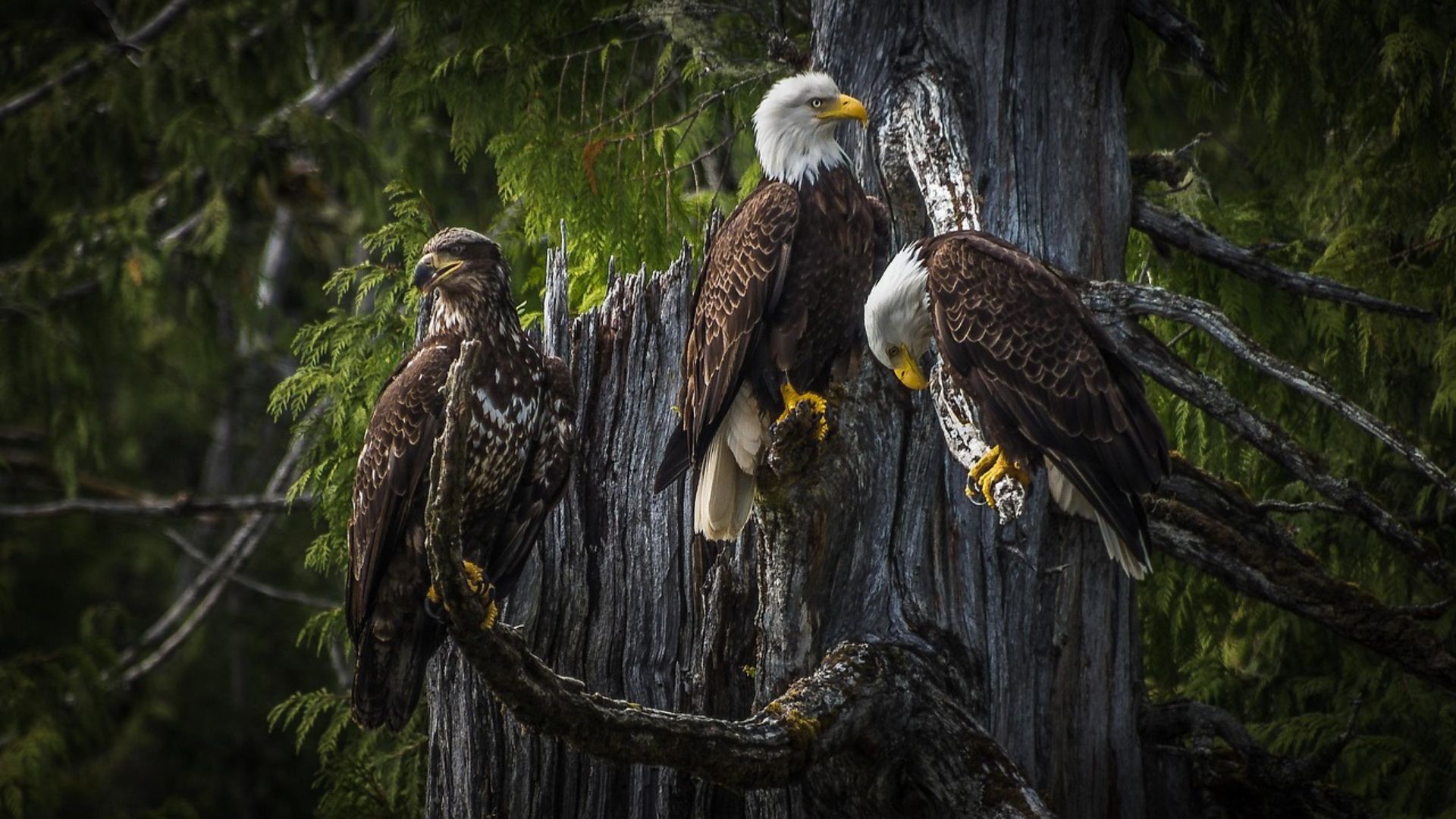
Despite its name, the Bald Eagle isn’t bald — it’s crowned in thousands of bright white feathers. The term “bald” stems from Old English balde, meaning white-headed or shining. Early settlers used it to describe the bird’s snow-white head that contrasts dramatically with its chocolate-brown body.
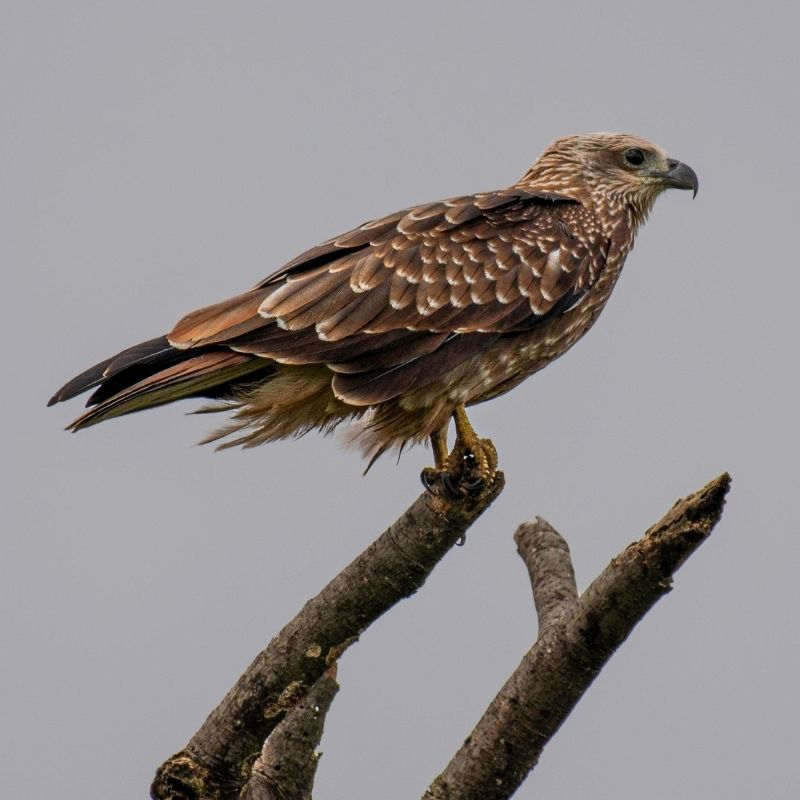
Juveniles, however, wear mottled brown plumage and are often mistaken for golden eagles until they reach adulthood.
2️⃣ Queens of the Sky: Females Rule Through Reverse Dimorphism
In the Bald Eagle world, females outsize males by as much as 25 percent — a reversal of most animal norms known as reverse sexual dimorphism.
Heavier females (10–14 lb; 7.5 ft wingspan) excel at nest defense and incubation, while lighter males (7–10 lb; 6.5 ft wingspan) perform agile fishing dives.
This size division minimizes food competition and maximizes survival — a pattern echoed in other raptors like ospreys and peregrines.
3️⃣ Vision Beyond Belief: Seeing What We Can’t
With eyesight up to eight times sharper than human vision (20/4 acuity), Bald Eagles can spot a rabbit from three miles away.
Their eyes contain double the light-detecting cells of ours and two foveae (focus points) that allow stereoscopic precision even at high speed.
They also detect ultraviolet (UV) light — enabling them to trace urine trails of prey or notice iridescent patterns on fish scales and feathers.
4️⃣ Nature’s Engineers: Builders of the Largest Nests in North America
A Bald Eagle nest, or aerie, is an evolving masterpiece. Each year, pairs return to enlarge their structure with sticks, moss, and grass — sometimes even rope or plastic.
Average nests span 5–6 ft wide and 2–4 ft deep, but the world record in St. Petersburg, Florida, measured 9.5 ft across, 20 ft deep, and weighed nearly 3 tons.
These towering fortresses shelter generations of chicks and symbolize the species’ meticulous domestic instinct.
5️⃣ The Hollywood Illusion: That Iconic Screech Isn’t Real
That piercing scream used in films and commercials? A Red-tailed Hawk.
In truth, Bald Eagles communicate through delicate whistles, chirps, and chatters — more songbird than superhero. Sound designers have dubbed hawk cries over eagle footage for decades to match public expectations.
6️⃣ Masters of Opportunity: Scavengers and Thieves
Benjamin Franklin wasn’t entirely wrong when he called the Bald Eagle “of bad moral character.”
Science now calls it kleptoparasitism — stealing prey from ospreys and other raptors mid-air — and scavenging, feeding on carrion and refuse.
Up to 70 percent of their diet can come from opportunistic meals, a strategy that conserves energy and supports survival through harsh winters.
7️⃣ Wing-Powered Swimmers: Rowing to Survive
When faced with an oversized fish, a Bald Eagle doesn’t surrender — it swims.
Using its wings like oars in a butterfly-stroke motion, it paddles toward shore, talons locked to the catch. This rare behavior, documented in Alaska and the Pacific Northwest, shows remarkable adaptability — though some eagles tragically drown if their prize is too heavy or the water too cold.
8️⃣ The Long Transformation: Five Years to Wear the Crown
Eaglets hatch fluffy gray, then darken to brown with irregular white blotches.
Only around age 4–5 do they gain the signature white head, tail, and bright yellow beak that mark sexual maturity.
This gradual molt is a rite of passage — nature’s slow unveiling of the eagle’s regal final form.
9️⃣ Lifelong Love: Cartwheels in the Sky
Bald Eagles are famously monogamous, bonding for life through spectacular aerial courtship displays.
Pairs lock talons, spiral earthward in a cartwheel dive, and release just before impact.
They return to the same territory and even the same nest year after year, repairing and enlarging it together.
If one mate dies, the survivor quickly pairs again — proof that in eagle society, loyalty meets pragmatism.
🔟 Built-In Goggles: The Eagle’s Secret Eye Shield
Hidden behind the drama of its golden gaze lies a nictitating membrane — a translucent third eyelid that slides sideways across the eye.
This layer cleans, moistens, and protects against debris during dives or while feeding, functioning like biological goggles that preserve perfect vision at 200 mph.
Why the Bald Eagle Endures: A Modern Conservation Miracle
Once nearly extinct — only ~400 nesting pairs remained in the 1970s due to DDT and habitat loss — the Bald Eagle has made one of the world’s greatest recoveries.
Following the 1972 DDT ban and 1973 Endangered Species Act, populations rebounded to over 316,000 individuals by 2021.
Still, threats persist: lead poisoning, wind-turbine collisions, and wetland destruction.
Each eagle seen today represents not only freedom but also the triumph of environmental science and collective protection.