When the Coast Fell Silent
Imagine a coastline once eerily quiet, where waves still crashed but the skies were empty. Then, one dawn, a squadron of vast birds slices the horizon—folding wings, plunging like arrows into the sea. That breathtaking sight, now common from Florida to California, nearly disappeared forever.
The Brown Pelican (Pelecanus occidentalis)—America’s coastal acrobat—was almost lost to history. Its graceful dive, elastic throat pouch, and iconic silhouette had once defined seaside life. But in a few short decades, chemical contamination and human neglect drove this bird to the edge of extinction.
The collapse of pelican populations showed how fragile ecosystem balance becomes when top consumers are disrupted. Its recovery, however, became one of the most inspiring conservation victories of the 20th century.
Meet the Brown Pelican: Coastal Acrobat
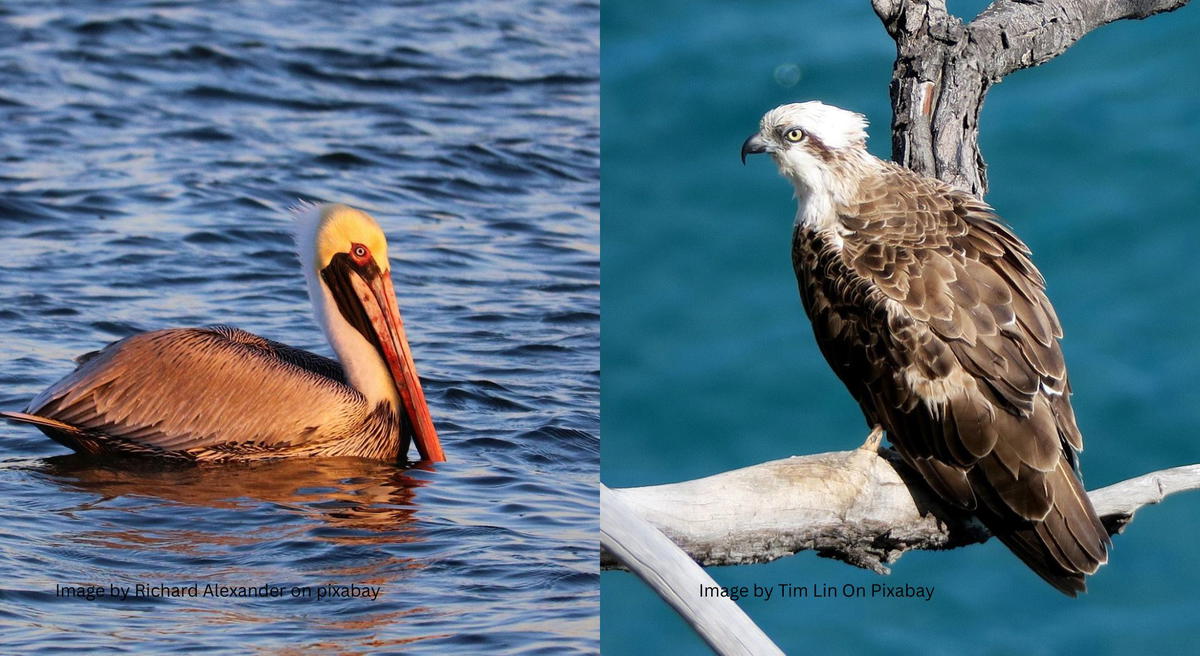
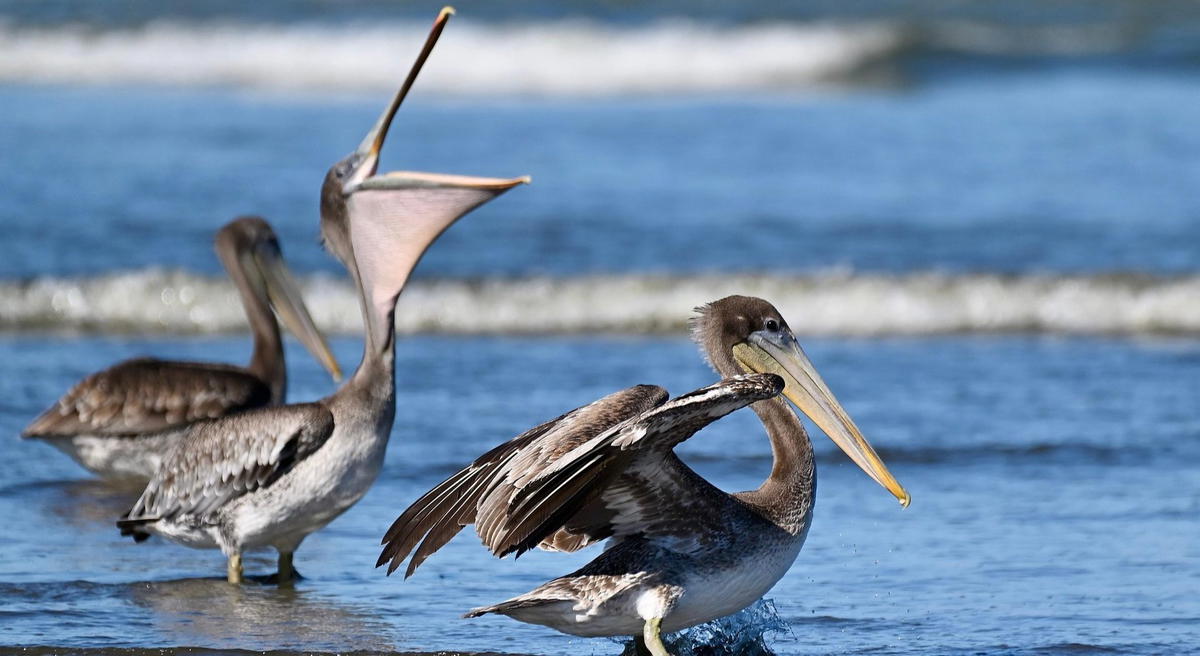
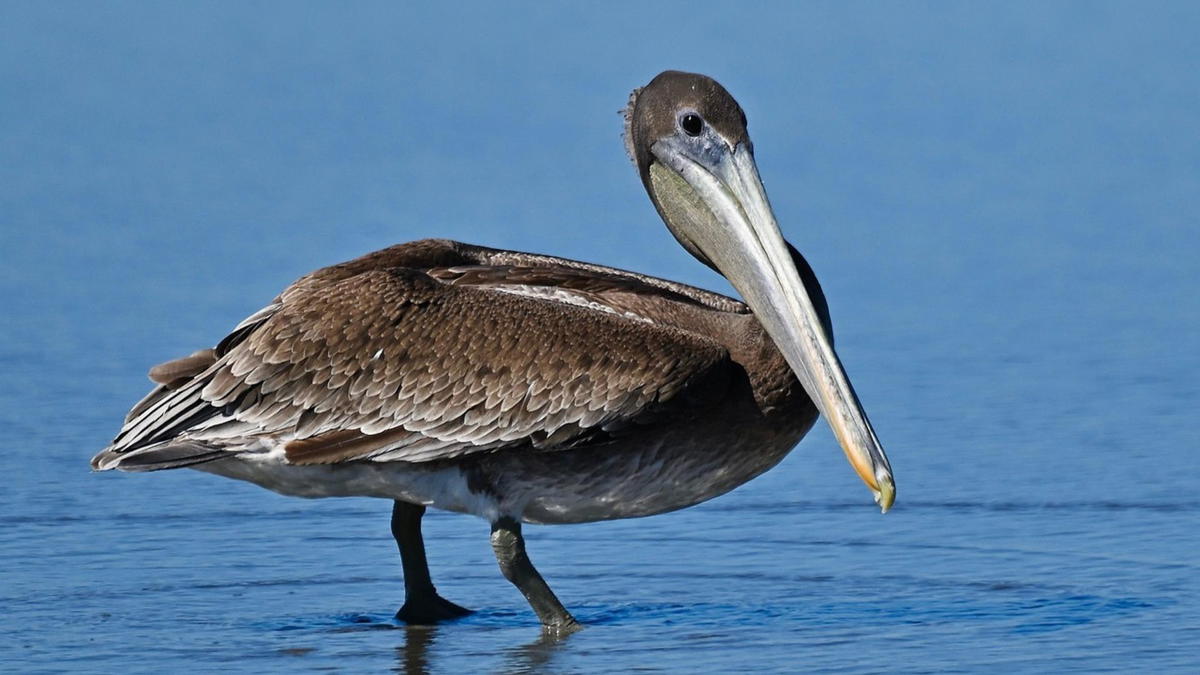
The Brown Pelican is both comical and majestic. Adults wear slate-gray bodies and a striking white head that turns chestnut in breeding season. Their immense bill—up to 34 cm (13 in)—ends in a pouch that can hold nearly 1.8 kg (4 lb) of fish and water, three times the bird’s stomach capacity.
“The Brown Pelican is a comically elegant bird with an oversized bill, sinuous neck, and big, dark body.”
— Cornell Lab of Ornithology
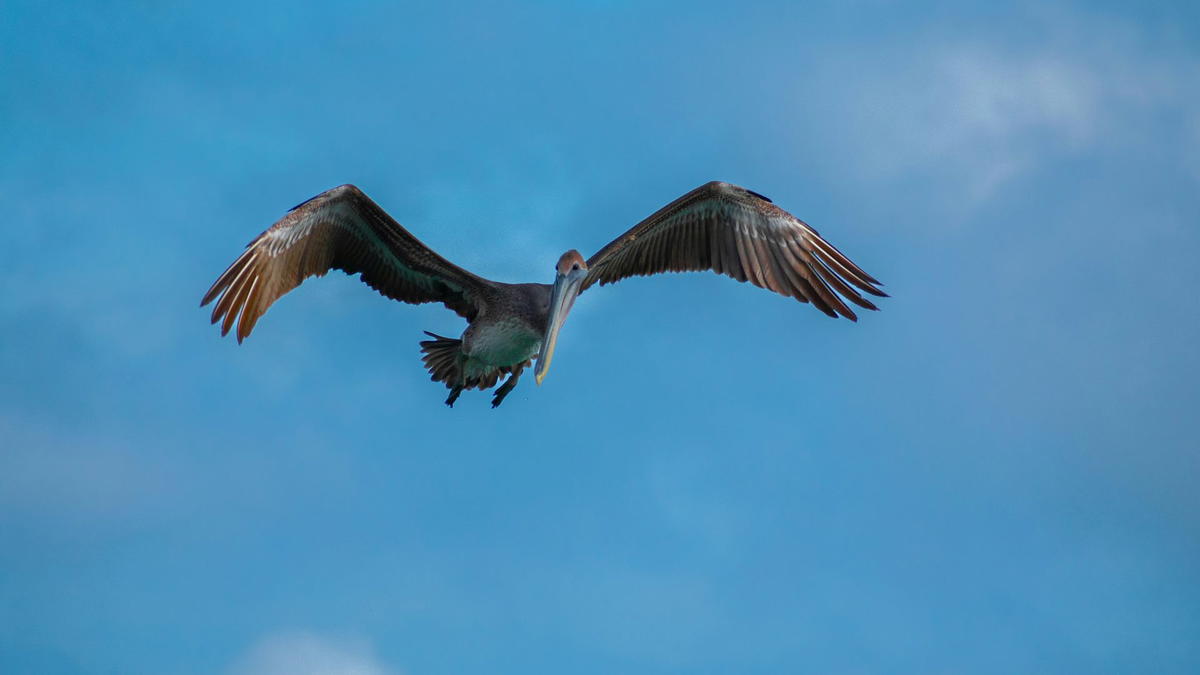
They glide effortlessly inches above the surf, wingtips grazing the water like surfers reading a swell. Seen beside a gull, their size astonishes—true ocean aviators designed for precision flight and dramatic dives.
The Silent Spring Crash
By the 1950s, disaster had struck. Entire colonies failed; eggs crushed under incubating parents. Louisiana, once a stronghold, recorded zero nests by 1963.
The villain was DDT, a pesticide that infiltrated rivers and estuaries. Small fish absorbed the chemical; pelicans, consuming dozens daily, accumulated lethal concentrations. DDT interfered with calcium metabolism, thinning eggshells by up to 50%, dooming generations.
| Region | Before DDT | During Crash (1970) |
| Texas | ~5,000 breeding pairs | Fewer than 100 |
| California | 552 nests | 0 successful fledglings |
| Florida | Dozens of colonies | Last wild chicks in 1968 |
Rachel Carson’s Silent Spring (1962) exposed the invisible crisis, and by 1972, the U.S. Environmental Protection Agency banned DDT nationwide. But for the pelican, recovery would require more than policy—it would need persistence and faith.
How America Rebuilt a Species
Action began even before the ban ink dried.
- 1970: Brown Pelican listed as endangered under the new Endangered Species Conservation Act.
- 1972: DDT banned across the United States.
- 1970s–80s: Wildlife biologists airlifted over 800 chicks from healthy Florida colonies to repopulate barren Louisiana islands such as Queen Bess and Raccoon Island.
- Refuge zones: National Wildlife Refuges and state agencies established no-entry sanctuaries around breeding islands.
The turnaround was remarkable. By the mid-1980s, Atlantic populations had stabilized. In 2009, after nearly four decades of restoration, the U.S. Fish and Wildlife Service (USFWS) officially removed the Brown Pelican from the Endangered Species List.
“We once again see healthy flocks of pelicans in the air over our shores.”
— Sam Hamilton, USFWS Director (2009)
Dive Dynamics: A Masterclass in Evolution
The Brown Pelican is the only pelican species that hunts by plunge-diving—a gravity-defying maneuver few birds on Earth can perform. From 20 meters (65 ft) above the sea, it folds its wings, tucks its neck, and pierces the surface at 60 km/h (40 mph).
Built-in airbags—air sacs under the skin and bones—absorb the shock. In one fluid motion, the bird’s throat pouch balloons open, scooping up to 11 liters (3 gallons) of water and fish. It then surfaces, drains, and swallows—all in under eight seconds.
“Brown Pelicans exhibit one of the most specialized feeding strategies of any seabird—a rare fusion of power and precision.”
— Smithsonian National Zoo
Their dive is not just spectacle—it’s survival, honed over millennia to thrive where ocean and air collide.
Size & Power: Brown vs. White Pelican
| Trait | Brown Pelican | American White Pelican |
| Length | 1.06–1.37 m (42–54 in) | 1.5–1.8 m (62–70 in) |
| Wingspan | 2.0–2.3 m (6.5–7.5 ft) | 2.4–3.0 m (8–9.8 ft) |
| Weight | 2.7–4.5 kg (6–10 lb) | 5–9 kg (11–20 lb) |
| Dive Depth | 1–2 m (3–6 ft) | Surface scooper only |
| Daily Fish Intake | ~1.8 kg (4 lb) | 1.8–2.7 kg (4–6 lb) |
The Brown Pelican’s agility gives it an edge in turbulent coastal waters, while the White Pelican thrives inland, scooping fish in cooperative groups.
Nest Engineering: Islands, Mangroves, and Ledges
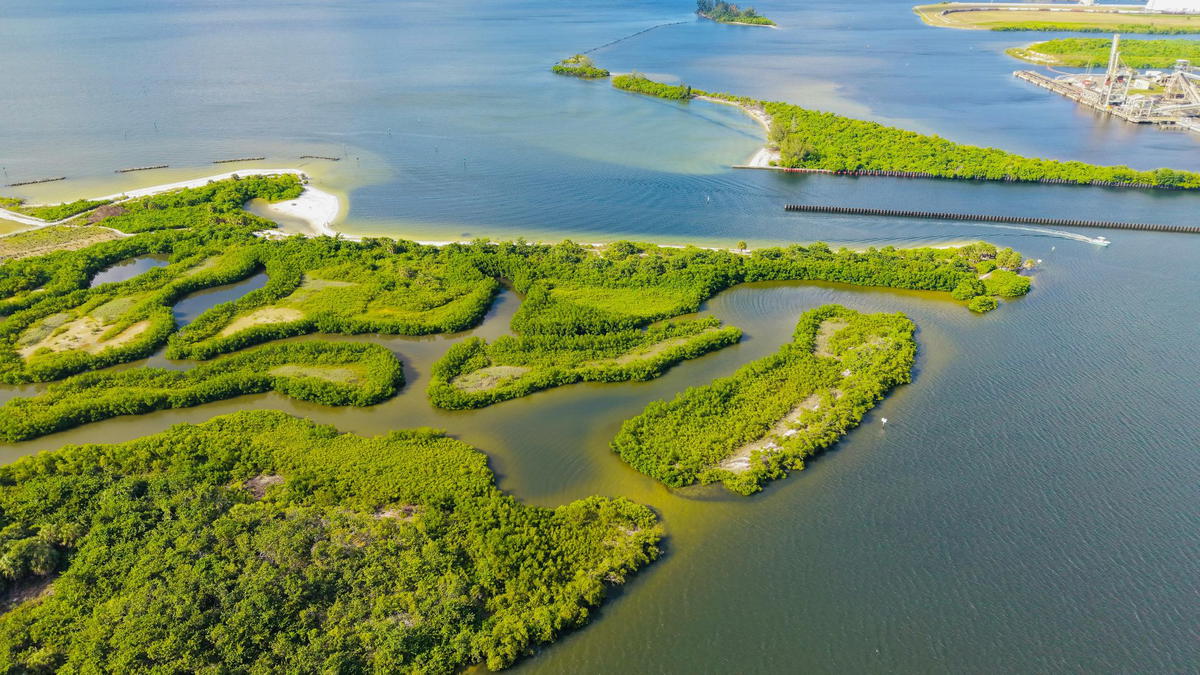
Brown Pelicans are creative architects. On mangrove islands they scrape simple ground nests, while California birds prefer cliff ledges. Parents take turns incubating two or three chalky eggs—using their webbed feet to transfer warmth.
Chicks hatch blind and naked, huddling in “crèches” for warmth and protection. Within five weeks, they are strong enough to explore nearby perches. By 10–12 weeks, they take their first flight—ungainly at first, but destined for aerial mastery.
Ecological Keystone of the Coast
Each adult pelican removes about 650 kg (1,400 lb) of small fish annually, mainly menhaden and anchovies—species that themselves regulate plankton. Without pelicans, these fish could overpopulate, fueling algal blooms and oxygen crashes.
Thus, pelicans are living barometers of estuary health. Their presence signals balance; their decline, an early warning. They occupy a vital position within coastal and estuarine food webs, linking fish populations to higher trophic levels. Like ospreys, pelicans depend on abundant fish stocks, but their plunge-diving strategy differs dramatically. While pelicans reveal large-scale environmental stress, other species serve as early-warning indicators of water quality shifts.
“Provided with the right habitat, they’ve kept coming back.”
— Todd Baker, Louisiana Dept. of Wildlife & Fisheries
New Shadows on the Horizon
The pelican’s recovery doesn’t mean the fight is over. New threats loom:
- Oil spills, like the 2010 Deepwater Horizon disaster, coated thousands of birds in toxic sludge.
- Plastic pollution entangles pouches and fills stomachs.
- Climate change is shrinking nesting islands and driving fish northward.
- Starvation events in 2023 forced California rehab centers to treat over 1,200 malnourished pelicans.
Every restored wetland, every protected rookery, buys time for these ancient mariners to adapt.
A Symbol Worth Guarding
Walk any Gulf Coast pier today, and a Brown Pelican will likely land beside you—stoic, prehistoric, and utterly unbothered by your gaze. That stare connects you to Pelican Island, Florida, the nation’s first wildlife refuge created by Theodore Roosevelt in 1903, and to every scientist who refused to let this bird disappear.
Their story is not just about survival. It’s about what happens when law, science, and public will align—when we decide that a creature worth saving once is worth protecting forever.
“The pelican’s recovery reminds us that conservation is not about saving species—it’s about saving our connection to the living world.”
— Natives of Nature Editorial Team
Related insight: Conservation success stories extend beyond pelicans — ecosystem engineers like alligators have also shaped wetland recovery.
References
National Geographic – Resilient California Brown Pelicans
U.S. Fish and Wildlife Service – Brown Pelican Delisting Announcement (2009)
Cornell Lab of Ornithology – Brown Pelican Life History (AllAboutBirds.org)
National Audubon Society – The Brown Pelican’s Remarkable Recovery (2024)
Smithsonian National Zoo & Conservation Biology Institute
Shields, M. (2002) – Brown Pelican, The Birds of North America
FAQs
1. What nearly caused the extinction of the Brown Pelican?
Widespread use of the pesticide DDT thinned eggshells, leading to decades of breeding failure until the chemical was banned in 1972.
2. How did scientists help bring them back?
Biologists relocated chicks to restore colonies, protected nesting islands, and enforced anti-pollution laws—efforts that restored population stability by 2009.
3. Why are Brown Pelicans essential to coastal ecosystems?
They regulate forage fish populations and serve as indicators of marine health—when pelicans struggle, entire food webs are at risk.
4. How do Brown Pelicans catch fish so precisely?
They plunge-dive from heights of up to 20 meters, using air sacs under their skin to absorb impact and their bill pouch to trap fish in seconds.
5. What ongoing threats could reverse their recovery?
Oil spills, plastic pollution, and habitat loss from sea-level rise remain serious dangers requiring continued vigilance and conservation action.