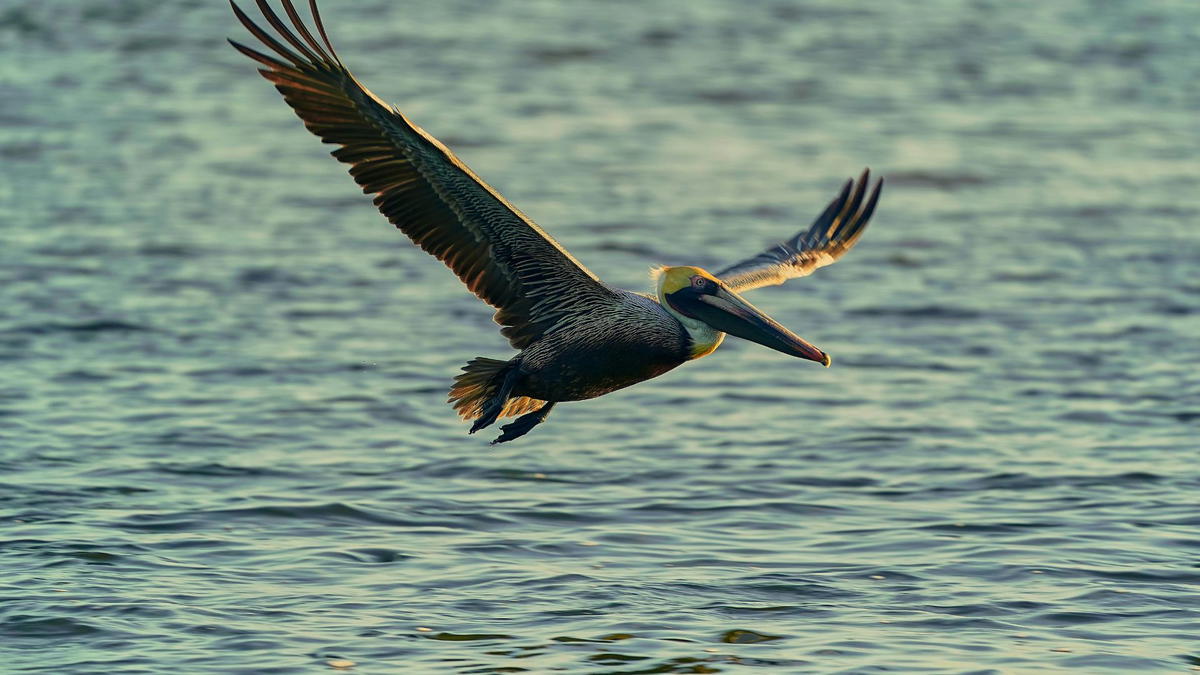
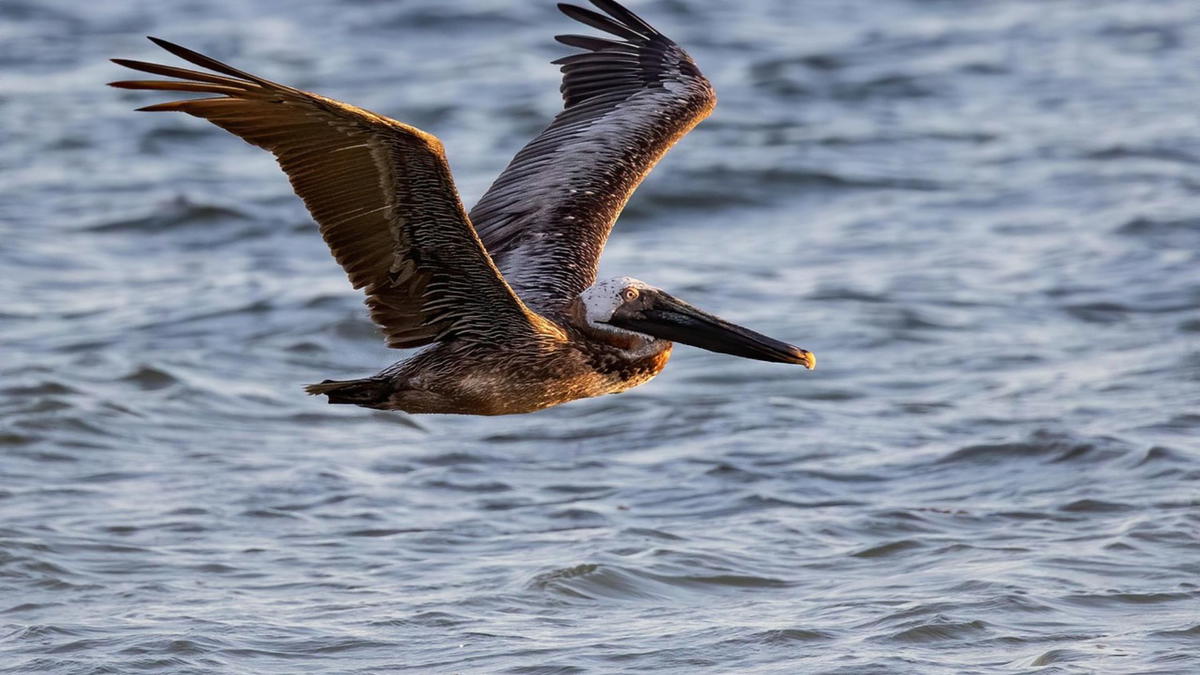
From a serene glide high above the ocean, a brown pelican transforms in an instant into a feathered missile, plunging headfirst into the waves with a thunderous splash. This is no reckless belly flop—it’s a 30-million-year-old masterpiece of physics, anatomy, and instinct that turns gravity into groceries.
The Aerial Scout: Eyes That Pierce Refraction
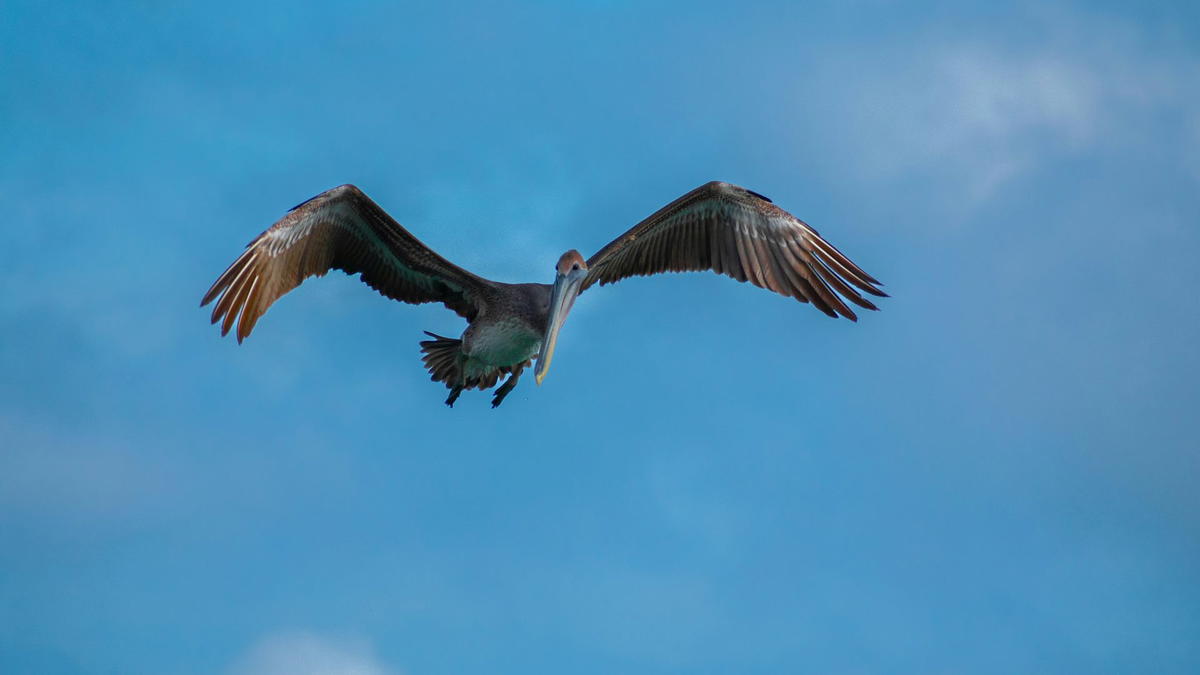
Brown pelicans patrol in perfect lines, wings spanning 2.03–2.28 m (6 ft 8 in–7 ft 6 in). From 6–20 m (20–65 ft) they lock onto shimmering schools—menhaden, anchovies, sardines.
“Pelicans dive at 60–90° angles to slice through Snell’s Window,” says Cornell Lab ornithologist Mark Shields. “Adults succeed 84% of the time; juveniles only 75%—proof that precision is learned.”
The Split-S Turn: A Fighter-Pilot Roll
The dive begins as a stall. Wings snap shut, body tucks, and the bird hits 18 m/s (40 mph) in under a second.
Milliseconds before impact, the pelican executes a 180° counterclockwise half-roll—a perfect Split-S maneuver. This shields the right-side trachea and esophagus while keeping the prey in sight.
Living Airbags: 30 Million Years of Crash Testing
Subcutaneous air sacs inflate like bubble wrap across breast, neck, and pouch. Fossil jaws identical to today’s prove this system evolved 30 million years ago and never needed an upgrade.
A reinforced skull, closed nostrils, and nictitating membranes complete the safety suite. Impact? Absorbed. Buoyancy? Instant.
The Pouch Trap: 11-Liter Fish Net
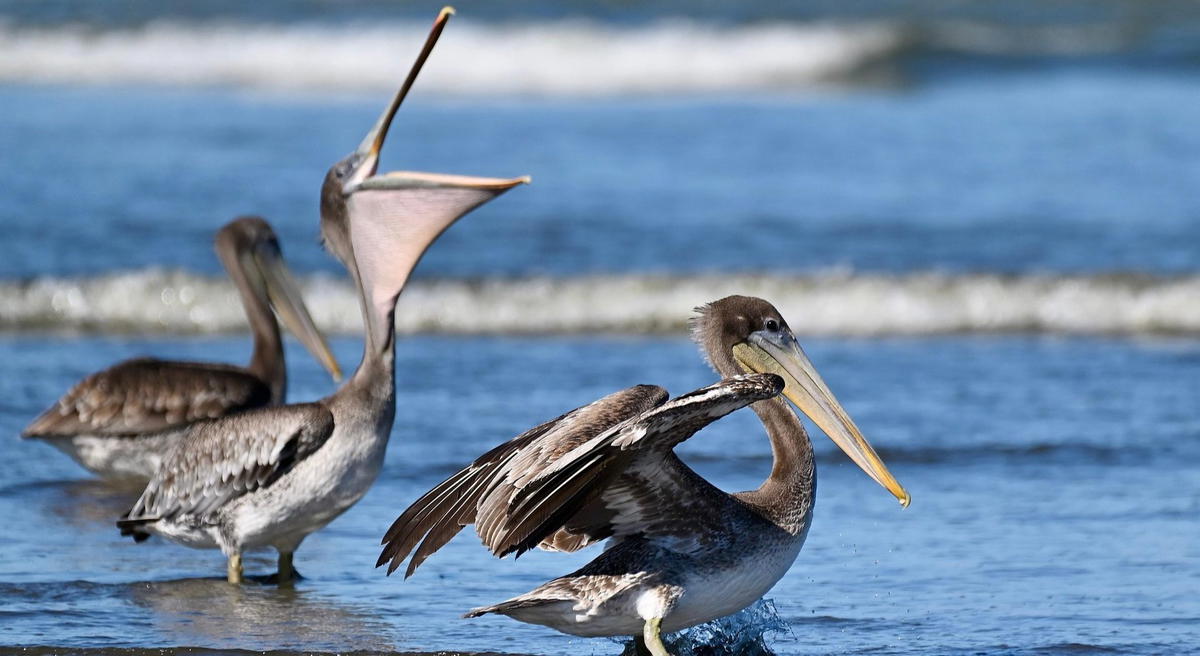
The lower mandible drops, ballooning the pouch to 11 L (3 gal)—three times stomach volume. Water drains in 8–10 seconds; stunned fish slide down headfirst.
Gulls perch on the pelican’s head mid-drain, stealing bites. “Kleptoparasitism costs calories,” notes Smithsonian seabird expert Juliet Lamb, “yet adults still net 1.8 kg (4 lb) daily.”
Ocean Sentinel: One Dive, One Vote for Clean Water
Each plunge links sardine booms to chick survival. U.S. flocks consume 70,000 metric tons of forage fish yearly. When DDT thinned eggshells in the 1960s, Louisiana erased the pelican from its state seal—zero nests remained.
Banned in 1972, the pesticide’s absence sparked a miracle: the species was delisted in 2009. Today 650,000 birds ride Atlantic and Pacific currents, monitored by USFWS as living barometers of ocean health.
Brown vs. Peruvian Pelican: Dive Specs Compared
| Trait | Brown Pelican | Peruvian Pelican |
| Length | 1.06–1.37 m (3 ft 6 in–4 ft 6 in) | 1.52 m (5 ft) |
| Wingspan | 2.03–2.28 m (6 ft 8 in–7 ft 6 in) | 2.28–2.74 m (7 ft 6 in–9 ft) |
| Weight | 2.7–4.5 kg (6–10 lb) | 5.4–9 kg (12–20 lb) |
| Dive Height | 6–20 m (20–65 ft) | 3–10 m (10–33 ft) |
| Pouch Volume | 11 L (3 gal) | 13 L (3.4 gal) |
| Success Rate | 84% (adults) | 78% |
| Depth Reached | 0.3–1 m (1–3 ft) | 0.5–2 m (1.5–6.5 ft) |
| Conservation | Least Concern | Near Threatened |
From Flop to Phantom: The Juvenile Learning Curve
Fledglings enter shallow, bending light and missing prey. Slow-motion footage shows a juvenile’s 40% miss rate plummet after 1,000 practice dives. By age three, scar tissue and muscle memory deliver adult precision.
Gular Flutter: Built-in AC & Salt Filter
On scorching days pelicans pant through their pouches—gular fluttering evaporates heat via blood-rich skin. Salt glands above the eyes drip brine; every pouchful is desalinated before the swallow.
Comeback Icon: From Ghost Bird to 650,000 Strong
In 1963 Louisiana had zero nests. Refuge creation, citizen science, and the Endangered Species Act reversed extinction. Today fledglings outnumber the Rockies in age—proof that science-guided law resurrects legends.
A Thunderous Vote for Blue Resilience
Every splash is a referendum on clean water. When brown pelicans spiral above your shoreline, they’re not just fishing—they’re certifying that forage fish still school, that currents still carry life. Watch one resurface, tilt its beak to the sun, and swallow tomorrow. That single gulp sustains a lineage older than redwoods and reminds us: protect the little fish, and the sky-divers will keep writing their ancient story in white spray across the waves.
References
- Cornell Lab of Ornithology – All About Birds: Brown Pelican
- Audubon – “How Brown Pelicans Dive Without Breaking Their Necks” (2024)
- U.S. Fish & Wildlife Service – Brown Pelican Recovery Plan
- Smithsonian National Zoo – Pelican Biomechanics
- Journal of Field Ornithology – “Plunge Diving Resembles a Split-S Turn” (2022)
FAQs
Do pelicans ever break bones diving?
Almost never. The leftward Split-S plus airbags absorb 99% of impact; healed scars are badges of mastery.
Why do they fly in perfect V-lines?
Ground-effect gliding saves 70% energy; drafting cuts 1,200 wingbeats per hour.
Can they drink seawater?
Salt glands drip brine like tears; every pouchful is fresh before swallowing.
How do El Niño years hurt plunge success?
Warm water pushes sardines deep. Failed dives drop chick survival from 1.8 to 0.2 fledglings per nest.