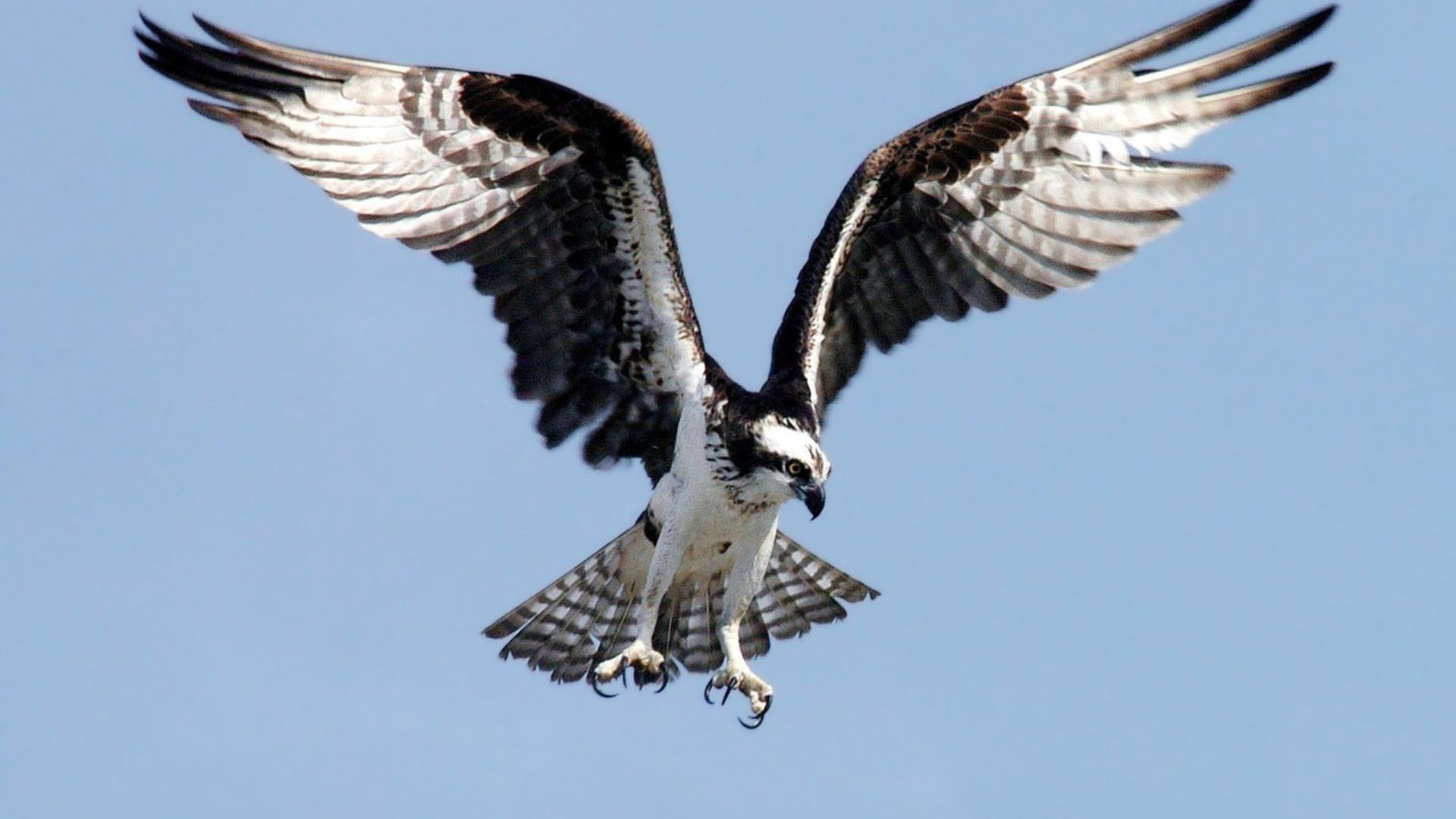
A thousand fish flash beneath a mirror-calm lake. An osprey hovers, wings trembling. A bald eagle circles higher, silent. Both see the same banquet—yet only one fish will die in the next ten seconds.
The choice is never random. It is the result of a silent, lightning-fast equation older than the continents themselves.
The Specialist and the Opportunist
Two masters of the sky. Two utterly different philosophies.
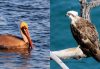
The osprey (Pandion haliaetus) is the purest hunter in the raptor world. 99 % of its diet is live fish—a commitment so absolute that its Latin genus stands alone.
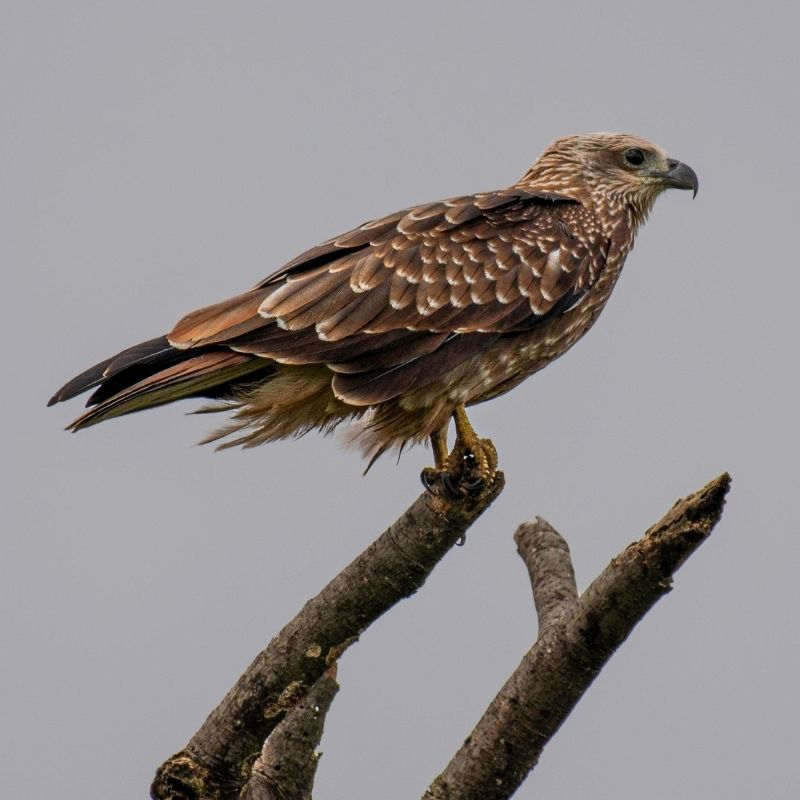
The bald eagle (Haliaeetus leucocephalus) refuses commitment. Fish when easy, ducks when distracted, carrion when convenient, osprey deliveries when available.
“An osprey without fish is a contradiction in terms,” says Dr. Rob Bierregaard, who has tracked ospreys for four decades. “An eagle without options is a dead eagle.”
The Plunge: Osprey’s All-or-Nothing Gamble
Picture the moment of decision.
An osprey stalls at 30 m (100 ft), head cocked downward. Its eyes—equipped with a second fovea specialized for underwater refraction—lock on a mullet 1.2 m (4 ft) beneath the surface. In a heartbeat it folds into a missile, talons forward, hitting the water like a thrown spear.
Success rate? Experienced adults: up to 70 %. Juveniles: often below 20 %.
One failed dive can burn 25 % of the day’s energy budget. That is why ospreys abort far more strikes than they complete.
The Theft: Eagle’s Low-Risk Masterstroke
Now watch the eagle.
It never needed to dive. It simply waited for the osprey to do the hard work. A short burst of speed, a scream of outrage from the osprey, one upside-down barrel roll—and the fish tumbles free. The eagle catches it mid-air. Calories gained: 400 g. Energy spent: almost none.
Bryan Watts, director of the Center for Conservation Biology, has documented coastal eagles obtaining 20–40 % of their fish through piracy. “Kleptoparasitism isn’t cheating,” he says. “It’s optimization.”
Vision Sharper Than Any Camera
Both birds possess visual acuity far beyond human capacity..
- Ospreys use polarized-light detection to cut surface glare.
- Eagles possess a higher density of motion-sensitive cones for spotting a limping coot among hundreds.
Smithsonian research shows that mature eagles make repeated low passes over waterfowl flocks, deliberately flushing birds to reveal the slowest responders—only then do they strike.
The Universal Equation Every Raptor Solves
| Decision Factor | Osprey Choice | Bald Eagle Choice |
| Energy cost | Extremely high per attempt | Low to negligible when stealing |
| Injury risk | Water impact, drowning possible | Almost zero when targeting weak prey |
| Success probability | 24–70 % (skill + conditions) | 30–50 % hunt; 90 %+ piracy |
| Payoff | Guaranteed fresh fish | Same calories, zero effort |
| Behavioral trigger | Fish within 1 m of surface | Weak, sick, distracted, or already caught |
Data: Cornell Lab of Ornithology, Center for Conservation Biology, USFWS long-term studies.
When the Equation Changes
Rough water hides fish from ospreys but exposes exhausted ducks to eagles.
Glare blinds both on bright afternoons.
Wind above 30 km/h (19 mph) makes hovering impossible—ospreys fast; eagles simply perch and wait for roadkill.
In prolonged bad weather, ospreys can lose 15 % of body mass in a week. Eagles switch to carrion and thrive.
The Apprenticeship of Hunger
First-year ospreys are tragic comedians—crashing, missing, starving.
Juvenile eagles frequently misjudge goose size and get dragged underwater.
By age four or five, survivors have logged thousands of calculations. They learn the exact flick of a healthy fish’s tail versus the sluggish roll of a parasite-laden one. They recognize the slight list of a duck with avian flu. Experience turns reckless youth into lethal precision.
Sanitation Crew of the Sky
Every selective strike improves the ecosystem.
Eagles remove diseased waterfowl before outbreaks spread. Ospreys crop dominant fish species, preventing overgrazing of aquatic plants that filter the water and shelter fry. Both keep prey populations vigorous and genetically healthy.
Is the Osprey a Better Hunter Than the Bald Eagle?
The answer depends on how you define “better.”
If the question is who catches live fish more efficiently, the osprey wins decisively. Experienced adults succeed in up to 70–90% of properly selected dives, thanks to reversible outer toes, spiny footpads, and the ability to plunge completely underwater. No other raptor is as specialized for fishing.
But if “better” means who survives across the widest range of conditions, the bald eagle takes the crown. Eagles combine hunting, scavenging, and kleptoparasitism—stealing fish from ospreys—to maintain consistent calorie intake even when fish are deep, winds are strong, or prey is scarce.
The osprey is a master specialist.
The bald eagle is a strategic generalist.
Both are elite hunters—optimized for different equations of risk, energy, and opportunity.
Quick Facts: Osprey vs. Bald Eagle at a Glance
| Trait | Osprey | Bald Eagle |
| Wingspan | 1.52–1.80 m (5.0–5.9 ft) | 1.83–2.30 m (6.0–7.5 ft) |
| Body mass | 1.4–2.0 kg (3.1–4.4 lb) | 3.0–6.3 kg (6.6–13.9 lb) |
| Primary prey | 99 % live fish | 60–90 % fish + waterfowl + carrion |
| Dive behavior | Full plunge, often submerged | Feet skim surface; rarely submerges |
| Daily food requirement | 300–400 g (0.66–0.88 lb) | 400–900 g (0.88–2 lb) |
| Kleptoparasitism | Victim | Primary pirate |
| Juvenile success rate | < 20 % first year | < 30 % first year |
| Conservation status | Least Concern | Recovered (delisted 2007) |
The Quiet Discipline of Apex Predators
An osprey could empty a pond in a season of greed. An eagle could terrorize every duck on a marsh.
Neither does.
Instead, they practice restraint refined over sixty million years: strike only when the math is undeniable, waste nothing, leave enough for tomorrow.
That restraint is why rivers still run silver with fish, why winter skies still darken with waterfowl, and why these magnificent hunters remain not as destroyers, but as the sky’s most elegant accountants—balancing life itself, one perfectly calculated kill at a time.
References & Trusted Sources
- Bierregaard, R. O., et al. (2022). Osprey migration and foraging ecology. Cornell Lab of Ornithology.
- Watts, B. D. (2021). “Kleptoparasitism rates in Chesapeake Bay bald eagles.” Journal of Raptor Research.
- Cornell Lab of Ornithology – All About Birds: Osprey & Bald Eagle.
- U.S. Fish and Wildlife Service – Post-delisting Monitoring of Bald Eagles.
- Smithsonian Migratory Bird Center – Raptor visual acuity and prey selection.
- National Geographic Society – Masters of the Air field expeditions.