Introduction
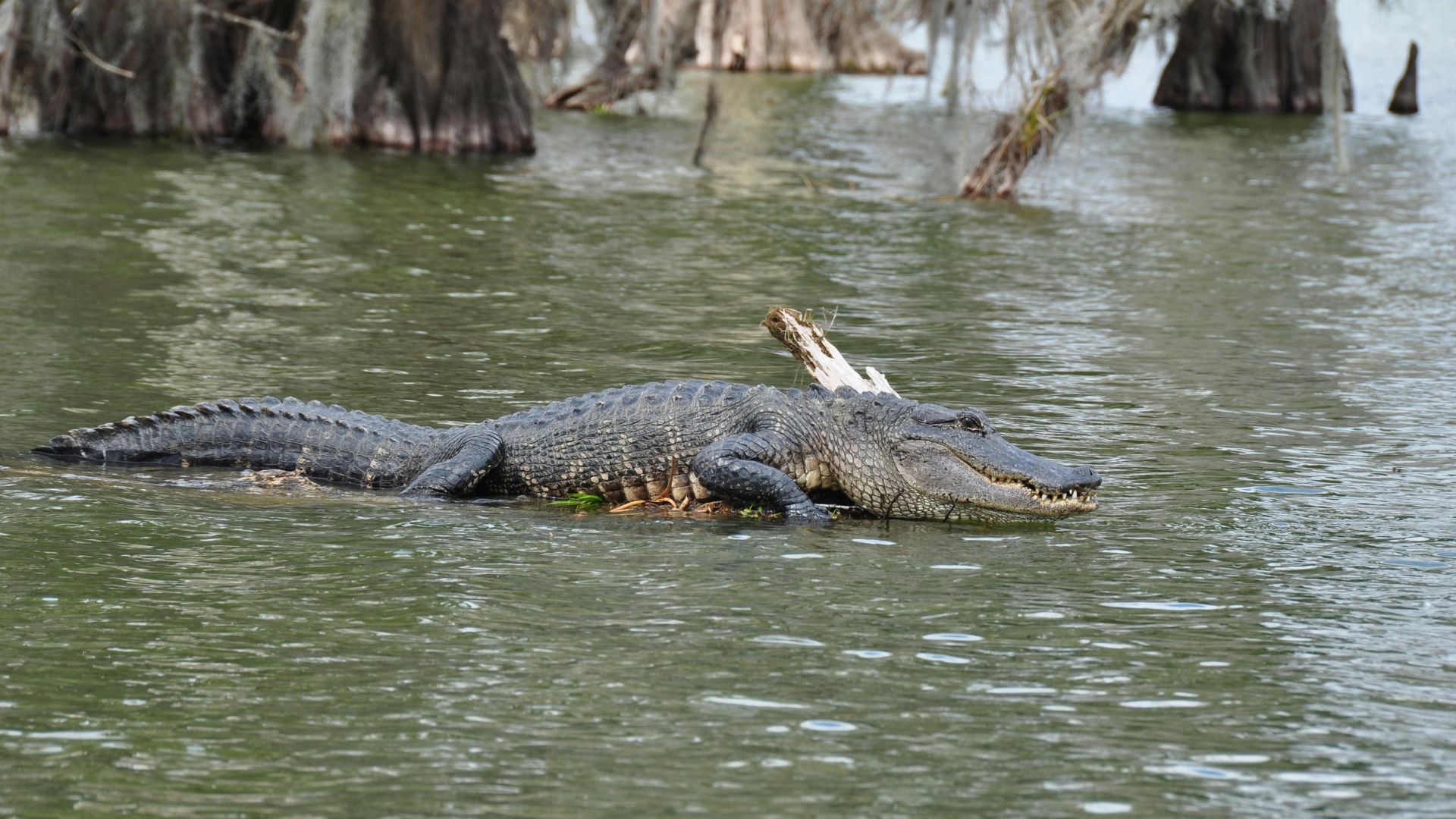
The American alligator (Alligator mississippiensis) is the largest reptile native to the United States, and Florida supports one of the species’ densest populations. Wildlife biologists estimate that more than 1.3 million alligators inhabit the state’s freshwater lakes, rivers, marshes, and swamps. While most adult males reach 3–3.6 meters (10–12 feet) in length, a small number grow significantly larger under favorable ecological conditions.
Exceptional individuals exceeding 4.2 meters (14 feet) are rare but well documented through regulated harvest programs and standardized scientific measurements. The Florida Fish and Wildlife Conservation Commission (FWC) maintains detailed records of harvested alligators through its Statewide Alligator Harvest Program and nuisance removal program. These records include measurements such as total length, head length, and body mass taken by trained biologists or verified officials.
Studying unusually large individuals helps researchers understand maximum growth potential, longevity, and habitat productivity in wild alligator populations. The following list summarizes ten of the largest American alligators documented in Florida, based on verified measurements reported through FWC harvest and nuisance removal records.
1. Lake Washington Giant — 14 ft 3.5 in (4.36 m), 654 lbs
The largest alligator officially recorded in Florida measured 14 feet 3.5 inches (4.36 meters) and weighed approximately 654 pounds (297 kg). This exceptional male was harvested in Lake Washington, Brevard County, on November 1, 2010, through the FWC Statewide Alligator Harvest Program.
Individuals reaching this length represent the upper documented size range for wild American alligators in Florida. Biologists note that attaining such dimensions likely requires several decades of growth, abundant prey availability, and minimal mortality risks during early life stages.
Large males typically dominate productive territories that provide reliable access to prey such as fish, turtles, birds, and mammals. This consistent energy intake allows continued somatic growth long after sexual maturity.
Although body weight can fluctuate seasonally depending on fat reserves and feeding patterns, total length is the primary metric used in official size records. The Lake Washington specimen remains the longest verified alligator documented in Florida.
2. Lake Talquin Alligator — 14 ft 1 in (4.29 m)
A male alligator measuring 14 feet 1 inch (4.29 meters) was recorded from Lake Talquin in 2013, making it the second-longest individual documented in Florida records.
Lake Talquin is a large reservoir in the Florida Panhandle formed along the Ochlocknee River, providing extensive shoreline habitat and abundant fish populations. Such environments allow dominant males to grow larger than average.
Alligator growth slows significantly after sexual maturity at approximately 2.5–3 meters (8–10 feet), but males can continue gaining length slowly for many years. Crocodilian biologists describe this pattern as indeterminate growth, meaning individuals continue growing throughout life, although the rate declines with age.
The Lake Talquin specimen illustrates how favorable habitat conditions and long lifespans can produce rare individuals exceeding 4.2 meters, a size reached by only a small percentage of wild alligators.
3. Lake Monroe Record — 14 ft ⅝ in (4.28 m)
Another exceptionally large alligator was recorded at Lake Monroe in 1997, measuring 14 feet and five-eighths of an inch (approximately 4.28 meters).
Lake Monroe is part of the St. Johns River system in central Florida, which contains extensive marsh and floodplain habitats capable of supporting large crocodilian populations.
Large male alligators typically occupy dominant territorial positions, controlling access to productive feeding areas such as fish concentrations and waterbird nesting colonies.
Because adult males of this size have few natural predators, survival rates increase significantly once individuals reach large body size. This longevity allows continued growth over several decades.
Biologists emphasize that reaching lengths above 4 meters (13 feet) is uncommon in wild populations and usually indicates advanced age and stable habitat conditions.
4. Apalachicola River Giant — 14 ft 1/16 in (4.27 m)
A massive alligator measuring 14 feet 1/16 inch (4.27 meters) was recorded from the Apalachicola River in 1989, representing one of the earliest documented individuals exceeding 14 feet in Florida.
The Apalachicola River basin contains extensive floodplain wetlands and oxbow lakes, ecosystems that support high prey diversity including fish, reptiles, birds, and mammals.
Large crocodilians in river systems often benefit from seasonal prey concentrations that occur during flooding cycles or drought periods when aquatic species gather in remaining pools.
River habitats also allow dominant males to maintain large territories spanning multiple connected wetlands, reducing competition with other large individuals.
The Apalachicola River specimen remains one of the longest alligators recorded in Florida and demonstrates the growth potential of individuals occupying productive riverine ecosystems.
5. Polk County Alligator — 13 ft 11¼ in (4.25 m)
In 2001, a large male measuring 13 feet 11¼ inches (4.25 meters) was documented in Polk County, central Florida.
Central Florida lakes often support high densities of fish and aquatic wildlife, providing reliable prey resources for large predators. Dominant male alligators typically occupy the most productive shoreline areas where prey availability remains consistent.
Growth in crocodilians is influenced by food availability, water temperature, and population density. When prey is abundant and competition is limited, individuals may grow well beyond average adult size.
Although slightly shorter than the few individuals exceeding 14 feet, the Polk County alligator still ranks among the largest verified specimens documented in Florida.
6. Orange Lake Heavyweight — 13 ft 10½ in (4.23 m), 1,043 lbs
The heaviest alligator ever recorded in Florida weighed 1,043 pounds (473 kg) and measured 13 feet 10½ inches (4.23 meters). This specimen was harvested from Orange Lake in Alachua County in 1989.
Body mass can vary widely among large alligators depending on feeding history, reproductive cycles, and seasonal fat reserves.
Large males accumulate significant fat stores that help them survive extended periods with limited food availability, particularly during cooler months when feeding activity declines.
Orange Lake is known for high ecological productivity, supporting large populations of fish, turtles, and waterbirds. These conditions allow dominant males to maintain unusually high body mass.
The Orange Lake specimen remains the heaviest verified alligator documented in Florida records.
7. Lake Dora Alligator — 13 ft 9¼ in (4.20 m)
An alligator measuring 13 feet 9¼ inches (4.20 meters) was recorded at Lake Dora in 1983.
Lake Dora is part of the Harris Chain of Lakes in central Florida, a connected system that supports numerous large predators due to extensive aquatic vegetation and shoreline habitat.
Older male alligators frequently establish territories near reliable feeding sites, such as fish spawning areas or waterbird nesting colonies.
These locations provide consistent food resources, allowing dominant males to maintain body condition and continue slow growth over long periods.
The Lake Dora individual demonstrates how large freshwater lake systems can support exceptionally large crocodilians when environmental conditions remain favorable.
8. Apalachicola River Heavy Giant — 13 ft 7.5 in (4.15 m), 1,008 lbs
Another large alligator from the Apalachicola River system measured 13 feet 7.5 inches (4.15 meters) and weighed approximately 1,008 pounds (457 kg). This specimen was documented in 2020.
Floodplain river ecosystems often support high prey diversity, providing consistent access to fish, reptiles, birds, and mammals.
Heavy individuals like this demonstrate how body mass can vary independently of length, depending on prey availability and seasonal feeding patterns.
Large crocodilians can consume prey items weighing 20–25% of their body mass, allowing them to accumulate significant fat reserves when food is abundant.
This Apalachicola specimen ranks among the largest and heaviest alligators recorded in recent Florida harvest records.
9. Sarasota County Giant — 13 ft 6.5 in (4.13 m), Over 900 lbs
A very large alligator recorded in Sarasota County in 2023 measured 13 feet 6.5 inches (4.13 meters) and was estimated to weigh over 900 pounds (408 kg).
Southwest Florida contains numerous freshwater wetlands connected to coastal river systems, creating suitable habitat for large adult males.
The Sarasota specimen demonstrates that extremely large individuals still occur today despite significant human development across the state.
Florida’s regulated harvest and nuisance removal programs play an important role in monitoring population size and documenting body measurements of large individuals.
Such records provide valuable biological data for wildlife managers studying long-term trends in alligator growth and population structure.
10. Large Florida Specimen — 13 ft 5 in (4.09 m), ~800 lbs
The tenth largest documented Florida alligator measured approximately 13 feet 5 inches (4.09 meters) and weighed about 800 pounds (363 kg).
Although specific location details are less frequently reported for some harvest records, individuals of this size are often associated with large freshwater systems such as Lake Okeechobee or major river basins.
Alligators exceeding 4 meters (13 feet) are typically several decades old, reflecting long-term survival and sustained access to productive habitats.Wildlife biologists note that individuals reaching this size represent only a small fraction of the total population, making them relatively rare even in regions with high alligator density.
Key Takeaways
• The longest alligator officially recorded in Florida measured 14 ft 3.5 in (4.36 m) in Lake Washington in 2010.
• The heaviest verified specimen weighed 1,043 pounds, recorded at Orange Lake in 1989.
• At least four documented Florida alligators have exceeded 14 feet, based on verified measurements.
• Most record specimens come from major river systems and productive freshwater lakes, where prey availability supports long-term growth.
• Verified records are maintained through the Florida Fish and Wildlife Conservation Commission’s harvest and nuisance alligator programs, which provide standardized measurements.
References
- Florida Fish and Wildlife Conservation Commission (FWC)
- U.S. Geological Survey (USGS)
- Smithsonian Institution