Introduction
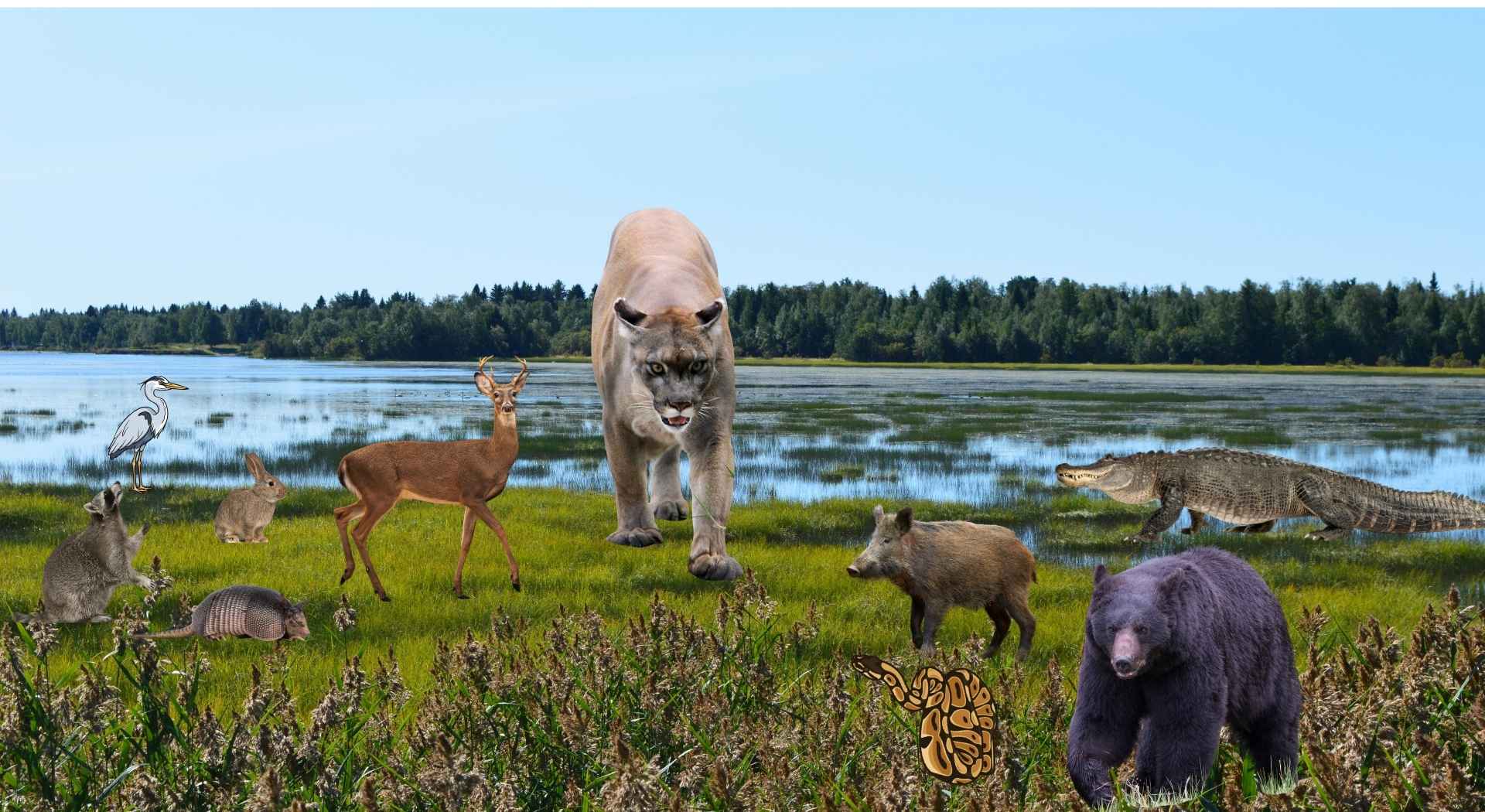
The Florida panther (Puma concolor coryi) functions as an apex predator within the subtropical wetlands of the Everglades, where its survival depends on a network of ecological interactions with other species. These interactions include predation, competition, scavenging, and habitat overlap, each influencing energy flow and population dynamics.
Understanding these relationships is scientifically important because predator–prey balance, interspecific competition, and resource availability directly affect panther survival and reproduction. Long-term monitoring by the U.S. Fish and Wildlife Service and the Florida Fish and Wildlife Conservation Commission uses GPS telemetry, kill-site analysis, and scat studies to quantify diet composition and movement patterns. These datasets show that changes in prey density or competition can alter home-range size by more than 10–20% in some regions.
The following sections examine ten key species that interact with Florida panthers, highlighting the biological mechanisms and ecological significance of each relationship within the Everglades ecosystem.
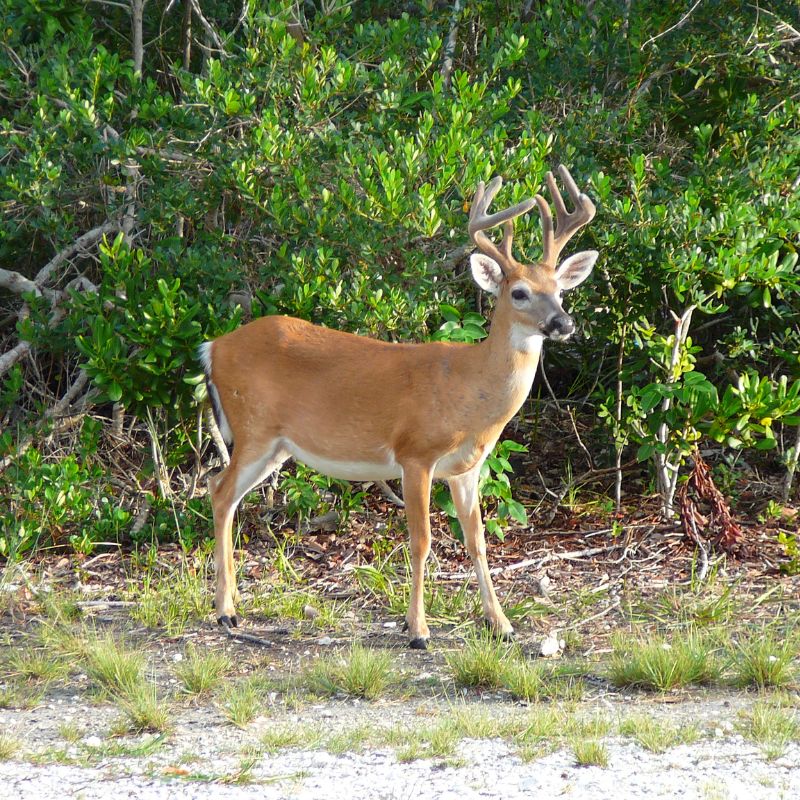
1. White-tailed Deer Are the Primary Prey Base
The White-tailed Deer is the dominant prey species for Florida panthers, contributing roughly 50–70% of total dietary biomass based on FWC and USFWS analyses. Panthers employ a classic ambush strategy, closing to within ~10–20 meters before delivering a suffocating bite to the throat or nape.
An adult deer can provide 40–90 kg of consumable tissue, often sustaining a panther for 3–5 days. Kill intervals typically average one deer every 7–10 days for adult individuals.
Ecologically, this interaction regulates herbivore density and prevents overbrowsing of vegetation such as saw palmetto and hardwood seedlings. Deer abundance strongly predicts panther distribution, with telemetry data showing individuals spending a majority of active time in deer-rich habitats.
2. Feral Hogs Serve as a Secondary High-Energy Prey
Feral Hog populations represent a major secondary prey source, often accounting for 15–30% of dietary biomass where abundant. Panthers hunt hogs using ambush tactics but typically target juveniles or solitary individuals to reduce injury risk from tusks.
Hogs range widely in mass (30–100+ kg), providing substantial energy but at higher risk than deer. Hunting success rates are generally lower than for deer due to defensive behavior and group vigilance.
Ecologically, this interaction has dual significance: hog predation reduces pressure from an invasive species that disrupts soil structure and native vegetation, while also buffering panthers against fluctuations in deer populations. Seasonal shifts show increased hog predation during dry periods when prey concentrates near water sources.
3. Burmese Pythons Compete for Shared Prey Resources
The invasive Burmese Python creates strong exploitative competition with Florida panthers by consuming overlapping prey such as deer, raccoons, and rabbits. Individuals exceeding 4–5 meters can take large mammals, including adult deer.
USGS-linked studies report declines of up to 80–90% in some mid-sized mammal populations in python-dense areas, indirectly reducing prey availability for panthers.
This interaction rarely involves direct conflict; instead, it alters prey abundance and distribution. Panthers may respond by expanding home ranges or increasing reliance on smaller prey. The ecological consequence is a reshaped food web in which an invasive apex predator modifies trophic structure and resource competition.
4. Raccoons Are Frequent Opportunistic Prey
The Raccoon is a common secondary prey species, appearing frequently in dietary analyses though contributing relatively little biomass (typically <5%). Weighing 5–10 kg, raccoons are captured with low risk compared to ungulates.
Panthers often hunt raccoons along wetland margins where raccoon foraging activity is concentrated. Capture typically involves a short pursuit followed by a cranial or neck bite.
Ecologically, this predation regulates mesopredator populations. Reduced raccoon density can indirectly benefit ground-nesting birds and reptiles by lowering nest predation rates, demonstrating a trophic cascade driven by apex predator presence.
5. American Alligators Represent Occasional Prey and Risk
American Alligator interactions are infrequent but notable. Panthers occasionally prey on juveniles under ~1.5 meters, using rapid strikes to avoid the jaws.
Conversely, large alligators (>2.5 meters) can pose a predation risk, particularly in deep-water crossings. Documented cases of panther mortality from alligators are rare but confirm bidirectional risk.
This interaction reflects intraguild dynamics within shared wetland habitats. While its overall dietary contribution is minimal (<5%), it illustrates the limits of panther predation and the importance of size-based risk assessment in prey selection.
6. Armadillos Provide Low-Risk, Small Prey
The Nine-banded Armadillo is a consistent but low-biomass prey item, appearing in approximately 10–15% of dietary samples. Individuals weigh 3–6 kg and are often excavated from burrows.
Panthers use forelimb digging behavior and bite force to overcome the armadillo’s osteoderm armor. This can involve several minutes of excavation effort.
Ecologically, armadillos serve as fallback prey when ungulate densities decline. This dietary flexibility increases resilience to environmental fluctuations, allowing panthers to persist in habitats with variable prey availability.
7. Marsh Rabbits Are Important Small-Mammal Prey
Marsh Rabbit populations provide a minor but consistent prey source, particularly for subadult panthers. Individuals weigh ~1–1.5 kg and are captured via short-distance ambush.
Because multiple rabbits are required to meet daily energy needs, they are inefficient compared to ungulates but useful when larger prey is scarce.
This interaction is especially important for younger panthers, serving as a behavioral training mechanism for developing hunting skills. Ecologically, marsh rabbits function as a key link in energy transfer from vegetation to higher trophic levels.
8. Wading Birds Are Occasional Opportunistic Prey
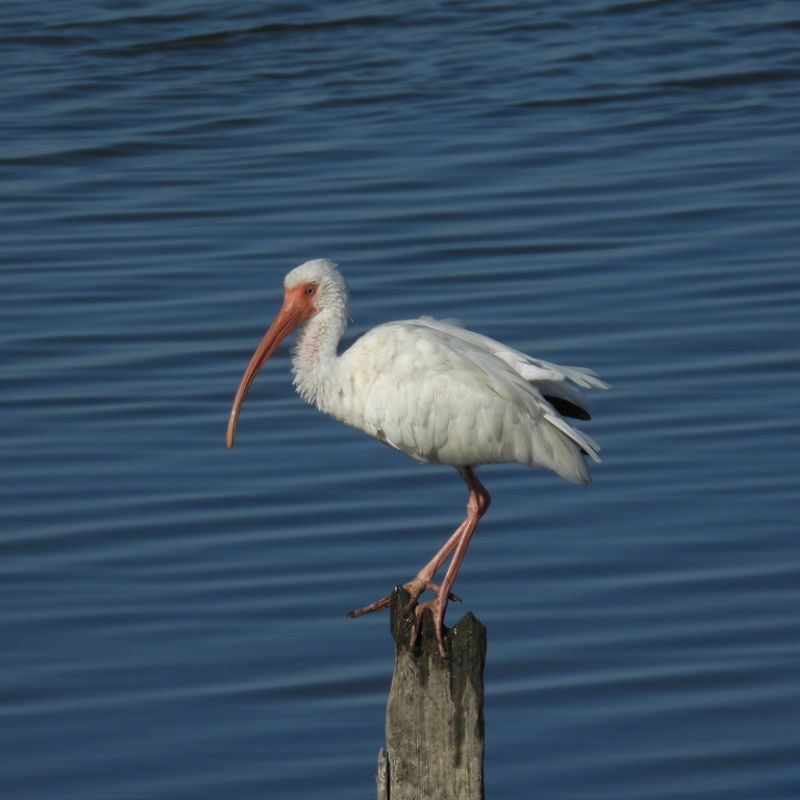
Species such as the Wood Stork and other wading birds are taken opportunistically, particularly when concentrated in drying wetlands or nesting colonies.
Avian prey contributes less than 1% of total diet biomass but demonstrates behavioral flexibility. Panthers may exploit roosting birds at night or ground-nesting individuals.
The ecological impact is limited in terms of biomass but highlights opportunistic feeding strategies. Occasional disturbance of nesting colonies represents an indirect interaction affecting bird reproductive success rather than sustained predation pressure.
9. Florida Black Bears Share Habitat and Resources
The Florida Black Bear overlaps with panthers in habitat use, particularly in forested wetlands. Direct conflict is rare due to temporal separation (bears more diurnal, panthers nocturnal).
Competition occurs primarily at carcasses, where bears may displace panthers through size advantage. This kleptoparasitic interaction can reduce feeding efficiency for panthers.
Telemetry data indicate that panthers may shift activity areas by over 1 km in response to bear presence, reflecting spatial avoidance. This interaction exemplifies resource partitioning among large mammals sharing the same ecosystem.
10. Humans Influence Panther Behavior Through Indirect Interactions
Human interactions are primarily indirect but represent the most significant mortality factor. Vehicle collisions account for over 50% of documented panther deaths in many years, according to FWC data.
Predation on livestock occurs infrequently (<2% of diet), typically near habitat edges where natural prey overlaps with agricultural land.
This interaction creates an ecological imbalance: humans exert strong pressure on panther populations, while panthers have minimal impact on humans. Roads, habitat fragmentation, and edge effects influence movement patterns, making this the most consequential interaction in modern panther ecology.
Key Takeaways
• White-tailed deer and feral hogs provide 70–90% of total dietary biomass for Florida panthers.
• Invasive Burmese pythons significantly reduce prey availability through competition.
• Smaller prey such as raccoons and armadillos support dietary flexibility during resource fluctuations.
• Rare interactions with alligators illustrate size-dependent predation risk.
• Black bears influence panther behavior through carcass competition and spatial avoidance.
• Human activity remains the dominant factor shaping mortality and movement patterns.