Key Finding: The alligator didn’t just survive the dinosaurs; it thrived by becoming a “biological Swiss Army knife”—a perfect blend of armored tank, energy-sipping engineer, and nurturing parent.
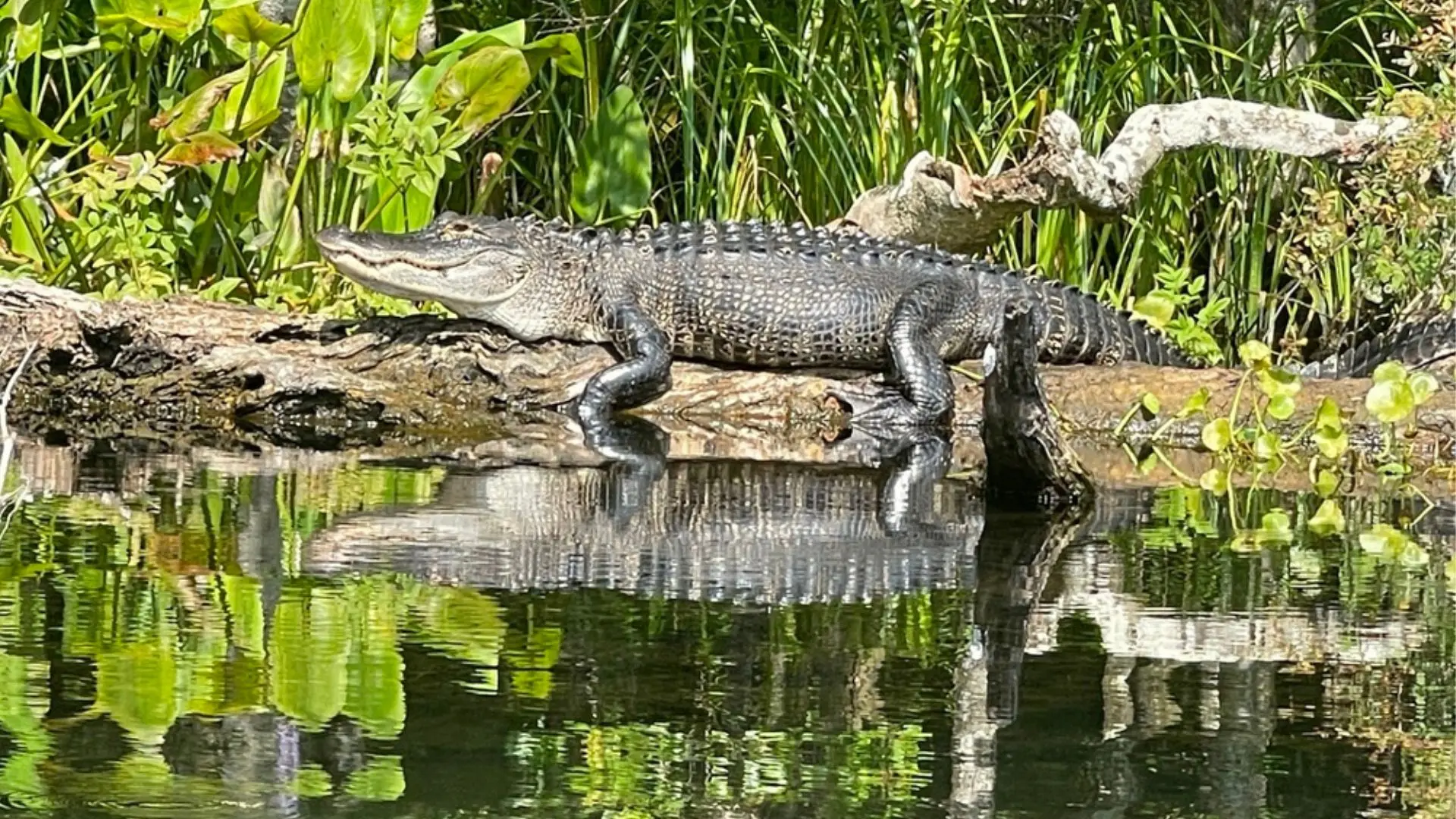
While the Tyrannosaurus rex is a fossil, its smaller, smarter cousin still rules the swamps. The American alligator (Alligator mississippiensis) is a walking paradox: a brutal bite force paired with a nurturing heart, a cold-blooded metabolism that fuels a warm-blooded social life. Its survival secret isn’t one trait, but a masterful interplay of biology and behavior.
Here’s the blueprint for its evolutionary perfection.
The Alligator’s Survival Blueprint: At a Glance
| Survival Challenge | Alligator’s Solution | Why It’s Genius |
| Self-Defense | Bony osteoderms & camouflage | Mobile, solar-powered armor. |
| Hunting | 2,900 PSI bite + stealth posture | Can take down prey much larger than itself. |
| Energy Conservation | Ectothermic (cold-blooded) metabolism | Can survive on ~50 meals a year. |
| Winter Survival | Brumation & “ice snorkels” | Effectively “hibernates” underwater. |
| Reproduction | Temperature-dependent sex determination | Population adapts to climate shifts. |
| Ecosystem Role | Digs “gator holes” | Becomes an essential ecosystem engineer. |
Level 1: The Impenetrable Fortress (Anatomy)
The alligator is a biological tank, engineered for defense and power.
- Living Armor: Its back is covered in bony plates called osteoderms, which are so effective that scientists are studying them for inspiration in bulletproof vest design.
- The Perfect Ambush Predator: With eyes and nostrils on top of its head, it can breathe and see while 95% of its body is hidden underwater. Its transparent nictitating membrane acts as built-in swimming goggles.
- A Bite of Legend: With a force of ~2,900 PSI, its bite can crush a turtle shell. Yet, the muscles for opening its jaws are surprisingly weak—a handled alligator’s mouth can be held shut with strong tape.
A Reptile with a 4-Chambered Heart?
Unlike most reptiles, alligators have a four-chambered heart, just like mammals and birds. This advanced cardiovascular system allows for more efficient oxygen delivery, supporting a more active predatory lifestyle and potentially contributing to their surprising intelligence and longevity.
Level 2: The Ultimate Energy Saver (Metabolism)
This is their core superpower. As ectotherms, they don’t burn calories to stay warm.
- The “Low-Energy” Apex Predator: A large adult can go for weeks or even months between major meals. This allows a stable population to thrive in a territory without depleting its prey base.
- Master of the Cold: They are the original “ice fishermen.” When water freezes, they enter brumation, slowing their heart rate to 2-3 beats per minute. They perform “icing,” where they poke their snouts through the ice to breathe, waiting patiently for the thaw.
- The Gender Thermostat: The temperature of the nest determines the sex of the hatchlings. Consistent temperatures around 90°F (32°C) produce males, while slightly cooler or warmer temperatures produce females. This built-in flexibility may have been key to adapting to prehistoric climate shifts.
Level 3: The Ecosystem Engineer (Behavior)
This is the secret that secured their future. The alligator builds the world it needs to survive.
During dry seasons, they dig “gator holes”—underwater reservoirs that become the last remaining oases. These holes are not just for the gators; they are lifelines for the entire ecosystem.
The Gator Hole Ripple Effect:
Fish & Turtles → find refuge → Wading Birds (Herons, Egrets) → gather to feed → The entire food web is sustained through the drought.
According to the U.S. Geological Survey (USGS): “Alligator holes are keystone features… their creation and maintenance are vital to the persistence of other species during seasonal droughts.”
By creating this essential resource, the alligator makes itself indispensable. It’s the ultimate strategy for long-term survival: help your home thrive, and you will, too.
The Nurturing Guardian (Social Intelligence)
Belying their “mindless killer” stereotype, alligators are among the most attentive parents in the reptile world.
- The Mound Nest: Females build and guard elaborate mound nests of vegetation.
- The Hatchling Call: Babies make a high-pitched “umph! umph!” sound from inside the eggs, signaling the mother to carefully uncover them.
- The Nursery Pond: The mother gently carries her hatchlings in her jaws to a safe nursery pond, protecting them for up to two years.
This extended parental care ensures a high survival rate for the next generation of wetland engineers.
The Modern Test: A Conservation Success Story
Their final survival test was us. By the 1960s, they were nearly hunted to extinction.
| The Comeback Timeline | |
| 1967 | Listed as Endangered |
| 1973 | Protected by the Endangered Species Act |
| 1987 | Officially declared Recovered |
| Today | >1.3 million in Florida; >5 million total in the U.S. |
This recovery is a testament to the power of science-based conservation. It proves that even a prehistoric predator can coexist with modern humanity.
The Newest Challenge: A Changing World
The alligator’s proven adaptability is now being tested by unprecedented threats:
- Sea-Level Rise: Saltwater intrusion into freshwater marshes destroys their habitat.
- Climate Skew: Rising average temperatures could disrupt the natural male/female hatchling ratio, threatening genetic diversity.
Conclusion: The Ultimate Survivor’s Report Card
| Survival Trait | Grade | Notes |
| Physical Design | A+ | Near-perfect predator anatomy. |
| Energy Efficiency | A+ | Master of metabolic conservation. |
| Environmental Engineering | A+ | Builds and maintains its own ecosystem. |
| Parental Investment | A | Exceptional for a reptile. |
| Adaptability to Change | A- | Survived eons, but modern threats are unique. |
| **Overall | A+ | The blueprint for evolutionary resilience. |
The American alligator’s secret is that it is a generalist specialist: generalized enough to eat almost anything and survive in fluctuating conditions, but specialized enough to perform a critical ecological role that no other creature can. It is a living lesson in resilience, reminding us that true strength lies not just in power, but in persistence, adaptation, and an indispensable role in the web of life.
References
- U.S. Geological Survey (USGS) – American Alligator Ecology
- Florida Fish and Wildlife Conservation Commission (FWC) – Alligator Management Program
- University of Florida IFAS – The American Alligator: Biology and Behavior
- National Park Service (NPS) – American Alligator Facts
- Journal of Experimental Biology – “The Functional Anatomy of the Alligator Jaw”
Frequently Asked Questions
1. How did alligators survive the asteroid that killed the dinosaurs?
Alligators survived the asteroid impact due to a combination of their aquatic lifestyle, which provided shelter from the initial devastation, their cold-blooded metabolism, which allowed them to survive long periods with little food, and their generalist diet, enabling them to eat whatever was available in the post-impact world.
2. What is the bite force of an American alligator?
The American alligator has one of the most powerful bites in the animal kingdom, exerting a force of approximately 2,900 pounds per square inch (PSI). This is enough to crush a turtle's shell with ease
3. How long can an alligator go without eating?
Due to their slow, cold-blooded metabolism, a large adult alligator can survive for weeks or even months between major meals. In extreme cases, they can go for over a year without food by living off their stored fat and energy reserves.
4. How do alligators survive winter and freezing temperatures?
Alligators perform a remarkable behavior called "icing." They enter a state of dormancy called brumation and stick their snouts above the waterline before it freezes, creating a natural "ice snorkel." Their heart rate slows to just 2-3 beats per minute, allowing them to breathe while their bodies remain dormant below the ice.
5. What is a "gator hole" and why is it important?
A "gator hole" is a depression dug by alligators in wetland bottoms during dry seasons. These holes retain water and become vital oases for fish, turtles, insects, and birds, preventing mass die-offs during droughts. This makes the alligator a crucial "ecosystem engineer."
6. Are alligators good parents?
Yes, alligators are surprisingly attentive parents, especially for reptiles. The mother guards the nest ferociously, helps the hatchlings escape the eggs, and then carries them gently in her jaws to a nursery pond. She will protect her young for up to two years
7. What determines the sex of a baby alligator?
Unlike most mammals, the sex of a baby alligator is determined by the temperature of the nest during incubation. Consistent temperatures around 90°F (32°C) produce males, while slightly cooler or warmer temperatures produce females.
8. Are American allivores still endangered?
No. The American alligator is a major conservation success story. After being listed as endangered in 1967, it made a full recovery and was removed from the list in 1987. Today, there are an estimated 1.3 million alligators in Florida and over 5 million across the southeastern U.S.