Introduction
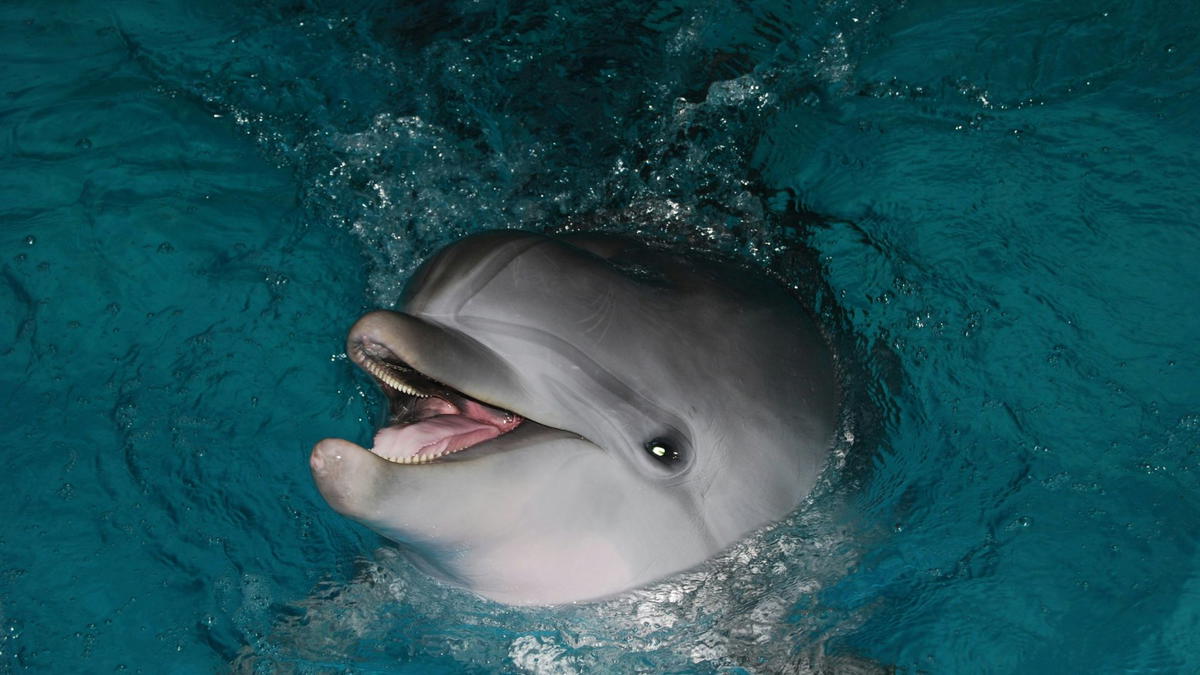
The bottlenose dolphin (Tursiops truncatus) is one of the few non-human animals known to use individually distinctive vocal signals that function similarly to names. These sounds, called signature whistles, are unique frequency-modulated acoustic patterns developed early in life and retained for decades. Unlike general communication calls used by many animals, these whistles encode identity and allow dolphins to address specific individuals within complex social groups.
Understanding whether dolphins have “names” is scientifically important because it provides insight into vocal learning, referential communication, and the evolution of social cognition. Research from organizations such as NOAA Fisheries and long-term datasets from the Sarasota Dolphin Research Program demonstrate that dolphins not only recognize these whistles but also use them intentionally to maintain contact and coordinate behavior. Playback experiments further show that identity information is encoded in whistle structure rather than voice characteristics. The following facts explain how signature whistles function, how they are learned and used, and why they represent one of the clearest examples of name-like communication outside humans.
1. Signature Whistles Function as Individual Acoustic “Names”
Each bottlenose dolphin develops a unique signature whistle that acts as an acoustic identifier, comparable in function to a name. These whistles are defined primarily by their frequency modulation contour—a stable pattern of rises, falls, and loops in pitch that remains consistent over time. Typical whistles last approximately 0.5 to 2 seconds and are individually distinctive within a population.
Unlike most animal vocalizations, which signal emotional states or environmental cues, signature whistles encode identity-specific information independent of voice quality. Playback experiments using synthetic whistles that preserve contour but remove individual voice features show that dolphins still recognize familiar individuals. This confirms that the contour itself carries identity information.
Biologically, this system enables dolphins to maintain cohesion in fission–fusion societies, where individuals frequently separate and reunite. The use of stable, learned acoustic labels represents one of the strongest examples of referential communication in a non-human mammal.
2. Dolphins Recognize and Respond to Their Own “Names”
Bottlenose dolphins demonstrate clear recognition of their own signature whistle, indicating a form of auditory self-representation. In controlled playback experiments, individuals exposed to recordings of their own whistle respond with orientation toward the sound source and often produce a return whistle. Response rates in some studies reach approximately 80–90% for self-whistles, compared to much lower responses for unfamiliar signals.
This selective response shows that dolphins associate a specific acoustic pattern with themselves rather than treating it as a general contact call. Importantly, dolphins can distinguish between their own whistle, those of close associates, and those of unfamiliar individuals.
The underlying mechanism involves advanced auditory processing and long-term memory, supported by a highly developed temporal lobe and auditory cortex. This ability is particularly important in underwater environments where visual cues are limited. Scientifically, such self-referential recognition is rare and provides strong evidence for complex cognitive processing in cetaceans.
3. Dolphins Use Signature Whistles to Address Specific Individuals
Signature whistles are not only identifiers but are actively used by dolphins to address specific individuals. Field observations show that dolphins produce copies of another individual’s signature whistle when attempting to re-establish contact, especially after separation. This behavior is functionally similar to calling another individual by name.
Studies from wild populations, including those monitored by the Sarasota Dolphin Research Program, show that whistle copying occurs most frequently during separation and reunion events. The addressed individual typically responds by approaching or producing its own whistle, indicating successful communication.
This targeted use requires precise vocal control and memory of multiple individuals’ whistles. It also demonstrates that dolphins can map specific signals to specific individuals and deploy them intentionally. Ecologically, this behavior supports group cohesion in environments where individuals may be separated by hundreds of meters or more.
4. Signature Whistles Are Learned Early and Remain Stable for Life
Dolphins acquire their signature whistles through vocal learning during the first months of life, typically stabilizing within the first year. Calves often model aspects of their whistle on sounds heard in their social environment—especially their mother’s whistle—but modify it to produce a unique contour.
Long-term datasets, including decades of recordings from identified individuals, show that these whistles remain highly stable over time, with minimal changes across 20 years or more. In some populations, calves produce whistles similar to their mothers in roughly one-third of cases, particularly among males, while females tend to develop more distinct patterns.
This stability allows individuals to be recognized consistently across long time spans, supporting enduring social relationships. From a biological perspective, the combination of early learning and long-term retention highlights the importance of identity signaling in dolphin societies.
5. Dolphins Can Mimic the “Names” of Close Associates
Bottlenose dolphins are capable of accurate vocal mimicry, specifically copying the signature whistles of familiar individuals. This copying is selective and context-dependent, occurring primarily between closely bonded individuals such as mother–calf pairs or allied males.
Acoustic analyses show that copied whistles closely match the original contour while sometimes incorporating subtle modifications, indicating intentional reproduction rather than confusion. This requires precise motor control of the vocal apparatus and strong auditory memory.
Biologically, this ability is supported by neural pathways linking auditory perception with vocal production, a hallmark of vocal learning species. Ecologically, whistle copying facilitates social bonding, coordination, and reunions. It also provides direct evidence that dolphins use learned signals referentially, reinforcing the interpretation of signature whistles as name-like labels.
6. Signature Whistles Support Complex Social Structures
Bottlenose dolphins live in fission–fusion societies, where group composition changes frequently. In such systems, reliable individual recognition is essential. Signature whistles provide an efficient mechanism for tracking individuals within these dynamic networks.
Research demonstrates that dolphins can remember the signature whistles of former associates for over 20 years, representing one of the longest documented social memory spans in non-human animals. This long-term recognition enables individuals to re-establish alliances and social bonds after extended separation.
From an ecological perspective, this communication system supports cooperation, alliance formation, and reproductive strategies. It reduces the cost of locating specific individuals in large or dispersed groups and enhances coordination in complex social environments.
7. Dolphins Are One of the Few Non-Human Animals With Name-Like Signals
The use of learned, individually specific vocal labels is extremely rare in the animal kingdom. Bottlenose dolphins are one of the clearest examples of a species that uses signals meeting key criteria for name-like communication: they are learned, individually distinctive, stable over time, and used referentially to address others.
Unlike most animal calls, which are tied to emotional states or immediate contexts, dolphin signature whistles function as abstract labels representing individuals. Experimental evidence shows that dolphins can recognize these labels even when stripped of voice cues, confirming that they encode identity rather than simply sound characteristics.
Scientifically, this system provides important insight into the evolution of communication. It suggests that complex social systems can drive the emergence of identity-based signaling, offering parallels to the early stages of human language development.
Key Takeaways
• Bottlenose dolphins use signature whistles as stable, individually distinctive acoustic identifiers.
• Identity is encoded in whistle contour, not voice characteristics, allowing reliable recognition.
• Dolphins recognize and respond to their own whistles, demonstrating self-referential processing.
• Individuals copy others’ whistles to address them directly, especially during separation.
• Signature whistles are learned early and remain stable for decades.
• This system represents one of the strongest examples of name-like communication outside humans.