Introduction
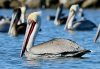
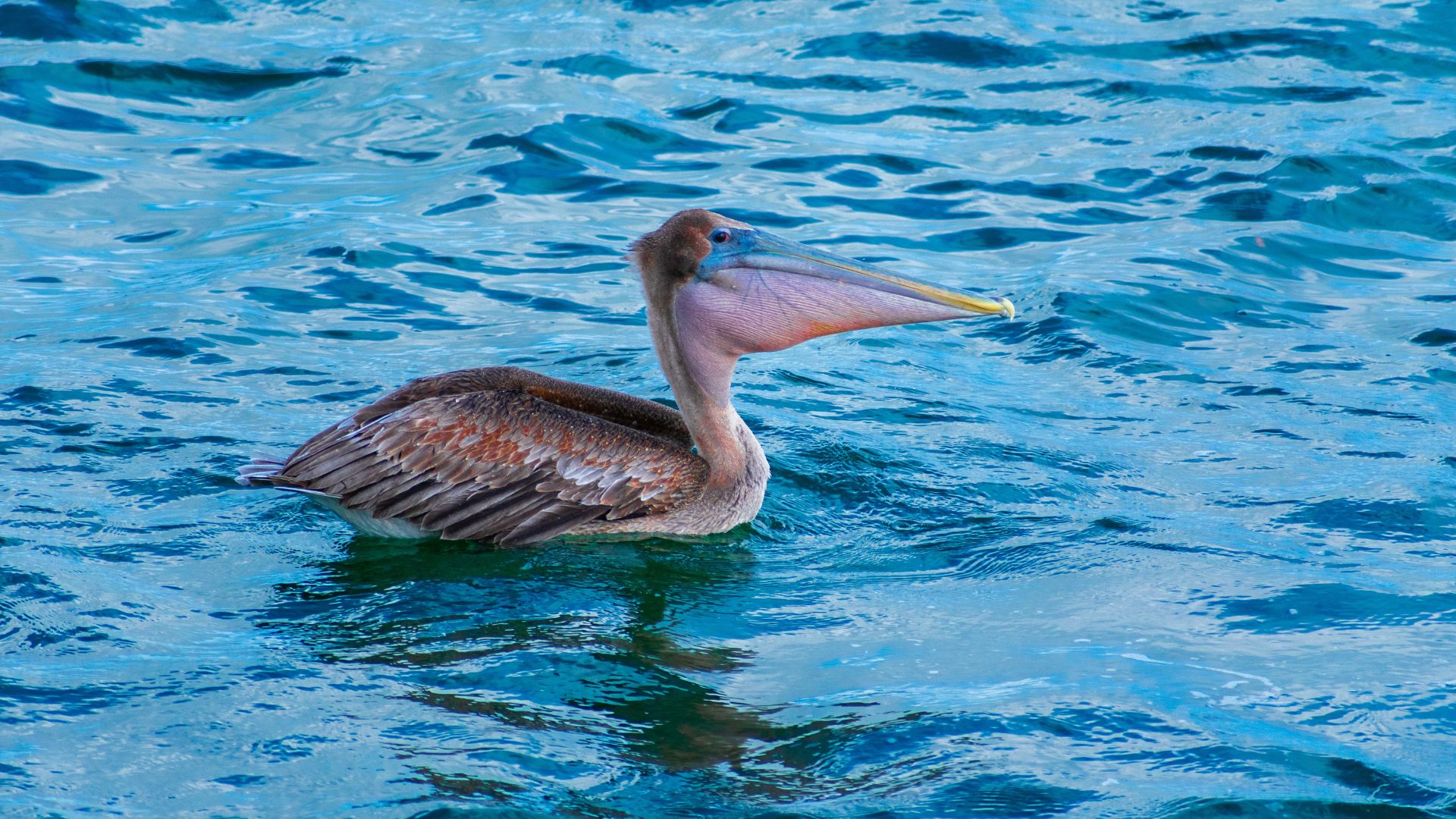
The Brown Pelican (Pelecanus occidentalis) is one of the few seabirds specialized for plunge-diving, a hunting strategy that involves diving from the air directly into the ocean to capture fish. This feeding technique exposes the bird to high-speed water impacts and requires precise coordination between flight mechanics, visual targeting, and specialized anatomical structures. As a result, Brown Pelicans possess a suite of morphological and physiological adaptations that allow them to hunt efficiently in coastal marine environments.
Unlike most pelican species that scoop fish from the water’s surface while swimming, Brown Pelicans target schooling fish below the surface by diving from heights of up to about 20 meters (approximately 65 feet). Their bodies are equipped with shock-absorbing tissues, expandable feeding organs, and highly developed sensory systems that help them locate and capture prey with minimal energy expenditure. Observations compiled by ornithologists and institutions such as the Cornell Lab of Ornithology have highlighted how these features function together as an integrated hunting system. The following sections examine ten key biological adaptations that enable Brown Pelicans to operate as highly effective ocean predators.
1. High-Speed Plunge-Diving Capability
Brown Pelicans are the only pelican species that regularly hunt by aerial plunge-diving. Individuals typically begin their dives from heights of about 10–20 meters (roughly 30–70 feet), folding their wings tightly against their bodies before striking the water headfirst. During descent they can reach speeds approaching 60 km/h (around 37 mph).
The steep entry angle serves an important optical purpose. Light bends as it passes through the air–water boundary, which can distort the apparent position of fish. By diving nearly vertically, the pelican reduces this refractive distortion and improves targeting accuracy.
Upon impact, the bird’s long bill and expandable throat pouch open to engulf fish along with surrounding water. This strategy allows Brown Pelicans to reach prey located several feet below the surface—an area inaccessible to most surface-feeding seabirds—while minimizing the need for extended underwater pursuit.
2. Impact-Absorbing Subcutaneous Air Sacs
Repeated plunge-dives generate strong deceleration forces when the bird strikes the water. Brown Pelicans mitigate these forces using subcutaneous air sacs located beneath the skin of the breast, neck, and belly.
These sacs are connected to the avian respiratory air-sac system, which forms part of the highly efficient breathing mechanism found in birds. In plunge-diving pelicans, these air pockets also function as mechanical shock absorbers. When the bird enters the water, the sacs compress and distribute impact forces across the chest and upper body.
This cushioning effect protects bones, muscles, and internal organs from sudden deceleration. The sacs also increase buoyancy immediately after impact, allowing the pelican to resurface quickly while it drains water from its pouch.
This combination of shock absorption and buoyancy allows the species to perform repeated high-speed dives during daily foraging.
3. Protective In-Air Body Rotation
Immediately before entering the water, Brown Pelicans perform a subtle rotation of the body to the left. This maneuver helps protect vulnerable tissues in the neck.
In birds, the trachea and esophagus run along the right side of the cervical region. If the pelican struck the water without adjusting its orientation, these soft tissues could absorb a significant portion of the impact force.
By rotating slightly and tightening the neck muscles, the pelican shifts these organs away from the direct line of impact. The movement also stabilizes the head and bill during entry, reducing the risk of cervical injury.
This coordinated body rotation illustrates how behavior and anatomy combine to manage the biomechanical stresses associated with plunge-diving.
4. Massive Distensible Gular Pouch
The Brown Pelican’s gular pouch—the expandable throat membrane attached to the lower mandible—is one of its most important feeding adaptations. The pouch consists of elastic skin supported by collagen and elastin fibers that allow repeated stretching without damage.
During a dive, the pouch expands rapidly as the bird scoops fish and water from the surrounding area. Measurements indicate that it can hold approximately 11–13 liters (about three gallons) of water and prey.
This volume is several times greater than the pelican’s stomach capacity. As a result, the pouch functions primarily as a temporary capture net rather than a food storage organ.
By capturing multiple fish during a single plunge, the pelican increases feeding efficiency when targeting dense schools of small fish such as anchovies or sardines.
5. Efficient Water-Draining Mechanism
After resurfacing, the pelican must separate fish from the large volume of seawater trapped in its pouch. Brown Pelicans accomplish this using a rapid drainage behavior.
The bird tilts its head downward while contracting muscles along the pouch and lower mandible. This action allows water to escape from the sides of the bill while the fish remain inside the pouch.
The drainage process takes only a few seconds and prepares the bird to swallow its prey immediately. Removing excess water also reduces the weight the bird must lift during takeoff.
This efficient filtering system allows Brown Pelicans to feed repeatedly within dense fish schools while minimizing unnecessary saltwater intake.
6. Extremely Acute Vision
Brown Pelicans rely heavily on visual detection to locate prey from the air. Their large eyes and dense retinal photoreceptors allow them to detect fish movements from tens of meters above the ocean surface.
Pelicans typically glide slowly while scanning the water below. Once a school of fish is detected, the bird adjusts its flight path and begins a plunge dive.
Strong binocular vision provides the depth perception necessary to estimate the correct dive angle. This is essential because the air–water interface distorts the apparent position of prey.
During the dive, a translucent nictitating membrane sweeps across the eye, protecting it from impact and saltwater while still allowing the bird to maintain visual contact with its target.
7. Two-Part Digestive System for Whole Fish
Brown Pelicans swallow fish whole, and their digestive tract is adapted for processing prey that contains bones, scales, and connective tissue.
Like most birds, they possess a two-part stomach. The first chamber, known as the proventriculus, secretes strong digestive acids and enzymes that begin breaking down soft tissues.
Food then passes into the gizzard, a muscular chamber that grinds harder materials such as bones and scales.
This combination of chemical digestion and mechanical grinding allows the pelican to extract nutrients efficiently from whole fish. Rapid digestion is important for supporting the energetic demands of flight and repeated plunge-diving.
8. Totipalmate Feet for Strong Swimming
Brown Pelicans possess totipalmate feet, meaning all four toes—including the hind toe—are connected by webbing. This creates a large paddle-like surface.
The extensive webbing increases propulsion when the bird swims on the water. After a dive, pelicans use powerful strokes to maneuver and stabilize themselves while draining water from the pouch.
Totipalmate feet also assist during takeoff. When launching from the water surface, the bird pushes forward with its feet while flapping its wings to gain lift.
Although pelicans hunt primarily from the air, strong swimming ability is essential for recovering from dives and positioning themselves near active fish schools.
9. Energy-Saving Ground-Effect Gliding
When searching for prey, Brown Pelicans often glide only a few centimeters above the ocean surface. This flight pattern exploits an aerodynamic phenomenon known as ground effect.
Ground effect occurs when air compressed between the bird’s wings and the water surface increases lift while reducing aerodynamic drag. This allows the pelican to glide farther with minimal wing flapping.
By conserving energy during search flights, pelicans can travel long distances along coastlines while scanning for fish schools.
This efficient flight strategy allows Brown Pelicans to cover extensive foraging areas without exhausting the energy reserves needed for repeated plunge dives.
10. Specialized Nasal Salt Glands
Because Brown Pelicans consume marine fish and inevitably ingest seawater during dives, they must regulate excess salt in their bodies. Like many seabirds, they possess specialized supraorbital salt glands located above the eyes.
These glands remove sodium chloride from the bloodstream and excrete it through ducts that open into the nasal passages. The concentrated brine then drips from the bill.
This adaptation allows pelicans to maintain proper fluid balance despite frequent exposure to seawater.
Salt glands are common among marine birds and are essential for species that feed primarily on ocean prey.
Key Takeaways
• Brown Pelicans rely on plunge-diving from heights up to about 20 meters to capture fish beneath the ocean surface.
• Subcutaneous air sacs and controlled body orientation protect the bird from high-impact forces during dives.
• The expandable gular pouch functions as a large capture net capable of holding several liters of water and prey.
• Acute vision, aided by a protective nictitating membrane, enables precise targeting during aerial dives.
• Totipalmate feet, efficient flight mechanics, and salt-excreting glands support the full sequence of ocean hunting—from prey detection to digestion.
References
Cornell Lab of Ornithology – Birds of the World
Smithsonian National Zoo & Conservation Biology Institute
Animal Diversity Web (University of Michigan)