Introduction
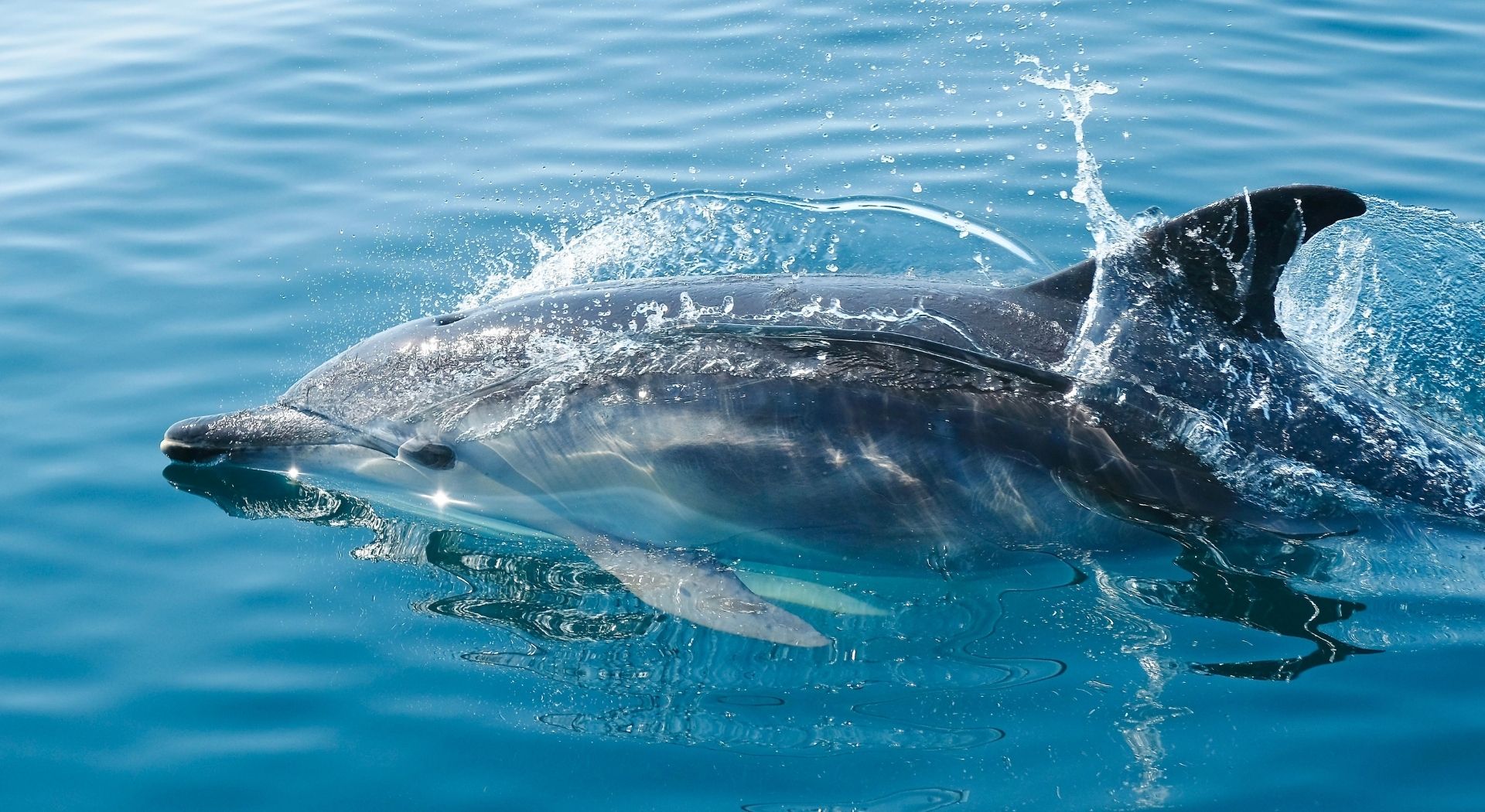
The bottlenose dolphin (Tursiops truncatus) is widely studied for its advanced cognitive abilities, making it one of the most intelligent non-human animals. Neuroscientific and behavioral research shows that dolphins possess complex communication systems, high-level problem-solving skills, and multi-layered social structures comparable in sophistication to those of great apes. Their encephalization quotient (EQ) is typically estimated around 4.5–5.3, indicating a brain significantly larger than expected for their body mass. Studies supported by institutions such as NOAA Fisheries and long-term programs like the Sarasota Dolphin Research Program have documented these capabilities in both wild and controlled settings. Understanding dolphin intelligence is scientifically important because it provides insight into convergent evolution of large brains, social cognition, and communication in mammals. These traits challenge traditional assumptions about intelligence being uniquely human and offer a comparative model for studying cognition in non-terrestrial environments.
1. Signature Whistles Function as Individual “Names”
Bottlenose dolphins produce individually distinctive, frequency-modulated vocalizations known as “signature whistles,” which function as acoustic identifiers. These whistles develop within the first year of life through vocal learning and remain stable for decades. Playback experiments have demonstrated that dolphins selectively respond to familiar whistles, even when acoustic features such as pitch are altered, indicating recognition of identity rather than sound alone. Field studies show individuals can remember signature whistles of former associates after separations exceeding 20 years, one of the longest documented social memory spans outside humans. Dolphins also copy the signature whistles of others in affiliative contexts, suggesting a form of directed communication. The mechanism relies on advanced auditory processing and long-term memory supported by expanded cortical regions. This system represents referential communication, a rare trait in animals, and provides evidence for symbolic representation—an essential precursor to language-like systems.
2. Cultural Transmission of Foraging Techniques
Certain bottlenose dolphin populations exhibit culturally transmitted behaviors, where knowledge is passed socially rather than genetically. A well-documented example is “sponging” in Shark Bay, Western Australia, primarily observed in Tursiops aduncus. Individuals carry marine sponges on their rostrum while foraging to protect against abrasion from rough substrates. Long-term studies show that over 90% of sponging individuals acquire the behavior from their mothers, indicating vertical transmission. Genetic and habitat analyses have ruled out environmental necessity alone, confirming cultural inheritance. This technique allows dolphins to access prey hidden in benthic substrates that are otherwise difficult to exploit. The behavior requires compensating for reduced echolocation efficiency while holding the sponge, demonstrating cognitive flexibility. Cultural transmission enables dolphins to occupy specialized ecological niches and maintain behavioral traditions, reinforcing the idea that non-human societies can sustain learned, population-specific knowledge across generations.
3. Mirror Self-Recognition Indicates Self-Awareness
Bottlenose dolphins are among the few species capable of passing the mirror self-recognition (MSR) test, a widely accepted indicator of self-awareness. In controlled experiments first reported in 2001, dolphins used mirrors to inspect marked areas on their bodies that were not otherwise visible, demonstrating contingency awareness between movement and reflection. Unlike species that treat reflections as conspecifics, dolphins exhibit self-directed behaviors such as turning and positioning to view specific marks. This ability is associated with a highly विकसित and extensively folded neocortex, along with the presence of spindle neurons linked to self-processing and social cognition. MSR is rare and shared only with a small group of species, including great apes and elephants. The presence of self-awareness suggests dolphins possess metacognitive abilities, allowing them to distinguish between self and others—an important foundation for complex social interactions and decision-making.
4. Flexible Tool Use Beyond Simple Objects
While sponge use is the most widely recognized example, dolphins demonstrate broader and more flexible tool-use behaviors. Observations in Shark Bay describe “shelling,” where dolphins trap fish inside large gastropod shells, bring them to the surface, and manipulate the shell to release prey. This multi-step process requires sequencing, motor coordination, and an understanding of cause-and-effect relationships. These behaviors are not universal across populations, indicating innovation and social learning rather than instinct. Tool use in dolphins involves integration of sensory input, particularly echolocation and tactile feedback, with motor planning. Such flexibility allows dolphins to exploit prey types that are otherwise inaccessible, enhancing foraging efficiency. The presence of multiple tool-use strategies places dolphins among the few non-primate mammals exhibiting habitual and innovative tool use, highlighting advanced problem-solving capabilities in a marine context.
5. Understanding of Abstract Symbols and Syntax
Experimental studies, particularly those led by cognitive scientist Louis Herman, demonstrate that bottlenose dolphins can comprehend artificial languages composed of gestural or acoustic symbols. Dolphins have been shown to understand sequences where word order determines meaning, correctly responding to commands such as object-action-object variations. In controlled trials, individuals successfully interpreted hundreds of novel command combinations, indicating rule-based learning rather than simple conditioning. They can also generalize learned structures to unfamiliar sequences, a hallmark of syntactic processing. This ability relies on advanced auditory discrimination and working memory supported by cortical specialization. The significance lies in demonstrating that dolphins can process symbolic representations and grammatical relationships, key components of language. While not equivalent to human language, this capacity suggests that foundational elements of syntax can evolve independently in non-terrestrial mammals.
6. Complex Social Alliances and Strategic Behavior
Male bottlenose dolphins form multi-level alliances that represent one of the most complex known social systems outside humans. First-order alliances typically consist of 2–3 individuals, while second-order alliances can involve up to 10–14 males cooperating to compete for access to females. Long-term studies in Shark Bay show that these alliances can persist for decades and require individuals to track relationships among dozens of others. Dolphins engage in coordinated behaviors, including synchronized swimming and physical contact, to maintain bonds. This system requires advanced memory, recognition, and the ability to infer third-party relationships. Such cognitive demands align with the social brain hypothesis, which links large brain size to social complexity. The ability to navigate dynamic alliance networks demonstrates strategic behavior and long-term planning, key indicators of high-level social intelligence.
7. Empathy, Altruism, and Possible Mourning Behavior
Bottlenose dolphins exhibit behaviors consistent with empathy and social awareness, often referred to as epimeletic behavior. Individuals have been observed supporting injured or sick pod members at the surface, enabling them to breathe. Mothers frequently carry deceased calves for extended periods, sometimes days, maintaining close physical contact. These behaviors have been documented across multiple populations and are not limited to maternal care, suggesting broader social concern. Neurologically, dolphins possess spindle neurons (von Economo neurons), which in humans are associated with empathy, rapid decision-making, and social emotions. While caution is required in interpreting emotional states, the consistency and context of these behaviors support the presence of complex social bonding. This trait provides important insight into the evolution of empathy and cooperative care in highly social mammals.
8. Large Brain Size and Advanced Neural Architecture
Bottlenose dolphins possess one of the largest brain-to-body size ratios among mammals, with EQ estimates ranging from 4.5 to over 5. Their brains typically weigh between 1.3 and 1.7 kg and feature a highly convoluted neocortex, increasing surface area for neural processing. They also possess spindle neurons concentrated in regions associated with social cognition and decision-making. Unlike primates, dolphin brains have evolved under aquatic constraints, including adaptations for acoustic processing and reduced olfactory structures. Despite these differences, functional similarities exist in areas linked to higher cognition. This neural architecture supports advanced learning, memory, and social interaction. The independent evolution of large, complex brains in cetaceans provides strong evidence for convergent evolution of intelligence, offering a valuable comparative framework for understanding cognition across mammalian lineages.
9. Echolocation Enables “Acoustic Imaging”
Dolphins use echolocation by emitting broadband clicks (typically 40–150 kHz) and analyzing returning echoes to construct detailed representations of their environment. This system allows them to discriminate objects based on size, shape, material composition, and internal density. Experimental studies show dolphins can detect differences as small as a few millimeters and distinguish between hollow and solid objects. The auditory cortex processes these signals rapidly, integrating temporal and spectral information into a coherent “acoustic image.” Some research suggests dolphins can identify internal structures, such as fish swim bladders, enabling efficient prey detection. This sensory modality functions independently of vision and is highly effective in turbid or low-light conditions. Echolocation demonstrates how intelligence can operate through non-visual sensory systems, expanding the concept of perception in animal cognition.
10. Unihemispheric Sleep Maintains Awareness
Bottlenose dolphins exhibit unihemispheric slow-wave sleep (USWS), in which one cerebral hemisphere shows slow-wave activity while the other remains alert. Electroencephalogram (EEG) recordings confirm that hemispheres alternate between sleep states over periods of several hours. During this time, the eye opposite the active hemisphere remains open, allowing environmental monitoring. This adaptation enables dolphins to surface voluntarily for respiration every few minutes and maintain social cohesion within pods. USWS reflects precise neural regulation, allowing rest without full loss of consciousness. This mechanism is essential for an obligate air-breathing marine mammal that cannot afford prolonged unconsciousness. The integration of physiological necessity with cognitive control highlights the flexibility of dolphin neural systems and represents a unique evolutionary solution among mammals.
Key Takeaways
• Signature whistles function as stable, learned identifiers, supporting referential communication and long-term social memory.
• Cultural transmission enables population-specific behaviors such as sponging, demonstrating non-genetic inheritance of knowledge.
• Mirror self-recognition and syntax comprehension indicate advanced cognitive processing and elements of metacognition.
• Multi-level alliances require tracking complex social relationships, reflecting high-level strategic intelligence.
• Echolocation provides detailed acoustic imaging, enabling perception beyond vision.
• Large brain size, spindle neurons, and unihemispheric sleep highlight advanced neural specialization and adaptability.